
Loading, please wait...
LOT 1719
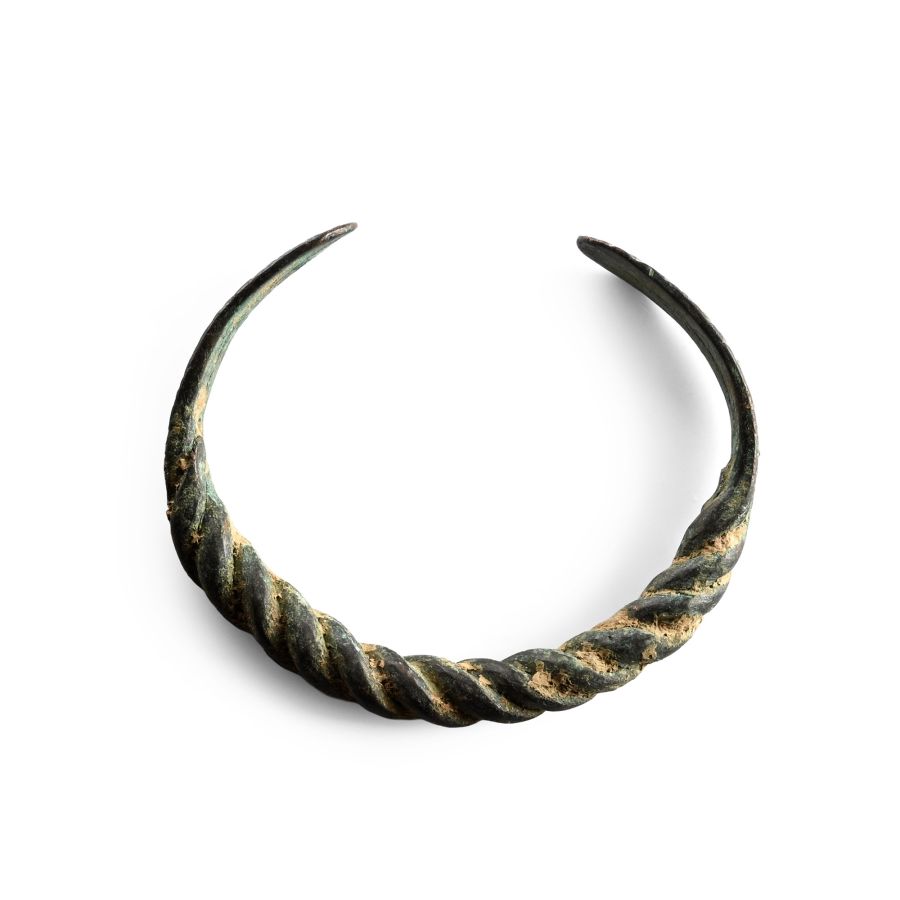
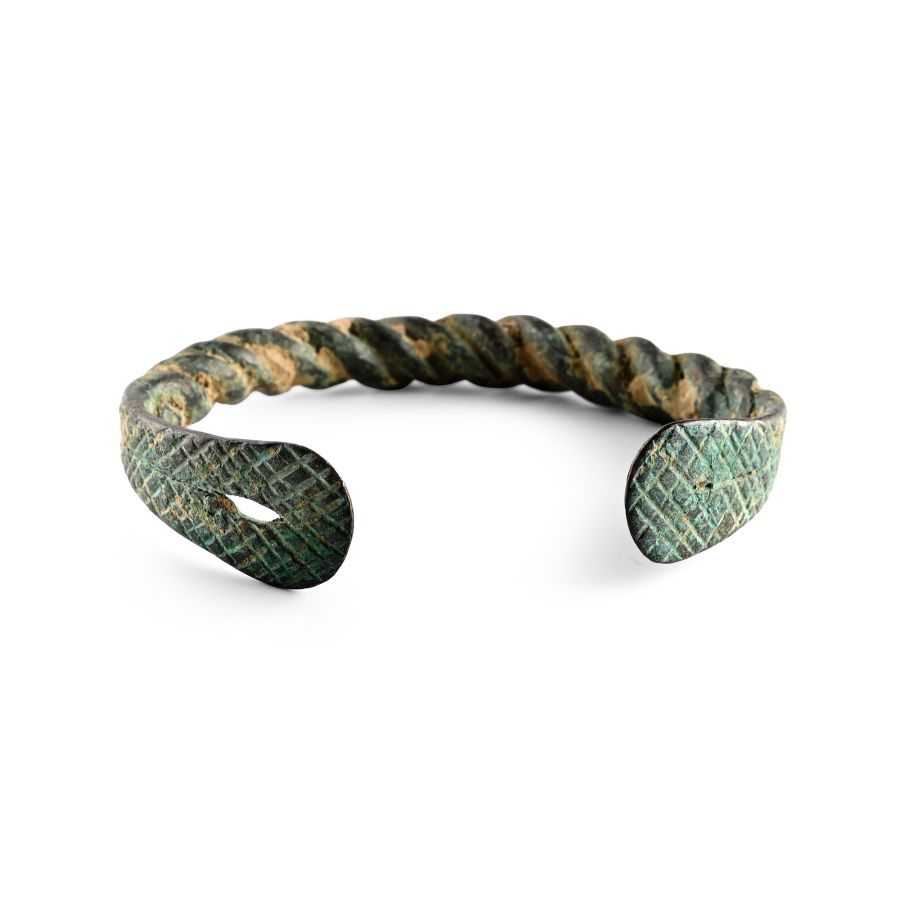
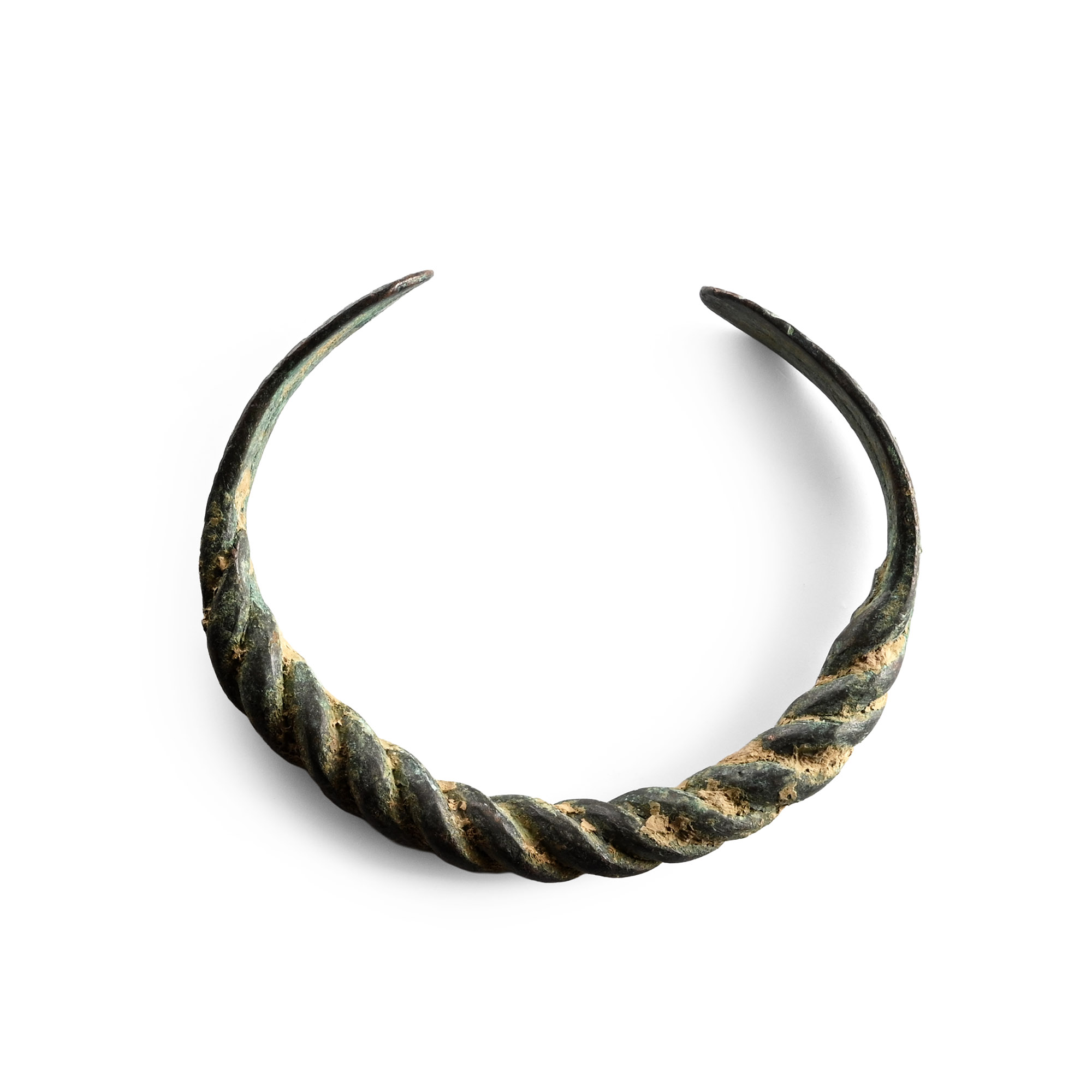
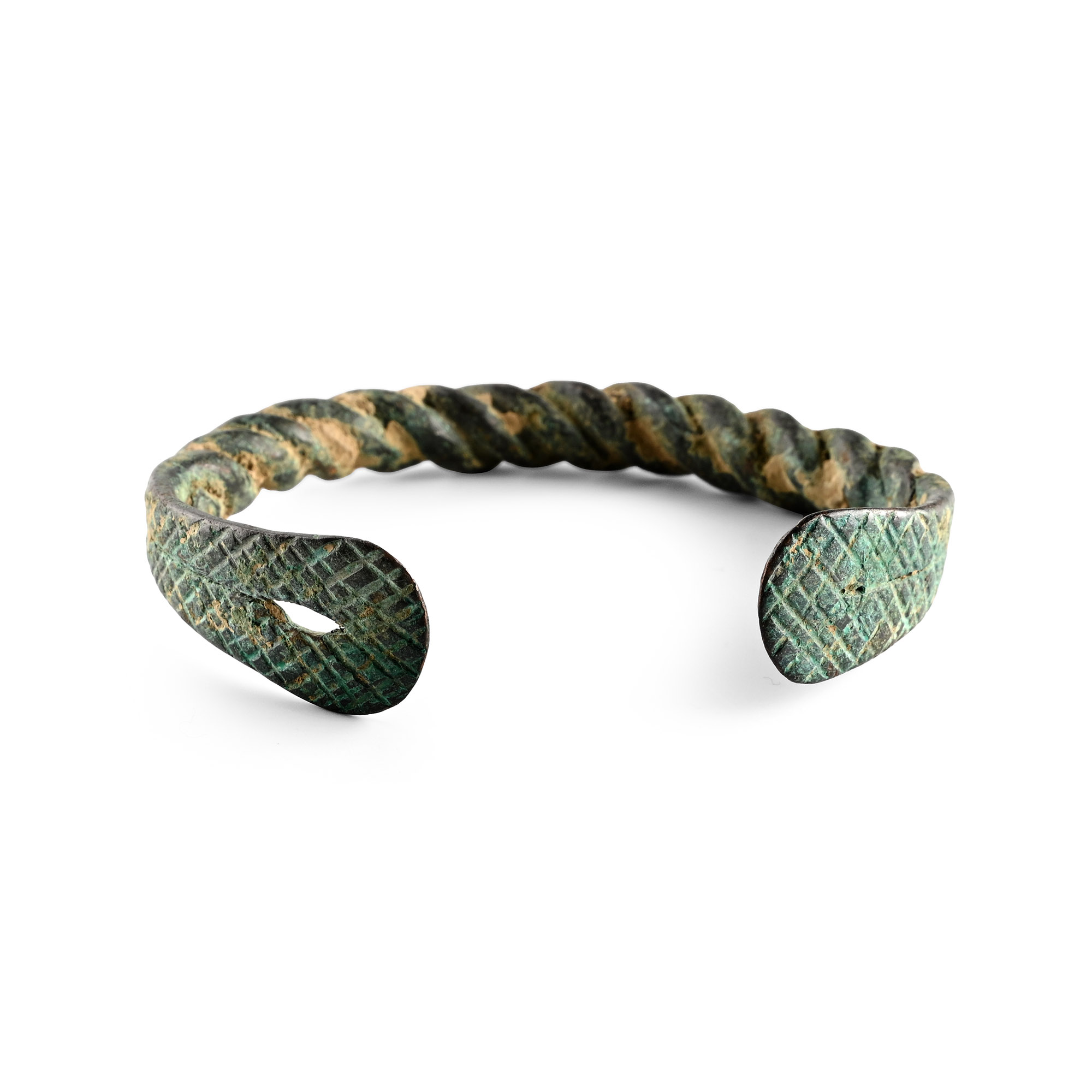
Viking Age Bronze Decorated Bracelet
9TH-11TH CENTURY A.D.
2 7/8 in. (50 grams, 74 mm).
Penannular in form with twisted shank and broad spatulate finials, hatched ornament to outer face. [No Reserve]
ProvenanceProperty of a North West London, UK, gallery; formerly in a 1980s collection.
From the property of a late Lincolnshire, UK, gentleman.
TimeLine Auctions follows a vetting process to ensure the authenticity and legality of all items, reinforcing our commitment to integrity and responsible trading. Each antiquity, antique, and coin lot undergoes thorough examination by a vetting committee of at least ten external specialists, professional trade association members, scientists, and archaeologists: Our Vetting Process
AUCTIONS:
TimeLine is a leading auction house specialising in antiquities, ancient art, collectables, natural history, coins, medals, and books. Our auctions offer museums, collectors, historians, and enthusiasts the opportunity to acquire unique and historically significant pieces.
-
Anglo-Scandinavian Viking Bronze Howling Beast Stirrup Apex Mount
11th century A.D.Sold for (Inc. bp): £111
With mounting hole at the apex and two to the lower edge, vestigial ledge to the reverse, reserved central motif of a wolf in profile with head thrown back; Williams's Class A Type 11. 20.5 grams, 55 mm
Found Norfolk, UK. -
.jpg)
Viking Age Bronze Fire Steel with Figure and Animals
8th-10th century A.D.Estimate: £400 - 600 (+bp*)
Opening Bid: £160
With openwork bifacial handle depicting central standing figure with arms outstretched towards the necks of two flanking rampant beasts; iron blade beneath; Finno-Ugric type. 58 grams, 60 mm
From the private collection of a London gentleman, from his grandfather's collection formed before the early 1970s. This lot is accompanied by an illustrated lot declaration signed by the Head of the Antiquities Department, Dr Raffaele D'Amato. -
Viking Bronze Pseudo Interlaced Ring
9th-11th century A.D.Sold for (Inc. bp): £111
With thick braided bezel of three wires, flat butted reverse. 4.70 grams, 23.81 mm overall, 19.34 mm internal diameter (approximate size British N, USA 6 1/2, Europe 13.72, Japan 13)
From the private collection of a London gentleman, from his grandfather's collection formed before the early 1970s.
