
Loading, please wait...
LOT 1626
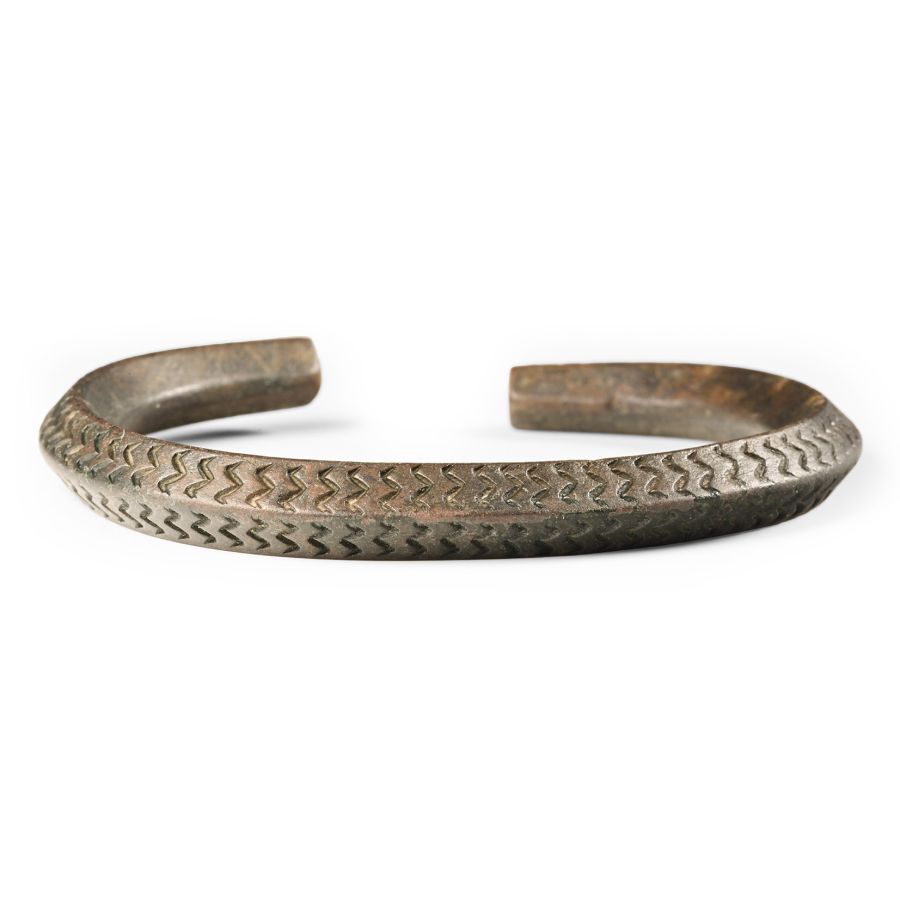
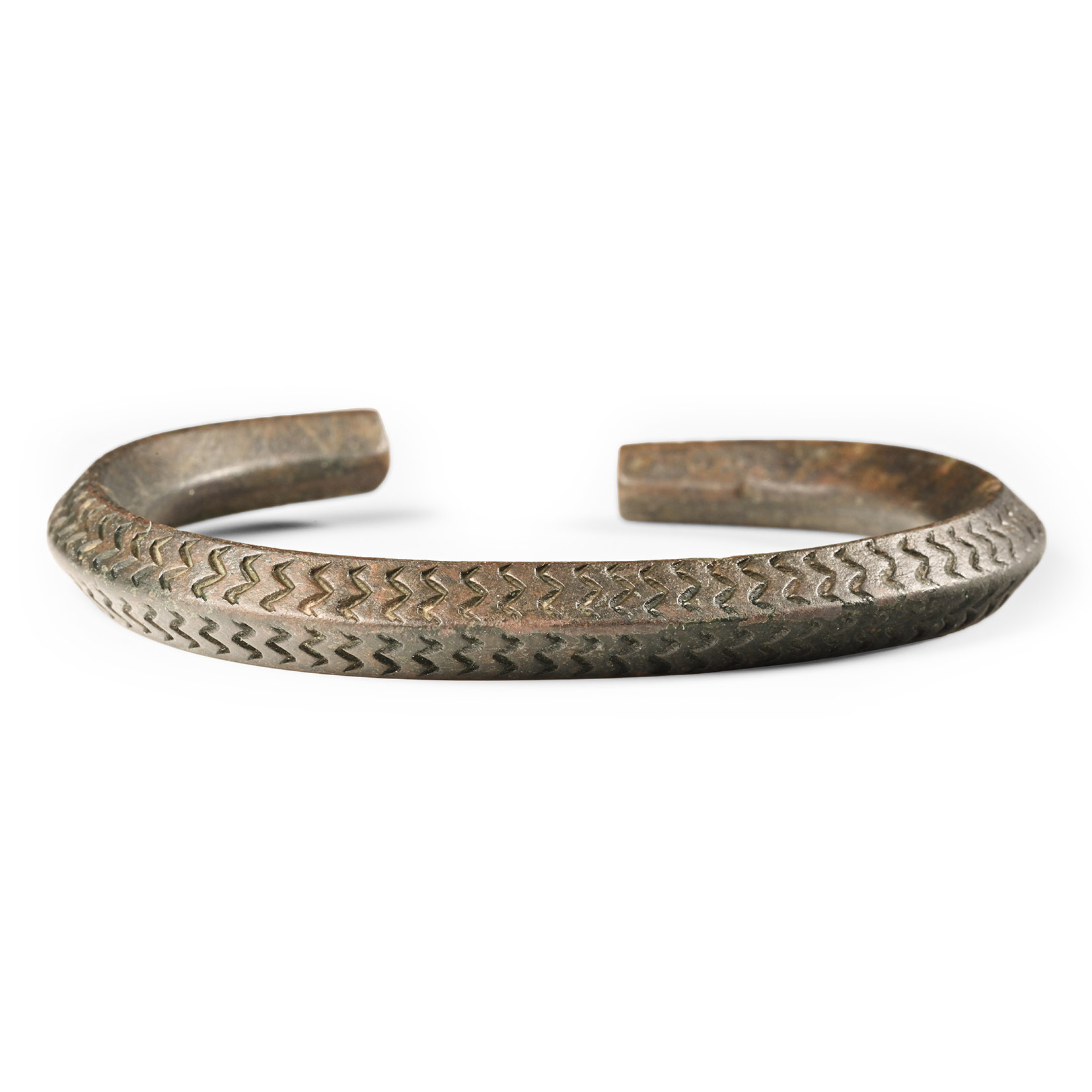
Viking Age Bronze Decorated Bracelet
9TH-11TH CENTURY A.D.
3 in. (56 grams, 76 mm).
Penannular square-section shank with punched detailing to the upper faces. [No Reserve]
ProvenanceFrom the private collection of a London gentleman, from his grandfather's collection formed before the early 1970s.
CONDITIONTimeLine Auctions follows a vetting process to ensure the authenticity and legality of all items, reinforcing our commitment to integrity and responsible trading. Each antiquity, antique, and coin lot undergoes thorough examination by a vetting committee of at least ten external specialists, professional trade association members, scientists, and archaeologists: Our Vetting Process
AUCTIONS:
TimeLine is a leading auction house specialising in antiquities, ancient art, collectables, natural history, coins, medals, and books. Our auctions offer museums, collectors, historians, and enthusiasts the opportunity to acquire unique and historically significant pieces.
-
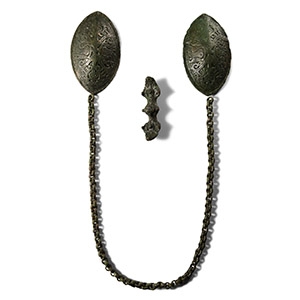
Viking Bronze Borre Style Brooch Set
10th-11th century A.D.Sold for (Inc. bp): £1,170
Comprising: two elliptical bronze tortoise brooches, each domed with raised ornament of four Borre-style faces with pellet eyes to the centre of a panel of body parts and hatching with two more faces to the narrow ends, wide flange, catchplate, pin-hinge and pendant attachment bar to the reverse; equal-arm brooch with two trapezoidal arms, each with raised Borre-Style geometric ornament, masks to the ends and central domed panel, lugs for the pin to the reverse, pierced lug to accept the chain; short chains of double-links. 280 grams total, 7.2 - 50.5 cm
From the private collection of a London gentleman, from his grandfather's collection formed before the early 1970s. -
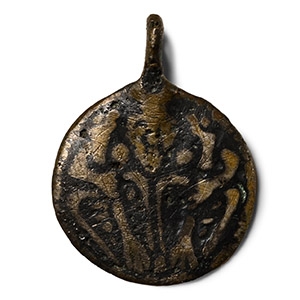
Viking Age Scandinavian Silver Odin Pendant with Ravens
Circa 9th-11th century A.D.Sold for (Inc. bp): £520
A discoid silver pendant with integral loop, beaded border enclosing a low-relief niello image of a male facing mask between two birds embraced at the necks. 1.76 grams, 21 mm
Private collection formed in Europe in the 1980s. Westminster collection, central London, UK. -
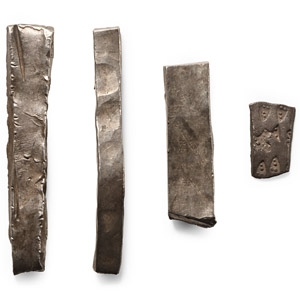
Viking Age Silver 'Hack Money' Bar Ingot Group
9th-11th century A.D.Sold for (Inc. bp): £416
Rectangular in section, irregular; one with punched triangular stamps. 38.9 grams total, 17-55 mm
Ex Spink and Sons, London, UK. Ex Nigel Mills, London, UK, 2014.
