
Loading, please wait...
LOT 1058
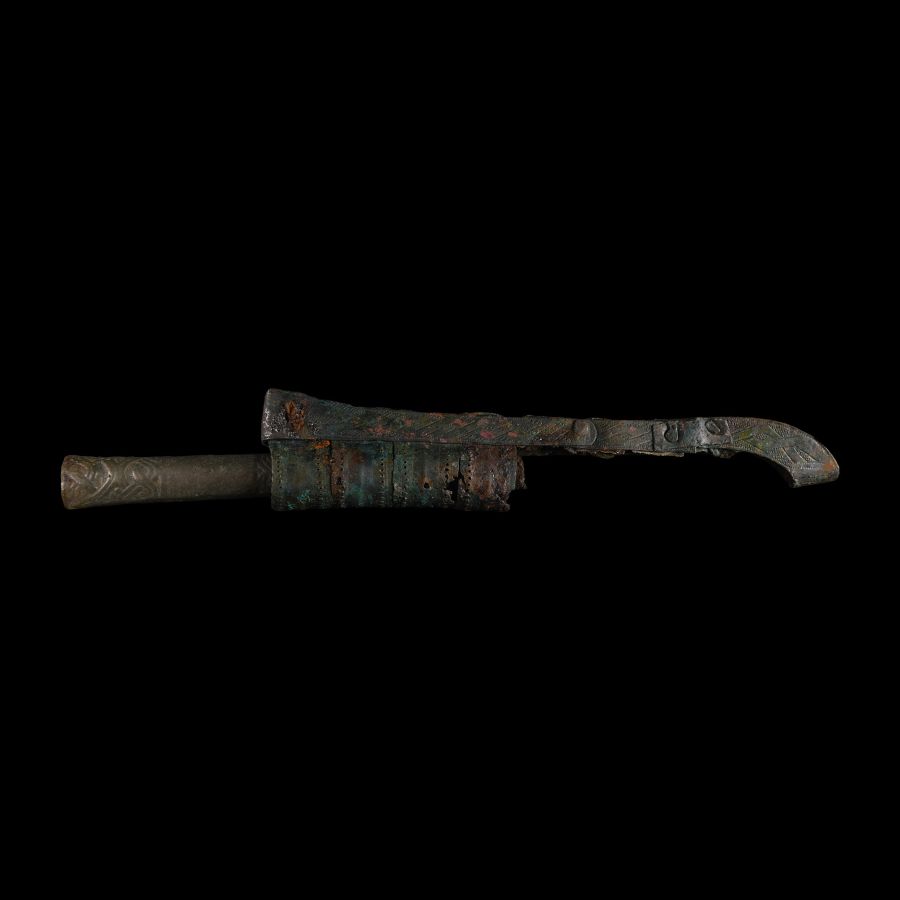
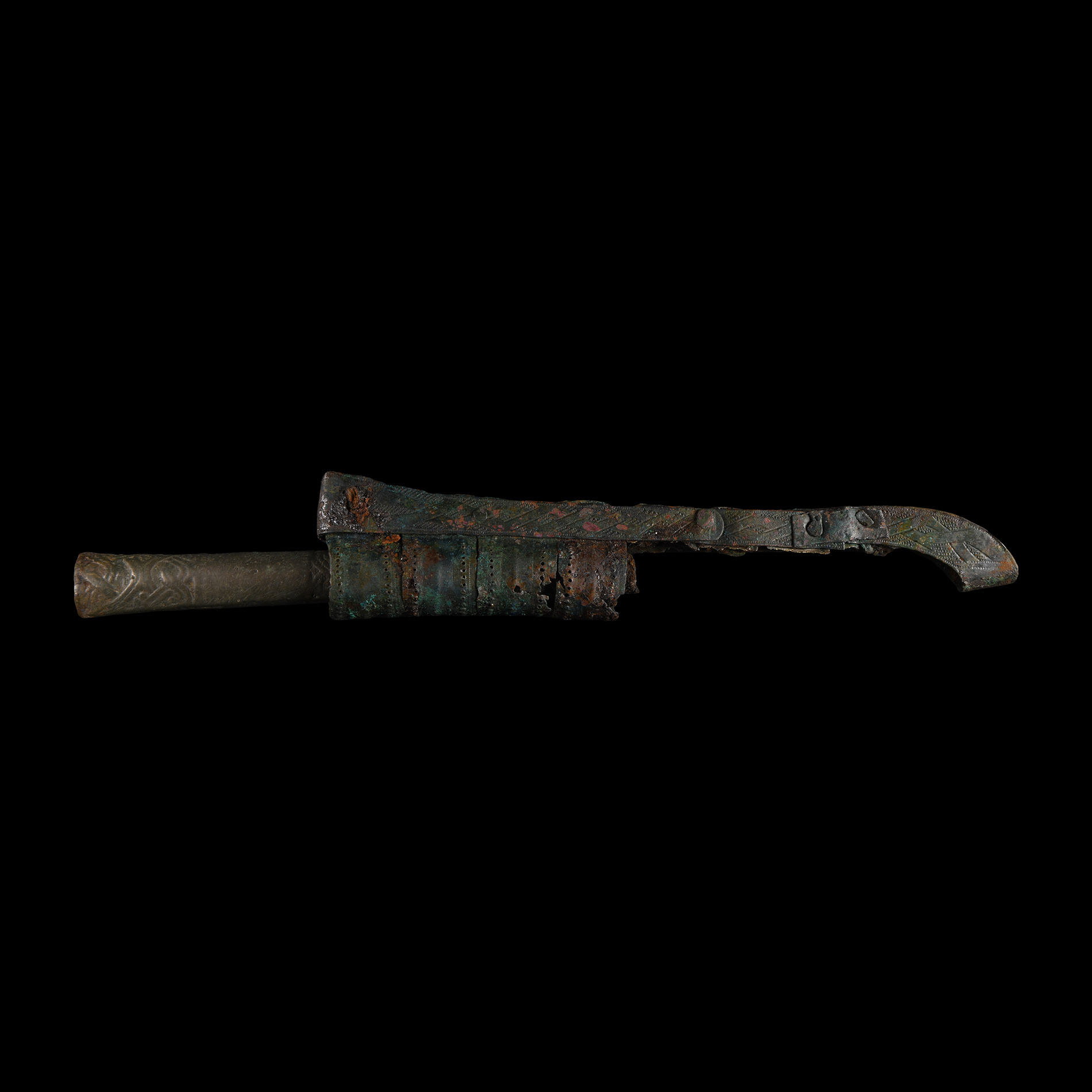
Viking Age Bronze Dagger Hilt with Scabbard
10TH-11TH CENTURY A.D.
9 1/2 in. (119 grams, 24 cm).
The scabbard with bronze hoop reinforcements to the upper third decorated with bands of punched holes; lateral suspension flap between bronze plates with reserved interlace motifs on hatched field; hilt with Borre Style ring-chain motifs to the upper end; hollow to the upper face. [No Reserve]
ProvenanceFrom the collection of a North American gentleman, formed in the 1990s.
LiteratureCf. Arbman, H., Birka I: Die Gräber, Uppsala, 1940, pl.6.
CONDITIONTimeLine Auctions follows a vetting process to ensure the authenticity and legality of all items, reinforcing our commitment to integrity and responsible trading. Each antiquity, antique, and coin lot undergoes thorough examination by a vetting committee of at least ten external specialists, professional trade association members, scientists, and archaeologists: Our Vetting Process
AUCTIONS:
TimeLine is a leading auction house specialising in antiquities, ancient art, collectables, natural history, coins, medals, and books. Our auctions offer museums, collectors, historians, and enthusiasts the opportunity to acquire unique and historically significant pieces.
-
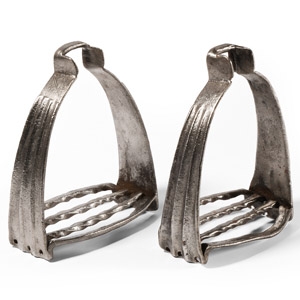
German Iron Stirrup Pair
16th century A.D.Estimate: £400 - 600 (+bp*)
Opening Bid: £111
Featuring twisted bar open treads, arched side pieces grooved and connected by a strap bar. 780 grams total, 16.5 cm each
Acquired from Czerny's Auctions, Italy, 2016, lot 313. The Kusmirek Collection, UK. Accompanied by a copy of Czerny's invoice and lot details. -
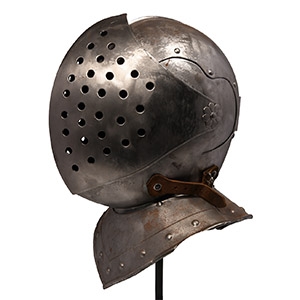
Italian Foot-Combat Helm
21st century A.D.Sold for (Inc. bp): £169
Comprising a pivoting visor, one piece skull raising to a small medial comb and fitted at the nape with a plume holder, flower-shaped pivots, front and rear gorget formed of a single plate. 3.9 kg, 37 cm high
The Kusmirek Collection, UK.
The helmet is a reproduction of a foot-combat helm, or great bascinet, used between the end of 15th and the first half of 16th century in the battles and tournaments. A similar helmet is that of Sir Giles Capel (1485-1556), a prominent figure at Henry VIII's court. These helmets were characterised by a unique rounded pierced visor with (here 60) slots for sight and ventilation. Helmets of this massive size and distinctive type were intended for foot-combat, a sporting contest fought by two fully armoured warriors armed with poleaxes, spears or swords. However, in this reproduction the visor has been mounted upon a separated collar. -
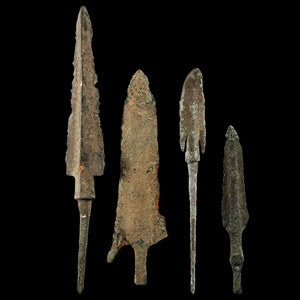
Luristan Bronze Arrowhead Group
2nd-1st millennium B.C.Sold for (Inc. bp): £13
Four tanged arrowheads of barbed and leaf-shaped types, including examples with pronounced midribs. 90 grams total, 8.7-14.5 cm
Ex G. White collection, 1990s.
