
Loading, please wait...
LOT 1539
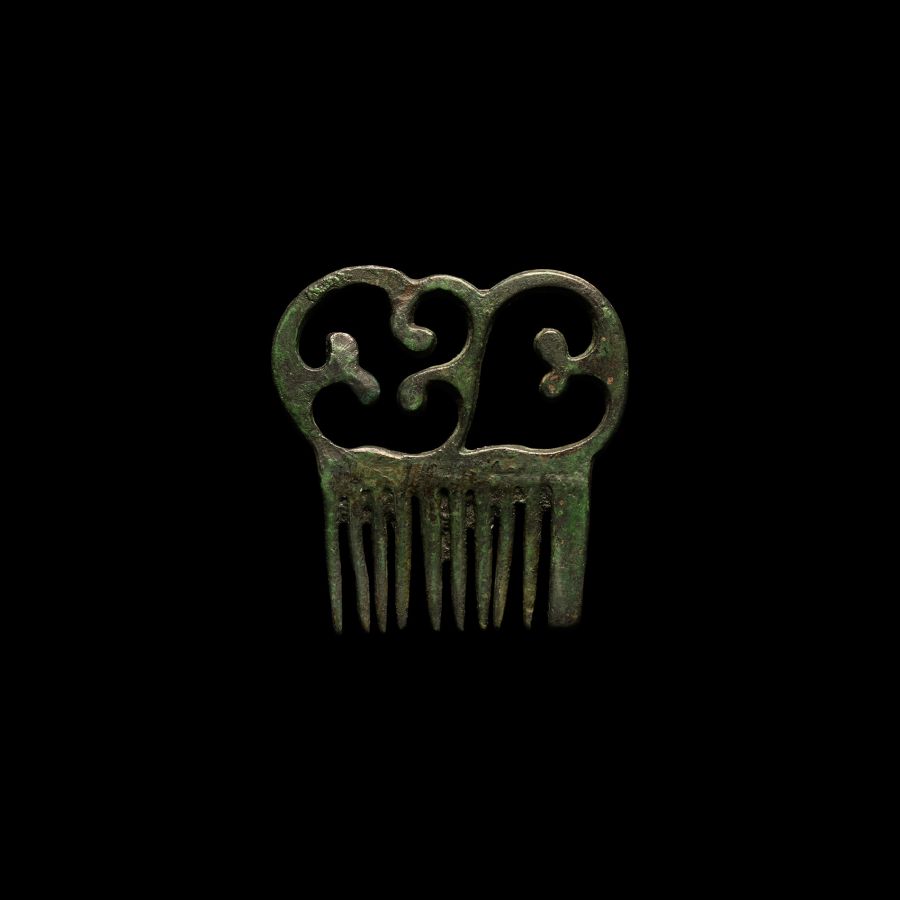
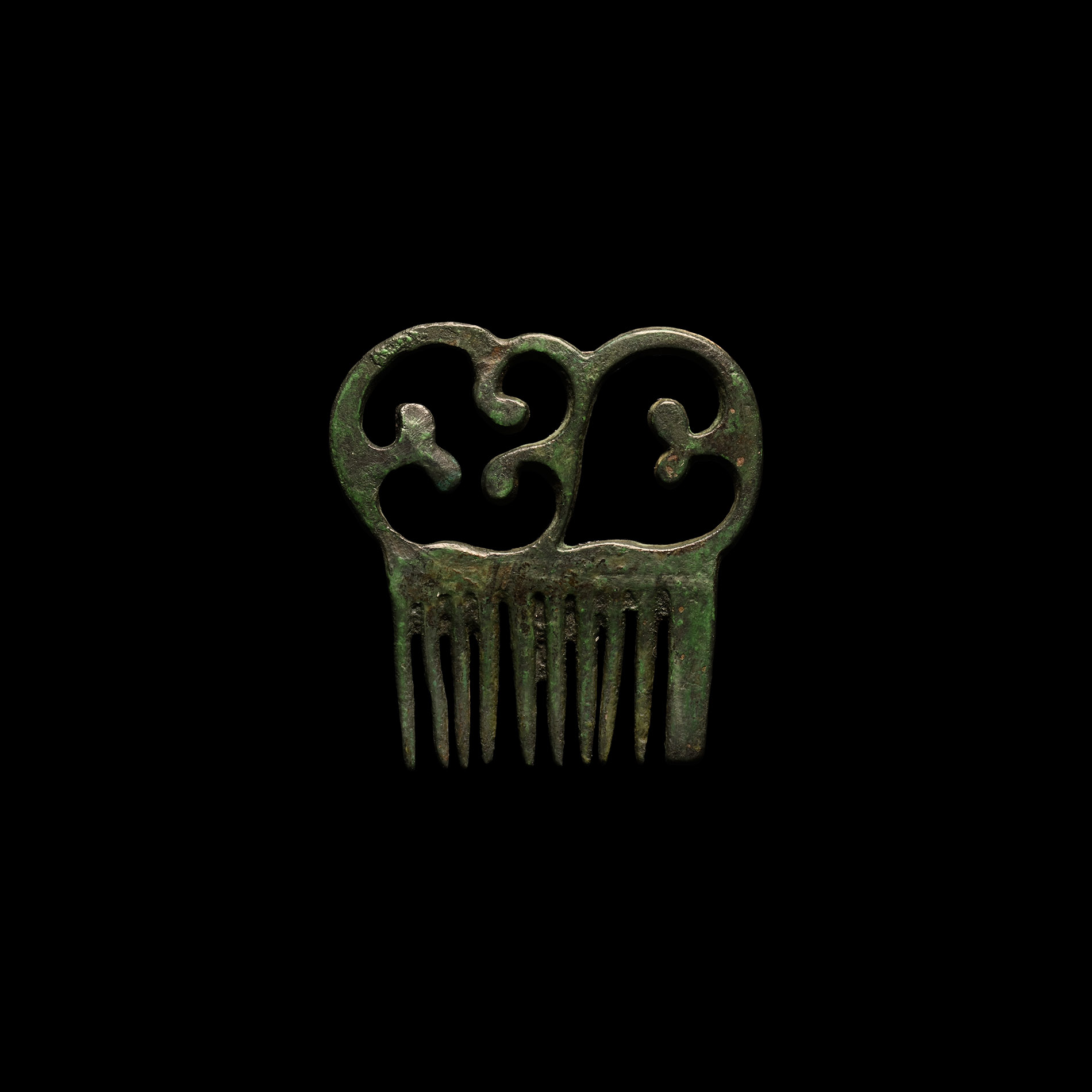
Viking Age Bronze Comb
10TH-12TH CENTURY A.D.
1 3/4 in. (16.5 grams, 44 mm).
Featuring a scalloped handle with openwork scrolling tendrils, complete set of teeth below. [No Reserve]
ProvenanceAcquired 1980-2000.
Ex property of an American collector.
See similar in Arbman, H., Birka I, Die Gräber, Uppsala, 1940, pl.100, no.2, from grave 1162.
FootnotesNorsemen were particularly fastidious about their appearance. The hair and beard were important to the men, for making a statement and to intimidate their opponents. Early combs were made from antler or bone and carried in a small pouch; high status combs were later made from metal (mainly bronze) and have been found as grave goods.
CONDITIONTimeLine Auctions follows a vetting process to ensure the authenticity and legality of all items, reinforcing our commitment to integrity and responsible trading. Each antiquity, antique, and coin lot undergoes thorough examination by a vetting committee of at least ten external specialists, professional trade association members, scientists, and archaeologists: Our Vetting Process
AUCTIONS:
TimeLine is a leading auction house specialising in antiquities, ancient art, collectables, natural history, coins, medals, and books. Our auctions offer museums, collectors, historians, and enthusiasts the opportunity to acquire unique and historically significant pieces.
LOT 1539
Viking Age Bronze Comb
Estimate £150 - 200€170 - 230 (for guidance only)$200 - 270 (for guidance only)
-
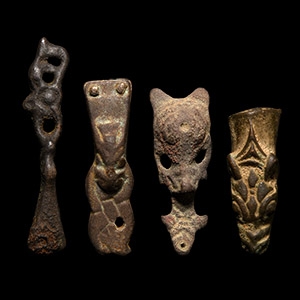
Viking Bronze Zoomorphic Strap End Collection
9th-11th century A.D.Sold for (Inc. bp): £169
Most with piercings or attachment rivets and displaying beasts in relief or openwork. 37.7 grams total, 34-50 mm
From the collection of a North American gentleman, formed in the 1990s. -
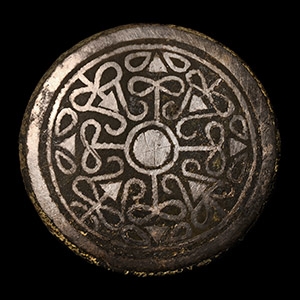
Viking Age Silver and Bronze Disc Mount
9th-11th century A.D.Sold for (Inc. bp): £143
The surface slightly domed, Bidriware silver facing with geometric motifs within concentric annular borders; three of four remaining lugs to reverse. 16.7 grams, 35 mm
Acquired on the German art market before 2000. From an old Munich collection. -
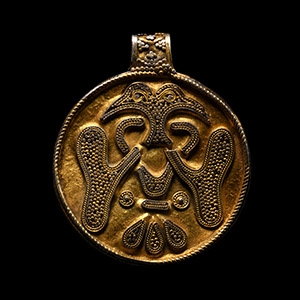
Viking Age Silver-Gilt Filigree Pendant with Conjoined Ravens
9th-11th century A.D.Sold for (Inc. bp): £5,460
The upper face decorated with a two-headed filigree raven, raised ropework border, suspension loop with pyramids of granules continuing onto the reverse. 6.26 grams, 42 mm
Private collection formed in Europe in the 1980s. Westminster collection, central London, UK. This lot has been checked against the Interpol Database of stolen works of art and is accompanied by search certificate no.203746.
Pairs of ravens were considered auspicious in medieval Scandinavian society. In pre-Christian times, two such birds were the informants of the god Odin, who relayed news of the deeds of men. They were also carrion birds, frequenting battlefields to feast on the bodies of fallen warriors.
