
Loading, please wait...
LOT 0321
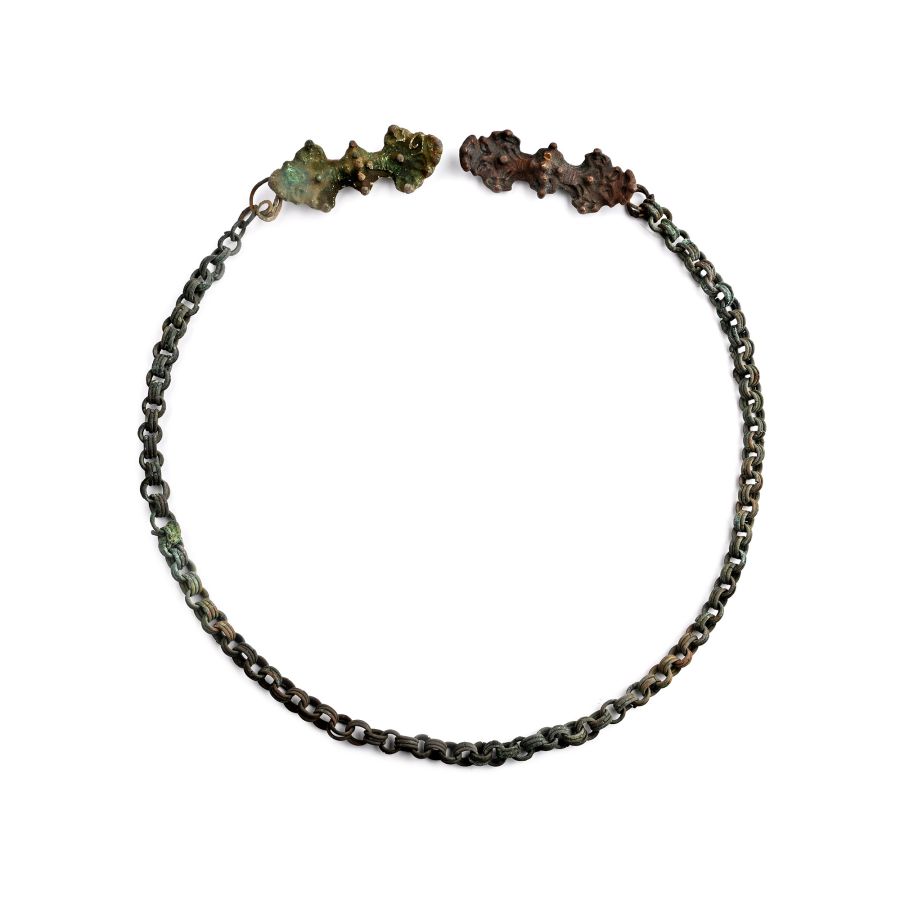
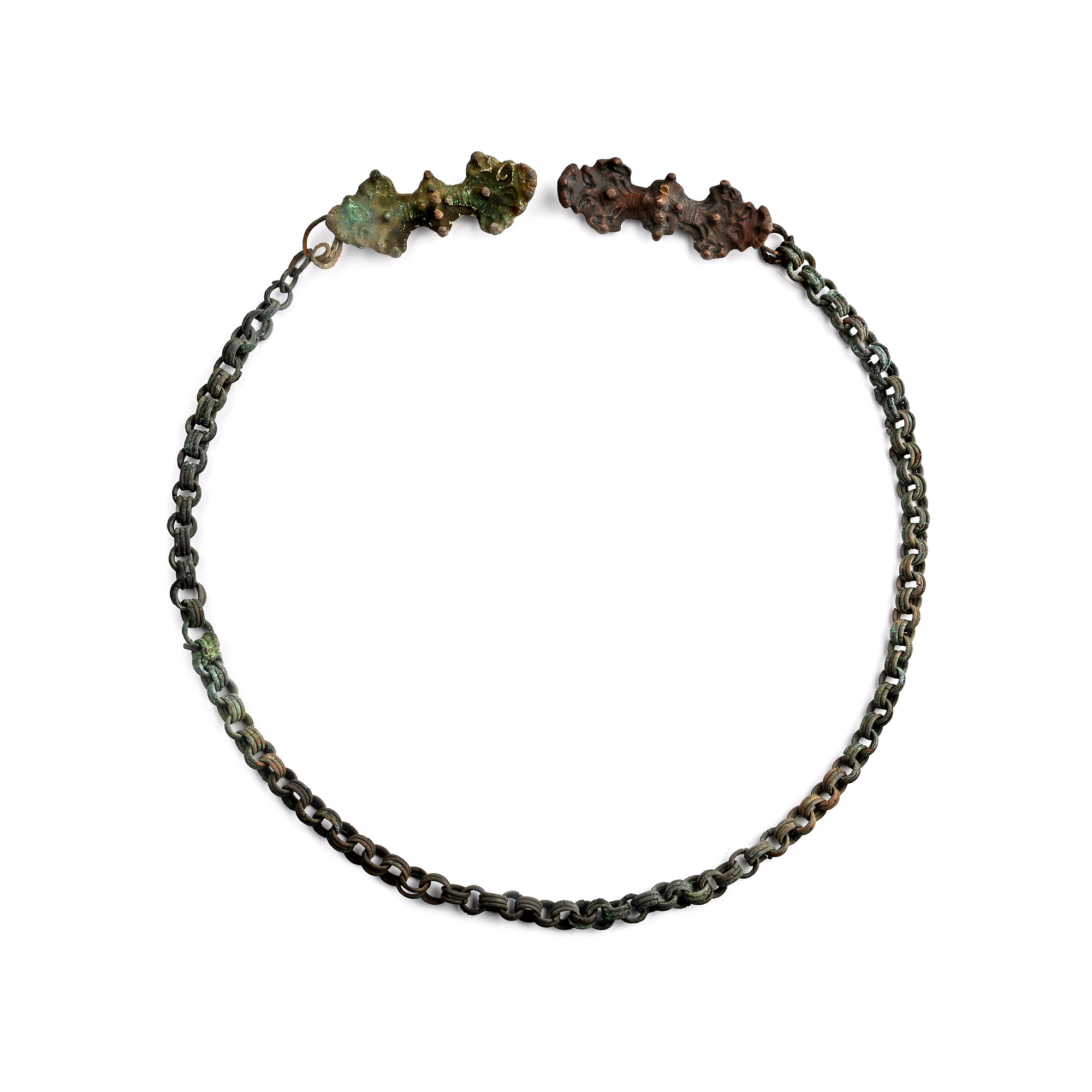
Viking Age Bronze Chained Equal-Arm Brooch Set
CIRCA 10TH CENTURY A.D.
30 3/4 in. (252 grams total, 78 cm long).
Each link in the chain composed of three separate hoops, the equal-arm brooches with decoration in high-relief and remains of pin-lugs and catchplate to reverse.
ProvenanceFrom the collection of a North American gentleman, formed in the 1990s.
LiteratureCf. Arbman, H., Birka I: Die Gräber, Uppsala, 1940, pl.80.
CONDITIONTimeLine Auctions follows a vetting process to ensure the authenticity and legality of all items, reinforcing our commitment to integrity and responsible trading. Each antiquity, antique, and coin lot undergoes thorough examination by a vetting committee of at least ten external specialists, professional trade association members, scientists, and archaeologists: Our Vetting Process
AUCTIONS:
TimeLine is a leading auction house specialising in antiquities, ancient art, collectables, natural history, coins, medals, and books. Our auctions offer museums, collectors, historians, and enthusiasts the opportunity to acquire unique and historically significant pieces.
LOT 0321
Viking Age Bronze Chained Equal-Arm Brooch Set
Estimate £800 - 1,000€930 - 1,160 (for guidance only)$1,080 - 1,350 (for guidance only)
-
.jpg)
Pre-Viking Bronze Ring with Thor's Hammer and Beads
6th-8th century A.D.Sold for (Inc. bp): £520
Suspension loop with four spherical glass beads and a miniature hammer with a braided loop. 6.24 grams, 43.83 mm overall, 14.52 x 9.78 mm internal diameter (approximate size British F, USA 2 3/4, Europe 3.67, Japan 3)
From the private collection of a London gentleman, from his grandfather's collection formed before the early 1970s. -
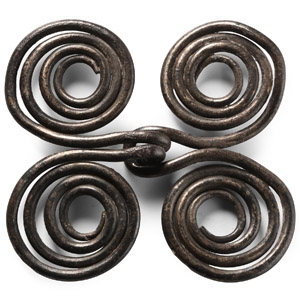
Scandinavian Pre-Viking Silver Wrist Clasp Pair
5th century A.D.Estimate: £200 - 300 (+bp*)
Opening Bid: £100
Spiral-coiled wrist-clasps of Hines's Class A with one broad rounded loop to the centre and one returned hooked loop. 11.5 grams total, 36-38 mm
Ex property of a gentleman; acquired in the 1970s.
The spiral-coil type of wrist clasp is the earliest form of an artefact type which became a very popular costume element in especially Norway and the English East Midlands in the early Anglo-Saxon Period. Grave-finds indicate that they were used to secure the cuffs of robes worn by high-status women. -
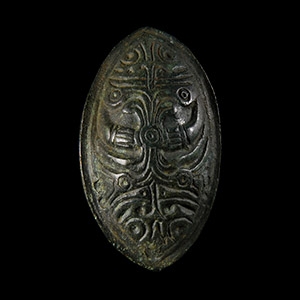
Viking Age Bronze Tortoise Brooch
Circa 10th century A.D.Sold for (Inc. bp): £572
Displaying high-relief palmette ornament, omega-shaped panels and other ornament; catch and two transverse bars to the reverse. 67.4 grams, 81 mm
From the collection of a North American gentleman, formed in the 1990s.
