
Loading, please wait...
LOT 1589
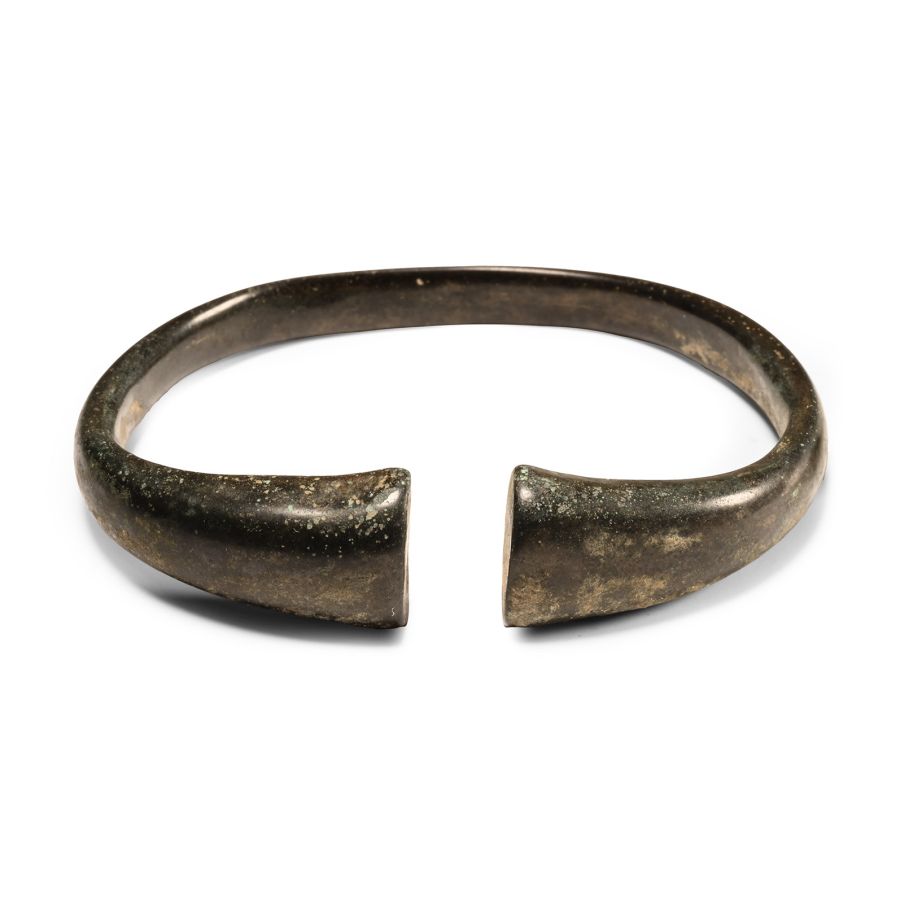
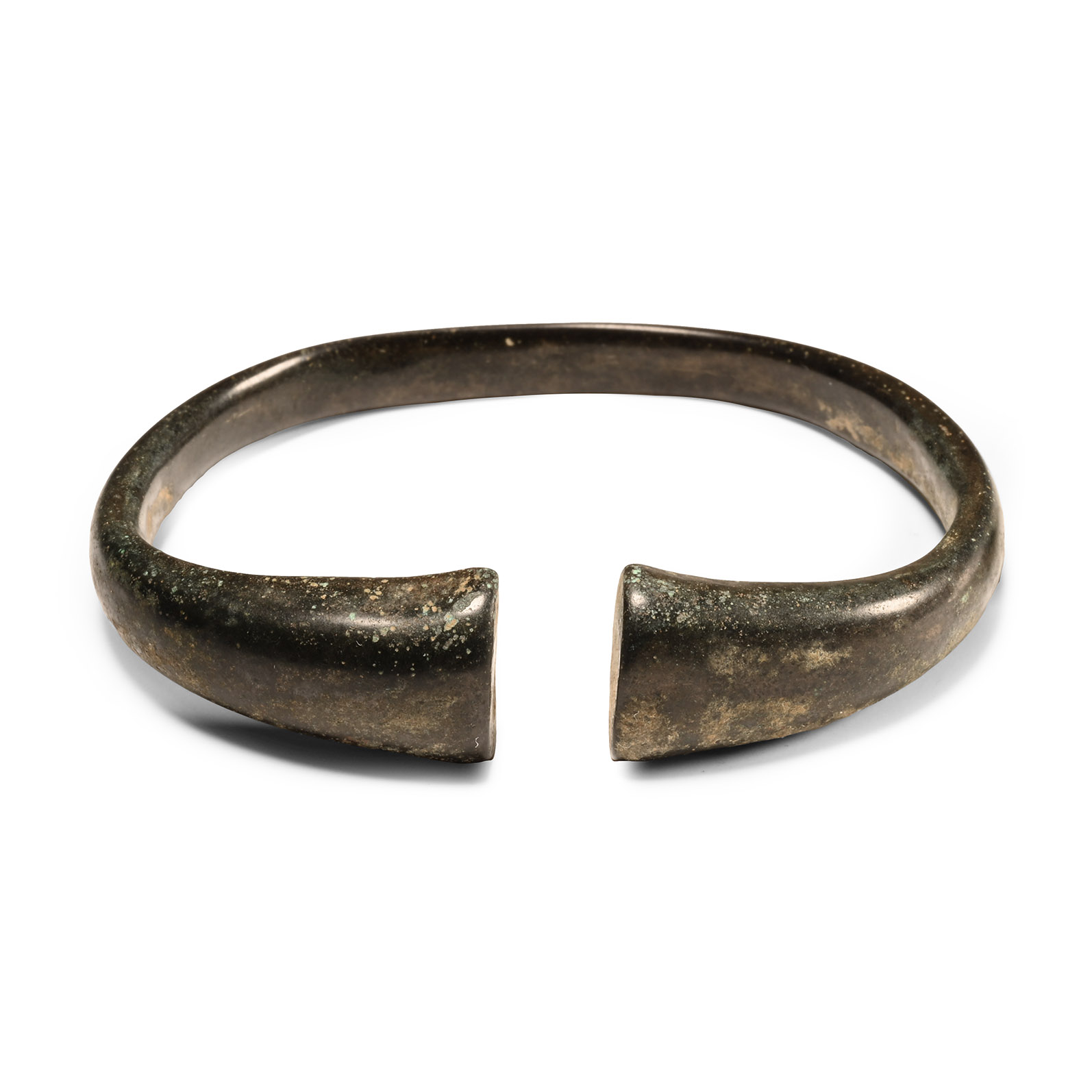
Viking Age Bronze Bracelet with Club Terminals
CIRCA 9TH-11TH CENTURY A.D.
2 1/4 in. (35.1 grams, 58 mm).
Penannular with thick clubbed terminals. [No Reserve]
ProvenanceFrom a London collection; acquired on the UK and European art markets before 2001.
LiteratureCf. Sedov, B.B., Finno-Ugri i Balti v Epokhi Srednevekovija, Moscow, 1987, pl.CXXI (15).
CONDITIONTimeLine Auctions follows a vetting process to ensure the authenticity and legality of all items, reinforcing our commitment to integrity and responsible trading. Each antiquity, antique, and coin lot undergoes thorough examination by a vetting committee of at least ten external specialists, professional trade association members, scientists, and archaeologists: Our Vetting Process
AUCTIONS:
TimeLine is a leading auction house specialising in antiquities, ancient art, collectables, natural history, coins, medals, and books. Our auctions offer museums, collectors, historians, and enthusiasts the opportunity to acquire unique and historically significant pieces.
-
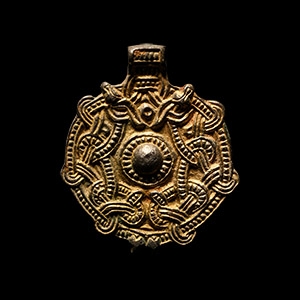
Viking Age Scandinavian Silver-Gilt Pendant with Interlaced Beasts
Circa 10th century A.D.Sold for (Inc. bp): £780
Discoid with integral loop; obverse with applied filigree Terslev ornament of three radiating looped knots and interstitial loops, boss to the centre. 13.9 grams, 42 mm
Private collection formed in Europe in the 1980s. Westminster collection, central London, UK. -
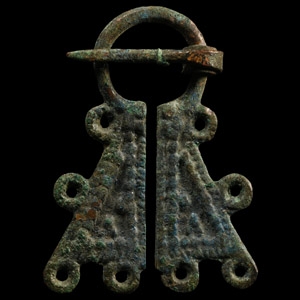
Viking Inspired Bronze Omega Penannular Brooch
12th-14th century A.D.Sold for (Inc. bp): £39
A flat-section Mordvinian type brooch comprising a penannular band and two trapezoidal plates; the tongue round-section with flat scroll around the band; the plates each with raised pellets and four pierced lugs to the outer edges. 12.4 grams, 55 mm
Ex property of an Essex gentleman. Property of a Scottish collector, acquired in 2013. -
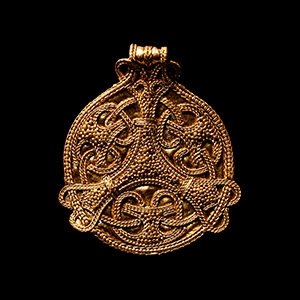
Viking Age Scandinavian Gold Filigree Pendant with Terslev Motif
Circa 9th-11th century A.D.Sold for (Inc. bp): £7,800
Disc with integral loop secured at the reverse; obverse with applied filigree Terslev ornament of three radiating looped knots and interstitial loops. 7.99 grams, 40 mm
Private collection formed in Europe in the 1980s. Westminster collection, central London, UK. This lot has been checked against the Interpol Database of stolen works of art and is accompanied by search certificate no.12113-212333.
