
Loading, please wait...
LOT 1424
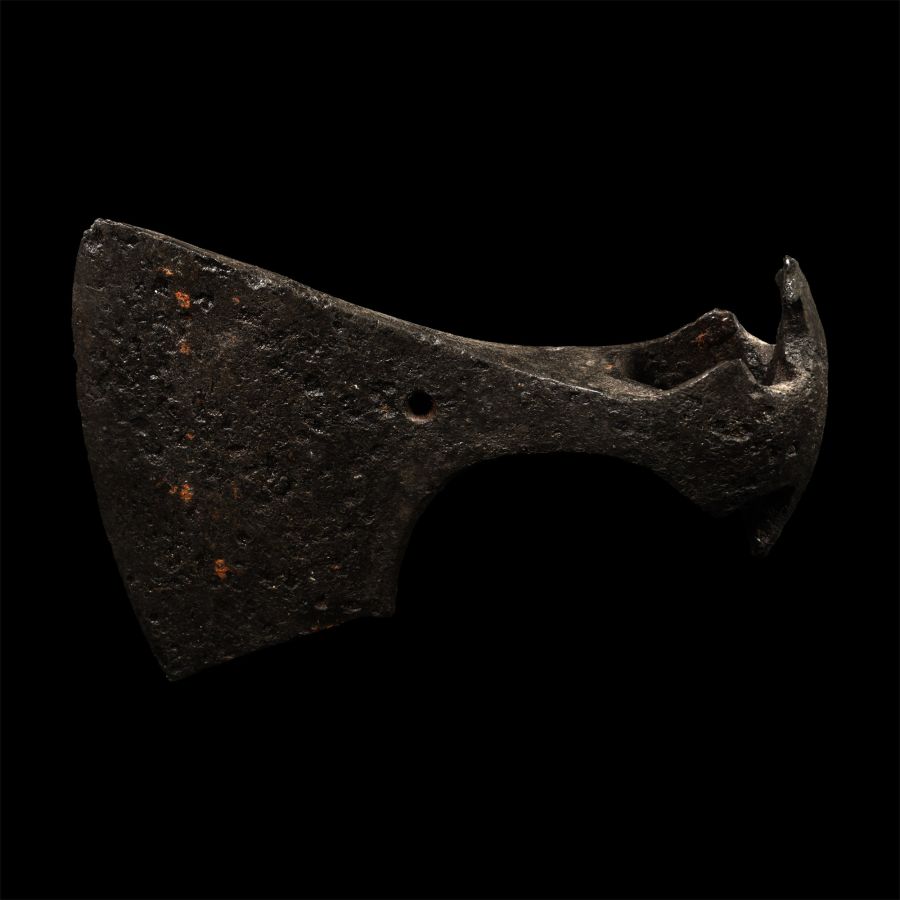
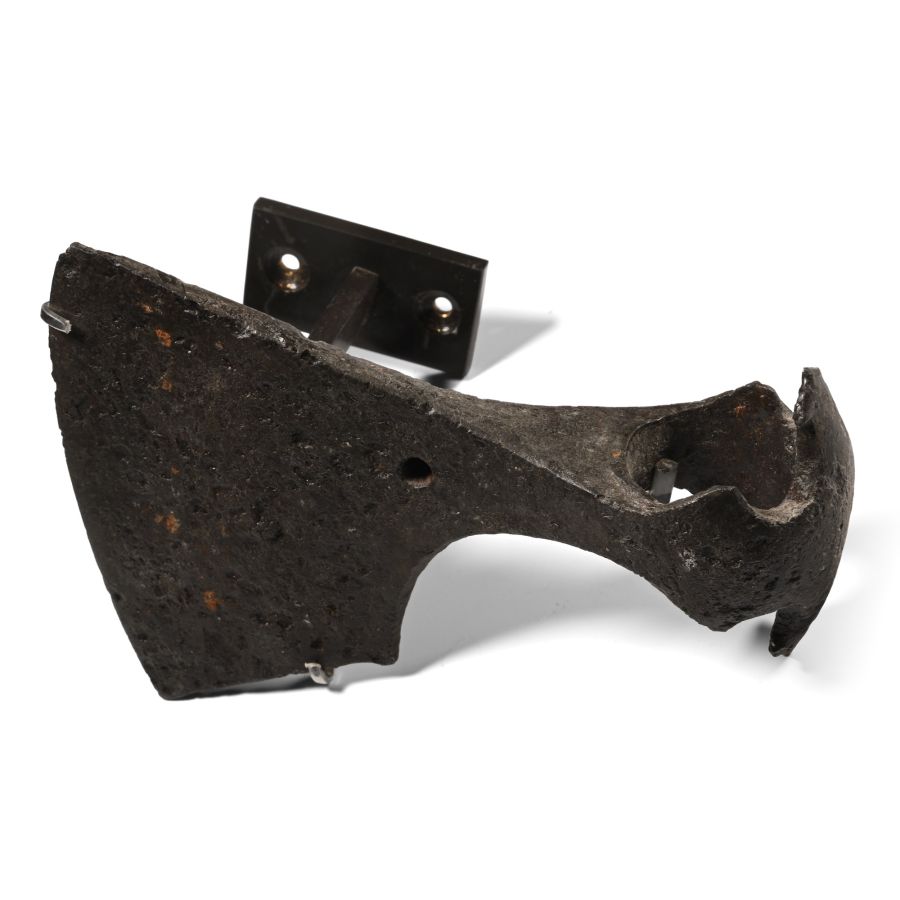
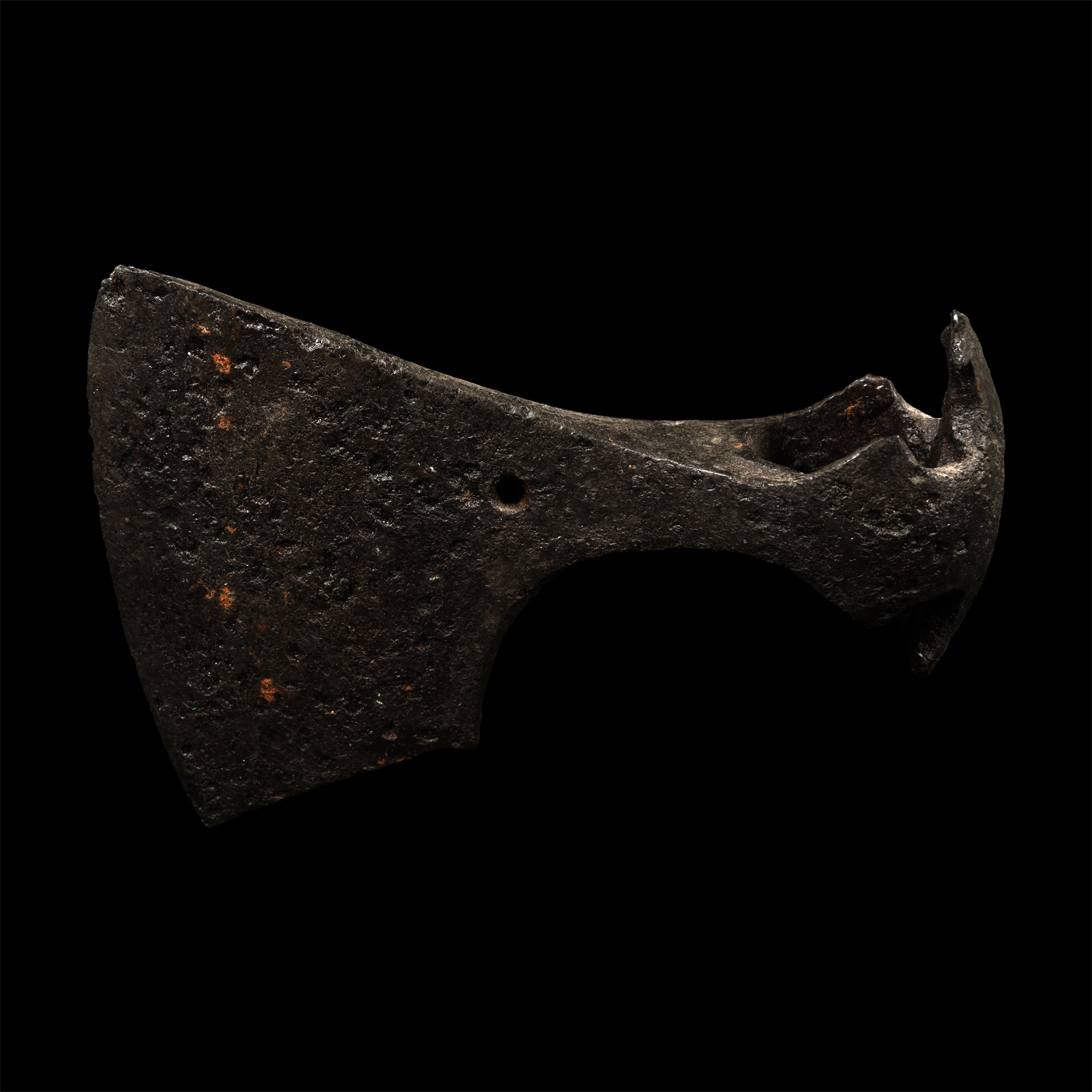
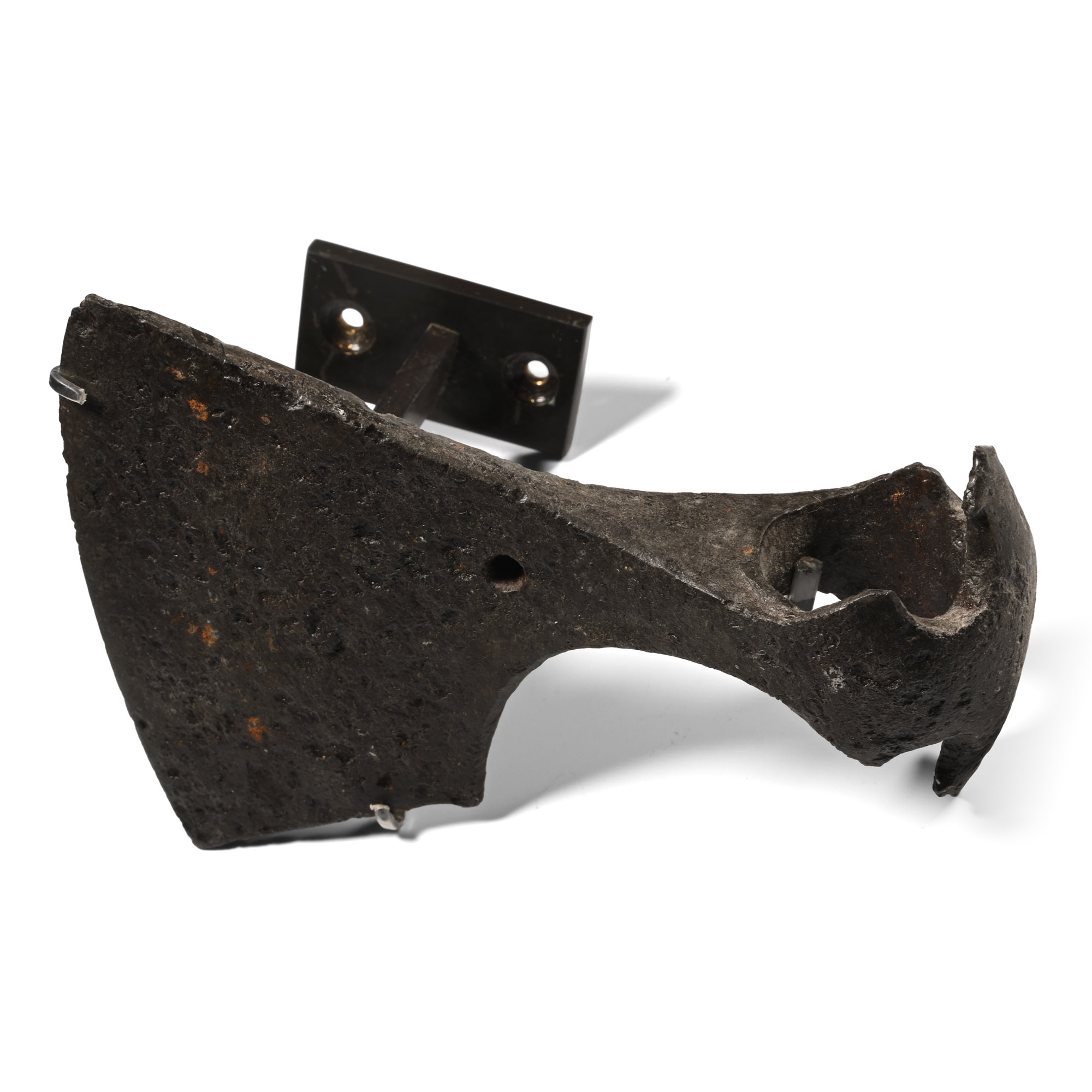
Viking Age Bearded Battle Axehead
EARLY 11TH-12TH CENTURY A.D.
5 3/4 in. (532 grams total, axe: 14.7 cm).
A Baltic hand-forged iron axehead with scooped socket, broad blade with extension to the lower edge, hole to the blade.
ProvenanceAcquired on the London art market, 1990s.
Private collection, London.
This lot is accompanied by an illustrated lot declaration signed by the Head of the Antiquities Department, Dr Raffaele D'Amato.
Cf. Sedov, B.B., Finno-Ugri i Balti v Epokhi Srednevekovija, Moscow, 1987, table V, item 20; see also similar specimen in the British Museum inv. no.1852,0329.473.
FootnotesThe more common weapons of Finno-Ugrian people were axes, commonly found from all Finnic areas, as well as spears. Among Baltic-Finnic people, especially in Finland and Karelia, knives called 'puukko' were common, as well as axes, spears, flat bows and longbows, while swords were usually imported from Germanic areas, Sweden or from elsewhere Scandinavia, some having often typically Scandinavian animal ornaments. Iron axeheads of this typology show a sub-trapezoidal asymmetrical blade, often perforated through the centre. They are characterised by two projecting spurs from the top and the bottom of the back of the shaft-hole.
CONDITIONTimeLine Auctions follows a vetting process to ensure the authenticity and legality of all items, reinforcing our commitment to integrity and responsible trading. Each antiquity, antique, and coin lot undergoes thorough examination by a vetting committee of at least ten external specialists, professional trade association members, scientists, and archaeologists: Our Vetting Process
AUCTIONS:
TimeLine is a leading auction house specialising in antiquities, ancient art, collectables, natural history, coins, medals, and books. Our auctions offer museums, collectors, historians, and enthusiasts the opportunity to acquire unique and historically significant pieces.
-
Bactrian Bronze Axehead
3rd-2nd millennium B.C.Estimate: £400 - 600 (‡+bp*)
Opening Bid: £200
With curved flaring cutting edge, characteristic curving shape and narrow socket, blade end squaring off, shaft hole pierced on both sides. 227 grams, 10.6 cm
Acquired in the mid 1980s-1990s. Private collection, Switzerland, thence by descent. Private collection, since the late 1990s. This lot is accompanied by an illustrated lot declaration signed by the Head of the Antiquities Department, Dr Raffaele D'Amato.
These collared axes have the specific feature of being equipped with variously shaped rear extensions. The provenance of this typology is clearer than others: these axes came from Margiana and southern Bactria. Gonur Depe and Susa yielded a rather atypical and probably imported example. P. Amiet suggests that they were an adoption of Elamite material, from conceptual and institutional models. They would have developed from the end of the 3rd and the beginning of the 2nd millennium B.C. -
Luristan Bronze Spearhead
13th-7th century B.C.Sold for (Inc. bp): £286
Composed of a leaf-shaped blade with tapering socket. 355 grams, 44 cm
Acquired 1980-2015. Ex Abelita family collection. This lot is accompanied by an illustrated lot declaration signed by the Head of the Antiquities Department, Dr Raffaele D’Amato. This lot is accompanied by an illustrated lot declaration signed by the Head of the Antiquities Department, Dr Raffaele D'Amato. -
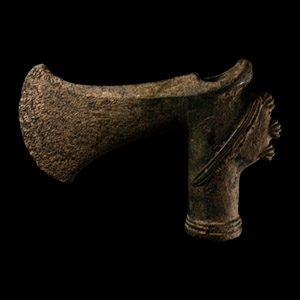
Luristan Socketted Bronze Axe Head
12th-8th century B.C.Estimate: £500 - 700 (‡+bp*)
Opening Bid: £225
Comprising a wide curving blade and long neck with a band of herringbone decoration at the base, tubular neck with claw-like extension to the rear and a decorative diagonal band to both sides. 308 grams, 10.6 cm
Acquired on the Swiss art market, 1997. Private collection, Europe. This lot is accompanied by an illustrated lot declaration signed by the Head of the Antiquities Department, Dr Raffaele D'Amato.
