
Loading, please wait...
LOT 1073
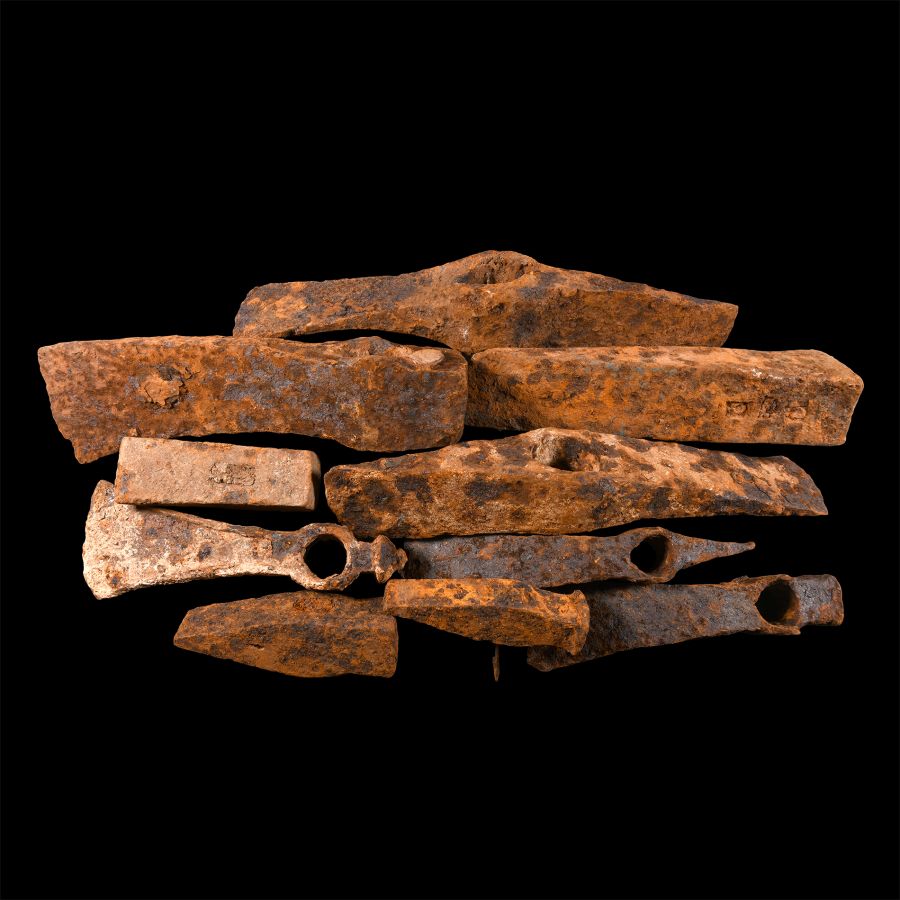
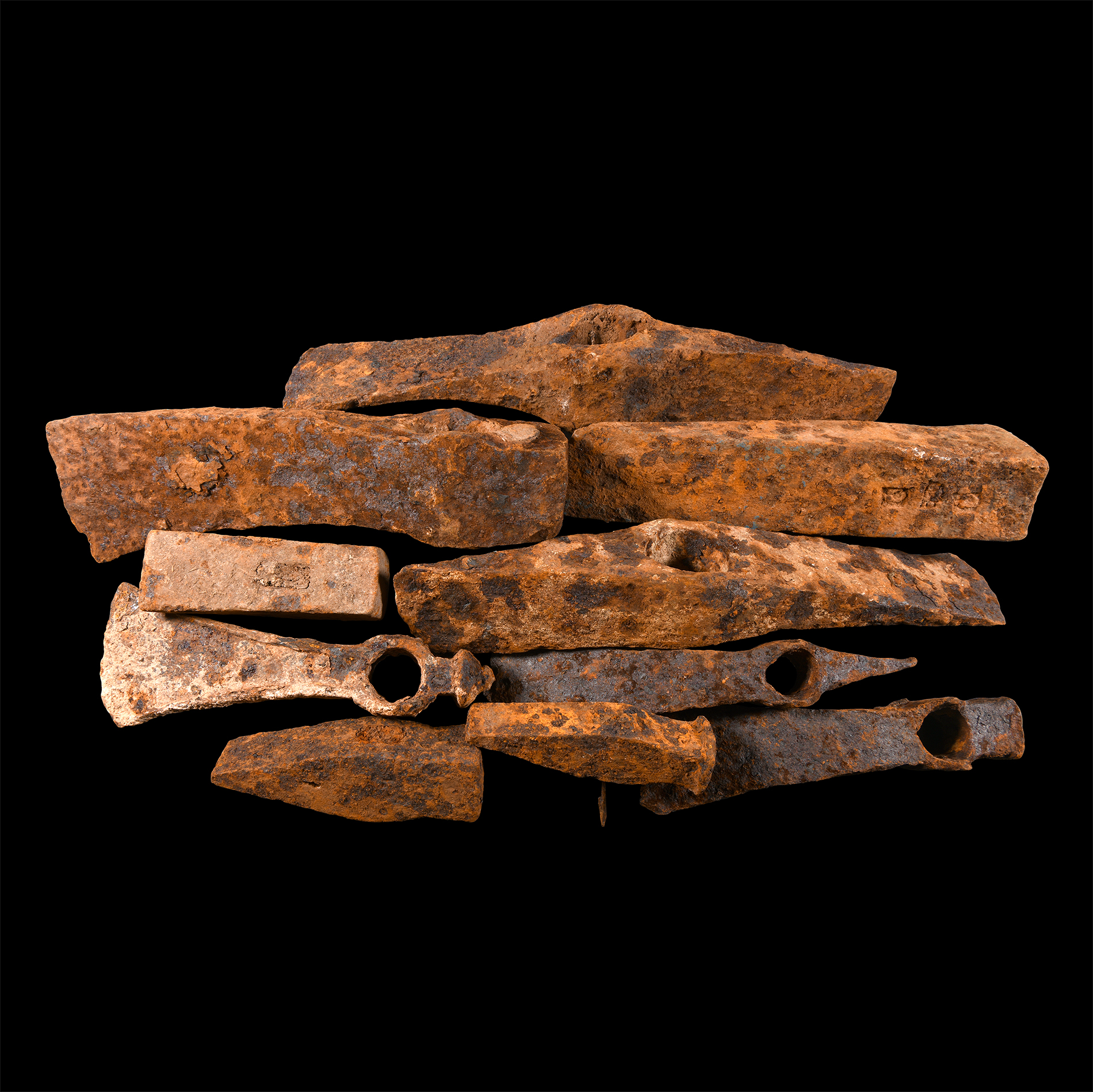
Viking Age And Later Iron Axehead Group
CIRCA 11TH-18TH CENTURY A.D.
4 3/4 - 10 1/2 in. (7.8 kg total, 9.5-26.5 cm).
Composed of socketted axeheads, hammer heads, adze-axes and wedges of various types; including examples stamped with maker's marks. [10]
ProvenanceAcquired 1990s-early 2000s.
East Anglian private collection.
TimeLine Auctions follows a vetting process to ensure the authenticity and legality of all items, reinforcing our commitment to integrity and responsible trading. Each antiquity, antique, and coin lot undergoes thorough examination by a vetting committee of at least ten external specialists, professional trade association members, scientists, and archaeologists: Our Vetting Process
AUCTIONS:
TimeLine is a leading auction house specialising in antiquities, ancient art, collectables, natural history, coins, medals, and books. Our auctions offer museums, collectors, historians, and enthusiasts the opportunity to acquire unique and historically significant pieces.
LOT 1073
Viking Age And Later Iron Axehead Group
Estimate £100 - 140€120 - 160 (for guidance only)$140 - 190 (for guidance only)
-
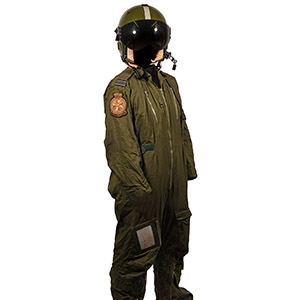
Mk3C Fighter Flying Helmet and Suit
1980s A.D.Sold for (Inc. bp): £572
Including MK 9 flying suit coveralls (for height 162-172cm, weight greater than 72.64 kg, size 4) with insignia to 825 Squadron (Fleet Air Arm) on shoulder and sewn cleaning and user instruction labels to the interior, shoulders with Flt Lieutenant Officer rank slides; MK3C flying helmet with clear and smoked visors, pig skin and blue velvet lining with electrical headset and adjustable microphone with radio lead and plug; Air Ministry label to interior reading 'Serial number 26396 Large Mk 3C' and AM 'crow's foot'. 2.9 kg, 29 cm
Acquired from J C Militaria, UK. The Kusmirek Collection, UK. Accompanied by a copy of JCM listing details and brief squadron research.
825 Squadron was originally formed in 1934 and served during WWII; it was reformed on the outbreak of the Falklands War in 1982 and equipped with ten Sea King helicopters; the squadron was disbanded in September 1982. -
.jpg)
Evans Transitional 34-Shot Musket
1866-1867 A.D.Sold for (Inc. bp): £1,404
By Evans Repeating Co, with 71 cm (28") round barrel with 34 shot tubular magazine in butt and hinged back-sight, two-piece wood stock with steel butt plate, sling swivels, and collars; action working well and believed only 150 made. 3.85 kg, 117 cm
Acquired from M J Noble Ltd, UK, 2015. The Kusmirek Collection, UK. Accompanied by copies of the purchase invoice and listing.
Sold as an exempt item under Section 58 (2) of the Firearms Act, 1968, to be held as a curiosity or ornament. No license required but buyer must be over 18 years of age. Overseas bidders should note that, due to UK regulations governing export of all firearms, overseas buyers will need to make arrangements for shipping this lot out of the UK directly, by air freight, with a specialist company or agent. -
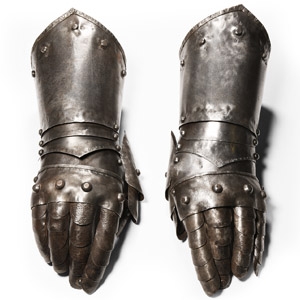
European Articulated Gauntlet Pair
Circa 1600 A.D.Sold for (Inc. bp): £1,690
Each with nail detailing to the thumb and sprays of dashes decorating the edges, ridges and rivets of certain plates; leather lining possibly not original and rivets possibly re-fitted. 1.35 kg total, 35 cm each
Acquired from Peter Bunting Antiques. The Kusmirek Collection, UK. Accompanied by copies of an invoice and previous listing.
