
Loading, please wait...

LOT 1019
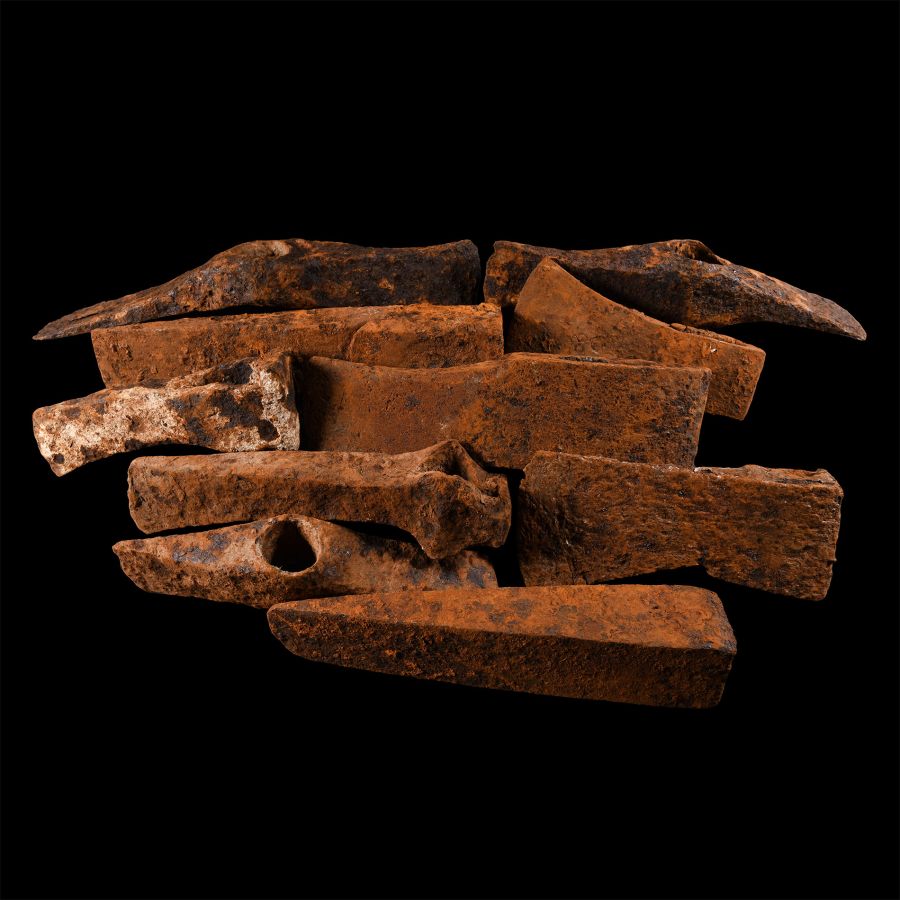
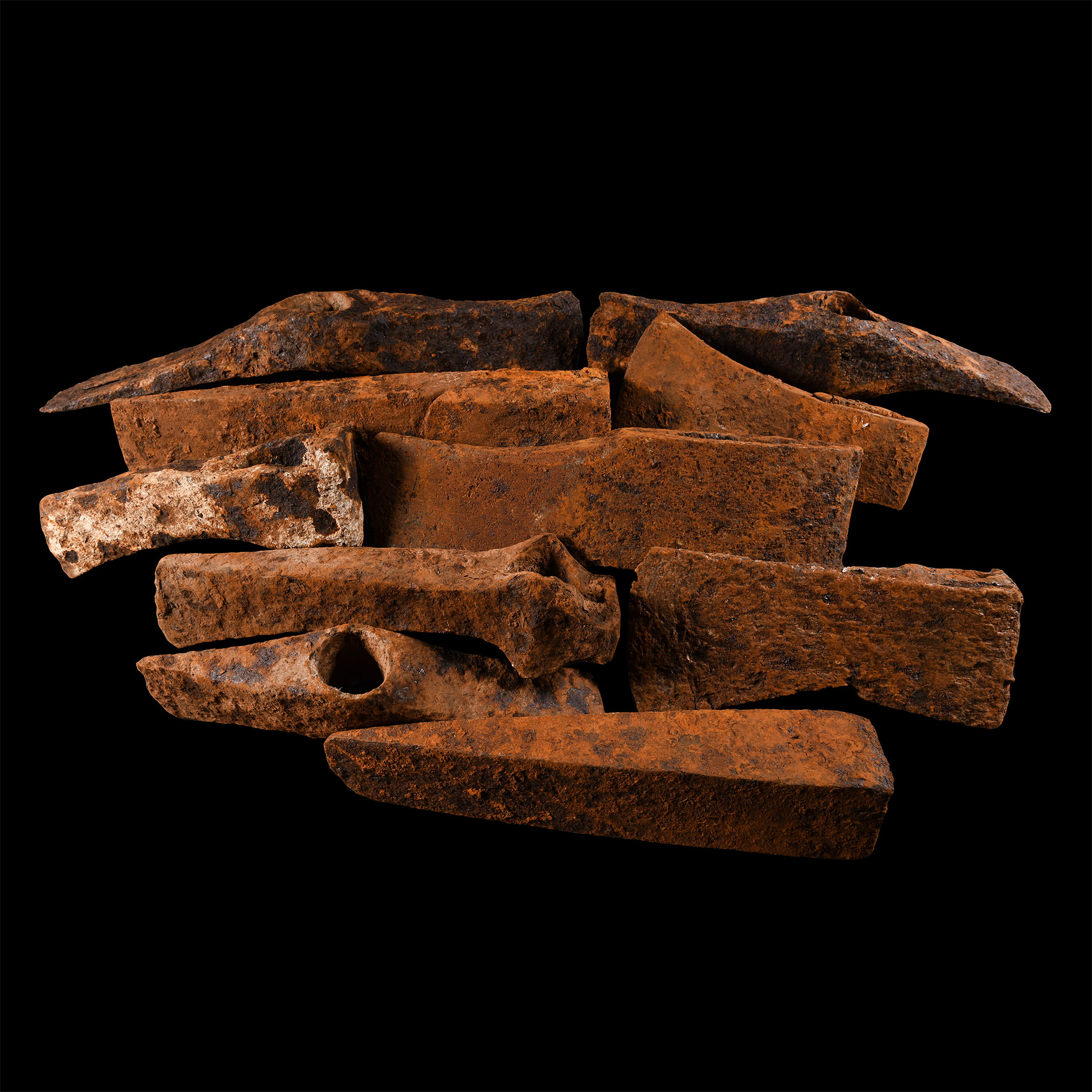
Viking Age and Later Iron Axehead Group
10TH-18TH CENTURY A.D.
5 1/2 - 10 3/4 in. (11.7 kg total, 14-27.5 cm).
Mainly comprising socketted axeheads, adze-axes, wedges and other items; some stamped with maker's marks. [10]
ProvenanceAcquired 1990s-early 2000s.
East Anglian private collection.
TimeLine Auctions follows a vetting process to ensure the authenticity and legality of all items, reinforcing our commitment to integrity and responsible trading. Each antiquity, antique, and coin lot undergoes thorough examination by a vetting committee of at least ten external specialists, professional trade association members, scientists, and archaeologists: Our Vetting Process
AUCTIONS:
TimeLine is a leading auction house specialising in antiquities, ancient art, collectables, natural history, coins, medals, and books. Our auctions offer museums, collectors, historians, and enthusiasts the opportunity to acquire unique and historically significant pieces.
-
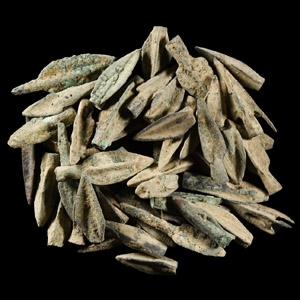
Greek Bronze Arrowhead Group
5th-3rd century B.C.Sold for (Inc. bp): £104
Mainly comprising socketted arrowheads of triangular type, including at least one barbed and one tanged example. 213 grams total, 32-56 mm
Ex private collection, 1980s. Acquired on the UK art market in the 1990s. -
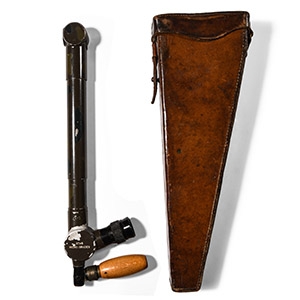
French WWII Trench Periscope
1940s A.D.Estimate: £100 - 140 (+bp*)
Opening Bid: £33
Aluminium rotating bodied vertical trench periscope with camouflage finish, marked 'GT=6 / MICRO:GRADES' to one side and M.G. / No.34185' to other, fitted with hinged wood handle; including original leather case with loops for belt/webbing. 1.36 kg, 40 cm
The Kusmirek Collection, UK. -
.jpg)
Georgian Flintlock Brass Blunderbuss with Spring Bayonet
18th century A.D.Sold for (Inc. bp): £2,340
Featuring steel flintlock action and spring-hinged triangular section bayonet with sliding retaining catch; the wood stock fitted with brass butt plate, side plate, trigger guard, ramrod mounts and escutcheon; a wood ramrod with brass ram tip and steel screw extractor fitted to underside of barrel; the barrel numbered 'A098' to right side near lock and the bayonet with number '86' at hinge; traces of original blued finish to lock; the lock and bayonet mechanisms in working order. 2.64 kg, 97 cm overall
Acquired 1960s-1990s. Late Alison Barker collection, a retired London barrister.
Sold as an exempt item under Section 58 (2) of the Firearms Act, 1968, to be held as a curiosity or ornament. No license required but buyer must be over 18 years of age. Overseas bidders should note that, due to UK regulations governing export of all firearms, overseas buyers will need to make arrangements for shipping this lot out of the UK directly, by air freight, with a specialist company or agent.
