
Loading, please wait...
LOT 1067
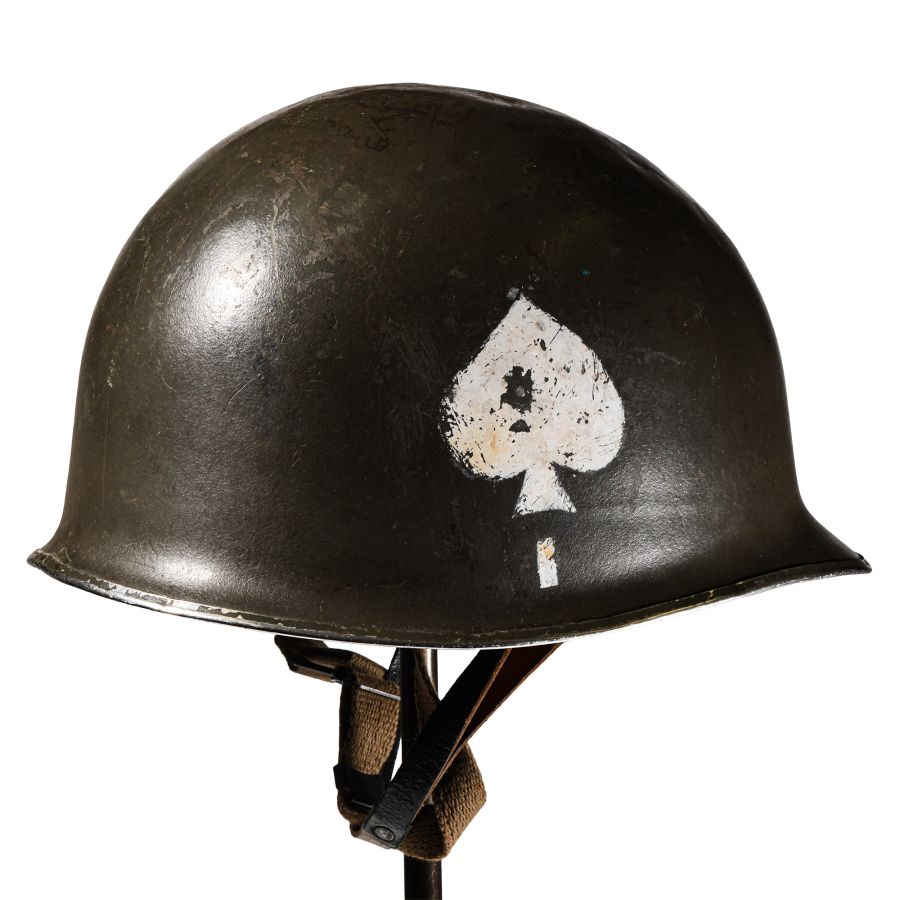
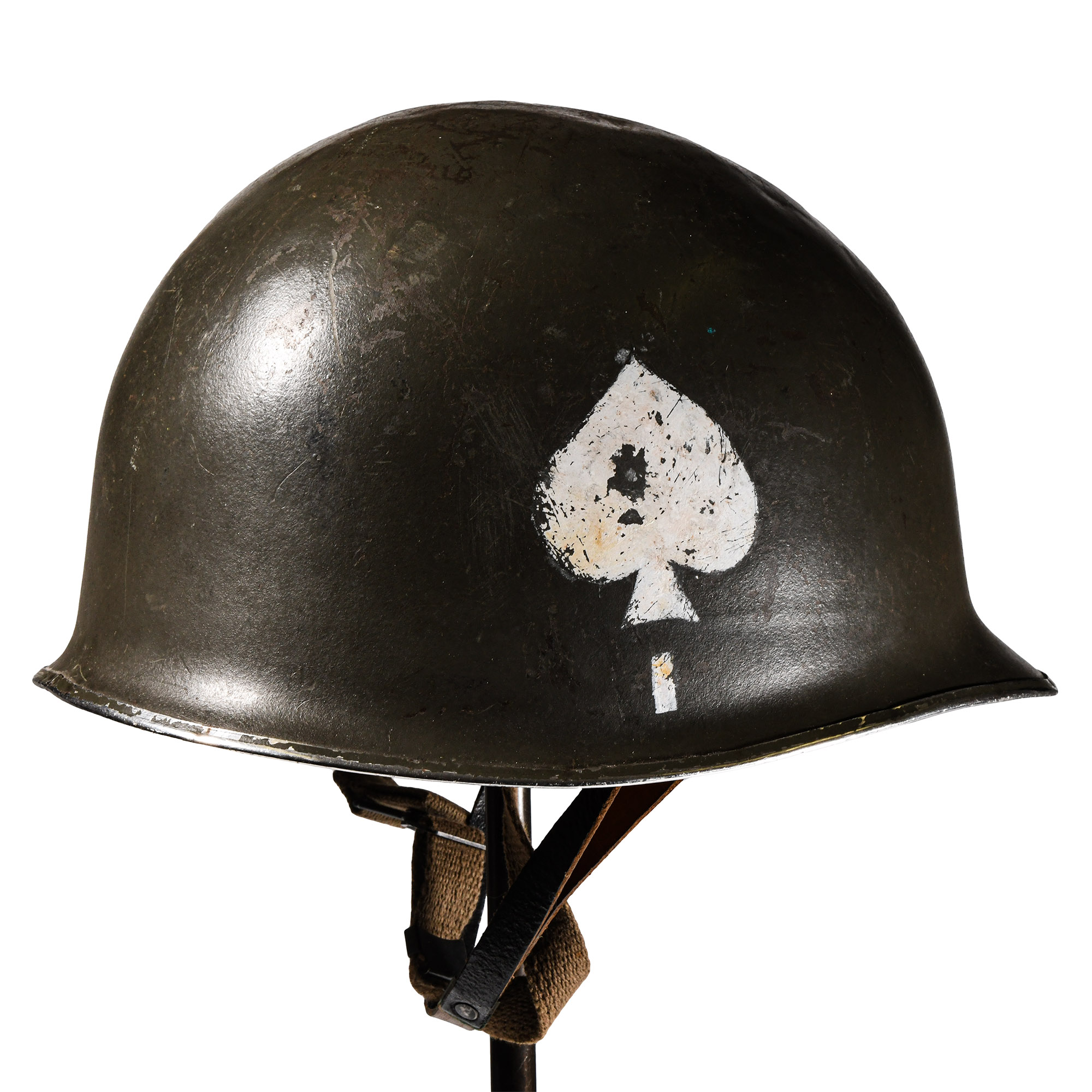
Vietnam M1 Helmet
1950-1970 A.D. OR LATER
11 1/4 in. (1.5 kg, 28.5 cm wide).
American Vietnam War era helmet with composition liner with leather lining; leather and fabric chin strap; ace over 1 painted to one side in white. [No Reserve]
ProvenanceThe Kusmirek Collection, UK.
CONDITIONTimeLine Auctions follows a vetting process to ensure the authenticity and legality of all items, reinforcing our commitment to integrity and responsible trading. Each antiquity, antique, and coin lot undergoes thorough examination by a vetting committee of at least ten external specialists, professional trade association members, scientists, and archaeologists: Our Vetting Process
AUCTIONS:
TimeLine is a leading auction house specialising in antiquities, ancient art, collectables, natural history, coins, medals, and books. Our auctions offer museums, collectors, historians, and enthusiasts the opportunity to acquire unique and historically significant pieces.
-
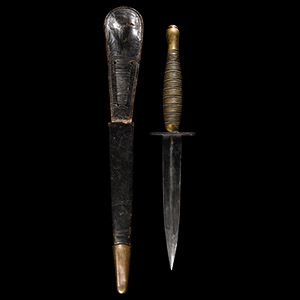
British Fairbairn-Sykes 'Beaded and Ringed' Commando Dagger in Scabbard
Circa 1942 A.D.Sold for (Inc. bp): £715
By Rodgers, with finely shaped 15cm stiletto blade with traces of original black finish tapering to a steel oval guard and fitted with a brass 'beaded and ringed' shaped hilt secured by a copper pommel nut; the hilt bearing the War Department 'broad arrow' and '2' marks near to the guard; with the original leather scabbard fitted with brass rivets and chape, pierced for belt wear and with the side flaps for sewing cut away as commonly seen when belt worn; the dagger showing wear with minor chipping to the blade. 254 grams, 33 cm overall
Property of a Luton, UK gentleman, by inheritance.
In the autumn of 1942, the Rodgers firm produced what many consider to be the best of all the wartime Fairbairn-Sykes knives: the 'Beads and Ridges' model (or 'Beaded and Ringed'); so-called for its distinctive grip pattern to the brass hilt of single rings of tiny beads, interspersed between sections of four to seven plain rings. The blade is delicate and uniform, and the weapon, though light, is well balanced. The blade finish was black (as this example) or nickel. All of this type are considered to be at least scarce. According to both Fredrick Stephens and Leroy Thompson the type was a commercial variant for private purchase; however, there are some rare cases of this type which were officially issued with the War Department broad arrow and number marks, as with this example. -
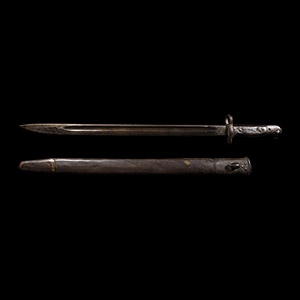
Siamese 'Wild Tigers Corps' Type 62 Pattern 1907 Bayonet and Scabbard
Dated 1919 A.D.Sold for (Inc. bp): £78
Stamped 2642 in Thai numerals at top of blade with 'tiger mask' mark for Siam, together with original British marks, fitted with wood grip scales and spring release button; the scabbard with original throat and chape, modified in Thailand to replace the original leather main section. 726 grams, 58.5 cm
Property of a Luton, UK gentleman, by inheritance.
The Type 62 is a re-badged British Pattern 1907 bayonet. Siam purchased 10,000 SMLE rifles and Pattern 1907 bayonets from Britain in 1919 to equip the 'Wild Tiger Corps', royal bodyguard of Vajiravudh, King Rama VI (reigned 1910–1925). The tiger figural on the ricasso is representative of the Wild Tiger Corps. Year 2462 on the Buddhist Calendar corresponds to 1919. SMLE rifles and Pattern 1907 bayonets were taken from British stocks, refurbished by Birmingham Small Arms (BSA), and remarked with Siamese markings. The bayonets were shipped with standard steel-mounted leather scabbards. However, the leather rapidly deteriorated in the tropical climate, so the Siamese made a replacement steel scabbard body to which the original steel mounts were brazed. -
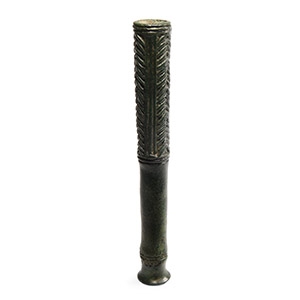
Elamite Bronze Macehead
Early 2nd millennium B.C.Sold for (Inc. bp): £312
Of tapering cylindrical form with flange to socket, the upper body displaying vertical columns of chevrons between plain bands. 449 grams, 23 cm
Acquired 1980-2015. Ex Abelita family collection.
This gorz mace head belongs to the category of truncheon-shaped mace-heads, a type developed on the Iranian plateau during the Bronze Age, used by Elamite and Luristan warriors since the 3rd millennium B.C. This category of objects was also interpreted as a part of a shaft or cudgel, but most scholars agree on the interpretation of use as a mace.
