
Loading, please wait...
LOT 1153
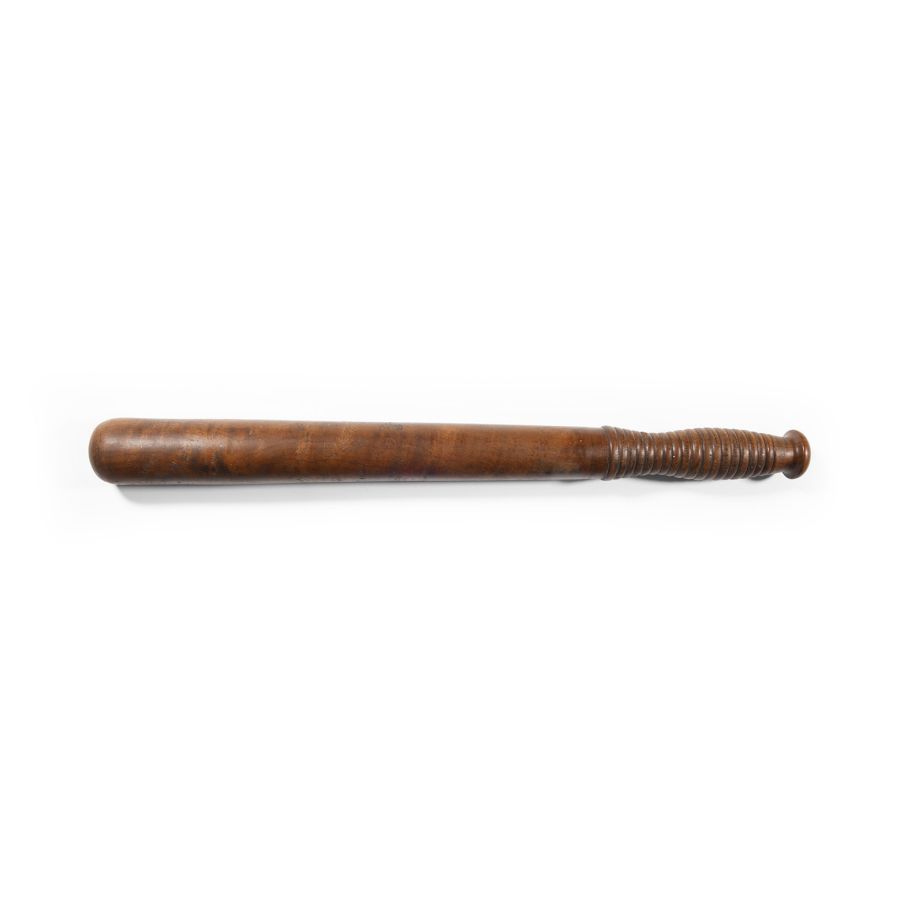
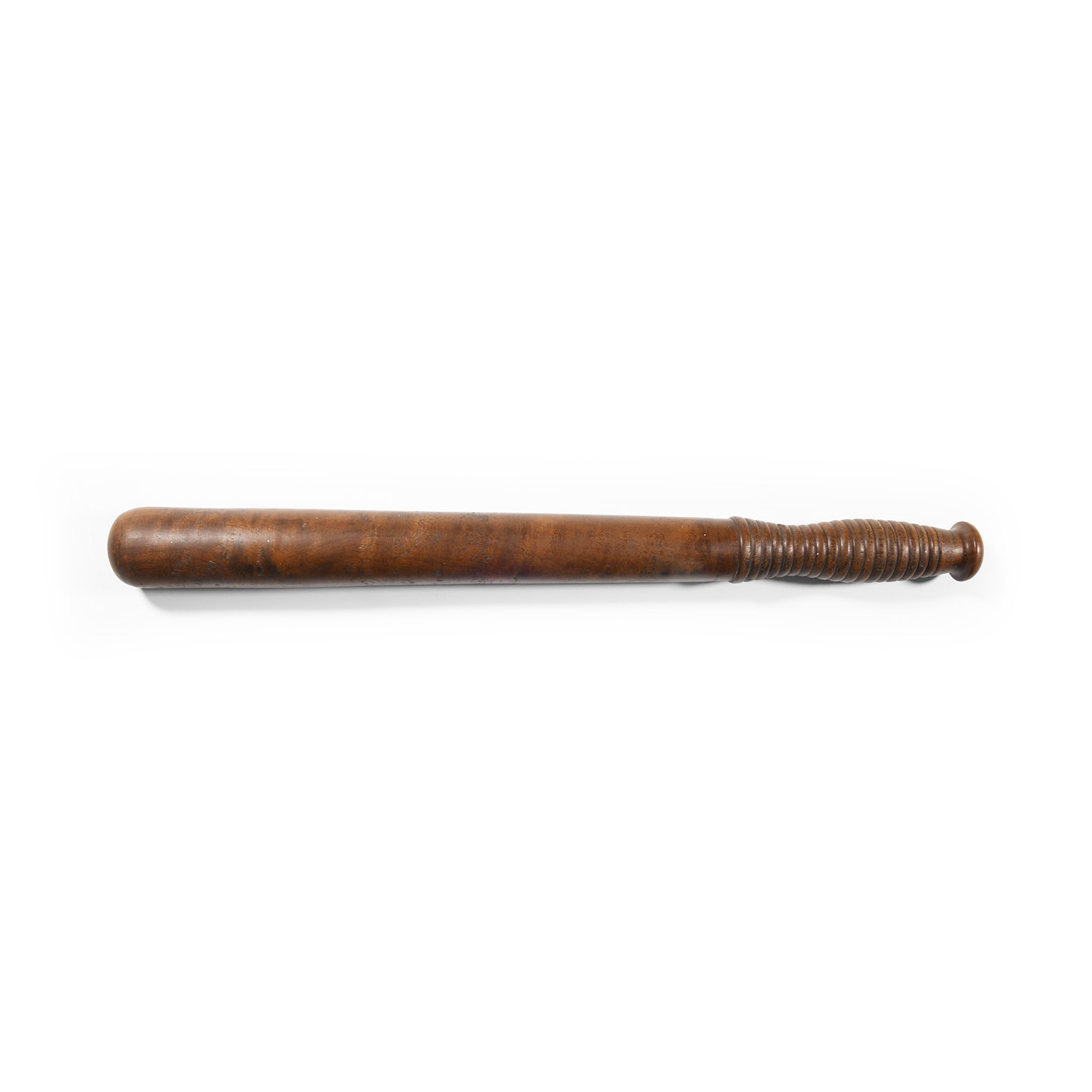
Victorian Police Truncheon
19TH CENTURY A.D.
17 in. (309 grams, 43 cm).
Composed of a tapering wooden blunt-tipped shaft, waisted grip with raised ribs and 'button' terminal. [No Reserve]
ProvenanceThe Kusmirek Collection, UK.
CONDITIONTimeLine Auctions follows a vetting process to ensure the authenticity and legality of all items, reinforcing our commitment to integrity and responsible trading. Each antiquity, antique, and coin lot undergoes thorough examination by a vetting committee of at least ten external specialists, professional trade association members, scientists, and archaeologists: Our Vetting Process
AUCTIONS:
TimeLine is a leading auction house specialising in antiquities, ancient art, collectables, natural history, coins, medals, and books. Our auctions offer museums, collectors, historians, and enthusiasts the opportunity to acquire unique and historically significant pieces.
-
.jpg)
English Medieval Iron Kidney Dagger
Late 15th-early 16th century A.D.Sold for (Inc. bp): £1,170
Comprising a single-edged blade, whittle tang and cylindrical grip terminating in a bulbous openwork pommel. 178 grams, 31 cm
Acquired 1960s-1990s. Late Alison Barker collection, a retired London barrister.
Carried universally throughout Europe, the kidney dagger or ballock dagger (dague a rognons) seems to have been used by all classes of society. Early effigies and brasses prove that the ballock dagger was a knightly weapon. Later on, the more elaborate daggers suggest that it was also a weapon of the emerging merchant and artisan classes. Of course there are also some very simple and crude examples which would probably have been used by the peasants. -
.jpg)
Post Medieval Horseman's Axe
Late 17th century A.D. or laterSold for (Inc. bp): £546
Featuring an openwork blade stamped with maker's marks on both faces: three punched starburst marks to one face, starburst and cross with two pellets to the reverse; later wooden shaft, collar and rivet. 740 grams, 67 cm
Acquired 1990s-early 2000s. East Anglian private collection. -
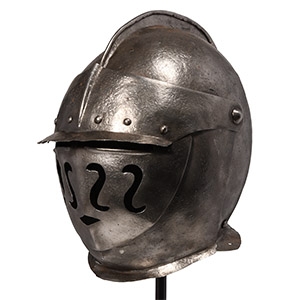
European Savoyard Burgonet
Circa 1620 A.D.Estimate: £3,500 - 4,500 (+bp*)
Opening Bid: £1,389
Comprising a full face shield with broad wavy bars and a small mouth opening, a wide hinged visor; the visor and the front section of the helmet secured by large hook-and-eye closures on the right-hand side; the crown with a tall ridge running from front to back, small collar for protecting the neck. 1.14 kg, 25 cm high
Acquired from Andrew Bennett in 2016. The Kusmirek Collection, UK. Accompanied by a copy of a payment confirmation from Andrew Bennett, dated 1st June 2016. Accompanied by an academic report by Dr Raffaele D'Amato. This lot has been checked against the Interpol Database of stolen works of art and is accompanied by search certificate number no. 11768-203986.
This variation of the burgonet helmet is thought to have originated in the Savoy region of southeast France, and was very popular with heavy cavalry (Reiters) serving with a variety of Continental armies of the period. The term Savoyard is a reference to a large number of these helmets that the Swiss captured from the troops of the Duke of Savoy during an unsuccessful assault on the city of Genoa in 1602. The undulated bars and the small mouth of the visor are all indicative of the Savoyard style. The hinges on the side allowed the front of the helmet as a whole to be lifted away from the rear, aiding the wearer to place it over his head.
