
Loading, please wait...
LOT 1090
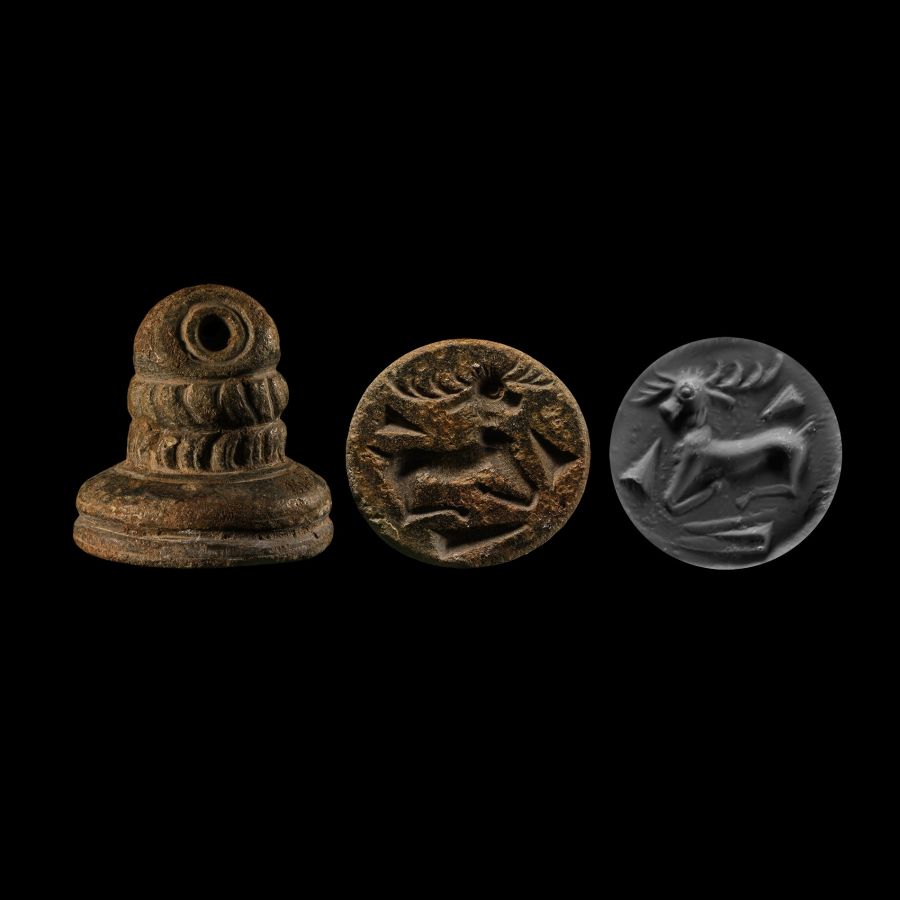
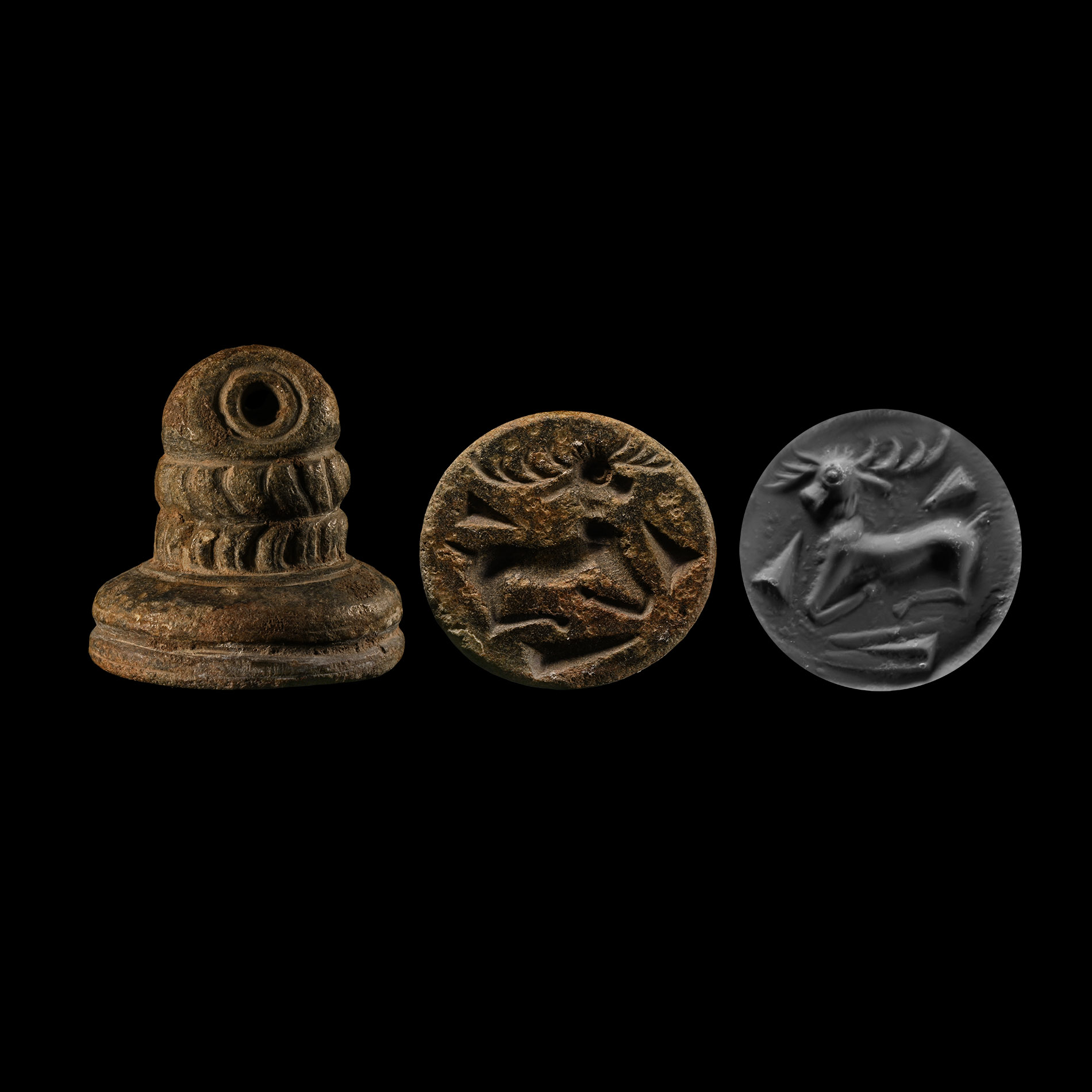
Very Large Western Asiatic Stone Stamp Seal with Animal
2ND-1ST MILLENNIUM B.C.
2 in. (109 grams, 49 mm).
Discoid in plan with tiered handle and transverse hole, with gusset to the upper face, chamfered shoulder; underside with intaglio image of a stag with legs bent beneath the body, objects in the field; supplied with a museum-quality impression.
ProvenanceCollected from 1969-1999.
From the collection of the late Mr S.M., London, UK.
TimeLine Auctions follows a vetting process to ensure the authenticity and legality of all items, reinforcing our commitment to integrity and responsible trading. Each antiquity, antique, and coin lot undergoes thorough examination by a vetting committee of at least ten external specialists, professional trade association members, scientists, and archaeologists: Our Vetting Process
AUCTIONS:
TimeLine is a leading auction house specialising in antiquities, ancient art, collectables, natural history, coins, medals, and books. Our auctions offer museums, collectors, historians, and enthusiasts the opportunity to acquire unique and historically significant pieces.
LOT 1090
Very Large Western Asiatic Stone Stamp Seal with Animal
Estimate £400 - 600€460 - 700 (for guidance only)$540 - 810 (for guidance only)
-
Western Asiatic Bronze Adjustable Torc Pair
1st millennium B.C.Sold for (Inc. bp): £111
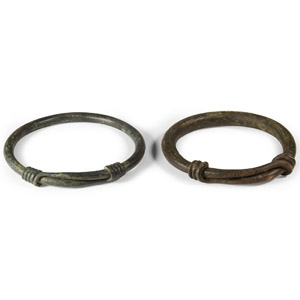
Comprising two heavy torcs with tapering round-section body, overlapping terminals and coiled sleeves. 530 grams total, 11.6-12.3 cm
UK private collection before 2000. On the UK art market. Property of a London gentleman. -
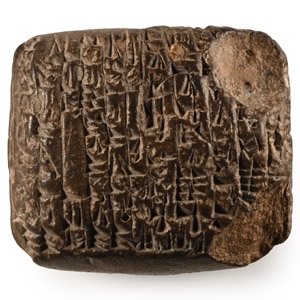
Mesopotamian Cuneiform Tablet Issued by the Temple at Drehem and Sohka
Circa 1200 B.C.Sold for (Inc. bp): £650
Pillow-shaped terracotta tablet with impressed cuneiform text to both broad faces and two edges. 10.4 grams, 28 mm
Acquired from Alister Matthews in 1958, from catalogue number 53, item 702 (6). From the private collection of the late Dr J.D.H. Widdness, Dublin, Ireland. Accompanied by an original Alister Matthews catalogue cutting from 1958. Accompanied by an old original typed cataloguing slip probably from the late 1950s. -
.jpg)
Sassanian Carnelian Eagle Gemstone
Circa 3rd-4th century A.D.Sold for (Inc. bp): £117
Eagle standing with wings folded, neck extended; supplied with a museum-quality impression. 0.46 grams, 10 mm
From the collection of a Swiss gentleman formed in Europe from 1970-1980s; thence by descent from the family in London.
