
Loading, please wait...
LOT 0286
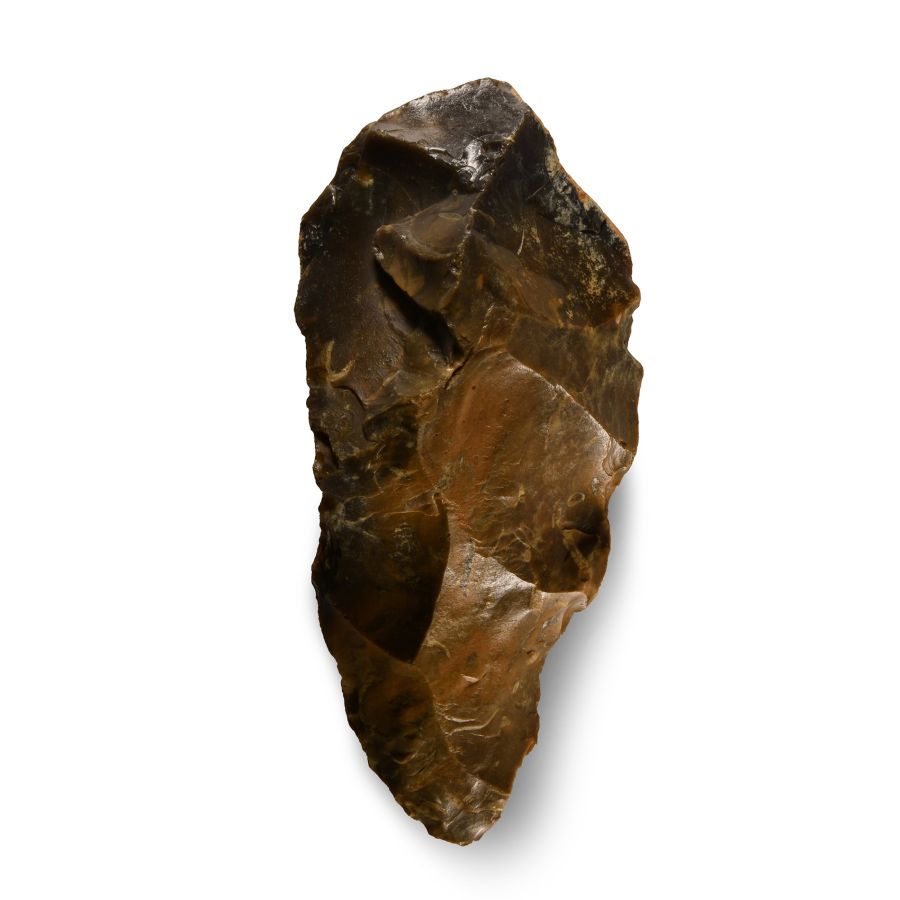
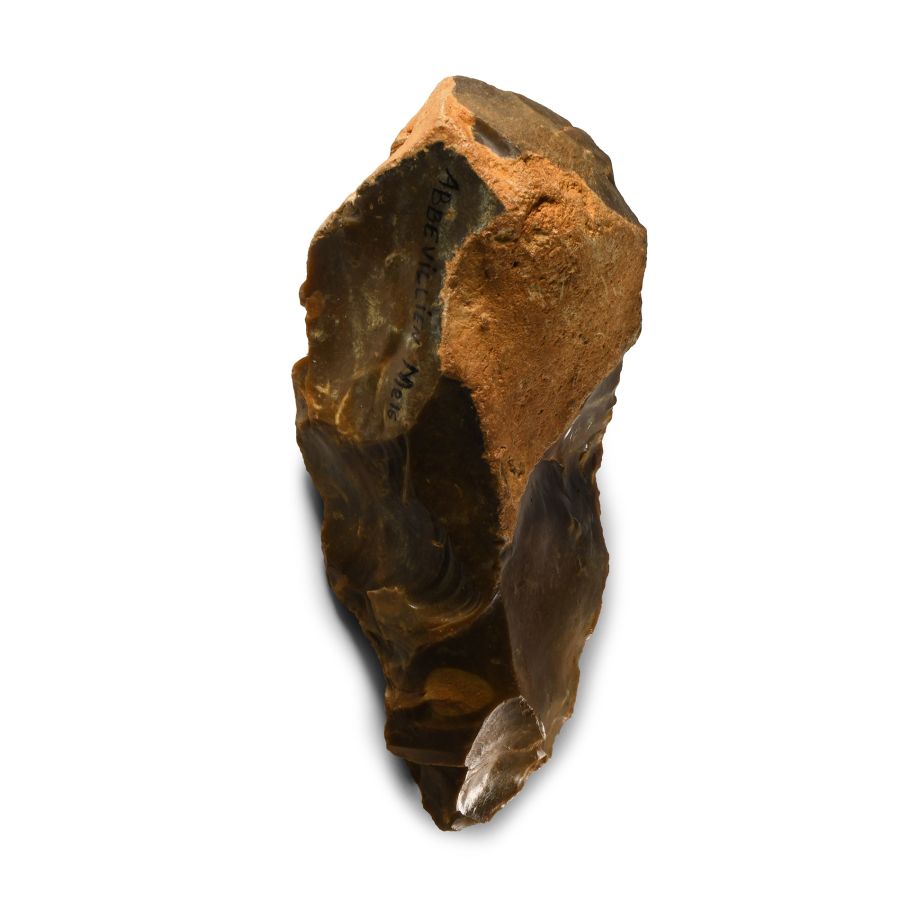
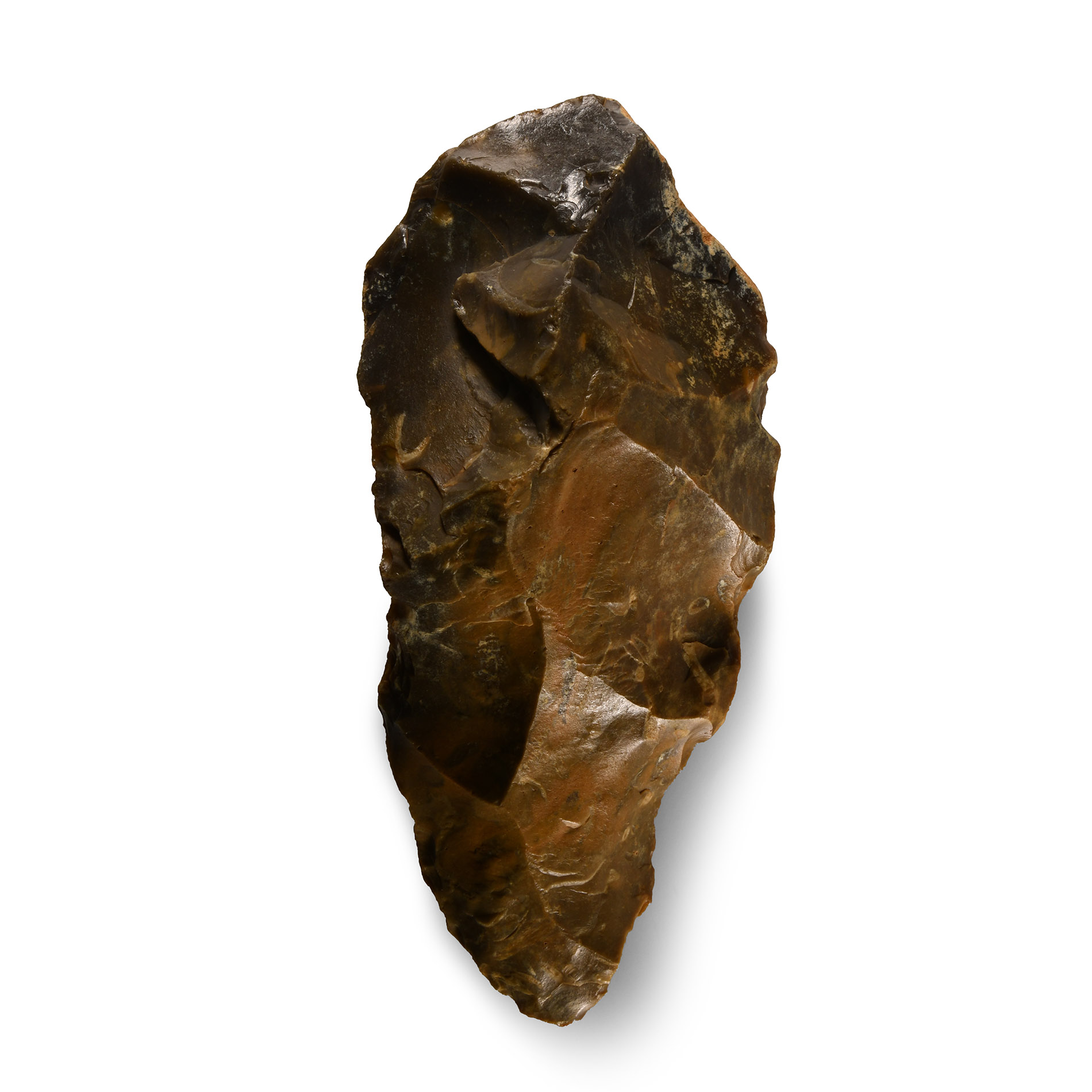
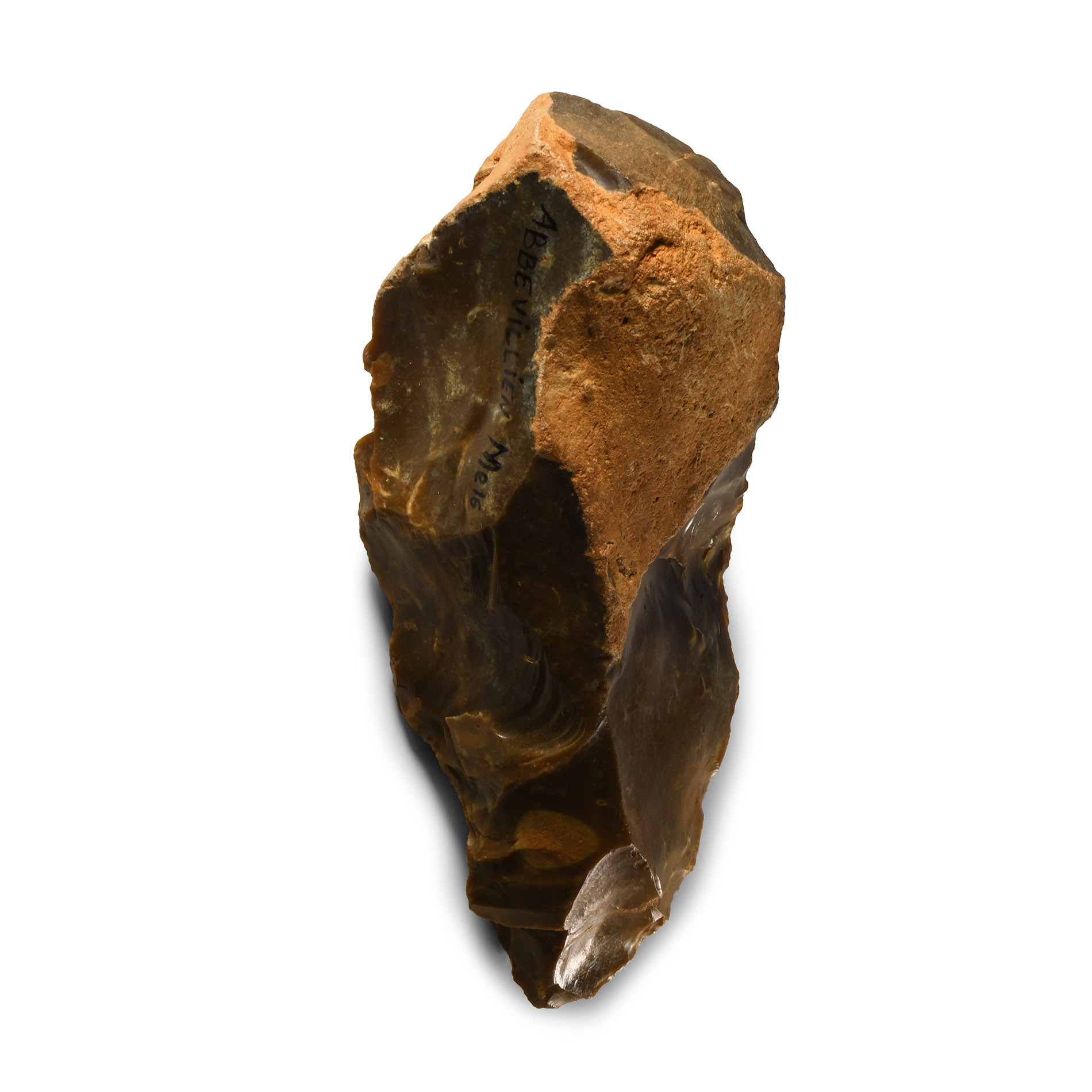
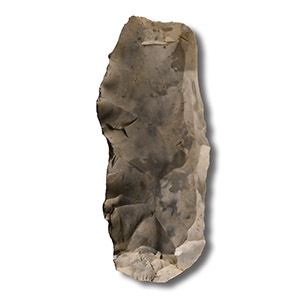
Very Large Stone Age 'Abbevilleien' Caramel and Burnt-Orange Knapped Flint Handaxe
LOWER PALAEOLITHIC PERIOD, 600,000-400,000 YEARS B.P.
7 7/8 in. (1.12 kg, 20 cm).
Substantial flint pointed tool with much cortex remaining. [No Reserve]
ProvenanceFound by the Somme River at Abbeville, France.
From an old French collection formed in the early 1900s.
From the collection of a Norfolk, UK, lady collector.
Abbervillien in style - a phase of the Olduwan that occured in Europe dated to 600,000 to 400,000 years ago.
CONDITIONTimeLine Auctions follows a vetting process to ensure the authenticity and legality of all items, reinforcing our commitment to integrity and responsible trading. Each antiquity, antique, and coin lot undergoes thorough examination by a vetting committee of at least ten external specialists, professional trade association members, scientists, and archaeologists: Our Vetting Process
AUCTIONS:
TimeLine is a leading auction house specialising in antiquities, ancient art, collectables, natural history, coins, medals, and books. Our auctions offer museums, collectors, historians, and enthusiasts the opportunity to acquire unique and historically significant pieces.
LOT 0286
Very Large Stone Age 'Abbevilleien' Caramel and Burnt-Orange Knapped Flint Handaxe
Sold for (Inc. bp): £390
-
Stone Age 'Spiennes' Knapped Flint Handaxe
Neolithic Period, 3000-2000 B.C.Sold for (Inc. bp): £33
Rectangular in plan with thin butt, made from a blade core. 343 grams, 10.5 cm
Found Spiennes, Belgium. From an old French collection. Ex Norfolk, UK, private collection. From the collection of a South West London, UK, specialist Stone Age collector. -
Very Large Stone Age 'Charente' Knapped Flint Axe Head
Neolithic Period, circa 5000 years B.P.Sold for (Inc. bp): £208
Biconvex in section with square butt and broad cutting edge, regular in shape and with unusual colouration. 1.19 kg, 22.5 cm
Found Charente, Dordogne Region, France. From an old French collection formed in the early 1900s. From the collection of a Norfolk, UK, lady collector. -
Stone Age 'Troussencourt' Knapped Adze
Neolithic Period, 3000-2000 B.C.Sold for (Inc. bp): £52
Triangular in section with parallel sides, broad butt and edge; marked 'Troussencourt'. 248 grams, 12.5 cm
Found Troussencourt, France. From an old French collection. Ex Norfolk, UK, private collection. From the collection of a South West London, UK, specialist Stone Age collector.
