
Loading, please wait...
LOT 0109
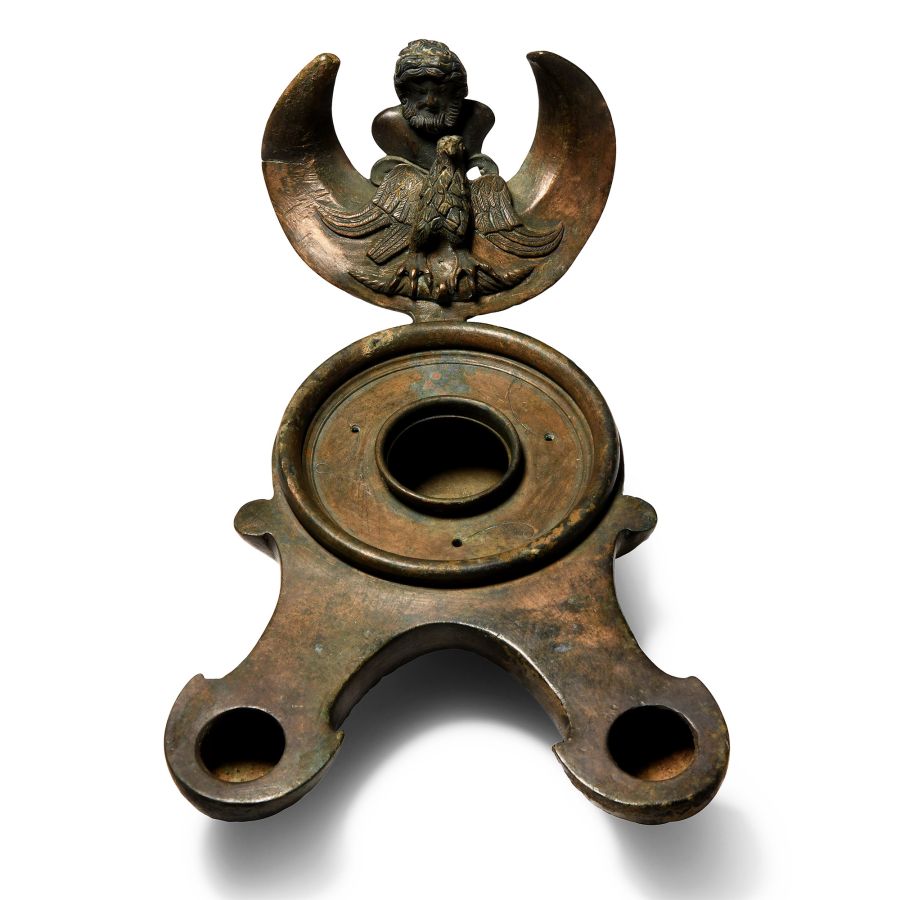
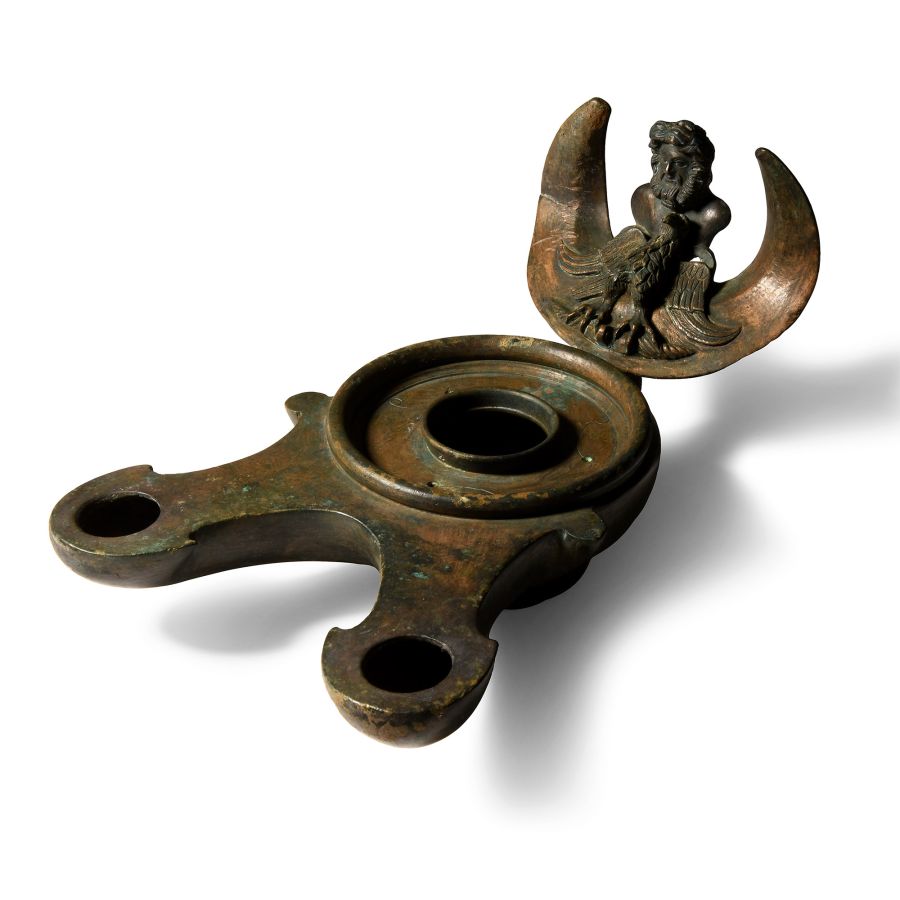
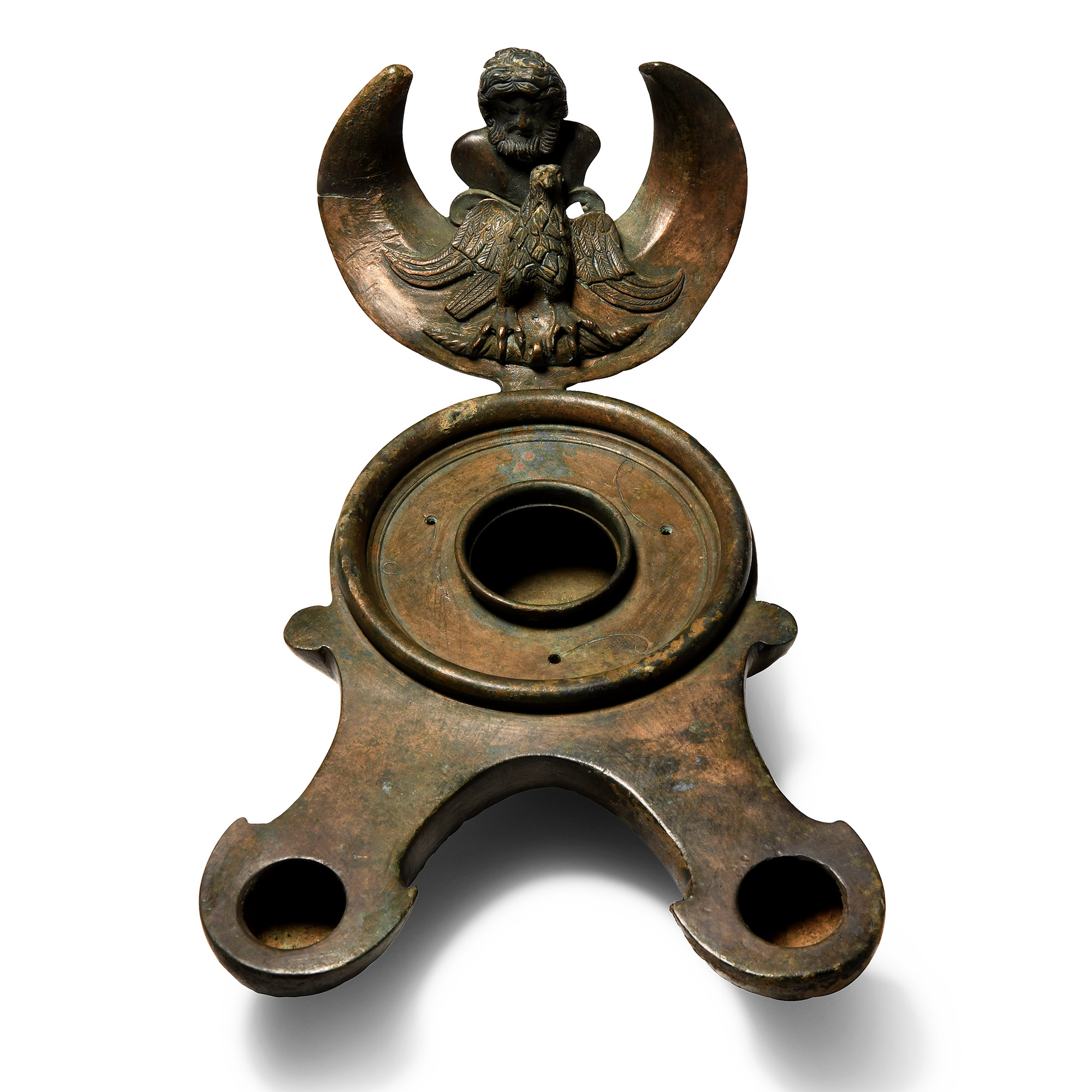
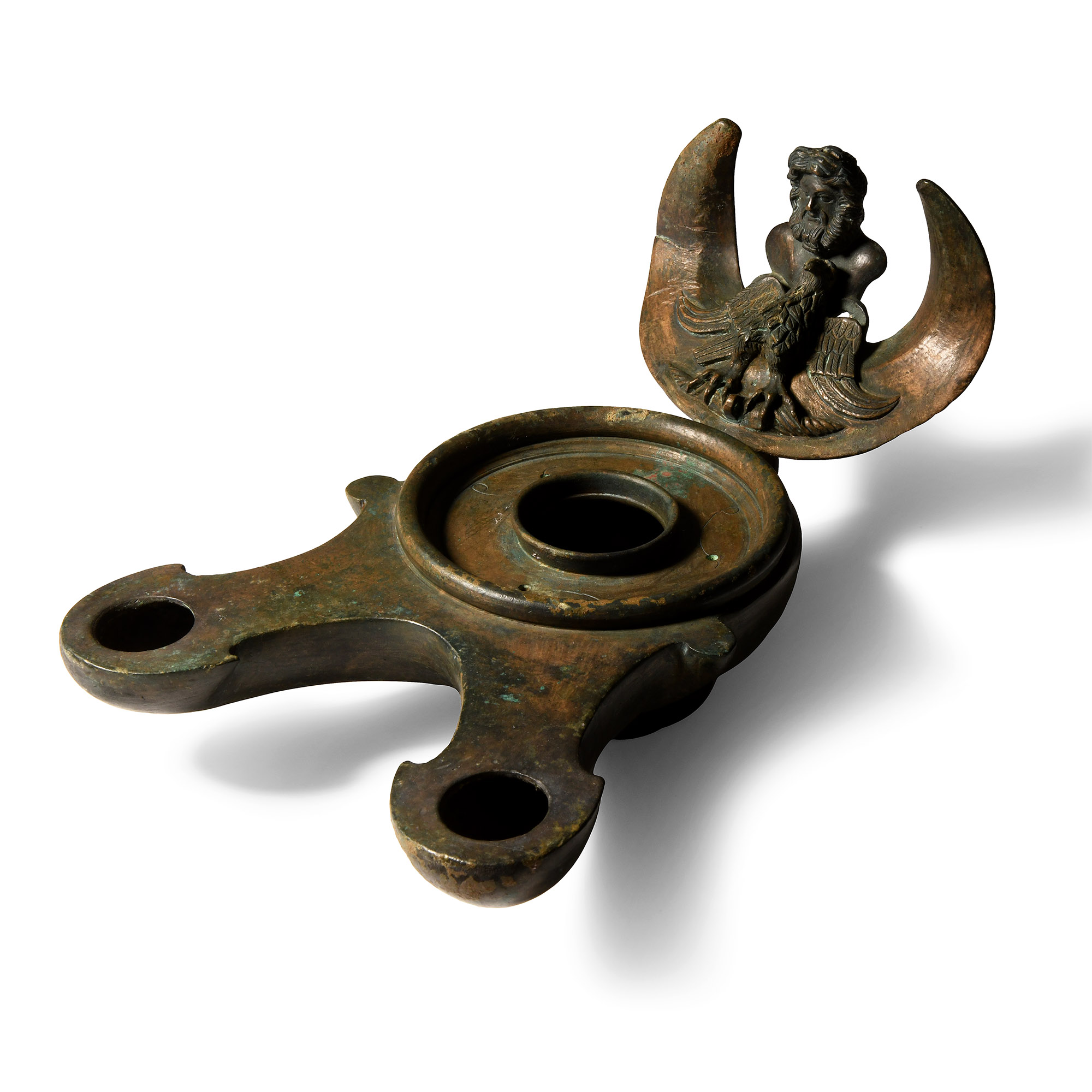
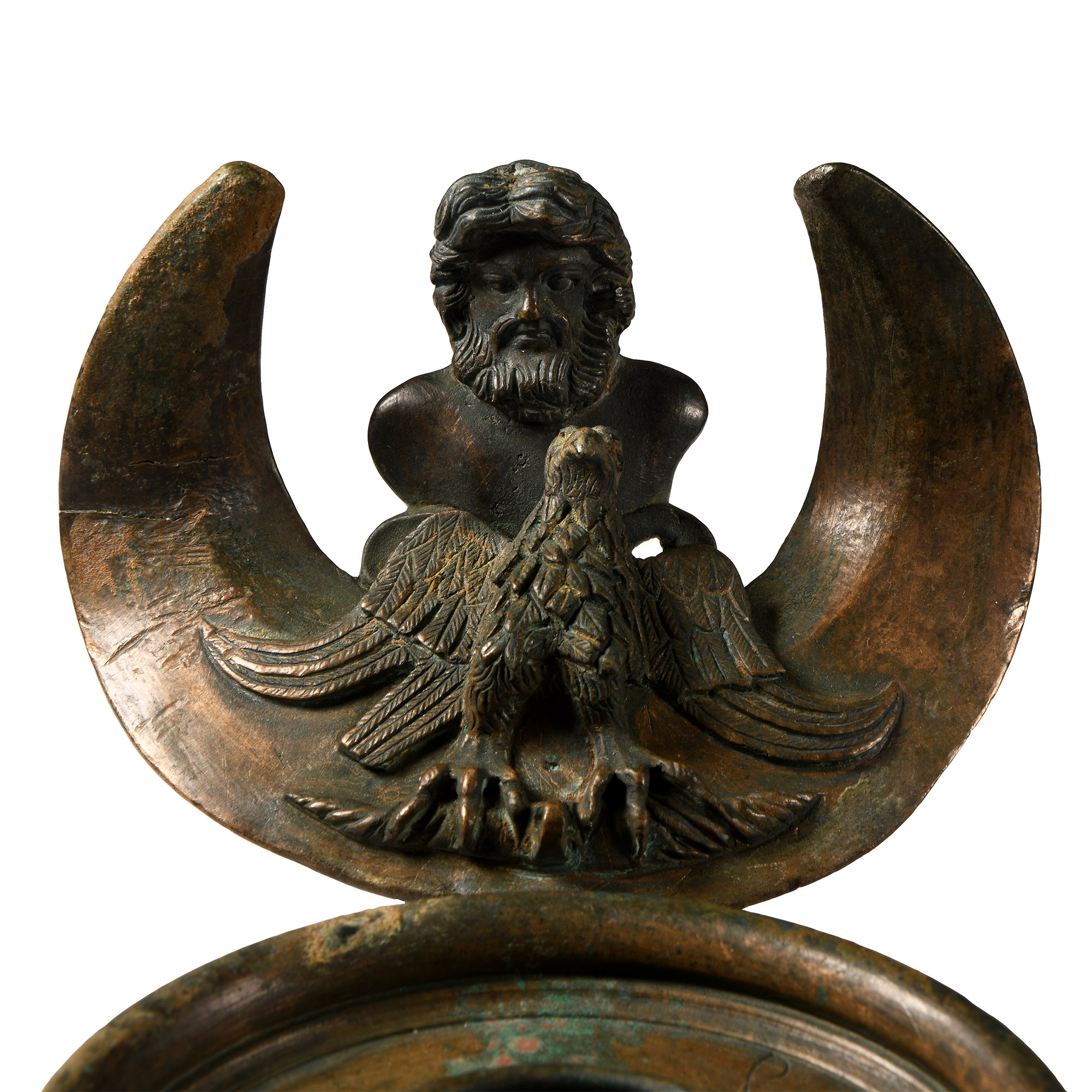
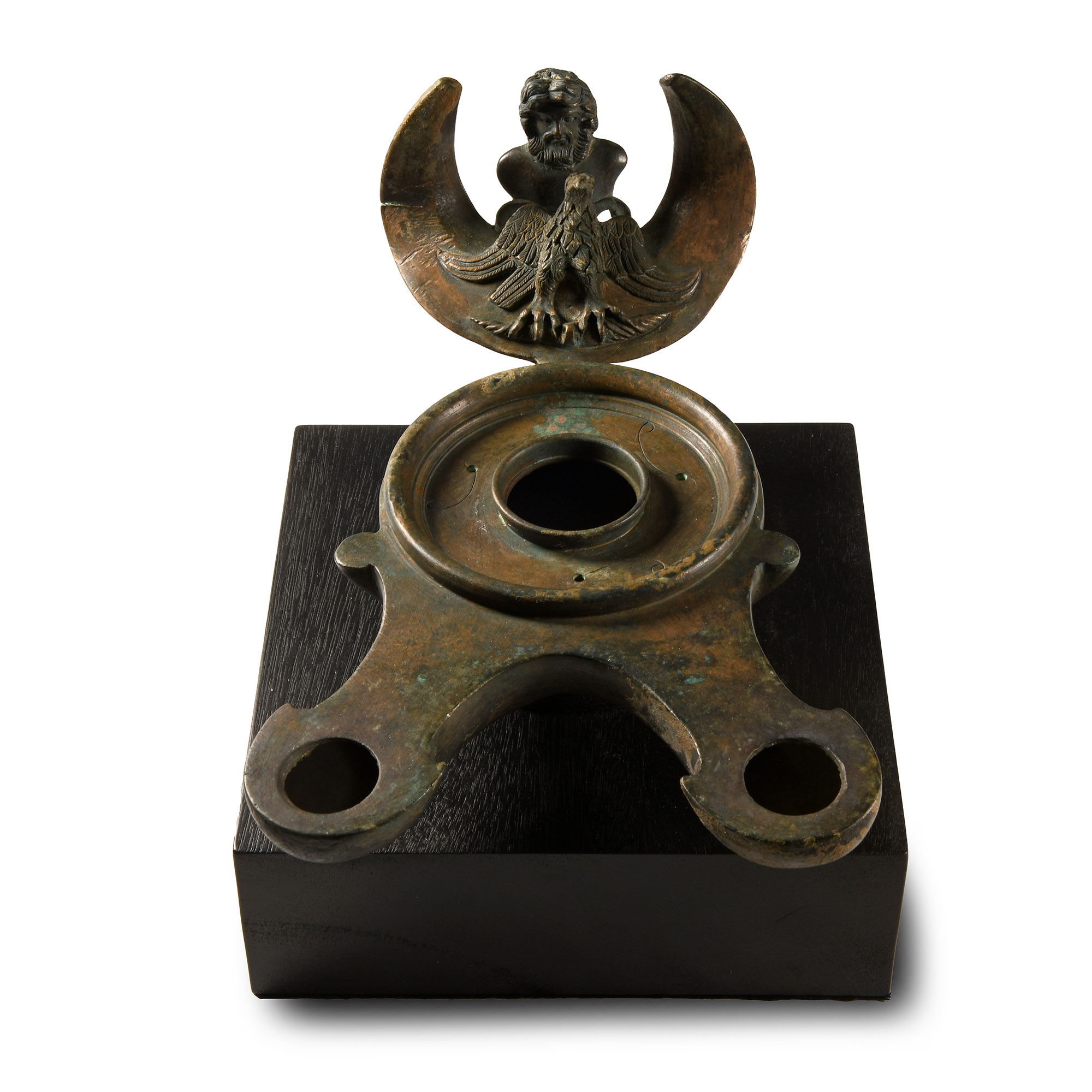
Very Large Roman Bronze Oil Lamp with Jupiter and Eagle
3RD-4TH CENTURY A.D.
10 1/8 in. (7 1/8 in.) (1.67 kg, 25.7 wide (3.08 kg total,18 cm high including stand)).
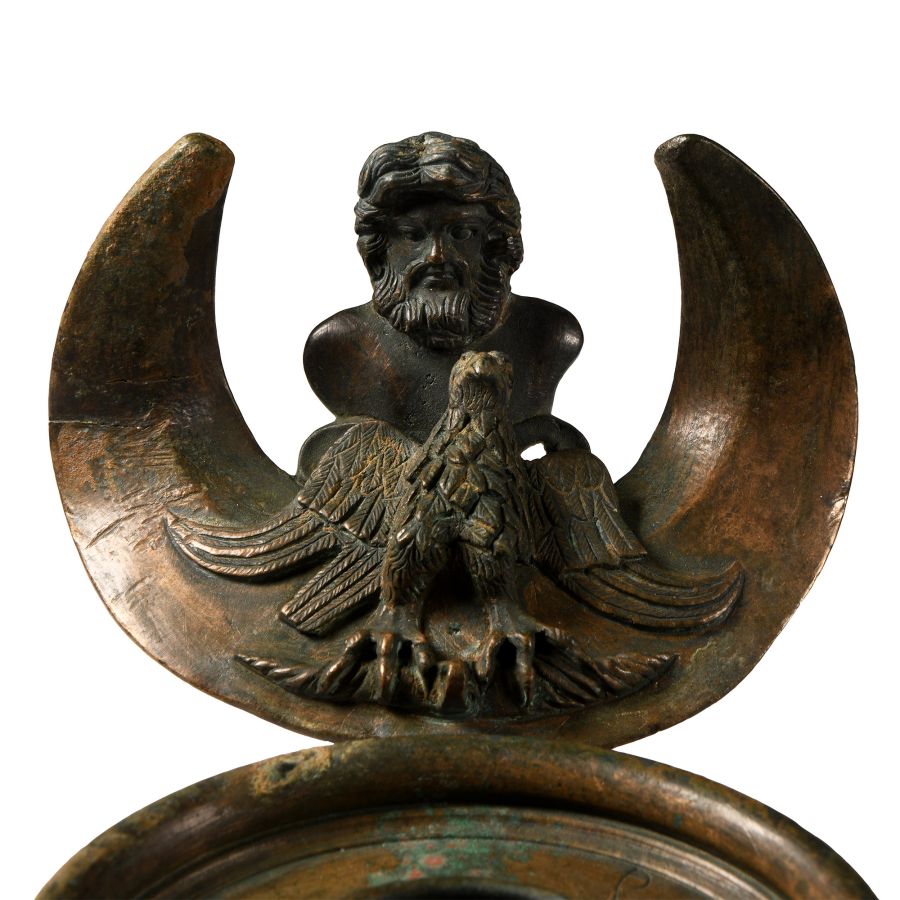
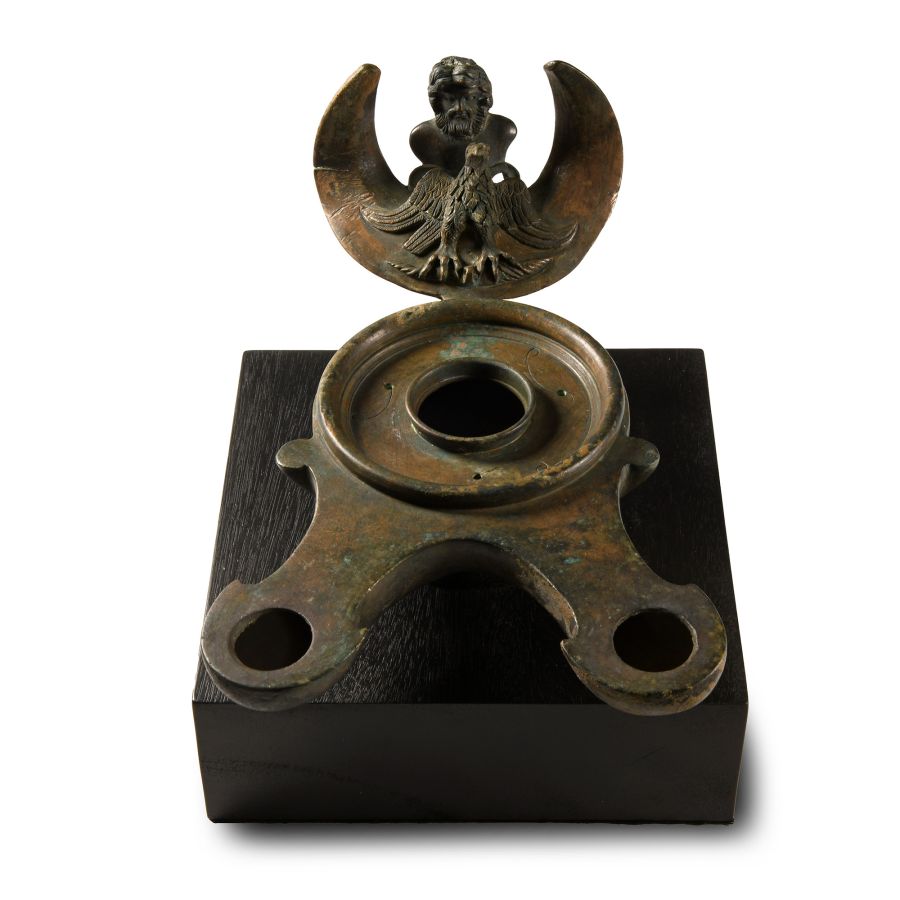
With a rounded body and double nozzle with volutes; the body flat with engraved volutes, raised rim and basal ring; to the rear a large crescent with Jupiter (Greek Zeus) to the centre and his eagle with spread wings before him; the god depicted with thick locks and voluminous beard, the eagle with detailed plumage and finely detailed face; accompanied by a custom-made display stand.
ProvenanceOld private British collection, pre-1965.
Property of a gentleman; acquired in the UK before 2000.
Accompanied by a copy of an old black and white photograph.
Accompanied by an academic report by Dr Raffaele D’Amato.
This lot has been checked against the Interpol Database of stolen works of art and is accompanied by search certificate number no.12034-215425.
Exhibited at the Harwich Museum, Harwich, Essex, UK, 14th March-9th June 2024; accompanied by a copy of a photograph of the artefact on display.
LiteratureCf. Bailey, D.M., A catalogue of the lamps in the British Museum, IV, Lamps of metal and stone, and lampstands, London, 1996, nos. 3769-3781, for the typology; similar specimens are preserved in Berlin, see Bérard, C., Bronzes Hellénistiques et Romains, Lausanne, 1979, pl.119; a similar example from Saida has been published by Pirzio Biroli Stefanelli, L., Il Bronzo dei Romani, Rome, 1990, p.269, no.264; cf. also Rolland, H., Bronzes Antiques de Haute Provence, Paris, 1965, no.299; Petit, J., Bronzes Antiques de la collection Detuit, Paris, 1980, no.15; Oggiano-Bitar, Bronzes figurés antiques de Bouches-du-Rhône, Paris, 1984, no.232, from Marseille.
FootnotesHere Jupiter is represented with his attributes connected with the crescent of goddess Luna. According to Bailey, all lamps in the category to which the map belongs, were intended for suspension. Lamps with multiple nozzles gave more light and thus were suitable for lighting large spaces.
CONDITIONTimeLine Auctions follows a vetting process to ensure the authenticity and legality of all items, reinforcing our commitment to integrity and responsible trading. Each antiquity, antique, and coin lot undergoes thorough examination by a vetting committee of at least ten external specialists, professional trade association members, scientists, and archaeologists: Our Vetting Process
AUCTIONS:
TimeLine is a leading auction house specialising in antiquities, ancient art, collectables, natural history, coins, medals, and books. Our auctions offer museums, collectors, historians, and enthusiasts the opportunity to acquire unique and historically significant pieces.
LOT 0109
Very Large Roman Bronze Oil Lamp with Jupiter and Eagle
Sold for (Inc. bp): £8,450
-
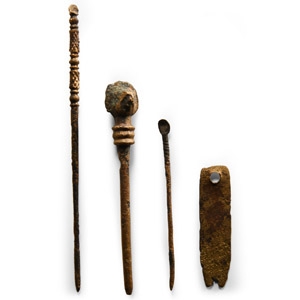
Roman Bronze Toilet Implement Group
Circa 1st century A.D.Sold for (Inc. bp): £208
Comprising: applicator with head finial; tag with nail cleaner; hair pin with balustered shank; cosmetic spoon. 14.6 grams total, 40-93 mm
Found City of London, UK. Acquired from mudlark Steve Brooker in the early 2000s. Ian Wilkinson collection, Nottinghamshire, UK, formed since 1985. -
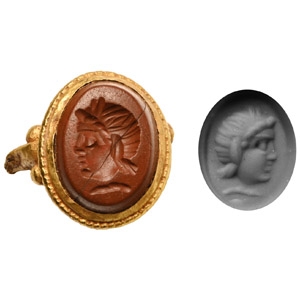
Roman Jasper Gemstone with Head of Pan in Gold Ring Bezel
2nd-3rd century A.D.Sold for (Inc. bp): £416
With incuse profile bust of Pan (Faunus); supplied with a museum-quality impression. 1.40 grams, 12 mm
From the Fadel family collection, London, UK, 1970s. -
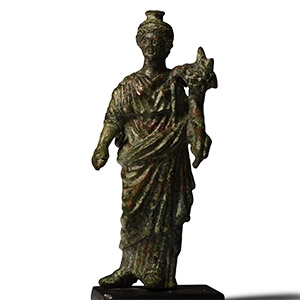
Roman Bronze Figure of Fortuna
1st-2nd century A.D.Sold for (Inc. bp): £715
The goddess standing, wearing an Ionic chiton and himation, the folds cascading to the floor; her left hand holding a cornucopia supported on her forearm and shoulder, her right hand extended, her centre-parted wavy locks fastened with a band, pulled back in a chignon at the nape of her neck and surmounted by a modius; mounted on a custom-made display stand with collector's label to the underside. 230 grams total, 99 mm including stand
From an old French collection. Acquired from Gallery Drees Archéo, 2008. Ex Gilles Grimm collection. Property of a French collector. Accompanied by a copy of the 2008 invoice.
