
Loading, please wait...
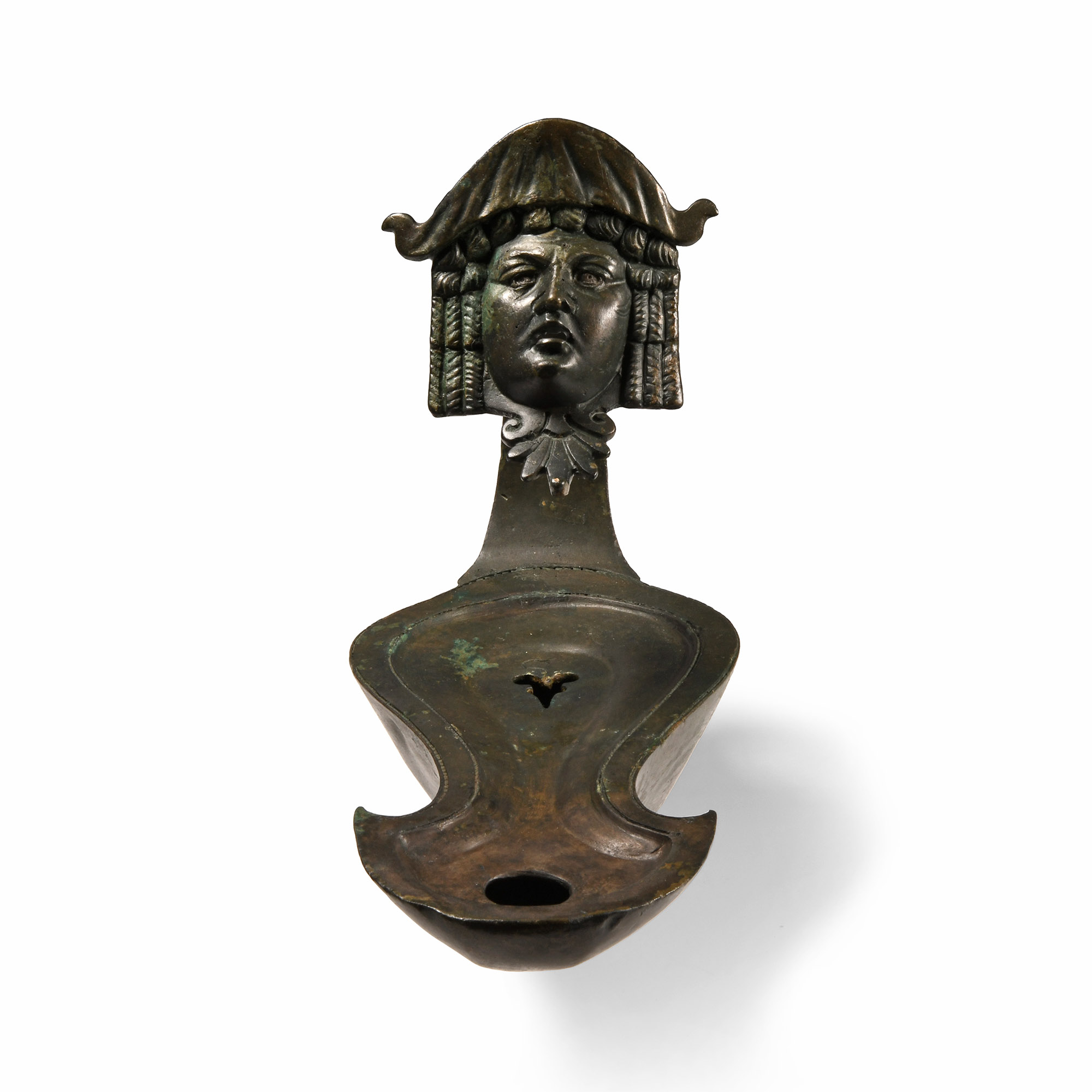
LOT 0110
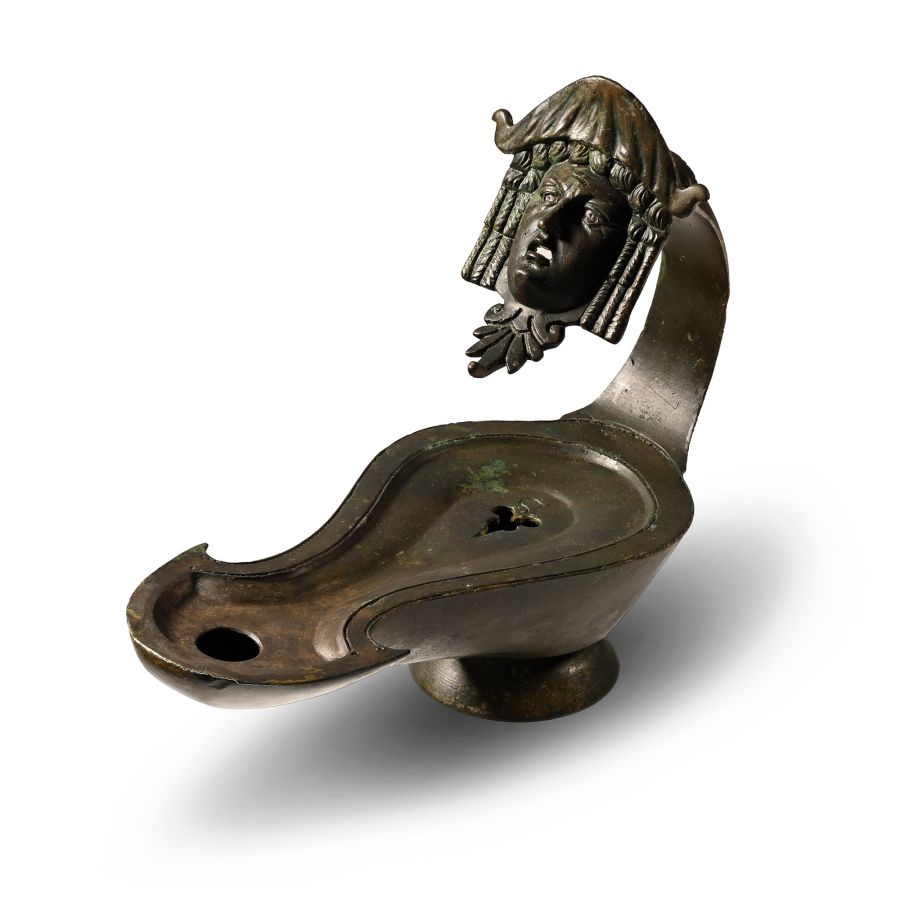
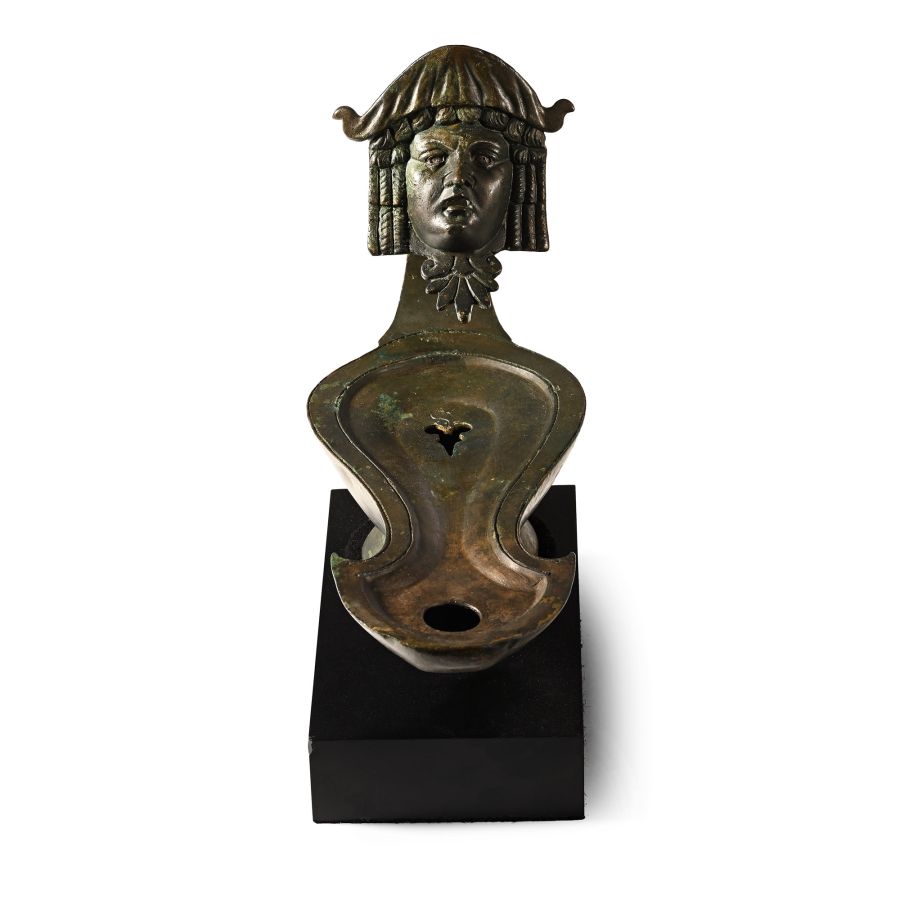
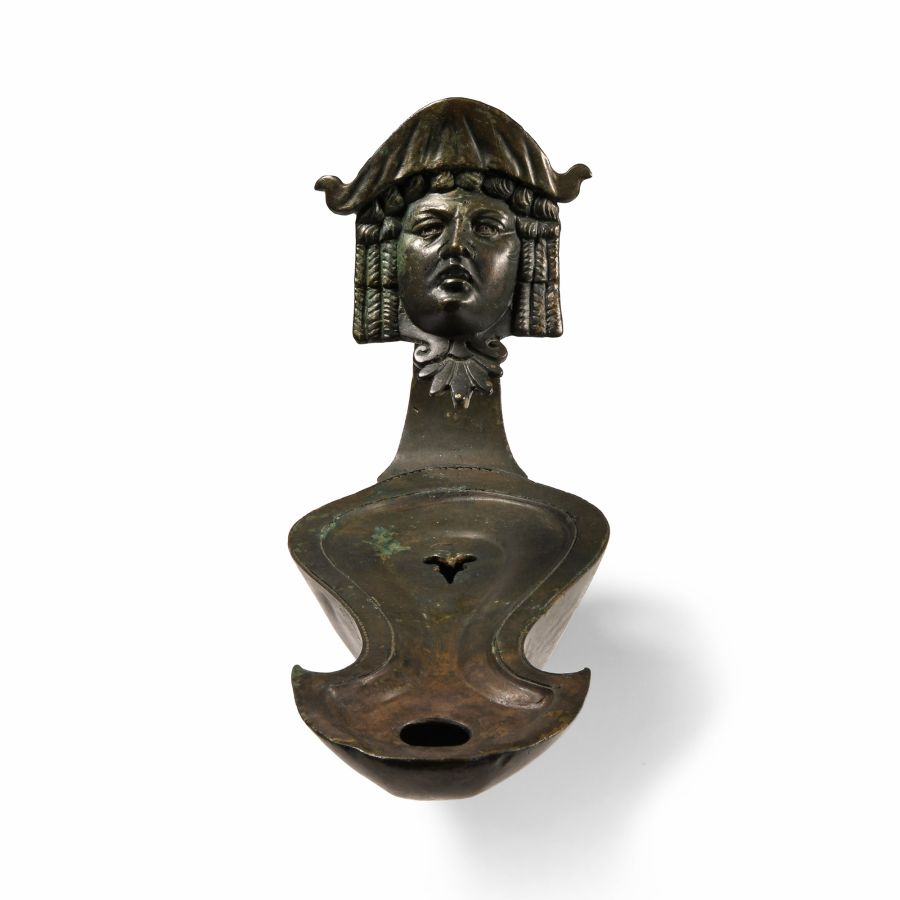
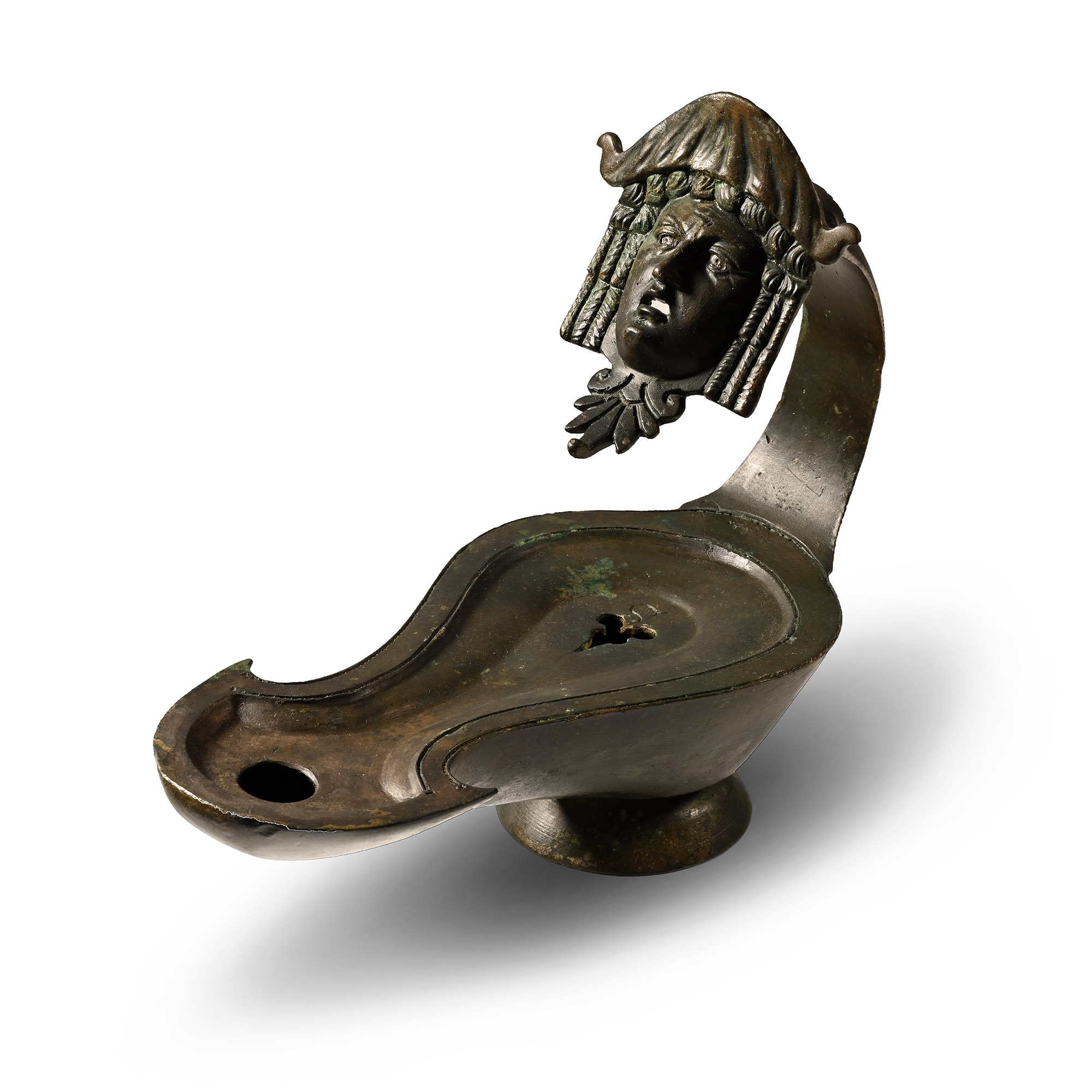
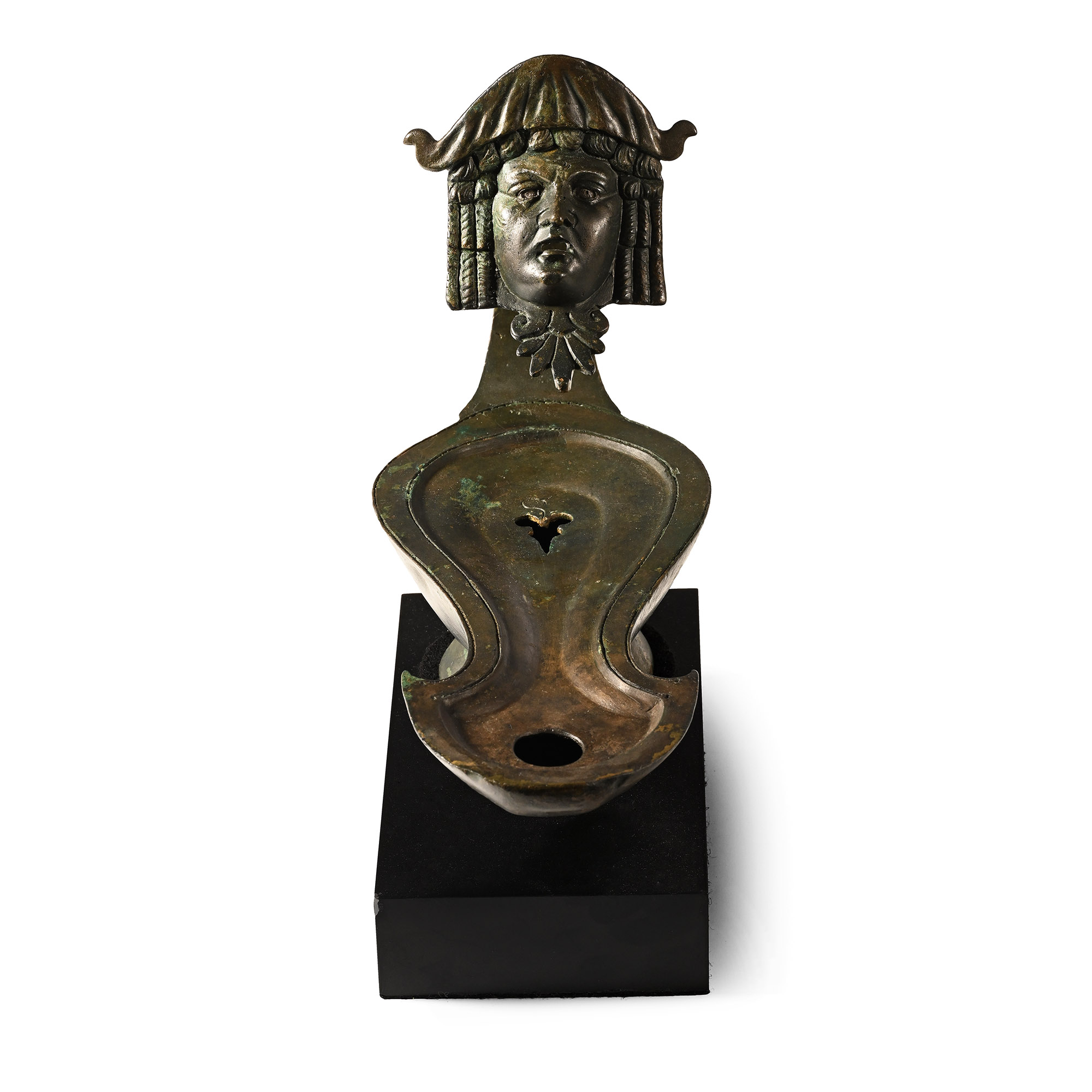
Very Large Roman Bronze Oil Lamp with Actor's Mask
1ST-2ND CENTURY A.D.
11 in. (10 7/8 in.) (1.97 kg, 28 cm wide (4.31 kg total, 27.5 cm high including stand)).
With an elongated body and a long nozzle with a rounded tip; raised rim enclosing the upper face with an ivy lef-shaped filling hole; wide handle terminating to a female tragic mask with a palmette below the chin, the hair dressed in ringlets with two rows of curls to the brow, eyes inlaid with silver; accompanied by a custom-made display stand.
ProvenanceOld private British collection, pre-1965.
Property of a gentleman; acquired in the UK before 2000.
Accompanied by a copy of an old black and white photograph and an academic report by Dr Raffaele D’Amato.
This lot has been checked against the Interpol Database of stolen works of art and is accompanied by a search certificate number no.12033-215424.
Cf. Bailey, D.M., A catalogue of the lamps in the British Museum, IV, Lamps of metal and stone, and lampstands, London, 1996, no. Q3669 (said to be from Rome) for identical, and Q3670 (preserved only in the identical mask); many other similar examples are from Pompeii, see Valenza Mele, N., Museo Nazionale Archeologico di Napoli, Catalogo delle Lucerne di Bronzo, Rome, 1981, nos.344-345; from the Western Provinces, see Rolland, H., Bronze Antiques de Haute Provence, Paris, 1965, no.357; and from the East, see Bérard, C., Bronzes Hellénistiques et Romains, Lausanne, 1979, pl.116, 7 and 10; cf. also Mitten, D.G., Doeringer, S.F., Master Bronzes from the Classical World, Cambridge, 1967, no.297, for identical, and Edgar, C.C., Greek Bronzes, Catalogue général des antiquités égyptiennes du Musee du Caire, Cairo, 1904, pl.12H.
FootnotesThe lamp is of Loeschke type XX (Walters type 6), with many of these lamps made in Italy, but some are also found in the East. The tragic mask appears frequently on lamp handles, probably as an apotropaic subject. The mask was an inseparable element of unity with the past and religious context.
CONDITIONTimeLine Auctions follows a vetting process to ensure the authenticity and legality of all items, reinforcing our commitment to integrity and responsible trading. Each antiquity, antique, and coin lot undergoes thorough examination by a vetting committee of at least ten external specialists, professional trade association members, scientists, and archaeologists: Our Vetting Process
AUCTIONS:
TimeLine is a leading auction house specialising in antiquities, ancient art, collectables, natural history, coins, medals, and books. Our auctions offer museums, collectors, historians, and enthusiasts the opportunity to acquire unique and historically significant pieces.
-
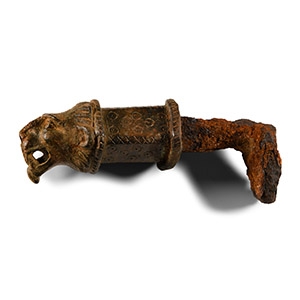
Large Roman Bronze Lion-Headed Iron Key
1st-4th century A.D.Sold for (Inc. bp): £572
Iron shank with perpendicular wards, square-section bronze handle with incised geometric ornament, lion-head finial with open mouth to accept a suspension ring. 125 grams, 86 mm
Ex German art market, 2000s. Acquired from an EU collector living in London. From the collection of Surrey, UK, gentleman. -
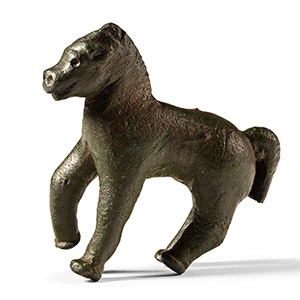
Romano-British Bronze Horse Statuette
Circa 1st century A.D.Sold for (Inc. bp): £351
Modelled in the round and in advancing pose with one foreleg raised, dressed tail. stiff mane, incised facial detailing; ferrous remains to the back where the rider was positioned. 195 grams, 72 mm
Found Peterborough, Cambridgeshire, UK. From an East Anglian private collection. -
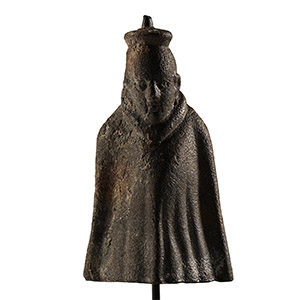
Roman Bronze Grotesque Figure with Paenula
2nd century A.D.Sold for (Inc. bp): £468
Hollow-formed with short hair and a beret, wearing a paenula military cloak extending to the hips; mounted on a custom-made display stand. 110 grams total, 90 mm including stand
From a collection acquired on the UK art market from various auction houses and collections mostly before 2000. From an important Cambridgeshire estate; thence by descent.
Telesphorus, dressed in the Gallo-Roman manner with the long hooded military cloak (folded on his back), was the subject of many votive statuettes in Roman Gaul. Son of Aesculapius, god of medicine, he certainly had a connection with the world of healing and medical care, and was associated with his sister Hygeia. He belonged to the Celtic pantheon and was spread to the East by the Galatians of Asia Minor. His cult then spread to the West, particularly in the Hadrianic period, as attested by his images found on the Wall at Birdoswald.
