
Loading, please wait...
LOT 1204
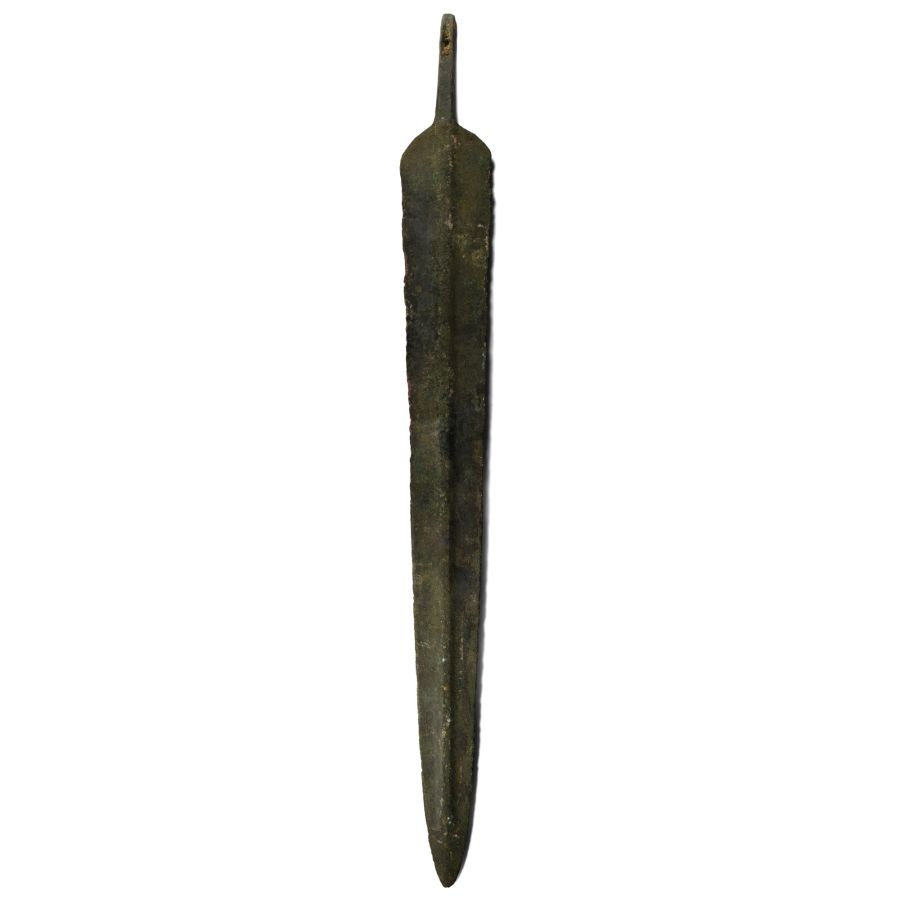
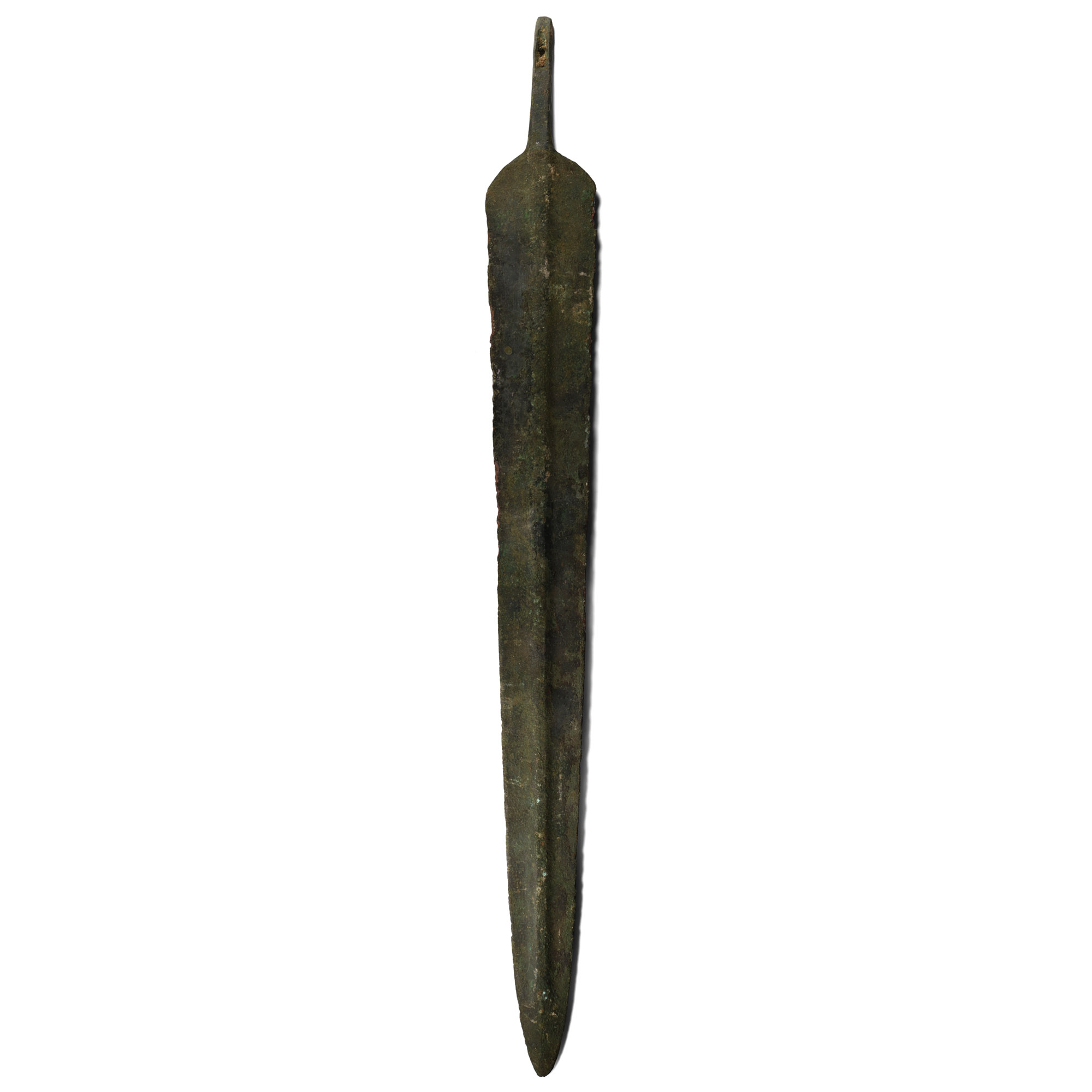
Very Large Luristan Bronze Sword
EARLY 1ST MILLENNIUM B.C.
19 1/4 in. (482 grams, 49 cm).
Tapering leaf-shaped blade with a raised midrib developing to a short rectangular-section tang, pierced at the end.
ProvenanceEx London art market, 1980-1990s.
This lot has been cleared against the Art Loss Register database, and is accompanied by an illustrated lot declaration signed by the Head of the Antiquities Department, Dr Raffaele D'Amato.
Cf. Christie's, The Axel Guttmann Collection of Ancient Arms and Armour, part 2, London, 2004, item 40, p.36.
FootnotesThe Luri people produced a quantity of fine metalwork, which according to Dr. Khorasani, could be due to a settled period which arose as a result of the defeat of the Elamites by the Babylonians, leaving the Luristani people in relative peace for a period of time after 1200 BC. According to Khorasani 'A culture of innovation and experimentation flourished, and the repertoire of the Luristan smiths expanded in the period between 1150-1050 B.C.'
CONDITIONTimeLine Auctions follows a vetting process to ensure the authenticity and legality of all items, reinforcing our commitment to integrity and responsible trading. Each antiquity, antique, and coin lot undergoes thorough examination by a vetting committee of at least ten external specialists, professional trade association members, scientists, and archaeologists: Our Vetting Process
AUCTIONS:
TimeLine is a leading auction house specialising in antiquities, ancient art, collectables, natural history, coins, medals, and books. Our auctions offer museums, collectors, historians, and enthusiasts the opportunity to acquire unique and historically significant pieces.
-
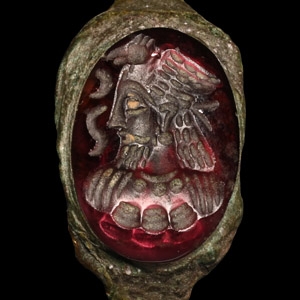
Sasanian Bronze Ring with Gemstone
4th-7th century A.D.Sold for (Inc. bp): £442
Comprising a slender hoop and wide bezel, intaglio engraved with a facing bearded bust. 2.85 grams, 22.66 mm overall, 19.92 mm internal diameter (approximate size British N 1/2, USA 6 3/4, Europe 14.35, Japan 13)
Acquired on the UK art market before 2000. Property of an Essex, UK, gentleman. This lot has been cleared against the Art Loss Register database, and is accompanied by an illustrated lot declaration signed by the Head of the Antiquities Department, Dr Raffaele D'Amato. -
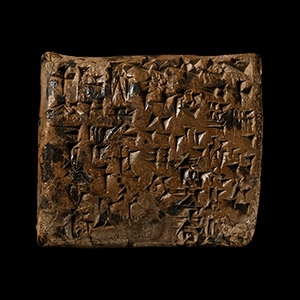
Old Babylonian Cuneiform Tablet with Original Envelope, Recording a Contract for 1½ Shekels of Silver
Circa 2000-1800 B.C.Sold for (Inc. bp): £1,690
Pillow-shaped sealed clay envelope with bands of cuneiform text to the broad faces; with 12 lines in Sumerian and a seal impression. 117 grams, 59 mm
From the important collection of the late Dr Gerrard. This lot has been cleared against the Art Loss Register database, and is accompanied by an illustrated lot declaration signed by the Head of the Antiquities Department, Dr Raffaele D'Amato. -
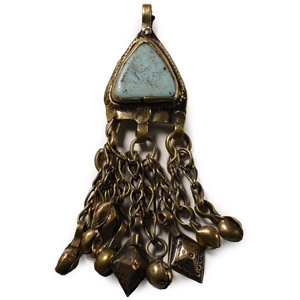
Western Asiatic Silver-Coloured Metal Pendant
20th century A.D.Sold for (Inc. bp): £13
Comprising a triangular plaque with inset onyx cloison, chains below with dangles. 15.6 grams, 85 mm
Ex collection of a late London, UK, collector, 1970s. This lot has been cleared against the Art Loss Register database, and is accompanied by an illustrated lot declaration signed by the Head of the Antiquities Department, Dr Raffaele D'Amato.
