
Loading, please wait...
LOT 1283
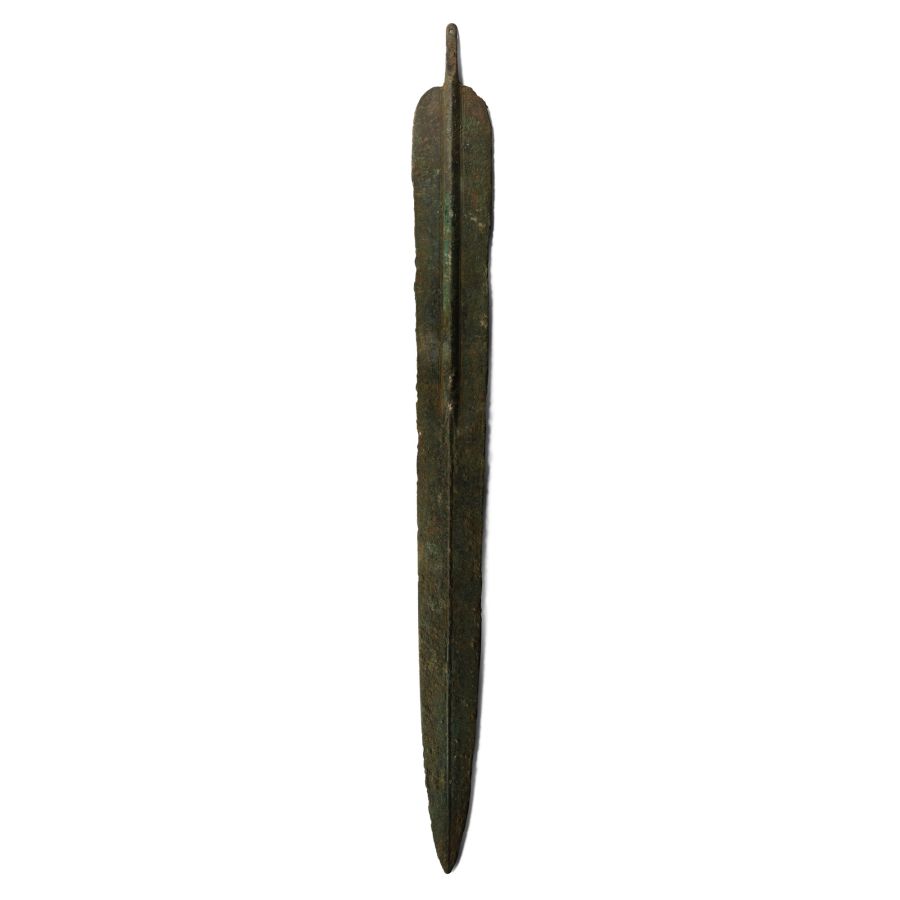
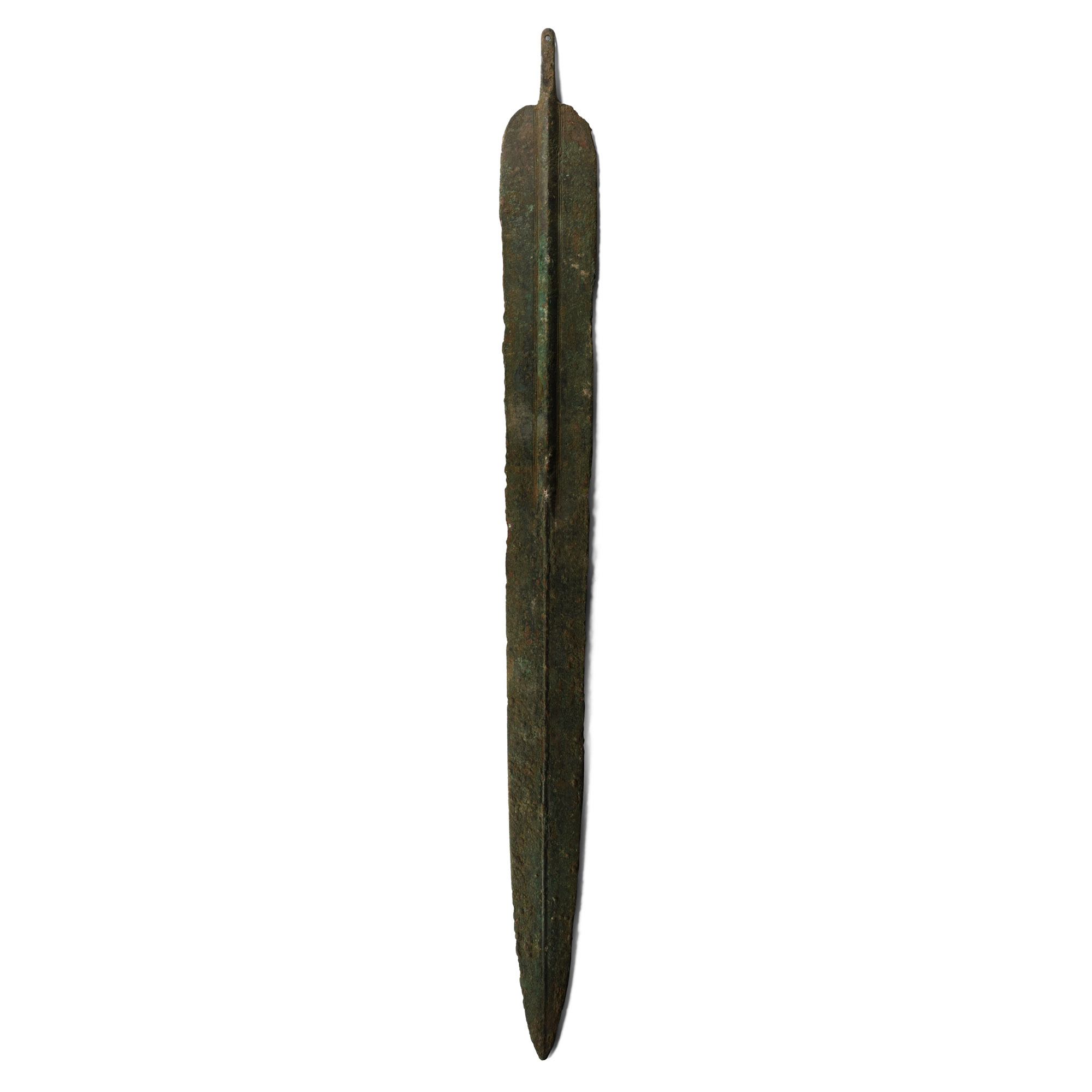
Very Large Luristan Bronze Dagger Blade
EARLY 1ST MILLENNIUM B.C.
19 1/2 in. (374 grams, 49.5 cm).
Tapering leaf-shaped blade with a raised midrib developing to a short tang, pierced at the lower end.
ProvenanceEx London art market, 1980-1990s.
This lot has been cleared against the Art Loss Register database, and is accompanied by an illustrated lot declaration signed by the Head of the Antiquities Department, Dr Raffaele D'Amato.
Cf. Christie's, The Axel Guttmann Collection of Ancient Arms and Armour, part 2, London, 2004, item 40, p.36.
FootnotesThe Luri people produced a quantity of fine metalwork, which according to Dr. Khorasani, could be due to a settled period which arose as a result of the defeat of the Elamites by the Babylonians, leaving the Luristani people in relative peace for a period of time after 1200 BC. According to Khorasani 'A culture of innovation and experimentation flourished, and the repertoire of the Luristan smiths expanded in the period between 1150–1050 B.C.'
CONDITIONTimeLine Auctions follows a vetting process to ensure the authenticity and legality of all items, reinforcing our commitment to integrity and responsible trading. Each antiquity, antique, and coin lot undergoes thorough examination by a vetting committee of at least ten external specialists, professional trade association members, scientists, and archaeologists: Our Vetting Process
AUCTIONS:
TimeLine is a leading auction house specialising in antiquities, ancient art, collectables, natural history, coins, medals, and books. Our auctions offer museums, collectors, historians, and enthusiasts the opportunity to acquire unique and historically significant pieces.
-
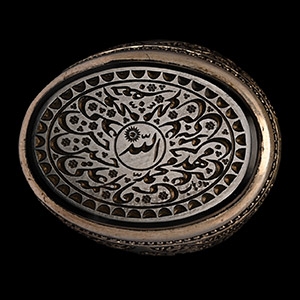
Large Western Asiatic Silver-Coloured Metal Ring with Agate Calligraphic Gemstone
20th century A.D.Sold for (Inc. bp): £85
The hoop decorated with elaborate floral motifs, two stamps to the inner face; oval bezel set with a dark brown agate intaglio engraved with densely arranged calligraphy arranged around a central medallion, notched border. 27.52 grams, 32.26 mm overall, 20.10 mm internal diameter (approximate size British U 1/2, USA 10 1/4, Europe 23.15, Japan 22)
From the family collection of a Hampstead gentleman; formerly acquired in the 1980s. This lot has been cleared against the Art Loss Register database, and is accompanied by an illustrated lot declaration signed by the Head of the Antiquities Department, Dr Raffaele D'Amato. -
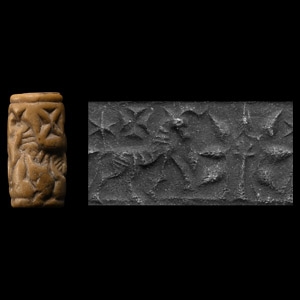
Neo-Assyrian Cream Stone Cylinder Seal with Bull
Circa 800-600 B.C.Sold for (Inc. bp): £286
Accompanied by a copy of an old scholarly note, typed and signed by W.G. Lambert, late Professor of Assyriology, University of Birmingham, 1970-1993, which states: ' Cylinder Seal of Cream Stone. 24 x 12 mm. The design, which is put between upper and lower rulings, shows a walking bull facing a stylized sacred tree: a straight trunk with five-branch crown, surrounded by scalloped line supporting seven leaves. There is a rhomb between bull and tree, and a star and Maltese cross above the bull's back. This is a Neo-Assyrian seal, c.800-600 B.C. It is one of the rarer types, deeply cut, and in good condition. The bull and the tree are both symbols of the storm god Adad, who had an important place in the Neo-Assyrian pantheon. The star is the symbol of Ishtar/Venus, also an important Assyrian deity, but the Maltese cross is so far not certainly identified.'; supplied with a museum-quality impression. 5.78 grams, 24 mm
From the private collection of a North American lady, formed 1970s-early 1990s, with collection reference no.590/2. Accompanied by a copy of a scholarly note, typed and signed by Professor Wilfrid George Lambert. This lot has been cleared against the Art Loss Register database, and is accompanied by an illustrated lot declaration signed by the Head of the Antiquities Department, Dr Raffaele D'Amato. -
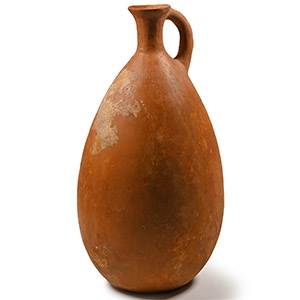
Amlash Tall Terracotta Jug
1st millennium B.C.Sold for (Inc. bp): £46
Ovate in profile with trumpet-shaped neck and mouth, single loop handle. 660 grams, 26.7 cm
From a London, UK, gentleman's collection of ancient pottery and artefacts, 1990s. This lot has been cleared against the Art Loss Register database, and is accompanied by an illustrated lot declaration signed by the Head of the Antiquities Department, Dr Raffaele D'Amato.
