
Loading, please wait...
LOT 0591
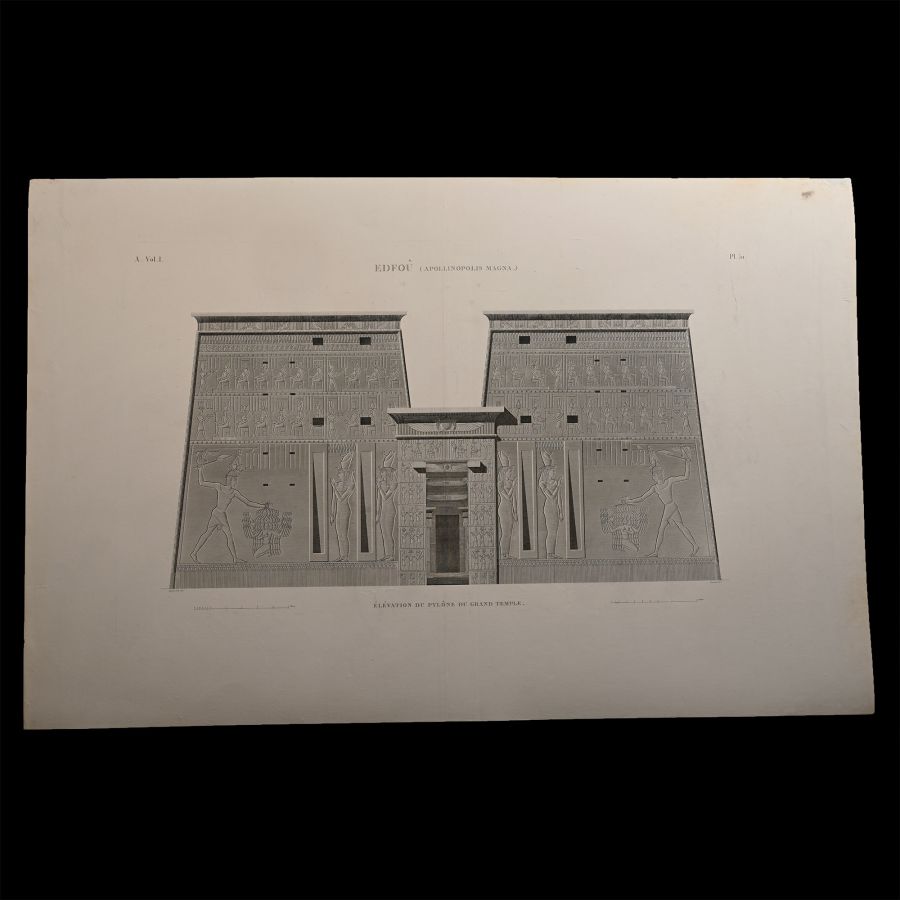
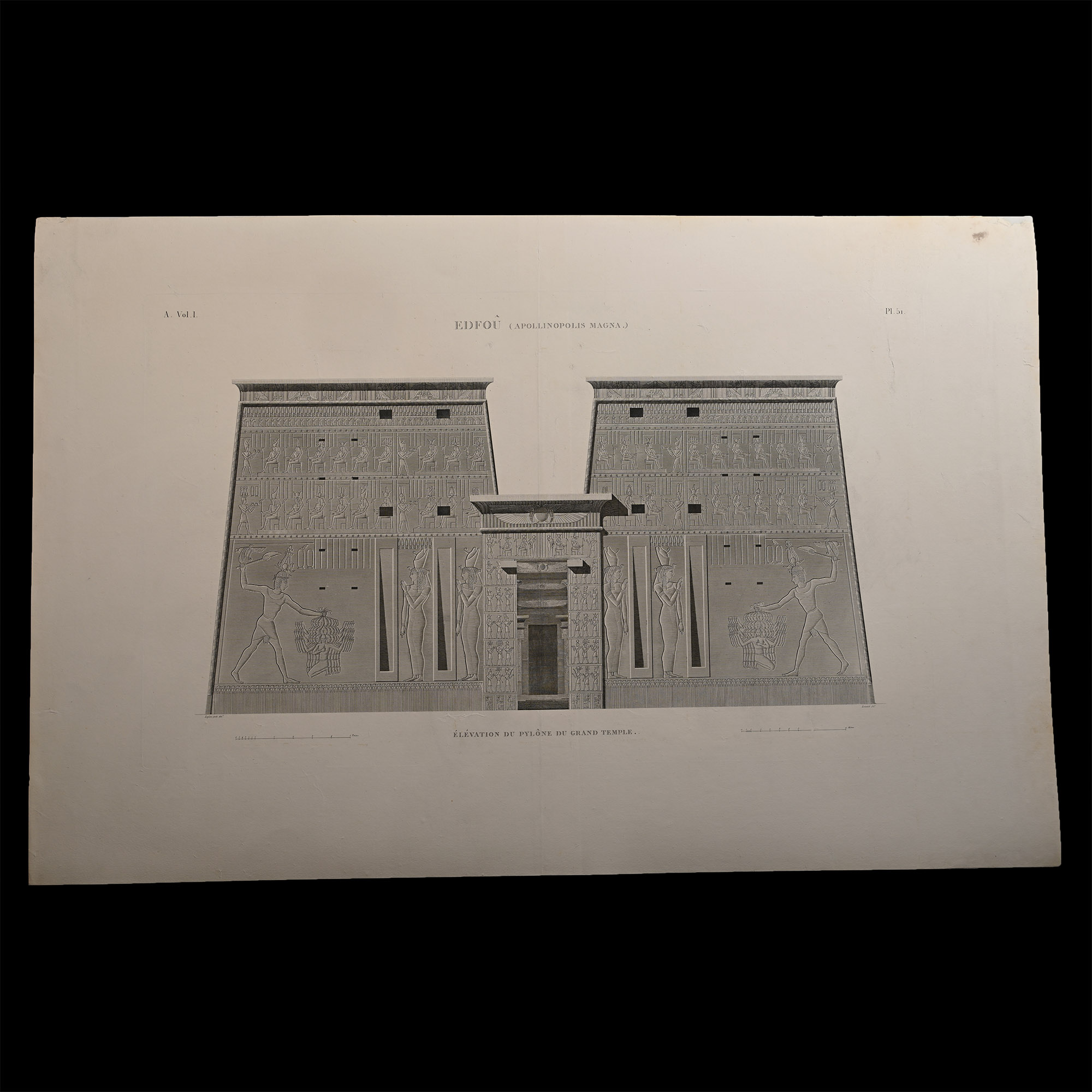
Very Large Egyptian Expedition Lithograph of the Temple of Edfu
EARLY 19TH CENTURY A.D.
41 3/4 x 27 in. (230 grams,106 x 68.5 cm).
Proof etching on laid paper of plate 51 from Vol.I of Description de l'Égypte : ou, Recueil des observations et des recherches qui ont été faites en Égypte pendant l'expédition de l'armée française. entitled Edfou (Apollinopolis magna. Élévation du pylône du grand temple.
ProvenanceFrom the collection of a North American priest.
Acquired between 1981-1996.
Property of a North American collector.
Produced between February 1802 and 1830 on the orders of Napoleon Bonaparte; published between 1809 and 1828. Just 1,000 copies were distributed to various institutions, printed on laid paper with an 'Égypte ancienne et moderne' watermark. The book is subtitled Recueil des observations et des recherches qui ont été faites en Égypte pendant l’expédition de l’Armée française, publié par les ordres de Sa Majesté l’Empereur Napoléon le Grand (Gathering of observations and discoveries which were made in Egypt during the expedition of the French army, published on the orders of His Majesty the Emperor Napoleon the Great). It was the world's first encyclopedia devoted exclusively to the remains of ancient Egypt. The plates of this book are the first to present the archaeological sites of Thebes (Luxor). The Temple of Horus at Edfu, located on the west bank of the Nile in Upper Egypt. Built in the Ptolemaic Period, it remains one of the best-preserved temples in Egypt.
CONDITIONTimeLine Auctions follows a vetting process to ensure the authenticity and legality of all items, reinforcing our commitment to integrity and responsible trading. Each antiquity, antique, and coin lot undergoes thorough examination by a vetting committee of at least ten external specialists, professional trade association members, scientists, and archaeologists: Our Vetting Process
AUCTIONS:
TimeLine is a leading auction house specialising in antiquities, ancient art, collectables, natural history, coins, medals, and books. Our auctions offer museums, collectors, historians, and enthusiasts the opportunity to acquire unique and historically significant pieces.
LOT 0591
Very Large Egyptian Expedition Lithograph of the Temple of Edfu
Sold for (Inc. bp): £130
-
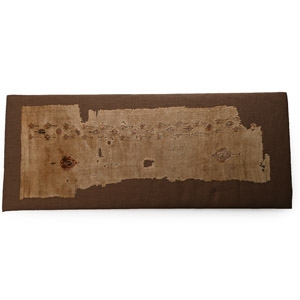
Large Mounted Egyptian Coptic Textile
Circa 5th-7th century A.D.Sold for (Inc. bp): £1,430
Possibly a fragment of a cloak, wool on linen, S-twist tapestry, decorated with a band of lanceolate leaves and two bigger opposed leaves in red, green and yellow colour. 345 grams total, mount: 86.5 cm
Acquired 1970s-1996. Property of a North American collector. London collection, 2016.
A. Gayet, who excavated the Necropolis of Antinoe, showed that the cloaks of Coptic-era nobles could be ornate, with decoration applied or woven into the fabric. Realised in dark blue, red, orange, yellow, green, brown and off-white linen and wool, the leaves are usually positioned inside a central medallion, also lanceolate, divided by a small leaf surmounted by a flower. -
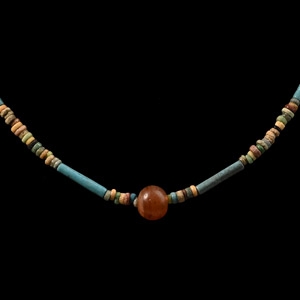
Egyptian Mummy Bead Necklace with Carnelian Feature Bead
Late Period, 664-332 B.C.Sold for (Inc. bp): £111
Restrung group of tubular and annular glazed composition beads with oblate centrepiece. 8.41 grams, 51 cm long
Previously with Astarte Gallery, London W1, UK, 1983. From the private collection of T.R. Elley, West Sussex, UK, 1980s. Accompanied by an invoice copy dated 18 October 1983. -
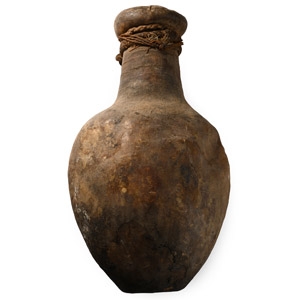
Coptic Leather Water Container
3rd-5th century A.D. or laterSold for (Inc. bp): £72
With tubular neck and ovoid body, thickened rim and flat base; three bands of rope and thong around the neck. 323 grams, 32 cm
Ex Terence Eva collection, London, UK; formed in the 1970's-1980's.
