
Loading, please wait...
LOT 0451
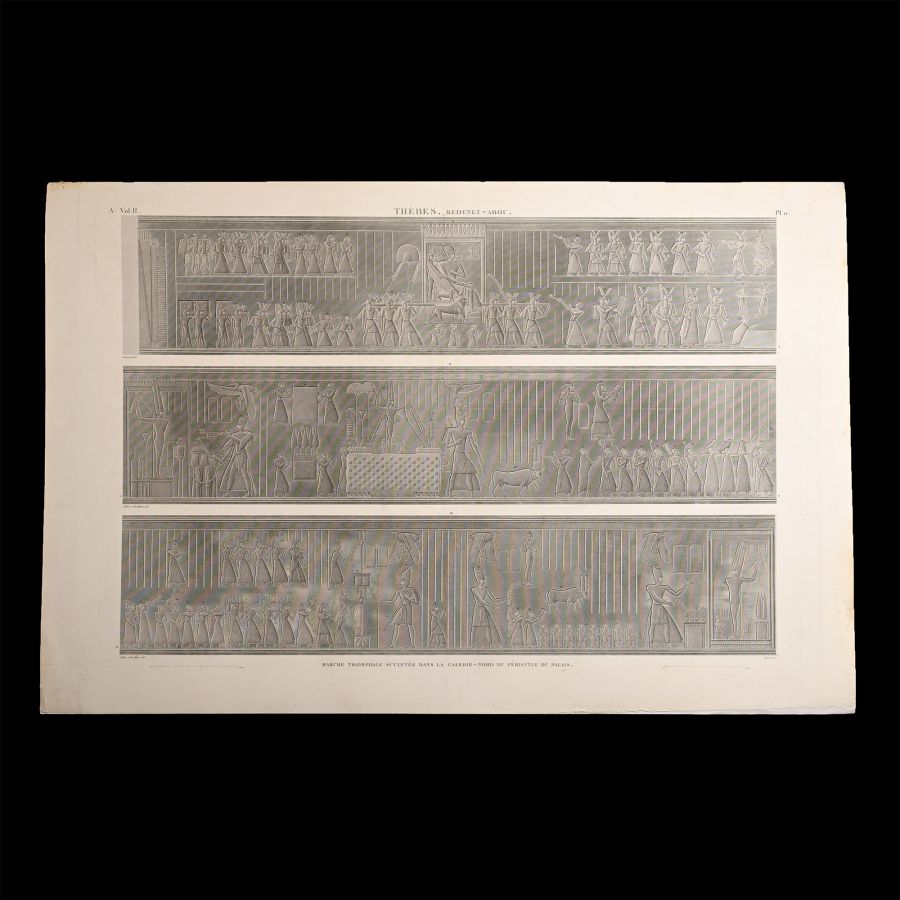
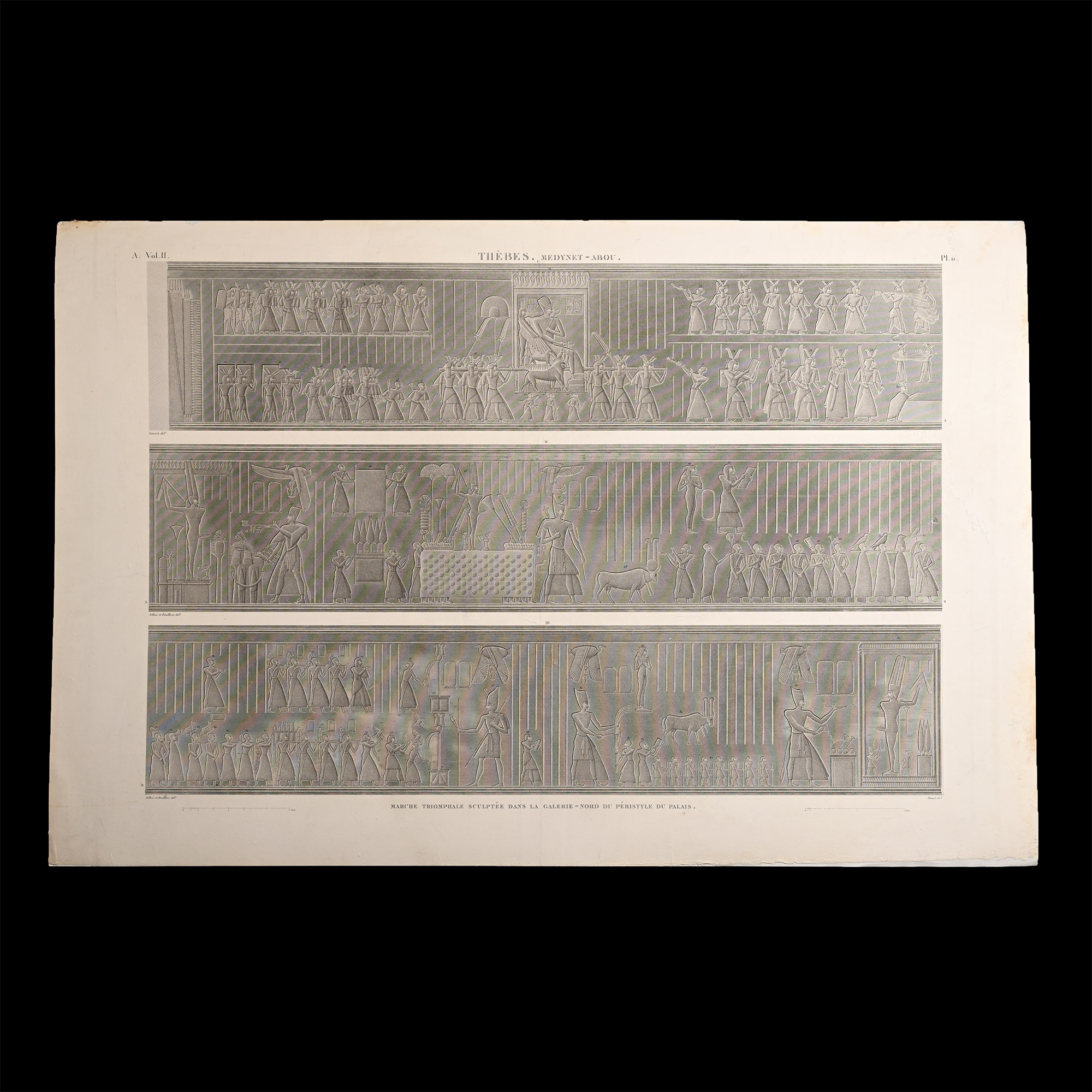
Very Large Egyptian Expedition Lithograph of the Reliefs of the Temple of Medynet-Abou at Thebes
EARLY 19TH CENTURY A.D.
41 x 27 1/2 in. (231 grams, 104 x 70 cm).
Proof etching on laid paper of plate 11 from Phillipeaux Thèbes - Medynet-Abou Marche Triomphale sculptée dans la Galerie-Nord du Péristyle du Palais with military procession in three registers.
ProvenanceFrom the collection of a North American priest.
Acquired between 1981-1996.
Property of a North American collector.
Produced between February 1802 and 1830 on the orders of Napoleon Bonaparte; published between 1809 and 1828. Just 1,000 copies were distributed to various institutions, printed on laid paper with an 'Égypte ancienne et moderne' watermark. The book is subtitled Recueil des observations et des recherches qui ont été faites en Égypte pendant l’expédition de l’Armée française, publié par les ordres de Sa Majesté l’Empereur Napoléon le Grand (Gathering of observations and discoveries which were made in Egypt during the expedition of the French army, published on the orders of His Majesty the Emperor Napoleon the Great). It was the world's first encyclopedia devoted exclusively to the remains of ancient Egypt. The plates of this book are the first to present the archaeological sites of Thebes (Luxor). Medinet Habu is the name given to the impressive mortuary temple built for Ramesses III. The walls are covered with scenes of religious and royal ceremonies, as well as battle scenes. An earlier temple and later tomb complexes are found within its impressive enclosure walls.
CONDITIONTimeLine Auctions follows a vetting process to ensure the authenticity and legality of all items, reinforcing our commitment to integrity and responsible trading. Each antiquity, antique, and coin lot undergoes thorough examination by a vetting committee of at least ten external specialists, professional trade association members, scientists, and archaeologists: Our Vetting Process
AUCTIONS:
TimeLine is a leading auction house specialising in antiquities, ancient art, collectables, natural history, coins, medals, and books. Our auctions offer museums, collectors, historians, and enthusiasts the opportunity to acquire unique and historically significant pieces.
LOT 0451
Very Large Egyptian Expedition Lithograph of the Reliefs of the Temple of Medynet-Abou at Thebes
Sold for (Inc. bp): £117
-
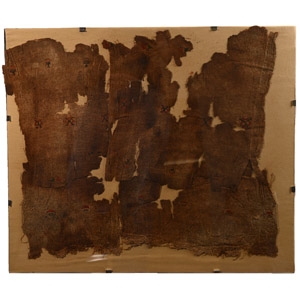
Large Mounted Egyptian Coptic Textile
Circa 6th-7th century A.D.Sold for (Inc. bp): £234
Possible fragment of tapestry or a cloak, light fabric, S-twist tapestry, ornamented with wool and linen flowers in red, green and yellow colour. 1.8 kg total, mount: 78 x 70 cm
Acquired 1970s-1996. Property of a North American collector. London collection, 2016.
Most of the linen or wool garments found by A. Gayet in the Antinoe necropolis were woven in a specific pattern, in a single piece, on a horizontal warp. Another relatively common pattern for linen garments consisted of assembling three pieces woven on a single warp and forming the upper part of the garment, with the collar and sleeves. -
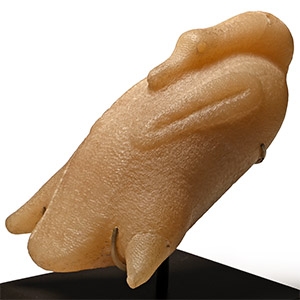
Egyptian Alabaster Trussed Duck
Old Kingdom, 6th Dynasty, circa 2345-2181 B.C.Estimate: £7,000 - 9,000 (+bp*)
Opening Bid: £3,500
Carved in the round with the head and neck laid backwards along the spine; mounted on a custom-made stand. 890 grams total, 10 cm wide including stand
Acquired before 1970. Private French collection. with Bonhams, New Bond Street, London, 29 April 2009, lot 58. Ex Middle Eastern royal family, living in the UK, 2013-2017. Accompanied by a copy of a French cultural passport no.099505. Accompanied by a copy of an Art Loss Register certificate, no.S000149104. Accompanied by a copy of the relevant Bonhams catalogue pages. This lot has been checked against the Interpol Database of stolen works of art and is accompanied by search certificate number no.12942-245247.
In ancient Egypt, the duck (actually the Egyptian goose) was considered a sacred and very popular animal, often depicted in art and associated with symbolic meanings. It was a common bird in the Nile Valley and considered a symbol of fertility, life, and family, which is why it frequently appeared in scenes of daily life and rituals, and in the artworks. -
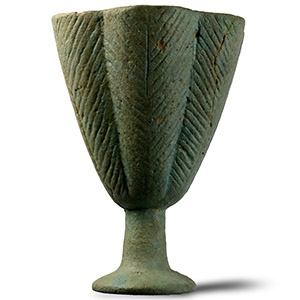
Egyptian Blue-Glazed Faience White Lotus Chalice
New Kingdom-Third Intermediate Period, 1315-945 B.C.Estimate: £5,000 - 7,000 (+bp*)
Opening Bid: £2,500
The lotiform cup modelled as an open lotus flower with incised petal detailing to the outer face, short stem and flared foot; some restoration. 205 grams, 12.1 cm
Acquired 1970s-1996. Property of a North American collector. London collection, 2016. This lot has been checked against the Interpol Database of stolen works of art and is accompanied by search certificate number no.12937-243177.
Faience chalices shaped like the flowers of the white lotus (Nymphaea albicans) first appeared in the 18th Dynasty and are believed to be drinking vessels.
