
Loading, please wait...
LOT 0505
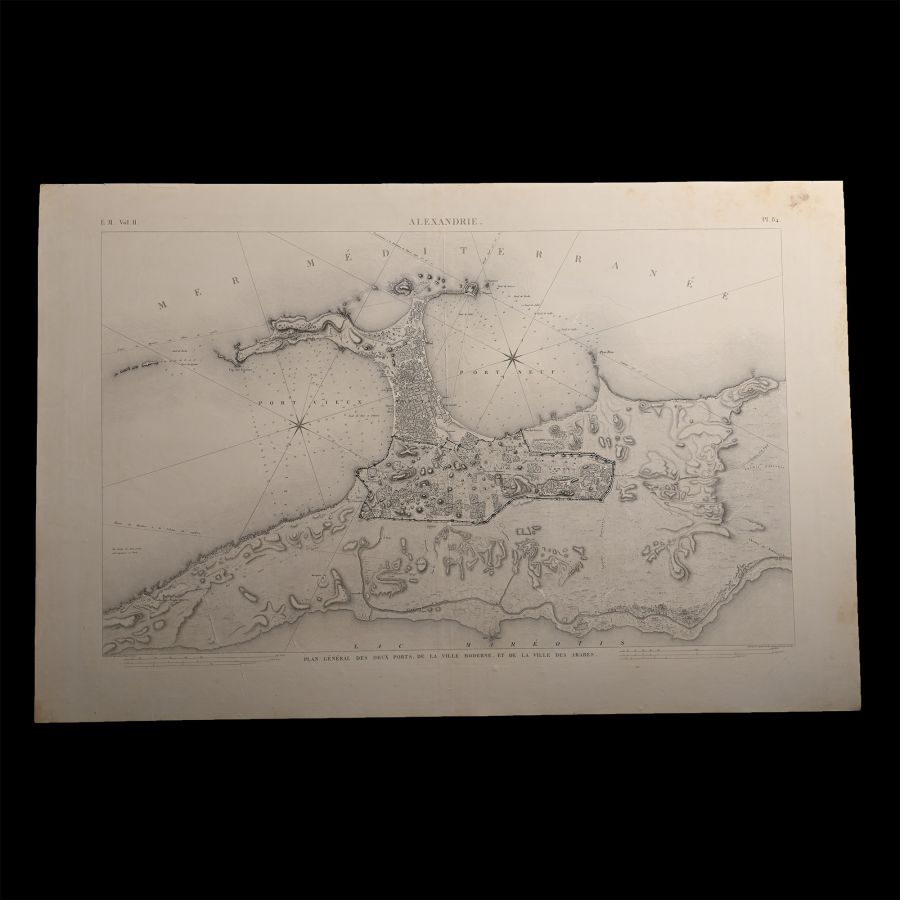
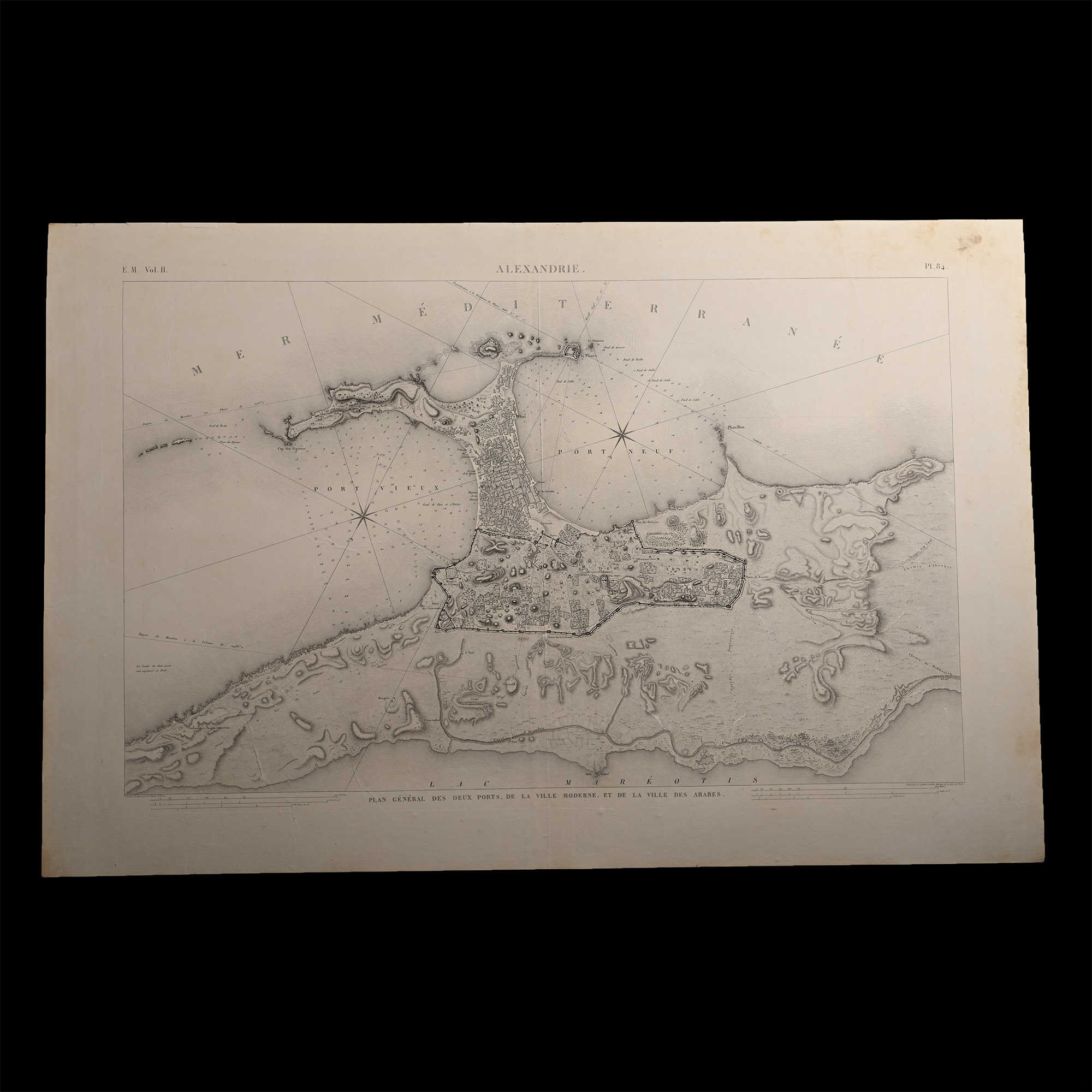
Very Large Egyptian Expedition Lithograph of a Plan of Alexandria
EARLY 19TH CENTURY A.D.
41 3/8 x 27 1/4 in. (299 grams, 105 x 69.5 cm).
Proof etching on laid paper of plate 84 from Description de l'Égypte: ou, Recueil des observations et des recherches qui ont été faites en Égypte pendant l'expédition de l'armée française entitled Alexandrie. Plan général des deux ports, de la ville moderne, et de la ville des arabes.
ProvenanceFrom the collection of a North American priest.
Acquired between 1981-1996.
Property of a North American collector.
Produced between February 1802 and 1830 on the orders of Napoleon Bonaparte; published between 1809 and 1828. Just 1,000 copies were distributed to various institutions, printed on laid paper with an 'Égypte ancienne et moderne' watermark. The book is subtitled Recueil des observations et des recherches qui ont été faites en Égypte pendant l’expédition de l’Armée française, publié par les ordres de Sa Majesté l’Empereur Napoléon le Grand (Gathering of observations and discoveries which were made in Egypt during the expedition of the French army, published on the orders of His Majesty the Emperor Napoleon the Great). It was the world's first encyclopedia devoted exclusively to the remains of ancient Egypt. The plates of this book are the first to present the archaeological sites of Thebes (Luxor).
CONDITIONTimeLine Auctions follows a vetting process to ensure the authenticity and legality of all items, reinforcing our commitment to integrity and responsible trading. Each antiquity, antique, and coin lot undergoes thorough examination by a vetting committee of at least ten external specialists, professional trade association members, scientists, and archaeologists: Our Vetting Process
AUCTIONS:
TimeLine is a leading auction house specialising in antiquities, ancient art, collectables, natural history, coins, medals, and books. Our auctions offer museums, collectors, historians, and enthusiasts the opportunity to acquire unique and historically significant pieces.
LOT 0505
Very Large Egyptian Expedition Lithograph of a Plan of Alexandria
Sold for (Inc. bp): £169
-
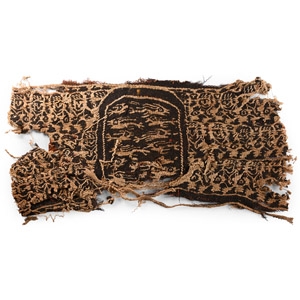
Egyptian Coptic Textile Fragment
Circa 4th-8th century A.D.Sold for (Inc. bp): £130
Fragment of a tapestry or a fabric, white linen and brown wool, S twist, depicting three rows of black slingers, shields in right or left hands, marching in opposing positions towards a roundel decorated with images of marine animals. 40 grams total including package, 22.5 cm
Acquired 1970s-1996. Property of a North American collector. London collection, 2016.
This embroidery was typical of tunics and garments characterised by full-length clavi, decorated with either intricate geometric patterns or with a multitude of small figures and animals, often edged with geometric borders and finished with thick, weft-loop fringes or cords. -
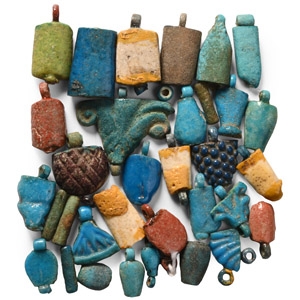
Egyptian Glazed Faience Bead and Amulet Collection
New Kingdom, 1550-1070 B.C.Sold for (Inc. bp): £143
Comprising various glazed amulets and beads, including grape bunch, lotus flower, and other types. 8.3 grams total, 2-19 mm
Ex Norri collection, Milton Keynes, UK, 1980s-1990s. -
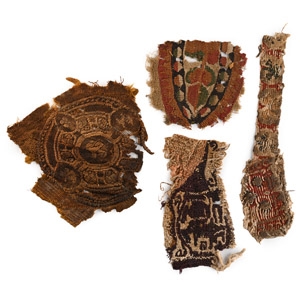
Egyptian Coptic Textile Fragment Group
Circa 4th-5th century A.D.Sold for (Inc. bp): £104
Comprising: a fragment of a clavus in coarse linen and dark brown wool, tapestry, with remains of a medallion embroidered with a lion running right; fragment of an orbiculus in linen and yellow and blue wool, S torsion, embroidered with vegetal and geometric patterns; two terminal fragments of a clavi, in red, green, dark blue and white wool. 58 grams total including package, 8.6-19.5 cm
Acquired 1970s-1996. Property of a North American collector. London collection, 2016.
These are decorative parts of tunics. The lion orbiculus in particular stands out for its delicate design and hunting theme. Dionysus and his entourage were often depicted on these tunics, despite the fact that these fabrics were produced in a by then heavily Christianised empire.
