
Loading, please wait...
![Very Large Clear Quartz Rock Crystal Point Group [6]](https://timelineauctions.com/zoom_images/zoomthumb/2/2/228147_900x900.jpg "Very Large Clear Quartz Rock Crystal Point Group [6]")
![Very Large Clear Quartz Rock Crystal Point Group [6]](https://timelineauctions.com/zoom_images/zoommap/2/2/228147_200x200.jpg "Very Large Clear Quartz Rock Crystal Point Group [6]")
![Very Large Clear Quartz Rock Crystal Point Group [6]](https://timelineauctions.com/upload/images/items/228147.jpg "Very Large Clear Quartz Rock Crystal Point Group [6]")
LOT 2425
Very Large Clear Quartz Rock Crystal Point Group [6]
2 5/8 - 3 3/4 in. (1.49 kg total, 67-96 mm).
Comprising six large clear to translucent prismatic points with inclusions. [6, No Reserve]
ProvenanceFrom Brazil.
Ex Mineral Imports, London, UK.
Gregory, Bottley & Lloyd (Gregory's), Harwich, UK.
TimeLine Auctions follows a vetting process to ensure the authenticity and legality of all items, reinforcing our commitment to integrity and responsible trading. Each antiquity, antique, and coin lot undergoes thorough examination by a vetting committee of at least ten external specialists, professional trade association members, scientists, and archaeologists: Our Vetting Process
AUCTIONS:
TimeLine is a leading auction house specialising in antiquities, ancient art, collectables, natural history, coins, medals, and books. Our auctions offer museums, collectors, historians, and enthusiasts the opportunity to acquire unique and historically significant pieces.
-
![Dendritic Limestone Plant-Like Formation Tile Group [3]](https://timelineauctions.com/upload/images/items/small/228171-s.jpg)
Dendritic Limestone 'Plant-Like Formation' Tile Group [3]
Sold for (Inc. bp): £20
Each a rectangular slice with radiating growths. 591 grams total, 11.9-14.3 cm
From India. Ex Mineral Imports, London, UK. Gregory, Bottley & Lloyd (Gregory's), Harwich, UK. -
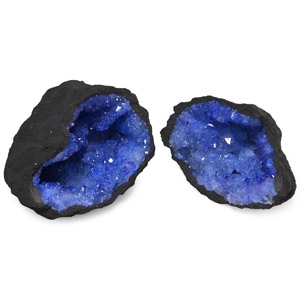
Coloured Quartz Crystal Geode Nodule
Sold for (Inc. bp): £39
A small nodule split in two halves exposing the vibrantly dyed blue-coloured crystals. 147 grams total, 61 mm each
From a Cambridgeshire, UK, collection. -
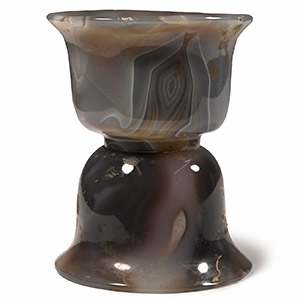
Banded Agate Vase
Sold for (Inc. bp): £85
With an hourglass-shaped body, a small opening to the base of the top, enabling it to be used as a candlestick as well. 484 grams, 10.5 cm
From the family collection of a Hampstead gentleman; formerly acquired in the 1980s.
