Loading, please wait...

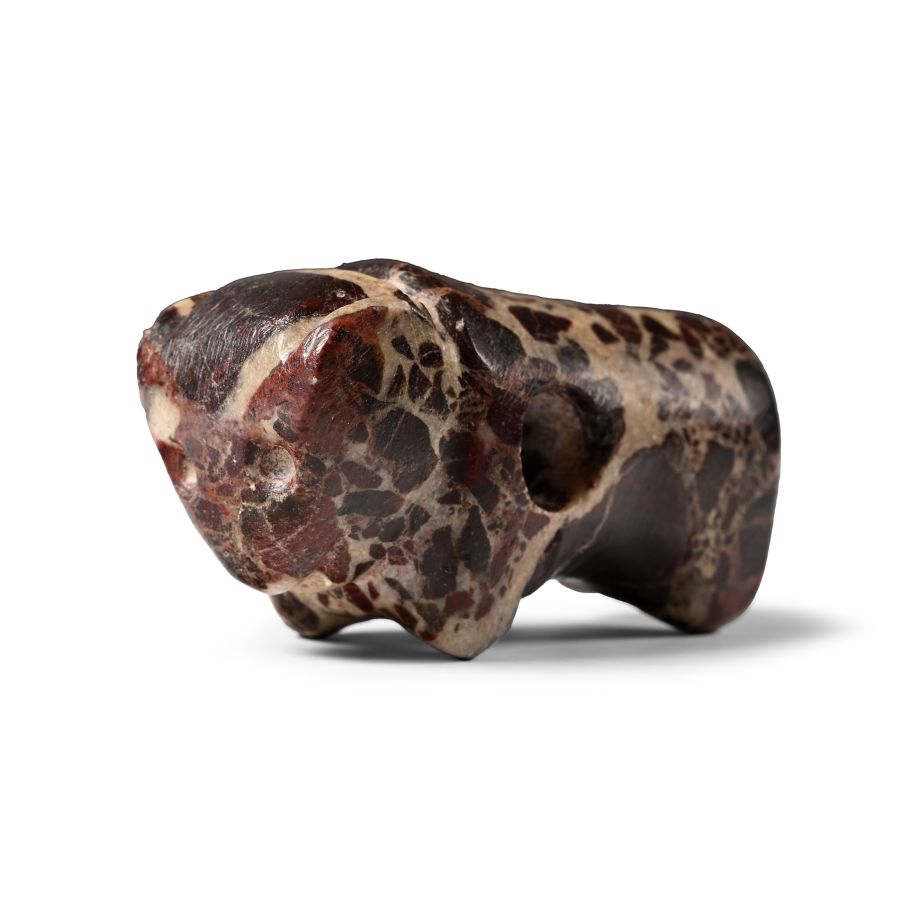
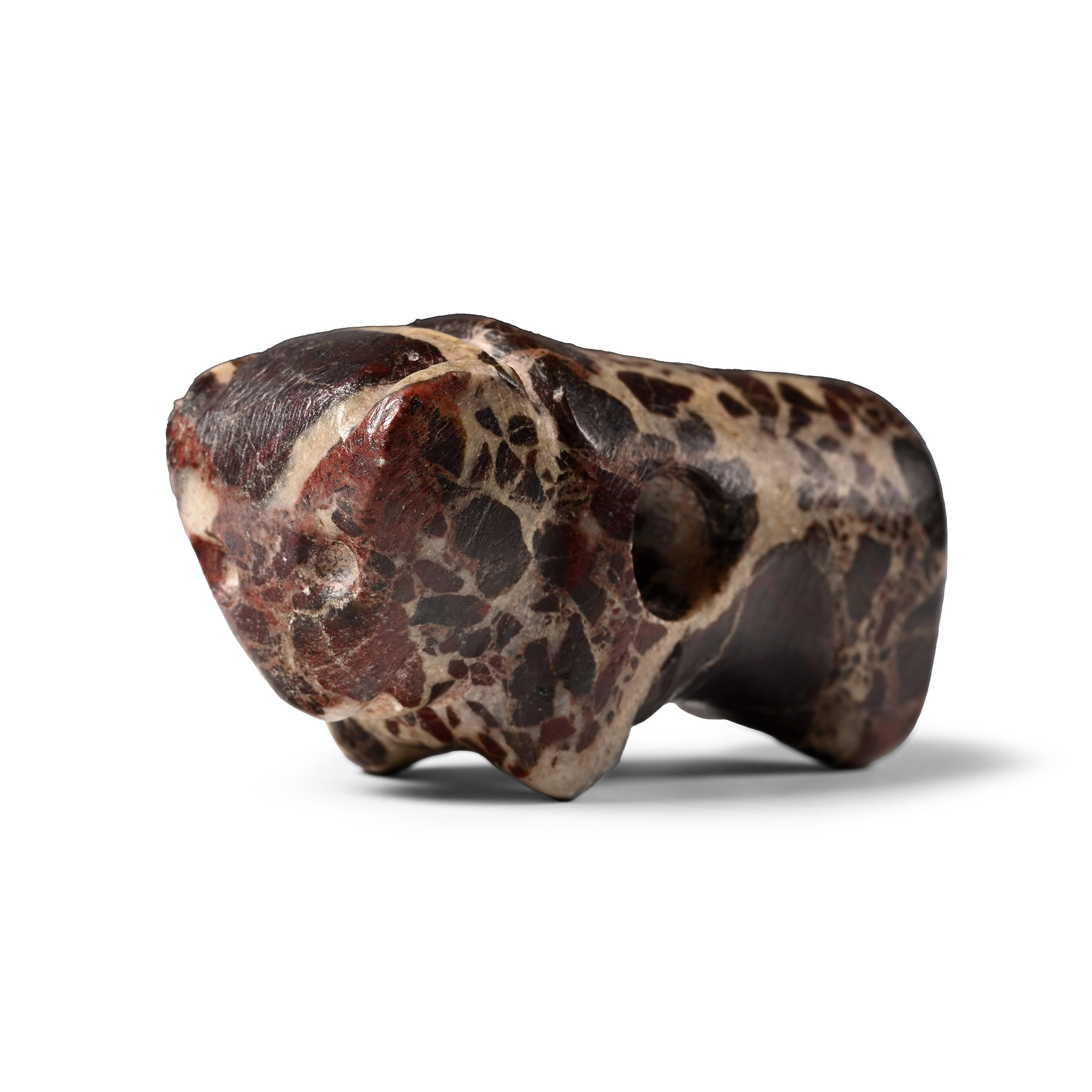
Uruk Speckled Brown Stone Bovine Amulet Uruk Speckled Brown Stone Bovine Amulet Uruk Speckled Brown Stone Bovine Amulet
Use mousewheel to zoom in and out, click to enlarge
Details

LOT 1114

Uruk Speckled Brown Stone Bovine Amulet

3RD MILLENNIUM B.C.

1 5/8 in. (33 grams, 45 mm).

Modelled in the round, bovine figure with head lowered; the eyes drilled to accept an inlay (absent); suspension hole at the shoulders incomplete.

Provenance

Ex S. collection, London, UK, 1980s-2000s.

CONDITION
VETTING:

TimeLine Auctions follows a vetting process to ensure the authenticity and legality of all items, reinforcing our commitment to integrity and responsible trading. Each antiquity, antique, and coin lot undergoes thorough examination by a vetting committee of at least ten external specialists, professional trade association members, scientists, and archaeologists: Our Vetting Process


AUCTIONS:

TimeLine is a leading auction house specialising in antiquities, ancient art, collectables, natural history, coins, medals, and books. Our auctions offer museums, collectors, historians, and enthusiasts the opportunity to acquire unique and historically significant pieces.

Live Bidding

LOT 1114

Uruk Speckled Brown Stone Bovine Amulet

Sold for (Inc. bp): £364

Print page

RELATED LOTS
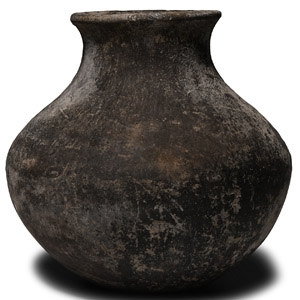
  • Sumerian Terracotta Vessel
    Sumerian Terracotta Vessel
    2600-2400 B.C.

    Sold for (Inc. bp): £2,860

    Squat biconvex jar with short neck and broad flat mouth; shoulder and body decorated with dense array of radiating combed lines, interrupted at the equator by a herringbone-pattern band, '4' shaped herringbone motif to the underside. 322 grams, 12.3 cm


    Acquired in the mid 1980s-1990s. Private collection, Switzerland, thence by descent. Private collection, since the late 1990s. This lot has been checked against the Interpol Database of stolen works of art and is accompanied by search certificate number no.12257-222364.

    Lot Details

  • Islamic Leather-Bound Manuscript, A Summary of Astronomy by Musa bin Muhammad Qadhi Zada al-Rumi
    Islamic Leather-Bound Manuscript, A Summary of Astronomy by Musa bin Muhammad Qadhi Zada al-Rumi
    942 A.H.

    Estimate: £4,000 - 6,000 (+bp*)

    Opening Bid: £2,000

    Rebound as a hardback with full leather binding, gilt central arabesque foliage panel and drypoint borders, fore-edge and envelope flap; title page with naskh script text in a triangular block with circular stamp and other notation; text pages each typically 21 lines of dense naskh script text with red titles, blocks of marginal notation. 418 grams, 15.5 x 20.5 cm


    From an important family collection started in the late 1950s. Property of a West London, UK, gentleman. This lot has been checked against the Interpol Database of stolen works of art and is accompanied by a search certificate number no.12273-220406.

    The text is an explanation of the book 'Summary of Astronomy' written by the engineer Musa bin Muhammad Qadhi Zada al-Rumi who died in 840 A.H. (1436 A.D.). The work is a footnote in the clarification of the minister, astronomical engineer Sinan al-Din Pasha, Yusuf bin Khadr bin Jalal Al-Din Al-Rumi who died in 891 A.H. (1486 A.D.) by order of Sultan Muhammad Al-Fateh bin Murad, a student of the author. This version dates to 952 A.H. (1535 A.D.).

    Lot Details

  • Luristan Bronze Pin Collection
    Luristan Bronze Pin Collection
    2nd-1st millennium B.C.

    Sold for (Inc. bp): £156

    Comprising: six specimens with a tapering round-section shank, balustered finial topped with a conical head, fastening holes; four specimens with tapering round section, poppy-shaped head and flared collar beneath. 714 grams total, 14.1-41.7 cm


    From a collection of a gentleman, acquired on the London art market in the 1990s.

    According to the study of Moorey, the knobbed pins from Iran are documented from the earliest periods of metallurgy, increasing in quantity during the late 2nd millennium, to reach the peak of the production from the early 1st millennium. Pins were used as hair and clothing fasteners, but it is not excluded that they could have been used by women as personal means of defence in dangerous situations.

    Lot Details

Stay up-to-date with the latest from TimeLine Auctions by joining our mailing list