
Loading, please wait...
LOT 0204
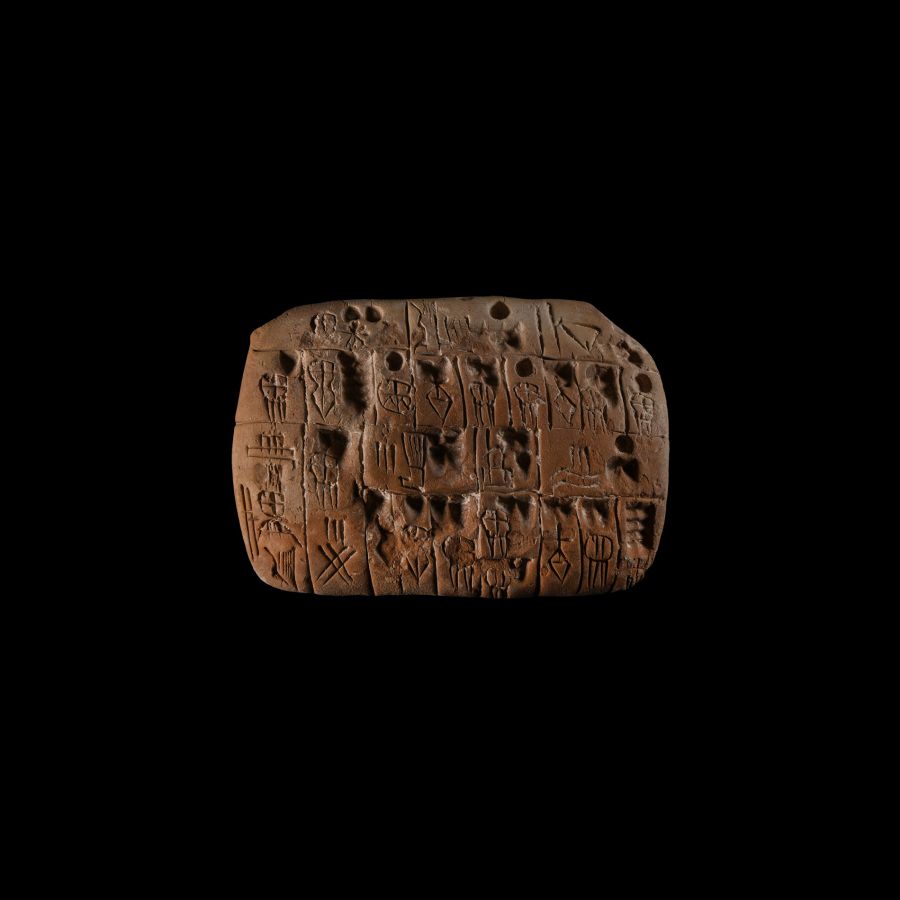
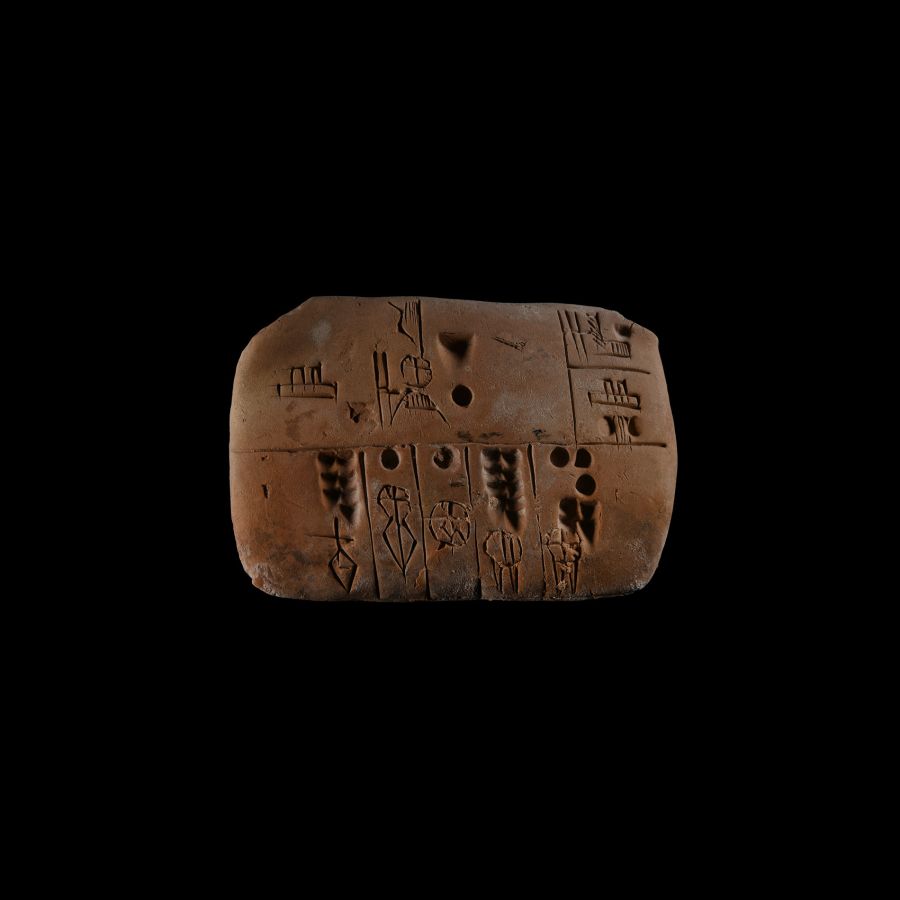
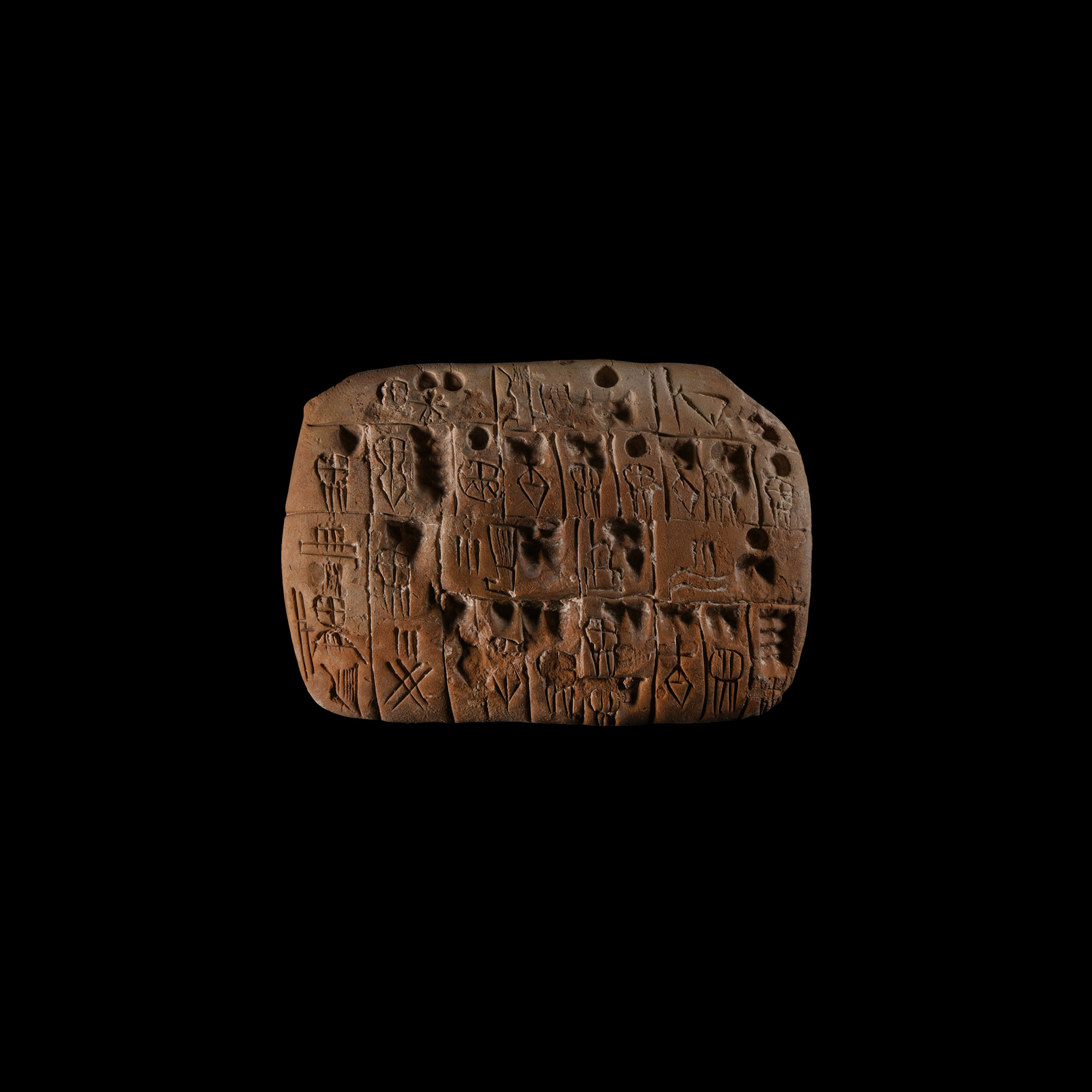
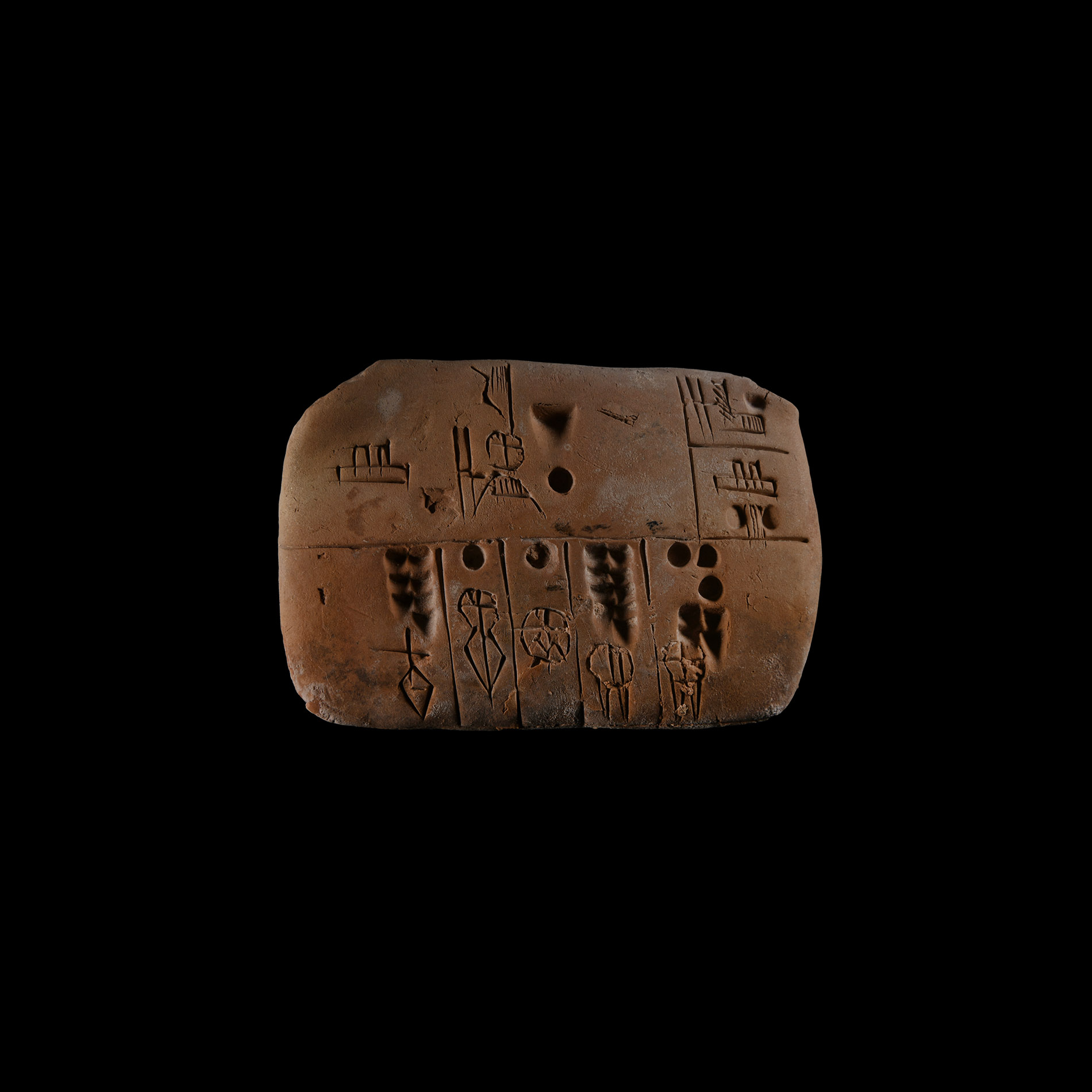
Uruk Pictographic Economic Clay Tablet Relating to Cattle
CIRCA 3000 B.C.
3 1/2 in. (112 grams, 89 mm).
Bearing pictographs to the two principal faces; of pillow-shaped form.
ProvenanceSpecialised collection of cuneiform texts, the property of a London gentleman and housed in London before 1992.
Thence by descent to family members.
Examined by Professor Wilfrid George Lambert FBA (1926-2011), historian, archaeologist, and specialist in Assyriology and Near Eastern archaeology, in the late 1980s and early 1990s.
The collection is exceptional for the variety of types, including some very rare and well preserved examples.
This lot has been checked against the Interpol Database of stolen works of art and is accompanied by search certificate no.201149.
Cf. similar item in the British Museum, London, under accession number 1989,0130.4/ BM No.140855 and published in MacGregor, N., A History of the World in 100 Objects, London, 2010 (cat.no.15, pp.90-94).
FootnotesThe purpose of these items is not known for sure but the combination of pictograms and impressed points has led to the suggestion that they were used for tallying quantities of various commodities.
CONDITIONTimeLine Auctions follows a vetting process to ensure the authenticity and legality of all items, reinforcing our commitment to integrity and responsible trading. Each antiquity, antique, and coin lot undergoes thorough examination by a vetting committee of at least ten external specialists, professional trade association members, scientists, and archaeologists: Our Vetting Process
AUCTIONS:
TimeLine is a leading auction house specialising in antiquities, ancient art, collectables, natural history, coins, medals, and books. Our auctions offer museums, collectors, historians, and enthusiasts the opportunity to acquire unique and historically significant pieces.
LOT 0204
Uruk Pictographic Economic Clay Tablet Relating to Cattle
Sold for (Inc. bp): £4,680
-

South Arabian Inscribed Ceramic Female Statuette
1st century B.C.-1st century A.D.Estimate: £800 - 1,000 (+bp*)
Opening Bid: £320
Modelled seated and nude, arms outstretched before the body; polychrome facial and anatomical detailing and depiction of a necklace and arm bangles; lettering to legs; repaired. 618 grams, 15.8 cm
London art market, 2000. Accompanied by thermoluminescence analysis report no.C142647A-1 from Re.S.Artes. Accompanied by an Art Loss Register search certificate dated 10 January 2017 and IADAA search certificate dated 15 April 2020. -

Qajar Inscribed Gemstone in Silver Ring
Dated 1873 A.D.Estimate: £150 - 200 (+bp*)
Opening Bid: £75
Carnelian cloison dated 1290 AH (1873 AD) with personal stamp seal for Rahim Al-Hosseini. 16.65 grams, 29.85 mm overall, 20.80 mm internal diameter (approximate size British W, USA 11, Europe 25, Japan 24)
Acquired by the vendor's father on the UK art market, before 1990. -

Western Asiatic Limestone Shekel Weight Collection
Iron Age III, 9th-7th century B.C.Sold for (Inc. bp): £975
A number bearing incised inscriptions; the set graduated in size, each weight with a domed profile; one with two old collection stickers to base. 96 grams total, 15-34 mm
Property of a North London gentleman.
Judean scale weights were primarily used to weigh amounts of silver, often in the form of hack silver. Modern scholarship has deduced that Judean weights were base on a standard of 11.4 grams to the shekel.
