
Loading, please wait...

LOT 1118
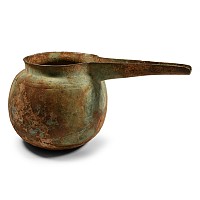
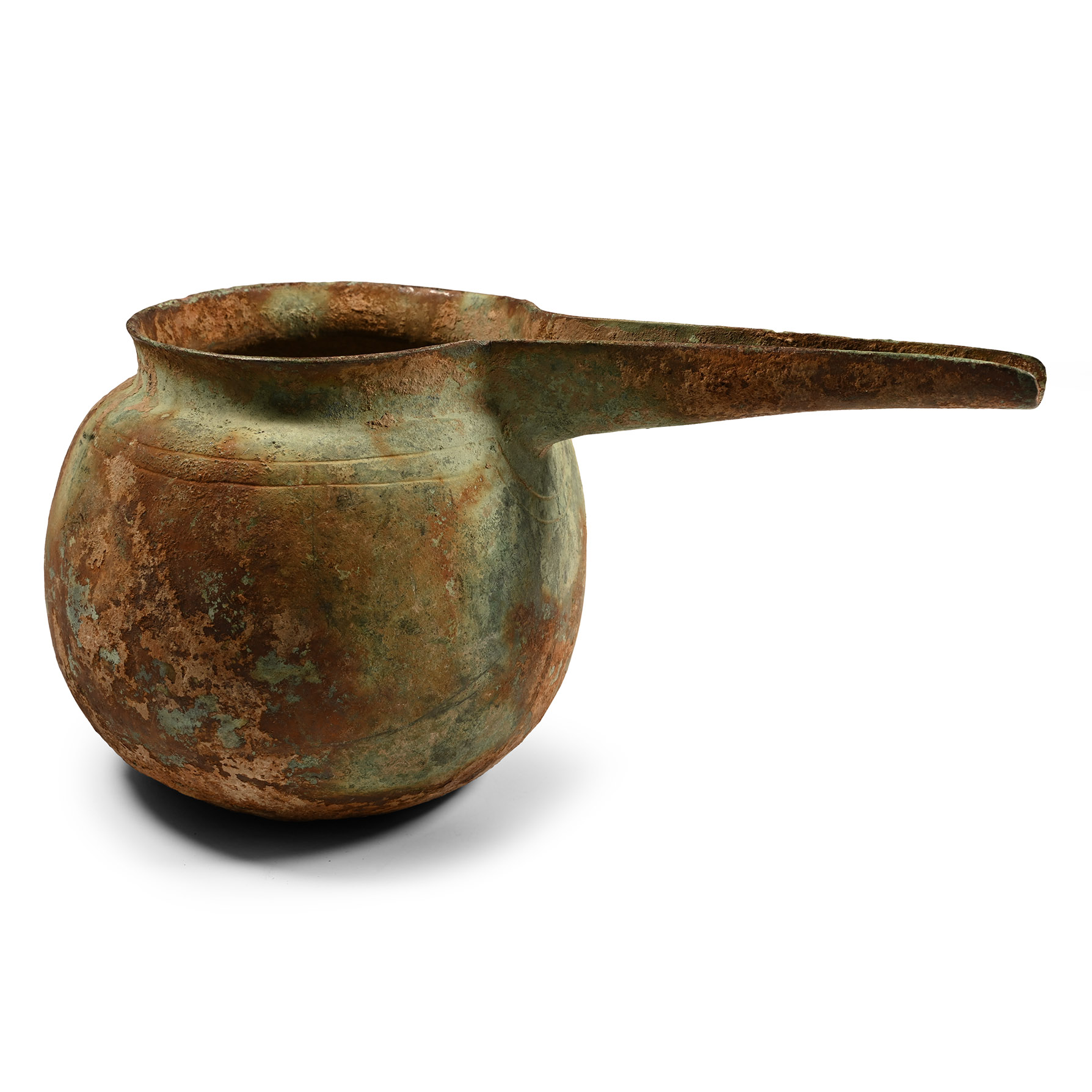
Urartu Bronze Spouted Vessel
10TH-7TH CENTURY B.C.
9 5/8 in. (706 grams, 24.5 cm).
With drum-shaped body, broad neck, everted rim; long, deep U-sectioned integral spout; band of incised parallel lines to the shoulder and beneath the spout. [No Reserve]
ProvenanceAcquired 1980-2015.
Ex Abelita family collection.
See Engel, N. & Overlaet, B. et al., Bronzes de Luristan, enigmes de l'Iran Ancien, IIIe-Ier millenaire av.J.C., Paris, 2008, for discussion.
CONDITIONTimeLine Auctions follows a vetting process to ensure the authenticity and legality of all items, reinforcing our commitment to integrity and responsible trading. Each antiquity, antique, and coin lot undergoes thorough examination by a vetting committee of at least ten external specialists, professional trade association members, scientists, and archaeologists: Our Vetting Process
AUCTIONS:
TimeLine is a leading auction house specialising in antiquities, ancient art, collectables, natural history, coins, medals, and books. Our auctions offer museums, collectors, historians, and enthusiasts the opportunity to acquire unique and historically significant pieces.
-
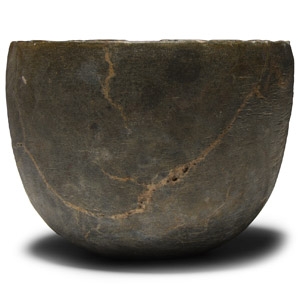
Western Asiatic Grey Stone Mortar
Circa 1st millennium B.C.Sold for (Inc. bp): £39
Drum-shaped in profile with rounded rim. 493 grams, 11.1 cm wide
From a collection acquired on the UK art market from various auction houses and collections mostly before 2000. From an important Cambridgeshire estate; thence by descent. -
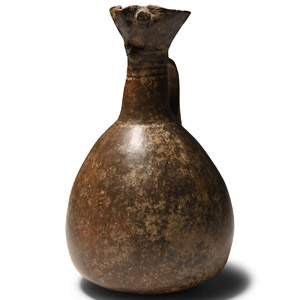
Luristan Terracotta Vessel with Bird Face
1st millennium B.C.Estimate: £200 - 300 (+bp*)
Opening Bid: £90
Ewer with broad bulbous body and carination at the base, tapering neck with loop handle developing to a raised spine, flared mouth with pinched rim and avian facial detailing. 298 grams, 18.5 cm
with a London, UK gallery, 1971-early 2000s. -
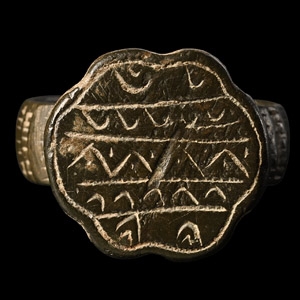
Western Asiatic Engraved Bronze Ring
13th-14th century A.D.Sold for (Inc. bp): £26
Sturdy D-section hoop with stepped shoulders and hexagonal rosette bezel with bands of incised pseudo-text. 20.25 grams, 31.80 mm overall, 20.12 mm internal diameter (approximate size British T, USA 9 1/2, Europe 21.26, Japan 20)
Collected from 1970-1999. From the collection of the late Mr S.M., London, UK.
