
Loading, please wait...
LOT 0199
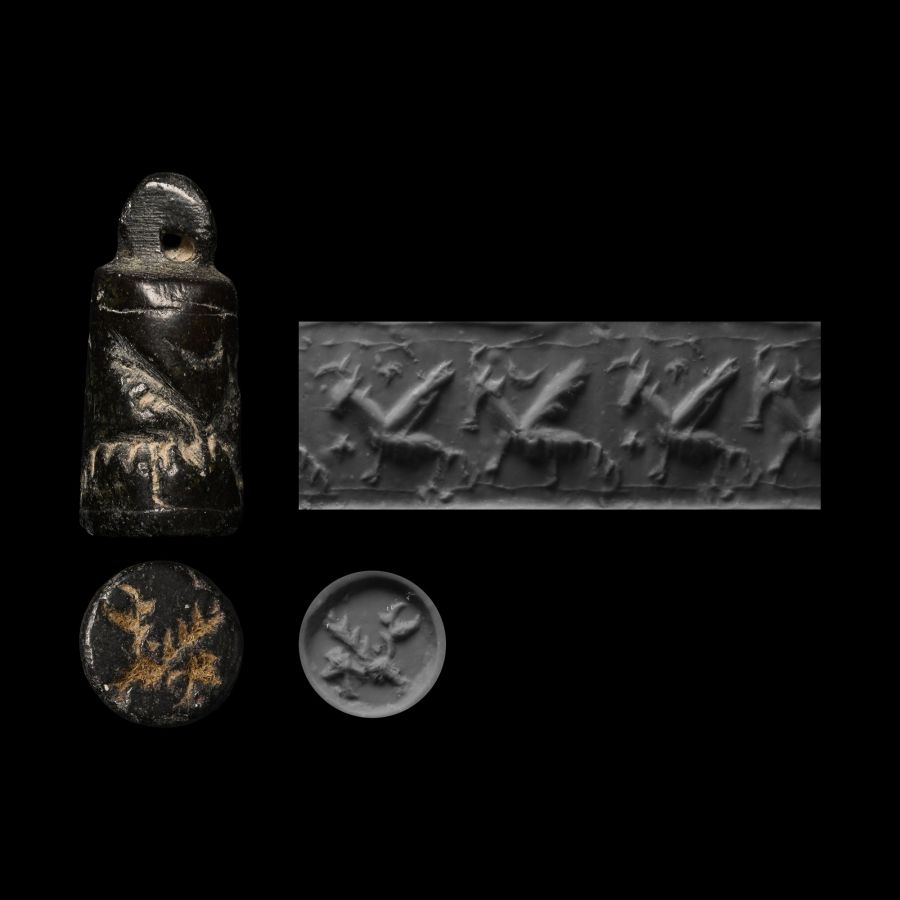
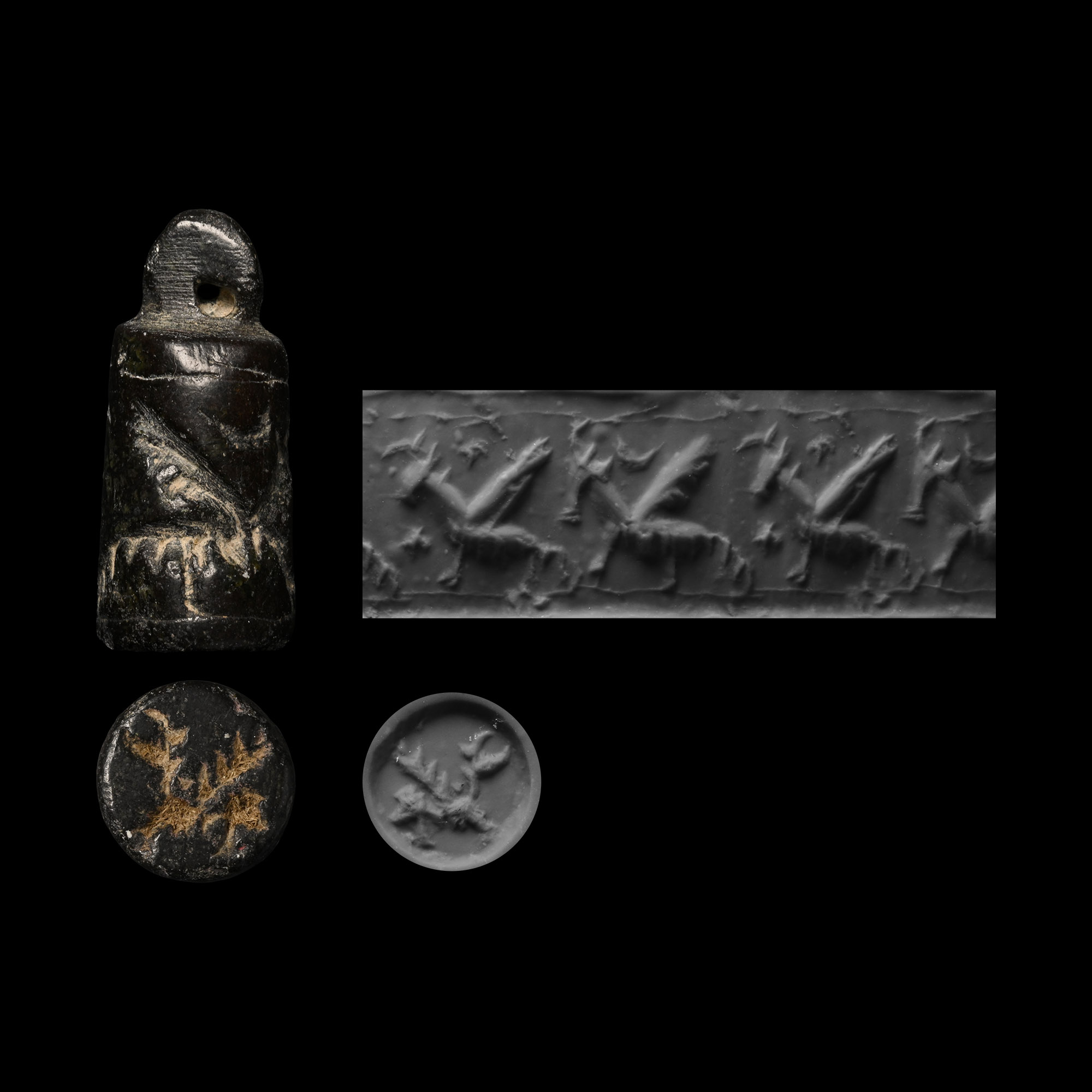
Urartu Black Stone Stamp-Cylinder Seal with Winged Quadruped
CIRCA 900-700 B.C.
1 1/4 in. (7.88 grams, 30 mm).
With two winged monsters, accompanied by museum quality impressions and a copy of an old scholarly note, typed and signed by W.G. Lambert, late Professor of Assyriology, University of Birmingham, 1970-1993, which states: 'Description of Stamp-Cylinder Seal of black stone, 31 x 14 mm. Sides: two winged monsters of slightly differing type; lunar crescent and other fillers, the design between rules. Base: winged quadruped. The stamp-cylinder is from the ancient Urartu, the area around lake Van, and dates c. 900-700 B.C. It has a pierced lug at the top which allows the base to be used as a stamp seal. Such monsters as are depicted are typical of Urartian art, not only of their seals. Condition very good.' [No Reserve]
ProvenanceUK private collection, acquired 1990-1993.
Accompanied by a copy of a scholarly note, typed and signed by Professor Wilfrid George Lambert in 1987.
TimeLine Auctions follows a vetting process to ensure the authenticity and legality of all items, reinforcing our commitment to integrity and responsible trading. Each antiquity, antique, and coin lot undergoes thorough examination by a vetting committee of at least ten external specialists, professional trade association members, scientists, and archaeologists: Our Vetting Process
AUCTIONS:
TimeLine is a leading auction house specialising in antiquities, ancient art, collectables, natural history, coins, medals, and books. Our auctions offer museums, collectors, historians, and enthusiasts the opportunity to acquire unique and historically significant pieces.
LOT 0199
Urartu Black Stone Stamp-Cylinder Seal with Winged Quadruped
Sold for (Inc. bp): £910
-
.jpg)
Sasanian Chalcedony Stamp Seal with an Ibex
5th century A.D.Sold for (Inc. bp): £117
Domed body with a large suspension hole to the centre, underside with a reclining ibex, long curving horns extending to the rump. 14.9 grams, 26 mm
UK private collection before 2000. Acquired on the UK art market. Ex property of a London gentleman. -
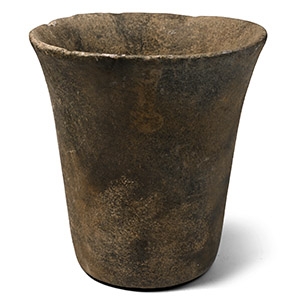
Mesopotamian Stone Vase
1st millennium B.C.Sold for (Inc. bp): £124
Tubular in section with broad base and gently flared profile. 440 grams, 11 cm high
Ex Mayfair, London, UK, gallery, 2000s. -
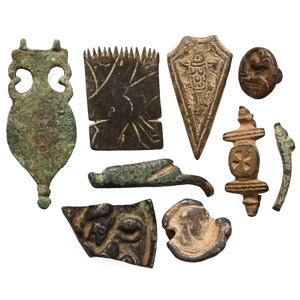
Western Asiatic and Other Bronze Artefact Group
Circa 1st millennium A.D. and laterEstimate: £100 - 140 (+bp*)
Opening Bid: £50
Comprising: the body of a bow brooch, a kite-shaped mount with a fish, a beast-head mount or finial, a Late Roman military belt strap end of 'amphora' type; a stamp seal with an ibex, and others. 76 grams total, 16-52 mm
From the collection of a gentleman, acquired on the London art market in the 1990s.
