
Loading, please wait...
LOT 1131
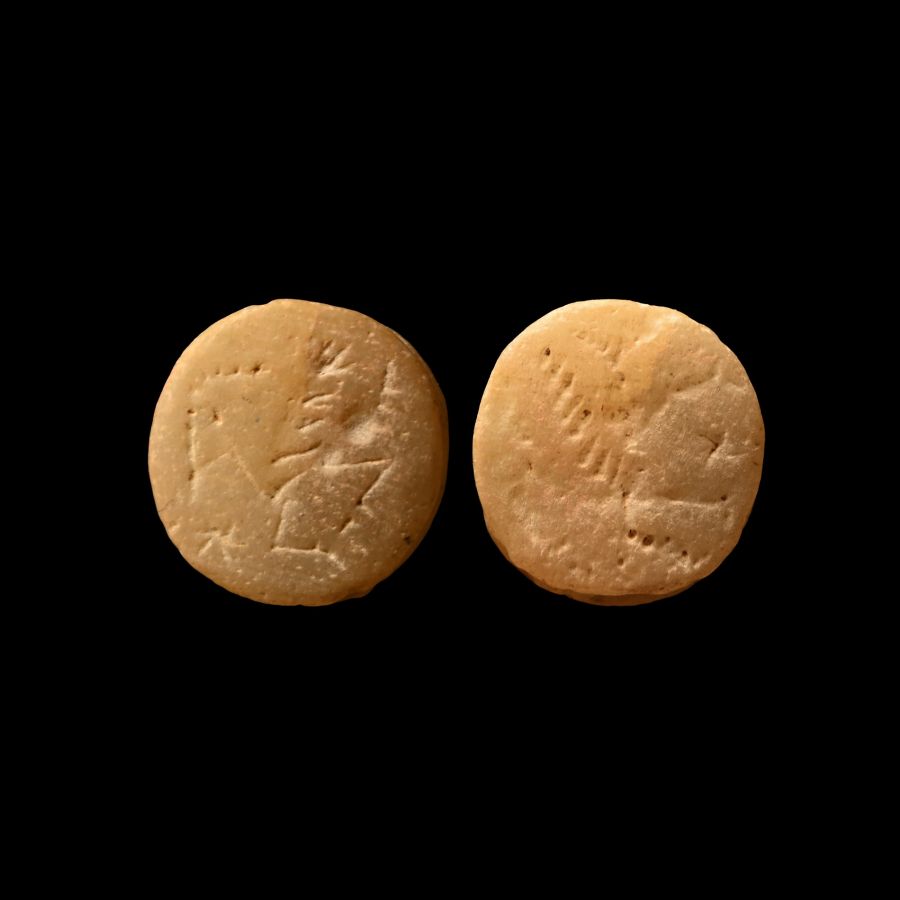
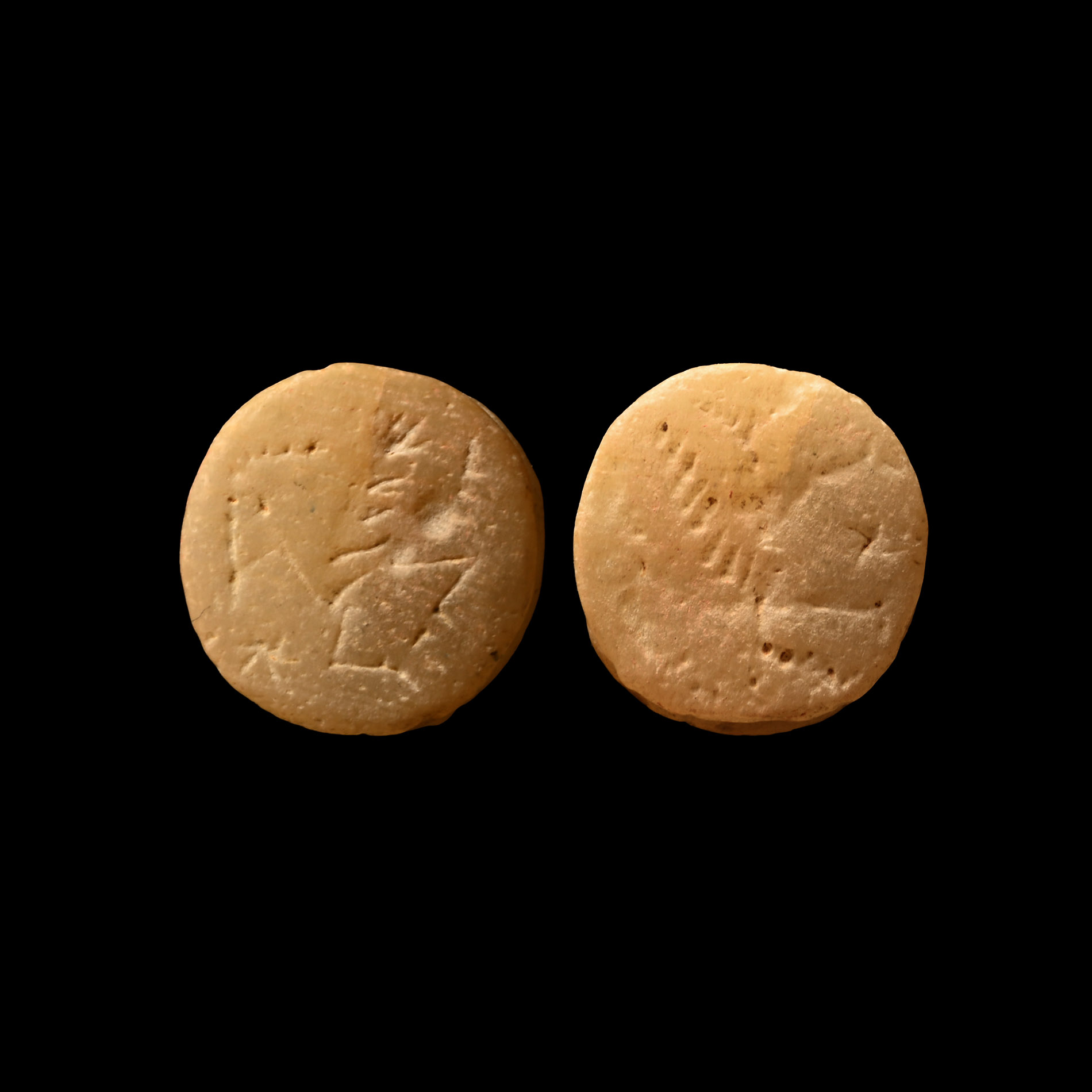
Urartu Alabaster Stamp Seal
8TH-7TH CENTURY B.C.
5/8 in. (3.36 grams, 16 mm).
Bifacial round seal with mythical creatures, likely winged ibexes; pierced hole for suspension.
ProvenanceEx London, UK, collection, before 1988.
LiteratureCf. for the iconography Sass, B., Uehlinger, C., Studies in the iconography of northwest semitic inscribed seals: Proceedings of a symposium held in Fribourg on April 17-20, 1991, Zurich, 1993, p.59, fig.16.
FootnotesAnimal-headed creatures are often winged bird-headed figures with human body in the Urartu and Northern-Syrian seals of ‘dnplţ ‘bd ‘mndb type, but often winged, apparently ibex-headed figures appear on the seals of the type bqšt bt ‘bdyrh. The ibex-headed figures might belong to same group of semi-divine beings visible on the Assyrian art.
CONDITIONTimeLine Auctions follows a vetting process to ensure the authenticity and legality of all items, reinforcing our commitment to integrity and responsible trading. Each antiquity, antique, and coin lot undergoes thorough examination by a vetting committee of at least ten external specialists, professional trade association members, scientists, and archaeologists: Our Vetting Process
AUCTIONS:
TimeLine is a leading auction house specialising in antiquities, ancient art, collectables, natural history, coins, medals, and books. Our auctions offer museums, collectors, historians, and enthusiasts the opportunity to acquire unique and historically significant pieces.
LOT 1131
Urartu Alabaster Stamp Seal
Estimate £100 - 140€120 - 160 (for guidance only)$140 - 190 (for guidance only)
-
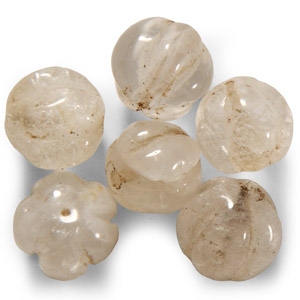
Western Asiatic Rock Crystal Melon Bead Group
17th-19th century A.D.Sold for (Inc. bp): £14
Group of six crystal melon beads. 7.05 grams total, 9-10 mm
From an old English deceased estate. Acquired on the London art market in the early 1990s. Property of a London, UK, collector. -
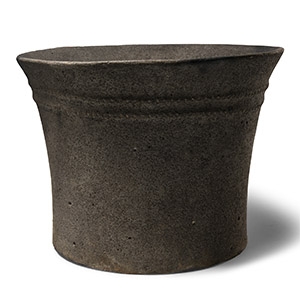
Large Bactrian Stone Vessel
2nd millennium B.C.Sold for (Inc. bp): £169
With slightly dished base, trumpet-shaped sidewall, parallel circumferential ridges below the rim with segmented detailing. 7.45 kg, 25.7 cm wide
From a collection acquired on the UK art market from various auction houses and collections mostly before 2000. From an important Cambridgeshire estate; thence by descent. -
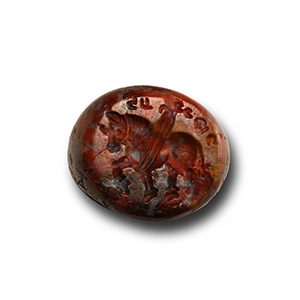
Sassanian Red Jasper Seal with Pegasus
4th-5th century A.D.Sold for (Inc. bp): £546
Plano-convex pierced seal with advancing winged horse, Pahlavi inscription 'l'sty rast' ('just'); supplied with a museum-quality impression. 8.1 grams, 20 mm
Acquired between 1980-1983. From the 'Empire' collection, an important UK private collection of seals, collection no.16. Accompanied by a copy of a typed and signed scholarly note by A D H Bivar.
