
Loading, please wait...
LOT 1105
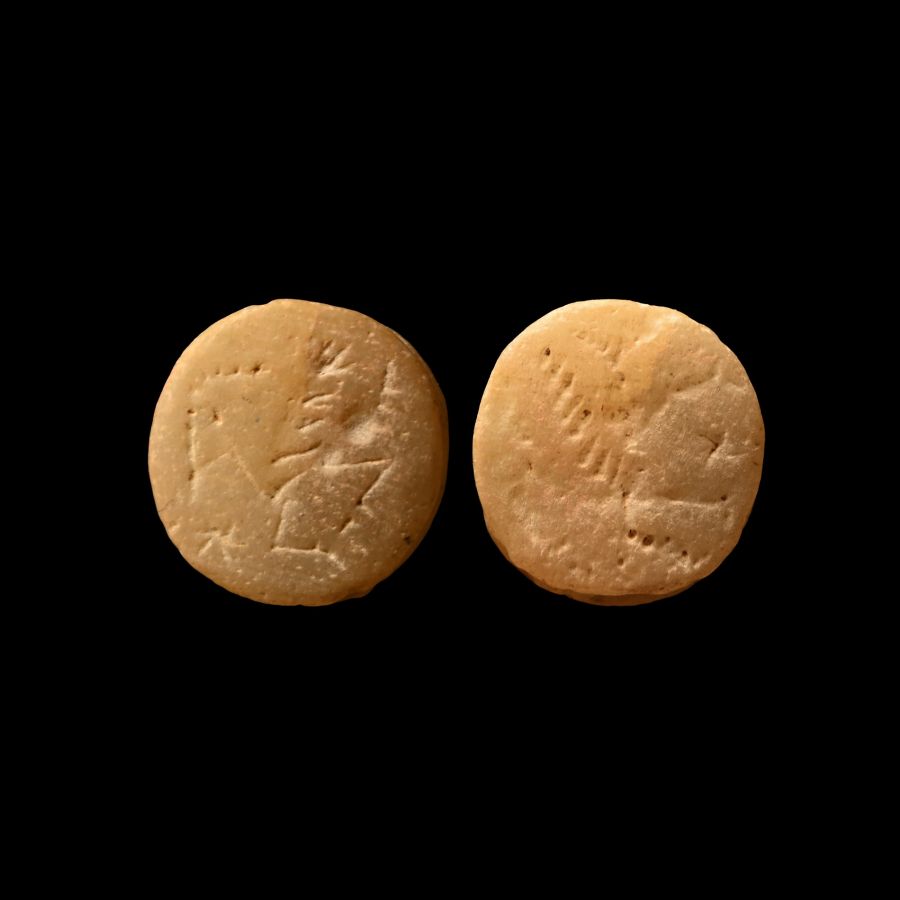
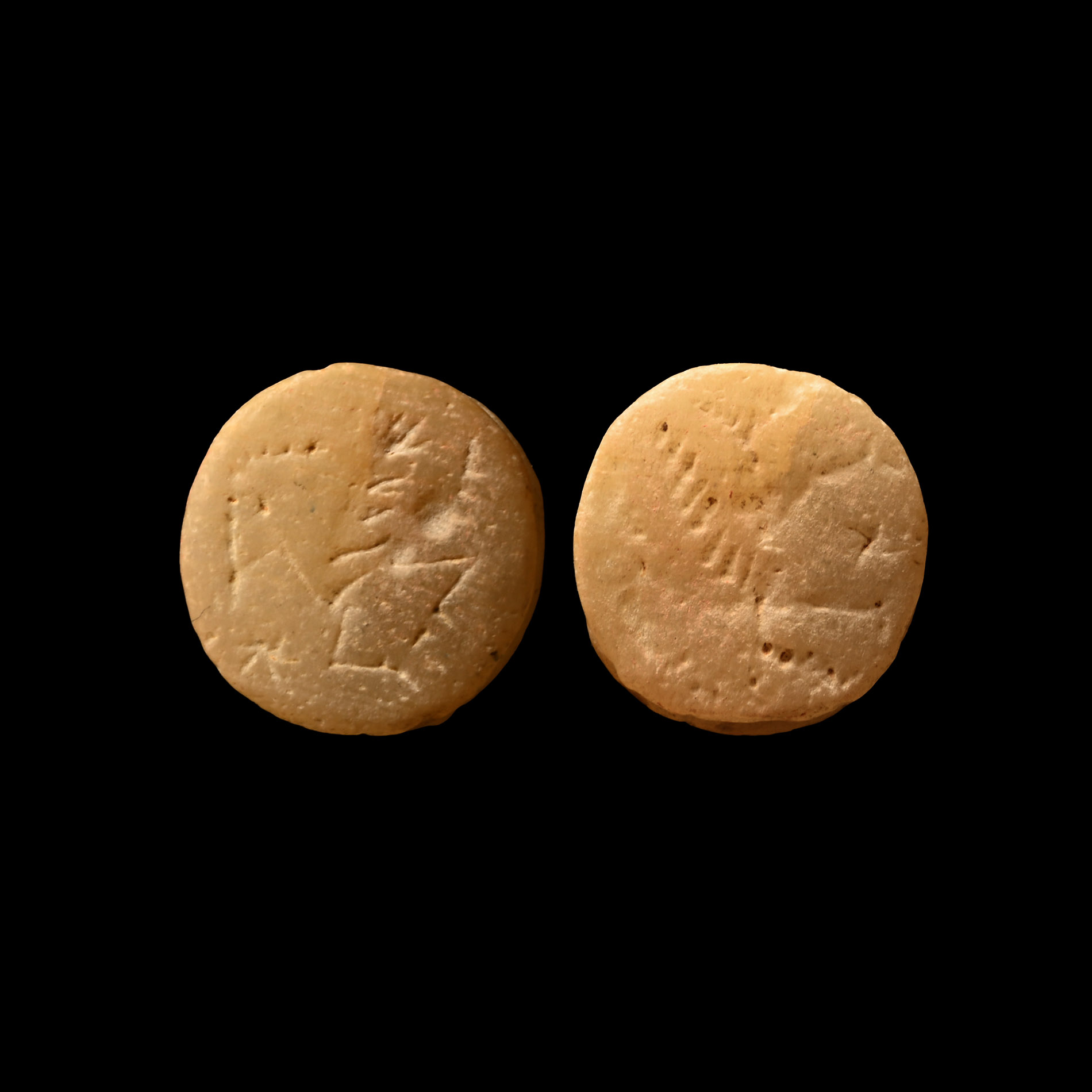
Urartu Alabaster Stamp Seal
8TH-7TH CENTURY B.C.
5/8 in. (3.36 grams, 16 mm).
Bifacial round seal with mythical creatures, likely winged ibexes; pierced hole for suspension.
ProvenanceEx London, UK, collection, before 1988.
LiteratureCf. for the iconography Sass, B., Uehlinger, C., Studies in the iconography of northwest semitic inscribed seals: Proceedings of a symposium held in Fribourg on April 17-20, 1991, Zurich, 1993, p.59, fig.16.
FootnotesAnimal-headed creatures are often winged bird-headed figures with human body in the Urartu and Northern-Syrian seals of ‘dnplţ ‘bd ‘mndb type, but often winged, apparently ibex-headed figures appear on the seals of the type bqšt bt ‘bdyrh. The ibex-headed figures might belong to same group of semi-divine beings visible on the Assyrian art.
CONDITIONTimeLine Auctions follows a vetting process to ensure the authenticity and legality of all items, reinforcing our commitment to integrity and responsible trading. Each antiquity, antique, and coin lot undergoes thorough examination by a vetting committee of at least ten external specialists, professional trade association members, scientists, and archaeologists: Our Vetting Process
AUCTIONS:
TimeLine is a leading auction house specialising in antiquities, ancient art, collectables, natural history, coins, medals, and books. Our auctions offer museums, collectors, historians, and enthusiasts the opportunity to acquire unique and historically significant pieces.
LOT 1105
Urartu Alabaster Stamp Seal
Estimate £100 - 140€120 - 160 (for guidance only)$140 - 190 (for guidance only)
-
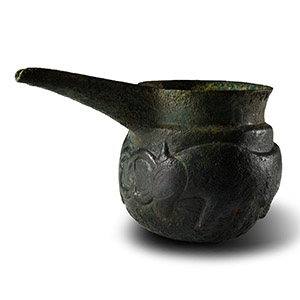
Luristan Bronze Spouted Vessel with Attacking Bulls
Late 2nd millennium B.C.Estimate: £1,200 - 1,700 (+bp*)
Opening Bid: £650
Composed of a squat body, stepped shoulder, broad rim and U-section spout, the body displaying a frieze of repoussé fighting bulls, their heads lowered and horns interlocking beneath the spout. 496 grams, 19 cm wide
Fine condition.
Acquired before 1983. Ex London gallery, 1990s. This lot has been checked against the Interpol Database of stolen works of art and is accompanied by search certificate no.11352-191889. -
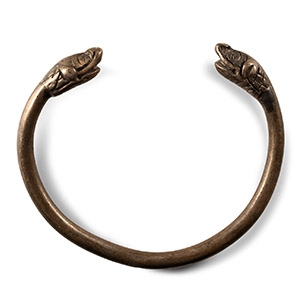
Achaemenid Silver Bracelet with Beast Heads
6th-4th century B.C.Sold for (Inc. bp): £338
Penannular in form, each terminal formed as a serpent's head with scale detailing. 24 grams, 60 mm
Ex Cummings collection, UK, 1990s. -
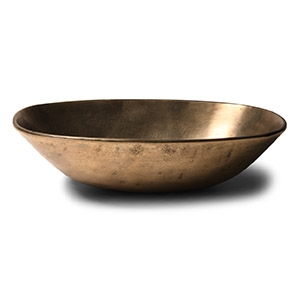
Sassanian Bronze Boat-Shaped Wine Bowl
4th-6th century A.D.Sold for (Inc. bp): £33
Featuring a rounded base; heavily cleaned. 292 grams, 16.5 cm
Acquired prior to 2000. British private collection of Mr D.M., London, UK.
