
Loading, please wait...
LOT 1343
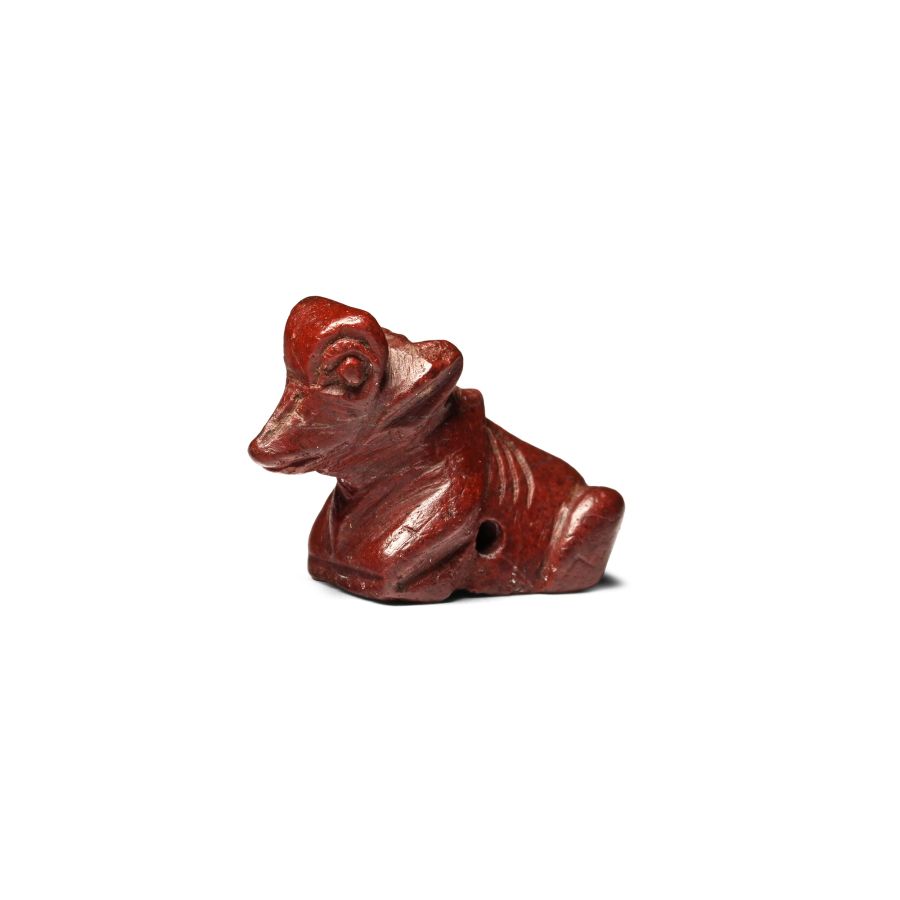
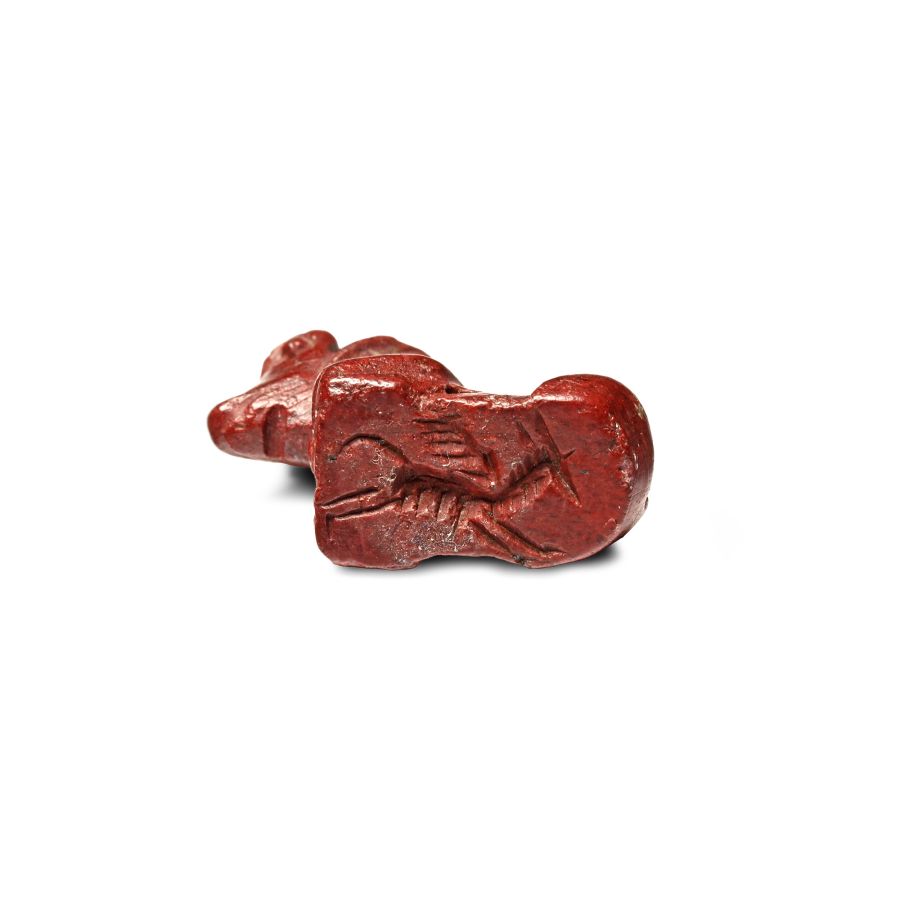
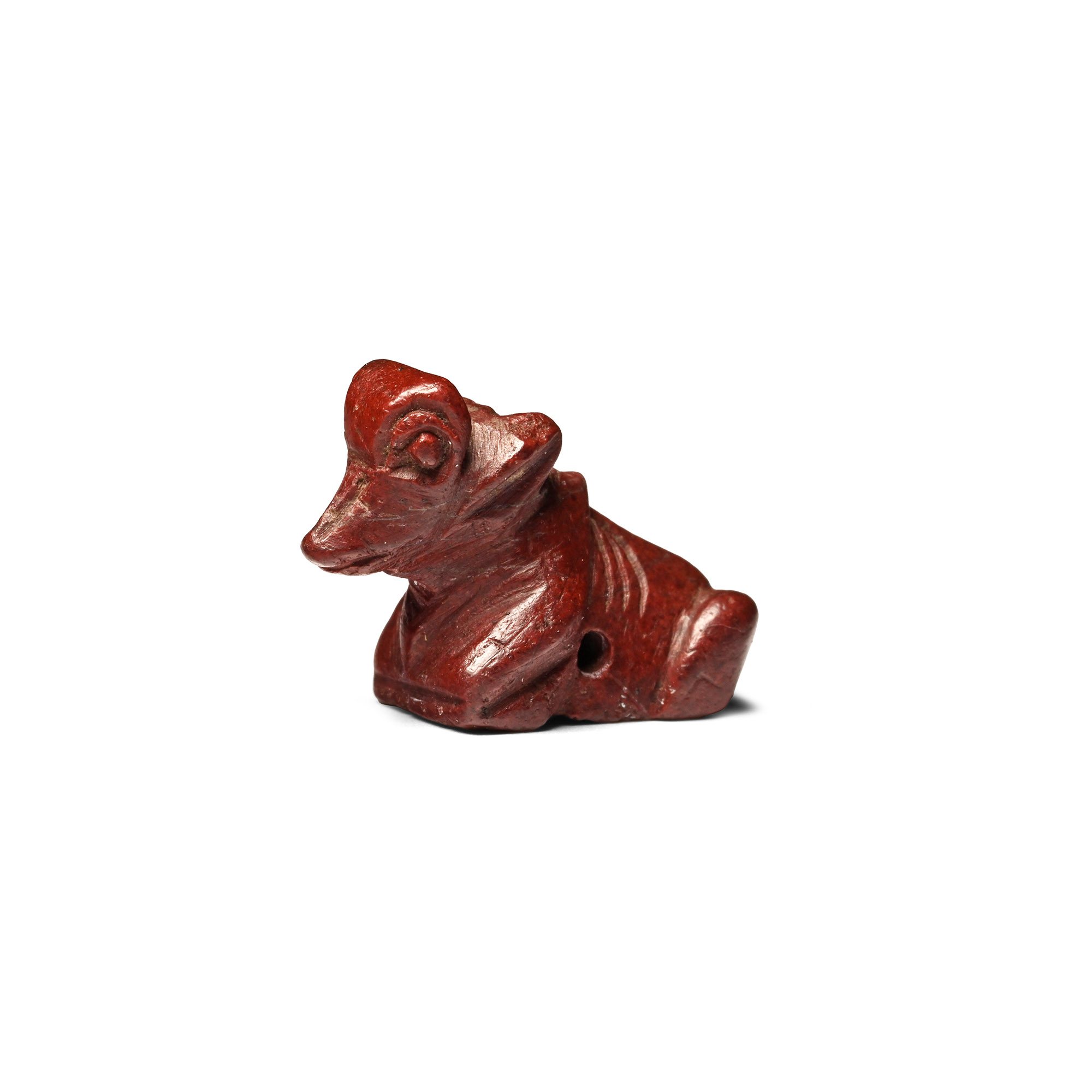
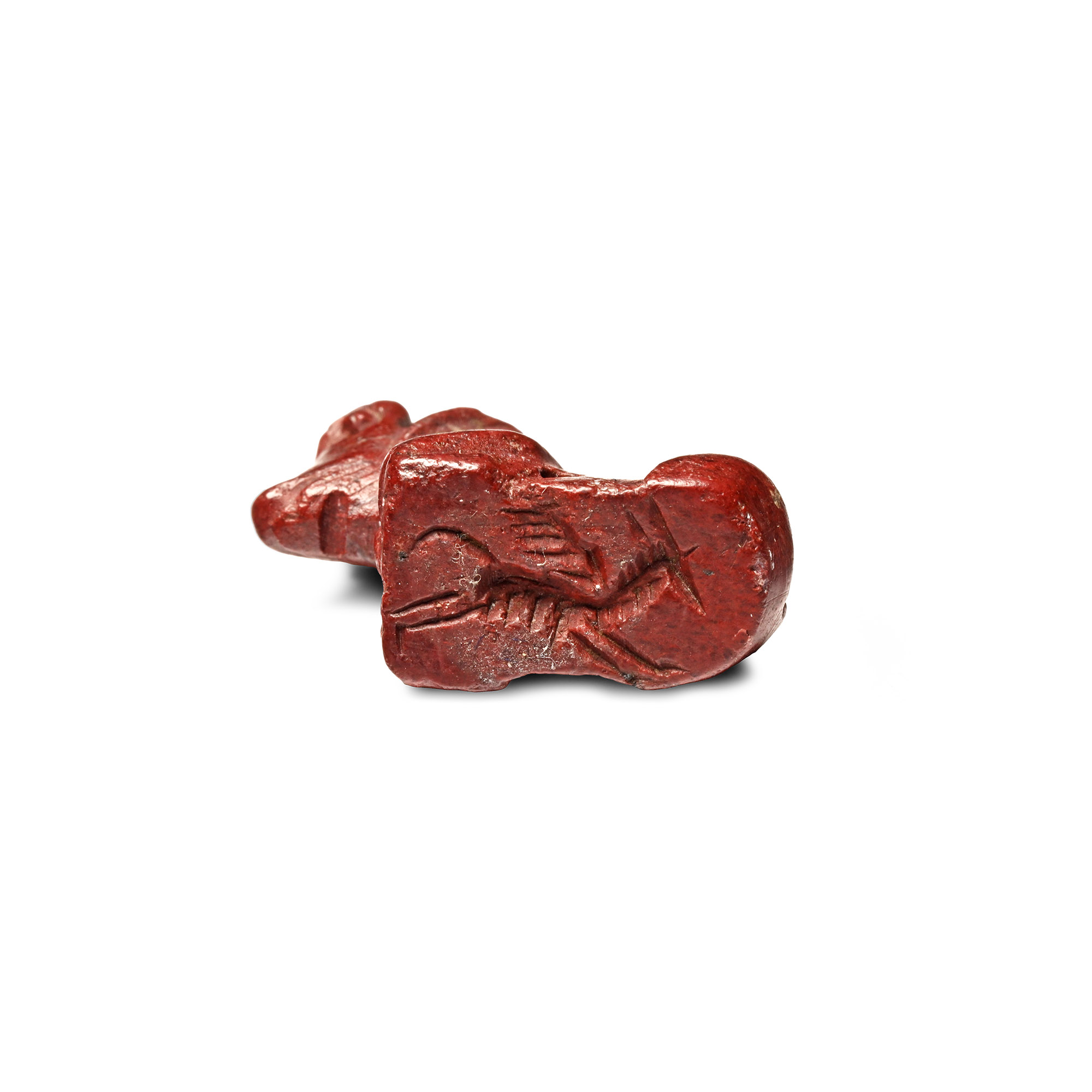
Urartian Jasper Bovine Seal Amulet
8TH-7TH CENTURY B.C.
7/8 in. (2.67 grams, 21 mm).
Carved as a reclining bull with erect head, underside engraved with a winged quadruped.
ProvenanceFrom the collection of Dr U.O., Zurich, acquired in the 1950s.
with Rhea Galerie, Zurich, Switzerland.
TimeLine Auctions follows a vetting process to ensure the authenticity and legality of all items, reinforcing our commitment to integrity and responsible trading. Each antiquity, antique, and coin lot undergoes thorough examination by a vetting committee of at least ten external specialists, professional trade association members, scientists, and archaeologists: Our Vetting Process
AUCTIONS:
TimeLine is a leading auction house specialising in antiquities, ancient art, collectables, natural history, coins, medals, and books. Our auctions offer museums, collectors, historians, and enthusiasts the opportunity to acquire unique and historically significant pieces.
LOT 1343
Urartian Jasper Bovine Seal Amulet
Estimate £400 - 600€460 - 700 (for guidance only)$540 - 810 (for guidance only)
-
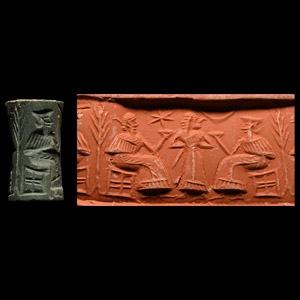
Akkadian Green Jasper Cylinder Seal with Seated Figures
Circa 2300-2200 B.C.Sold for (Inc. bp): £749
Showing a divine drinking scene; accompanied by a museum quality impression and a copy of an old scholarly note, typed and signed by W.G. Lambert, late Professor of Assyriology, University of Birmingham, 1970-1993, which states: 'Cylinder Seal of Green Jasper, 23 x 13 mm. Two seated figures face each other. On the right is a male, wearing a flat cap on his head, and a long robe to the feet with a deep fringe at the bottom. He is holding up a flat cup. The figure on the left is female, bare-headed, but wearing a similar long garment with fringe at the bottom, alos a fringe where the fabric overlaps from the waist down. Both figures hold up the same type of cup. Between them stands a servant, in a similar long robe and with bare head, holding a mace at the waist. In the sky there is a star and lunar crescent. A tall slender tree serves as a terminal. This is a Akkadian seal, c. 2300-2200 B.C., from Mesopotamia or a neighbouring region. In view of the flat cap on the male the figures are no doubt divine, and this is then a divine drinking scene. This seal is in excellent state of preservation.' 6.31 grams, 23 mm
From the private collection of a North American lady, formed 1970s-early 1990s, with collection reference no.P18. Accompanied by a copy of a scholarly note, typed and signed by Professor Wilfrid George Lambert in August 1992 and an old photograph. -
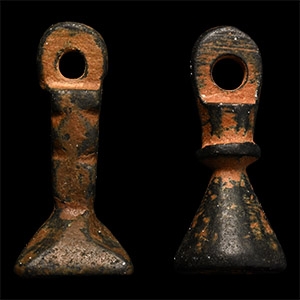
Judean Stamp Seal Group
1st century B.C.-3rd century A.D.Sold for (Inc. bp): £117
Each a square-section pyramidal base and balustered shank with pierced lug finial; avian motifs. 22.7 grams total, 29-30 mm
From the collection of a gentleman, acquired on the London art market in the 1990s. -
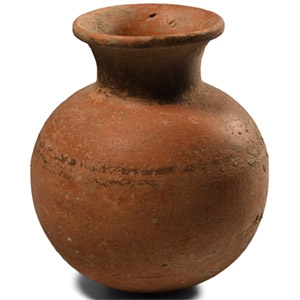
Western Asiatic Bulbous Terracotta Jar
1st millennium B.C.Estimate: £100 - 140 (+bp*)
Opening Bid: £50
Comprising a globular body with circumferential painted bands at the equator, trumpet-shaped neck and mouth. 522 grams, 16.2 cm
From the collection of a London, UK, gentleman, 1990s. This lot has been cleared against the Art Loss Register database, and is accompanied by an illustrated lot declaration signed by the Head of the Antiquities Department, Dr Raffaele D'Amato.
