
Loading, please wait...
LOT 0234
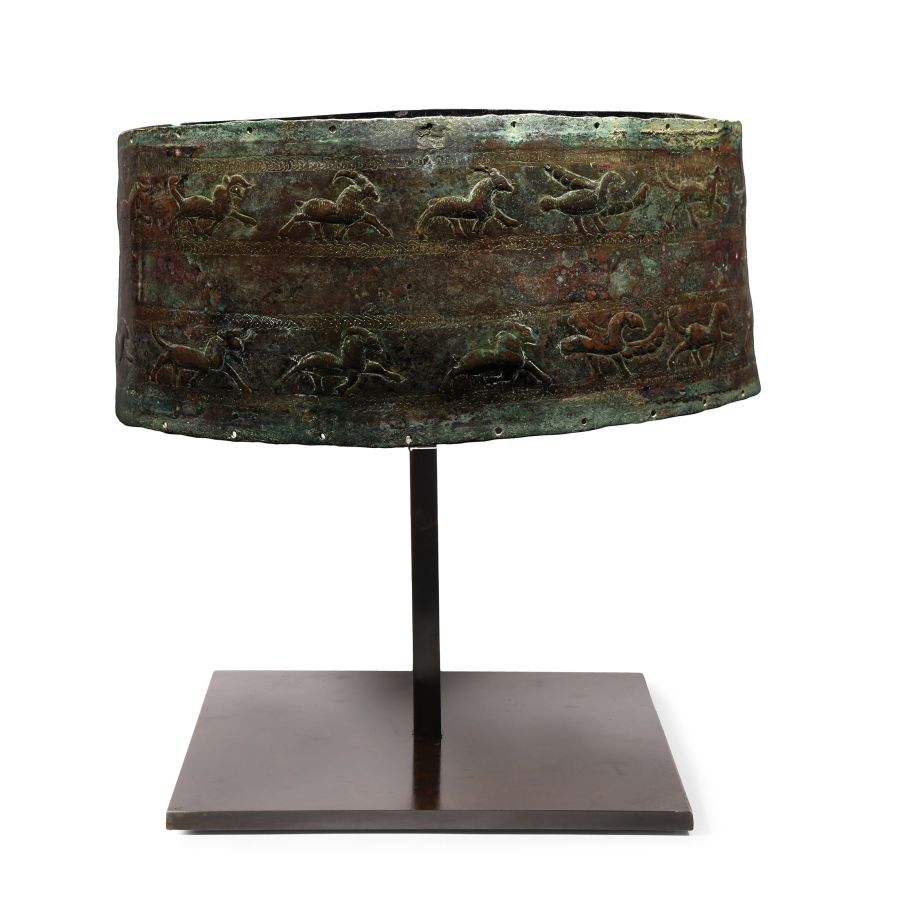
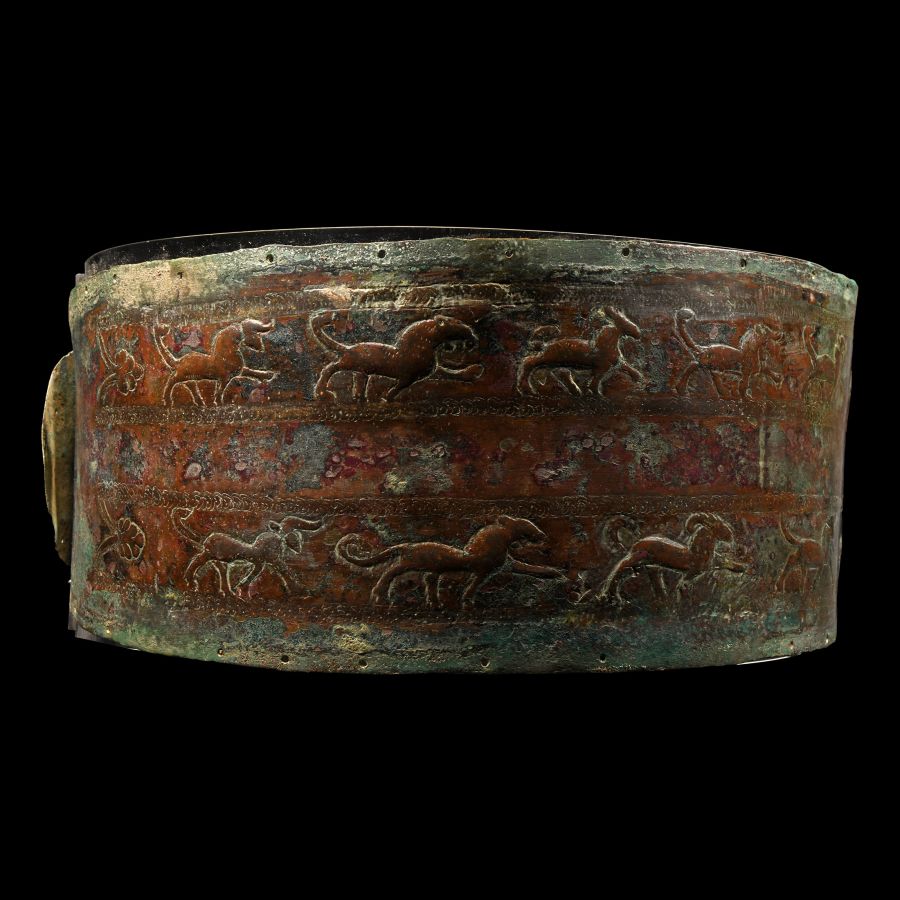
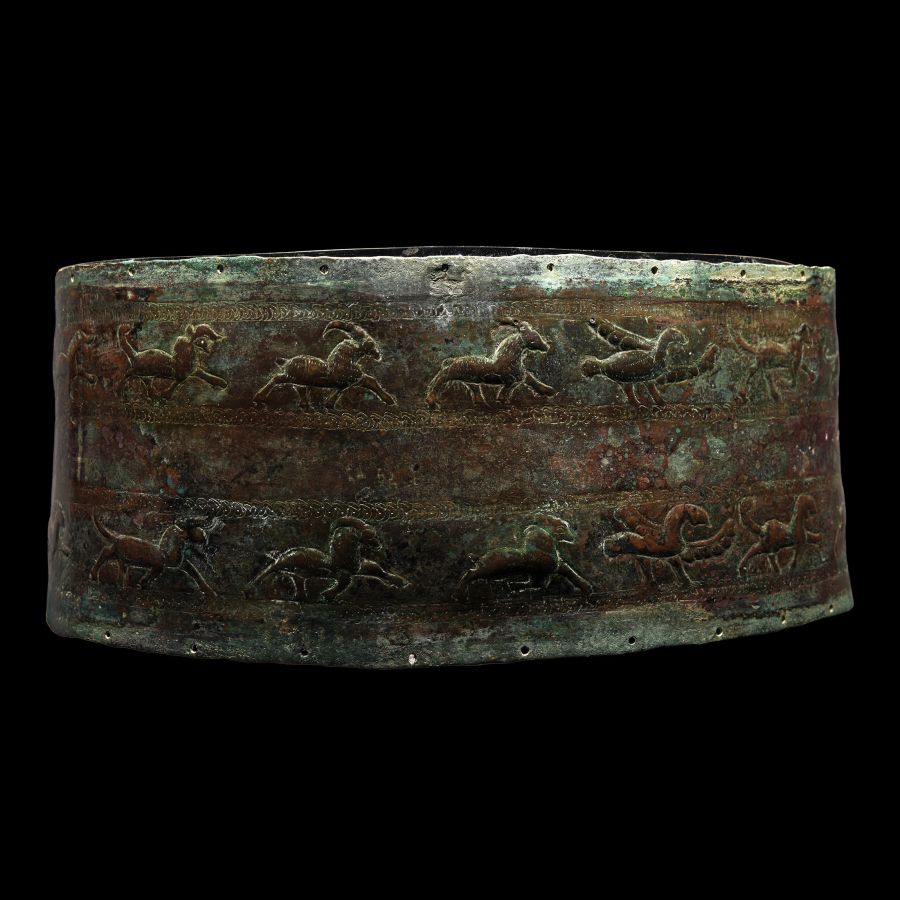
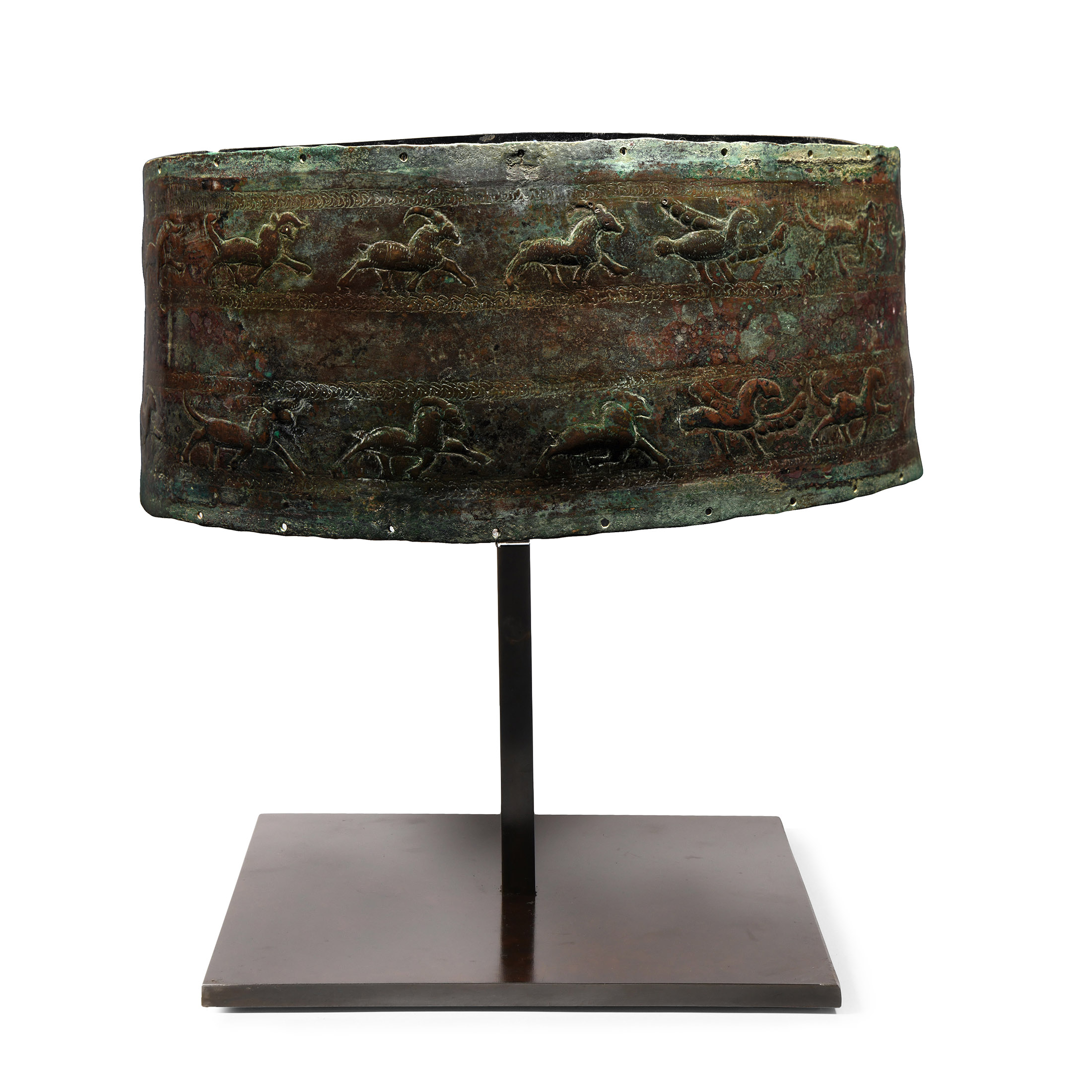
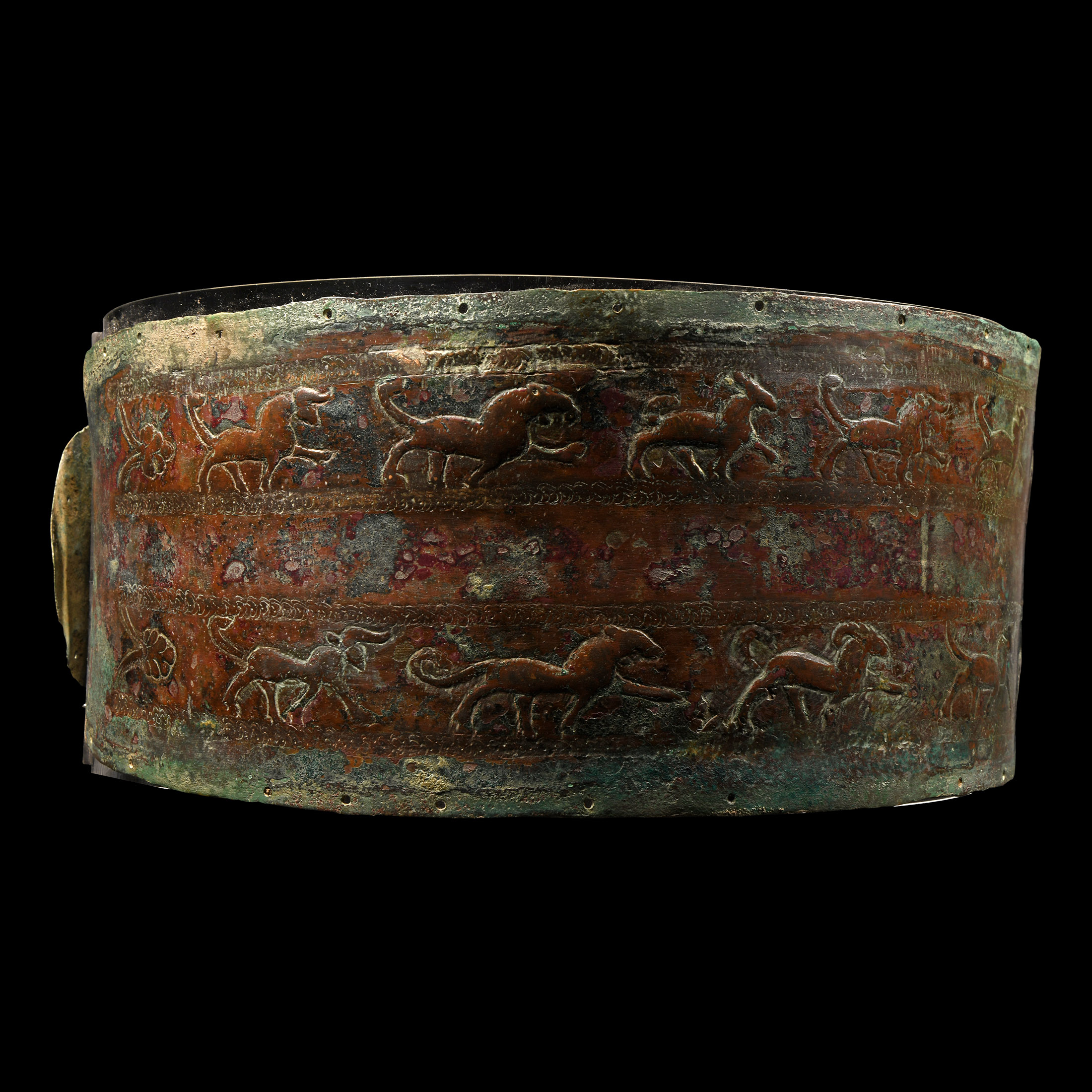
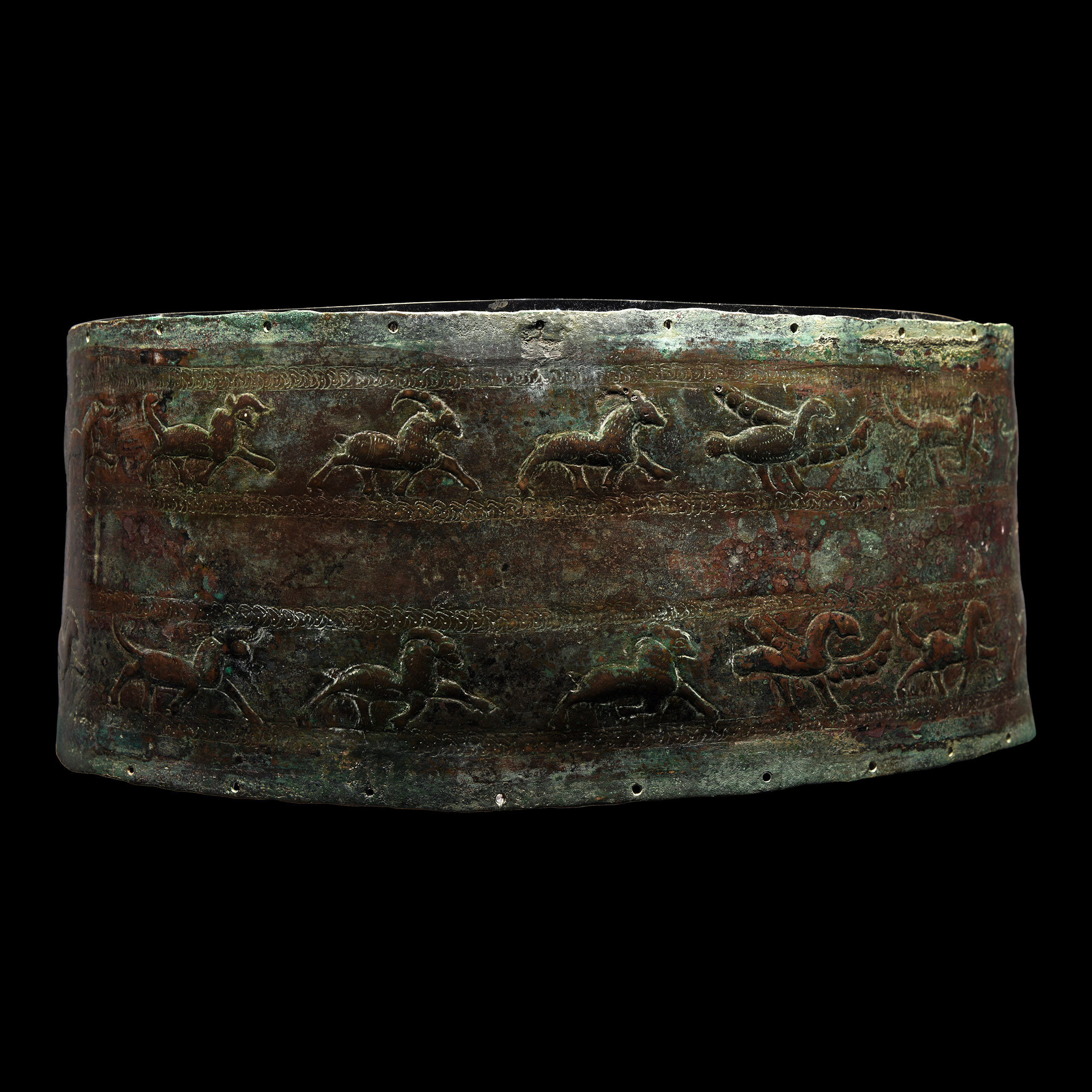
Urartian Bronze Cuirass Belt with Animals
8TH-7TH CENTURY B.C.
13 3/4 in. (6.4 kg total, 35 cm high including stand).
Displaying two repoussé registers of animals including lions, antelope and birds processing right between geometric borders, stylised flower heads to one terminal; attachment perforations to upper and lower edges; one rounded terminal, one terminating with a narrow arm and D-shaped lug; mounted on an adjustable custom-made display stand.
ProvenanceUK private collection before 2000.
UK art market.
Property of a London gentleman.
Accompanied by an academic report by Raffaele D'Amato.
This lot has been checked against the Interpol Database of stolen works of art and is accompanied by search certificate number no.11745-202242.
Cf. Есаян, С. А., ‘Погребения VI-V вв. до н. э. в горах Шамшадина’ (Esayan, S.A., Burials of the VI-V centuries BCE in the mountains of Shamshadin) in СА, 1965, 3, pp.229-232; Born H., Seidl U., Schutzwaffen aus Assyrien und Urartu, Sammlung Axel Guttmann IV, Mainz, 1995, AG427, fig.93, AG502 fig.128; see Gorelik, M., Weapons of the Ancient East, IV millennium BC-IV century BC, Saint Petersburg, 2003.
FootnotesProtective belts were very popular in the Caucasus, especially among the Urartians, decorated with geometric motifs, or with images of warriors, animals, hunting and mythological tales. They were regarded as a personal item and eventually buried with the warrior.
CONDITIONTimeLine Auctions follows a vetting process to ensure the authenticity and legality of all items, reinforcing our commitment to integrity and responsible trading. Each antiquity, antique, and coin lot undergoes thorough examination by a vetting committee of at least ten external specialists, professional trade association members, scientists, and archaeologists: Our Vetting Process
AUCTIONS:
TimeLine is a leading auction house specialising in antiquities, ancient art, collectables, natural history, coins, medals, and books. Our auctions offer museums, collectors, historians, and enthusiasts the opportunity to acquire unique and historically significant pieces.
-
.jpg)
Western Asiatic Bronze Dagger with Stone Pommel
3rd millenium B.C.Sold for (Inc. bp): £910
Comprising a leaf-shaped blade with broad midrib to both faces, square-section tang and pommel with discoid bronze top displaying a stylised floral or geometric motif with parallel pairs of lines radiating from the centre and a pellet in each segment. 693 grams, 42 cm
Ex old English collection. Acquired from Timeline Originals, UK, 2015. The Kusmirek Collection, UK.
This type of daggers include lanceolate blades with a pronounced piercing and cutting function, often reinforced with a convex stiffening rib or fullers that follow the contour of the blade (Gorelik, 2003, pls. IV, 15-21, 23-25). It is commonly believed that the fullers were designed to drain blood, but this is a misconception; their purpose is to increase the strength of the blade and reduce its weight. -
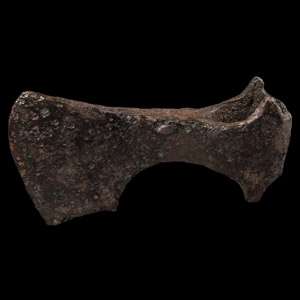
Viking Age Iron Bearded Axehead
10th-13th century A.D.Sold for (Inc. bp): £208
Finno-Ugrian iron forged with triangular-section narrow blade widening to a broad bevelled edge with square chin and spur to the rear, socket with flanges to the rear. 821 grams, 17 cm
Acquired 1971-1972. From the collection of the vendor's father. Property of a London, UK, collector.
During the mid 13th century, the axes were favourite weapons among Baltic people. For instance the Curonian army included lightly armed soldiers who fought with spears, shields, fighting knives and axes. A heavily armed soldier could also carry a sword, a helmet, a shield and a wide bladed axe. -
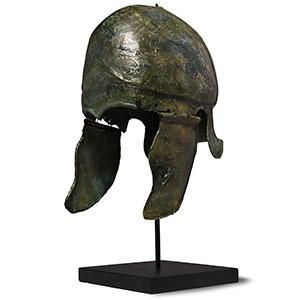
Greek Bronze Chalcidian Helmet
5th-4th century B.C.Estimate: £4,000 - 6,000 (+bp*)
Opening Bid: £1,667
Of Kunze Group VII, formed from two curved segments, each with a flared rim, nasal, raised panels to the upper section of the bowl, repoussé ridge forming curved brows, a recess for the ear to each side; star-shaped attachment to the top with slot for plumes; restored and with replica cheek pieces. 2.7 kg total, 42.5 cm high including stand
Restored, but in general good condition, rare details
Acquired in the 1970s. Ex private Austrian collection. The Kusmirek Collection, UK Accompanied by an academic report by Dr Raffaele D'Amato. Accompanied by a report of metallurgical analytical results, written by metallurgist Dr Brian Gilmour of the Research Laboratory for Archaeology and History of Art, University of Oxford. This lot has been checked against the Interpol Database of stolen works of art and is accompanied by search certificate number no.11763-203979.
Among the Chalcidian helmet types, the fifth and last typology, corresponding to the Kunze group VII (Pflug, 1988, p.138), was characterised by the presence of detached cheek-guards. By the end of the 5th century BC, the fixed cheek-pieces had been entirely abandoned on the Chalcidian helmets for the more versatile hinged cheek pieces. As is the case with most of the Greek helmets in 5th and 4th century B.C., very few originals have been found on the Greek continent. Several district regional workshops produced such helmets by the 5th century B.C.: mainland Greece, the Black Sea Coast, Thrace, Southern Italy and Iberia.
