
Loading, please wait...
LOT 0214
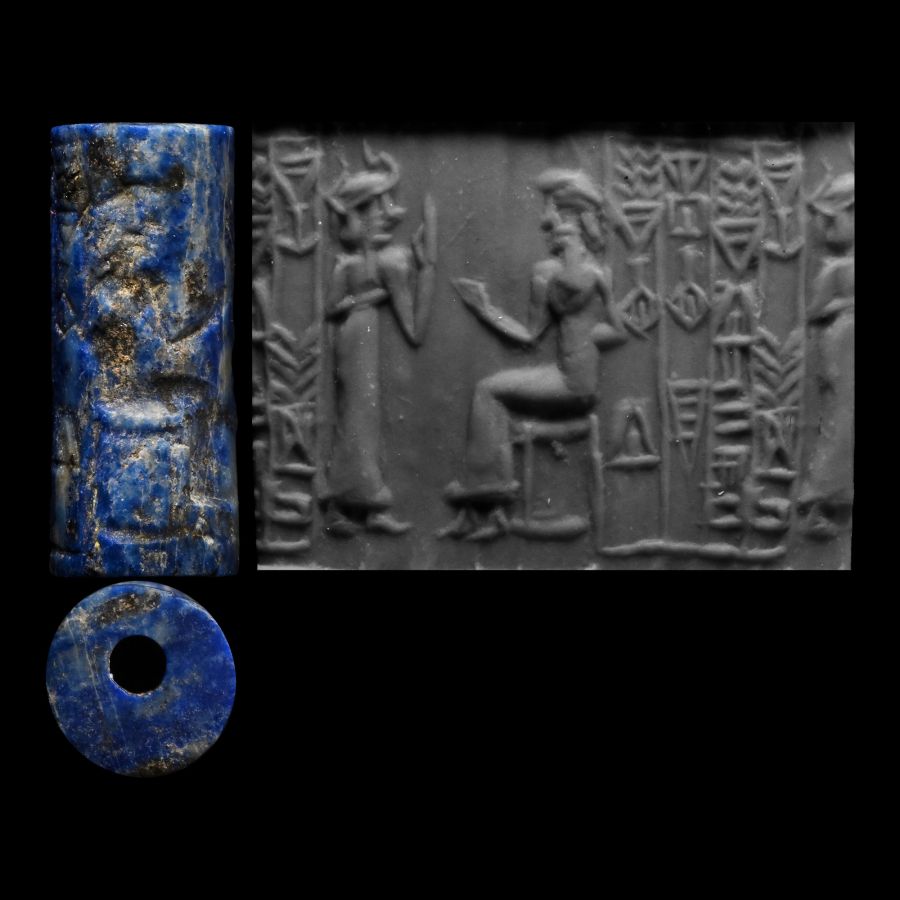
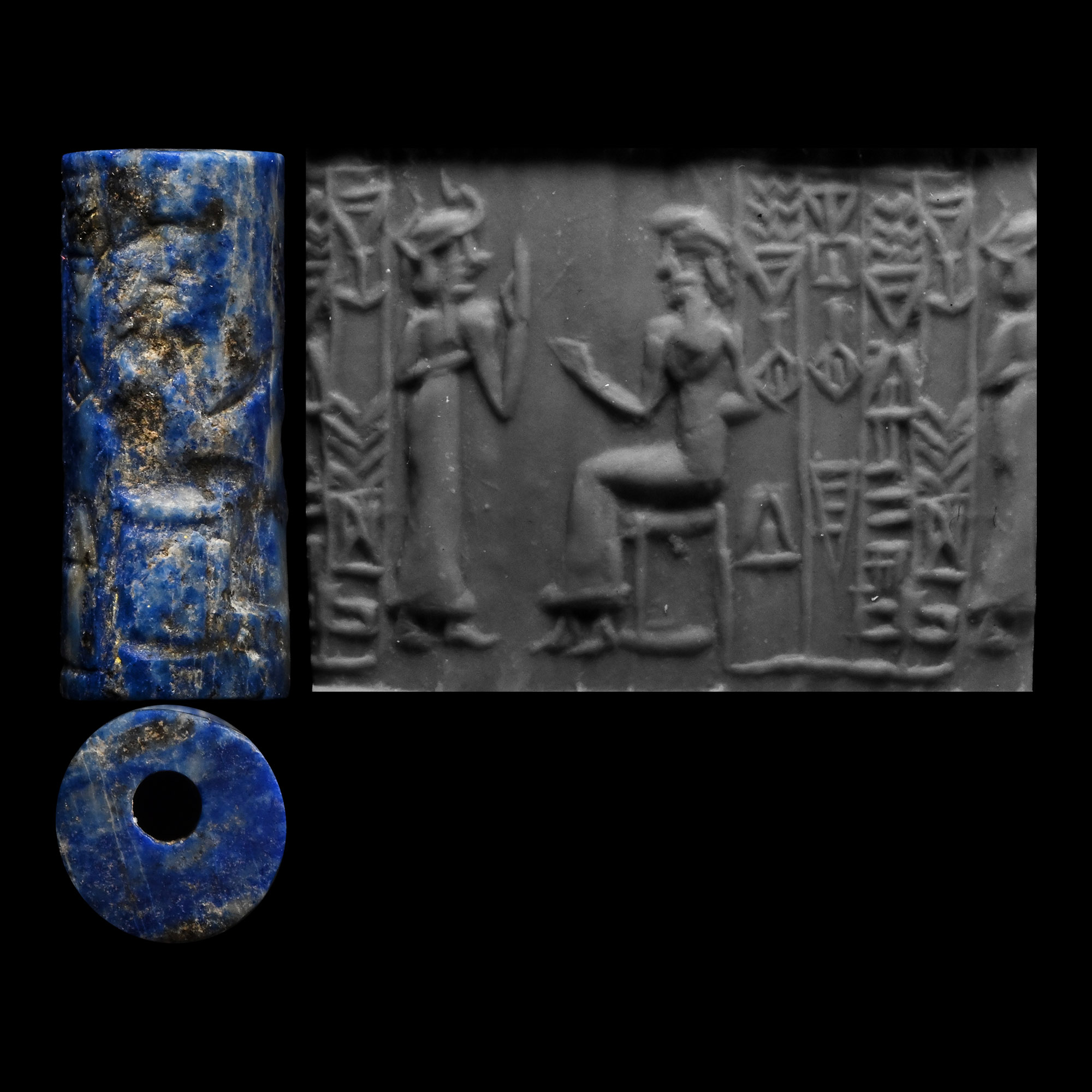
Ur II Period Lapis Lazuli Cylinder Seal with Dedicatory 'Gutua to Inka' Inscription
2200-2000 B.C.
3/4 in. (2.96 grams, 20 mm).
With frieze depicting a standing figure addressing a seated figure and four columns of cuneiform text, reading 'Gutua to Inka, his Sister / Lady, He Gave (This Seal)'; supplied with a museum-quality impression.
ProvenanceAcquired in 1995.
Private collection, Switzerland, thence by descent.
Private collection, since the late 1990s.
This lot has been cleared against the Art Loss Register database, and is accompanied by an illustrated lot declaration signed by the Head of the Antiquities Department, Dr Raffaele D'Amato.
TimeLine Auctions follows a vetting process to ensure the authenticity and legality of all items, reinforcing our commitment to integrity and responsible trading. Each antiquity, antique, and coin lot undergoes thorough examination by a vetting committee of at least ten external specialists, professional trade association members, scientists, and archaeologists: Our Vetting Process
AUCTIONS:
TimeLine is a leading auction house specialising in antiquities, ancient art, collectables, natural history, coins, medals, and books. Our auctions offer museums, collectors, historians, and enthusiasts the opportunity to acquire unique and historically significant pieces.
LOT 0214
Ur II Period Lapis Lazuli Cylinder Seal with Dedicatory 'Gutua to Inka' Inscription
Sold for (Inc. bp): £1,820
-
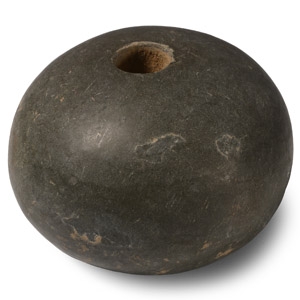
Western Asiatic Stone Macehead
3rd-2nd millennium B.C.Sold for (Inc. bp): £117
Donut-shaped and drilled vertically to accommodate a wooden shaft. 502 grams, 78 mm
From a West London, UK, collection, 1980-1990s. This lot has been cleared against the Art Loss Register database, and is accompanied by an illustrated lot declaration signed by the Head of the Antiquities Department, Dr Raffaele D'Amato. -
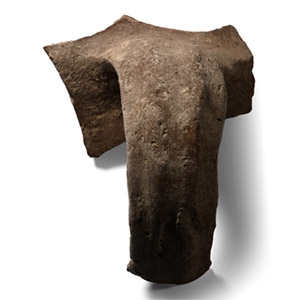
Royal Stamped Terracotta Jar Handle
Late 8th century B.C.Estimate: £300 - 400 (+bp*)
Opening Bid: £150
The handle fragment from a Tufnell type 484 jar, bearing an oval stamp to the upper handle. 129 grams, 10 cm
Ex S.M. London collection, UK, 1970-1990s. Accompanied by a description from Peter Gert Van der Veen, senior lecturer of Levantine Archaeology, Johannes Gutenberg-Universität, Mainz. This lot has been cleared against the Art Loss Register database, and is accompanied by an illustrated lot declaration signed by the Head of the Antiquities Department, Dr Raffaele D'Amato. -
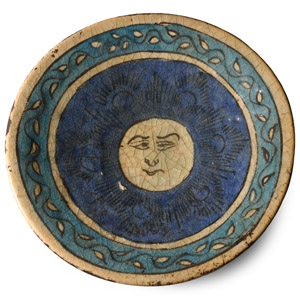
Qajar Glazed Dish with Face
1796-1925 A.D.Sold for (Inc. bp): £260
Cream-glazed with low basal ring, obverse with cerulean ring enclosing a running tendril with reserved leaves, inner dark blue panel with radiating starburst, centre a reserved disc with human mask. 619 grams, 22.5 cm
Acquired from old English collections via the UK art market since the mid 1970s. From the private collection of Peran Dachinger, thence by descent. From the family collection of a Maida Vale lady, UK. This lot has been cleared against the Art Loss Register database, and is accompanied by an illustrated lot declaration signed by the Head of the Antiquities Department, Dr Raffaele D'Amato.
