
Loading, please wait...
LOT 0281
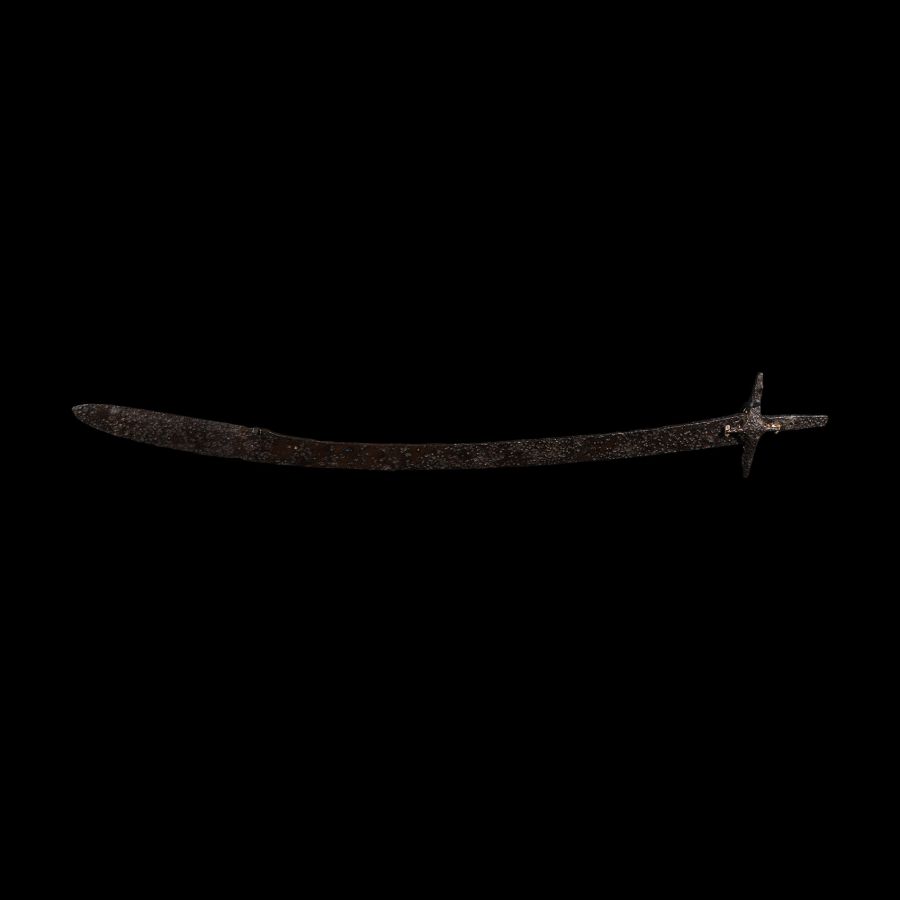
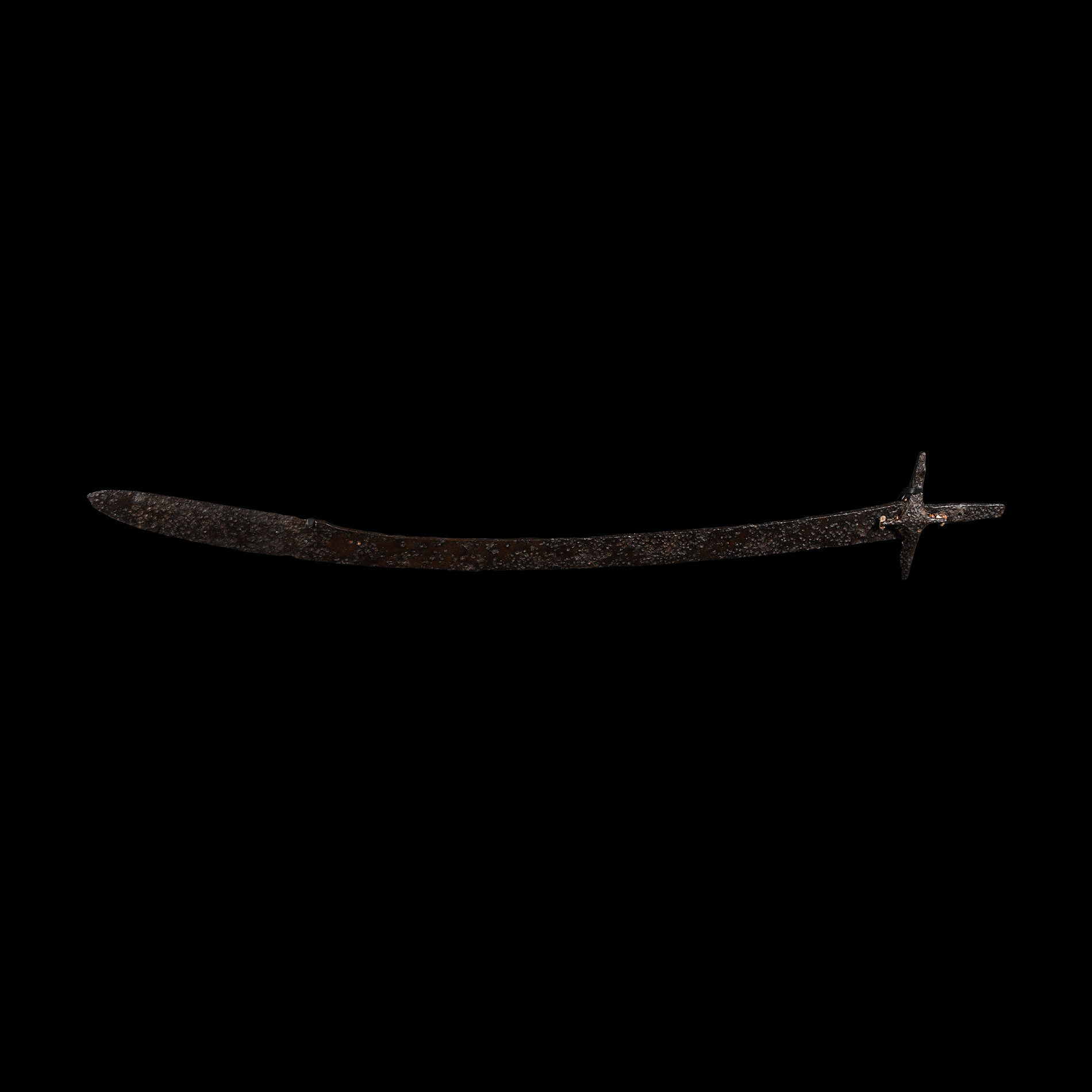
Turkish Iron Sabre
15TH CENTURY A.D.
37 1/4 in. (1.35 kg total, 95 cm including stand).
Comprising a cross-shaped hand guard, the blade with a slight curvature widening towards the point; mounted on a custom-made wall mount.
ProvenancePrivate collection, Munich, Germany, 1970s.
Private collection, London, UK, 2014, acquired from the above.
Cf. similar sword in the Muzeum Topkapi Saray, nr.380, in Zablocki, W., Cięcia prawdziwą szablą, (Cuts with a real sabre), Warszawa, 1989, no.75, p.264.
FootnotesThe Turkish sabres from 15th century, had hilts similar to Omayyad and Abbasid's swords. The blades were long and heavy and were most probably used for swinging cuts, and were particularly convenient for point-thrusts when fighting on foot.
CONDITIONTimeLine Auctions follows a vetting process to ensure the authenticity and legality of all items, reinforcing our commitment to integrity and responsible trading. Each antiquity, antique, and coin lot undergoes thorough examination by a vetting committee of at least ten external specialists, professional trade association members, scientists, and archaeologists: Our Vetting Process
AUCTIONS:
TimeLine is a leading auction house specialising in antiquities, ancient art, collectables, natural history, coins, medals, and books. Our auctions offer museums, collectors, historians, and enthusiasts the opportunity to acquire unique and historically significant pieces.
-
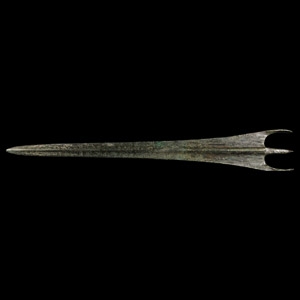
North-Western Bronze Short Sword
2nd-1st millennium B.C.Sold for (Inc. bp): £585
Featuring a prominently curved guard extending out from the ricasso of the blade and partly framing the hilt, thick midrib extending slightly above the ricasso. 346 grams, 43.5 cm
Acquired 1980-2015. Ex Abelita family collection.
The hilt of such swords was made separately, and unfortunately is nearly always missing from the archaeological records. Similar excavated examples have been recorded from the South Caspian area from Tomadjan and Ghalekuti. -
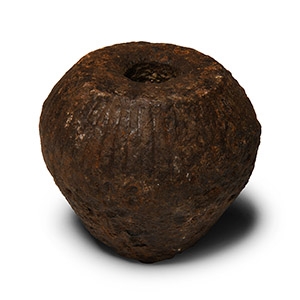
Medieval Eastern European Iron Macehead
14th-15th century A.D.Sold for (Inc. bp): £117
Displaying shallow striations running vertically around the body; cylindrical socket. 828 grams, 64 mm wide
Acquired 1990s-early 2000s. East Anglian private collection.
This kind of later maces, typical of 15th century, had irregularly shaped heads, with spheres having holes for the insertion of the shaft. Incised, parallel strips formed a cross ornament running horizontally and vertically. Grooved lines were carved in the fields between. -
.jpg)
Roman Bronze Military Mask Helmet Section
3rd century A.D.Sold for (Inc. bp): £975
From the upper part of the right side of the face mask, the upper edge with a band of embossed curved lines, probably representing stylised hairs, intertwined with laurel crown; embossed image of advancing Mars, the god of war, to the centre, depicted nude with military sagum, a pseudo-Corinthian helmet to the head and carrying a circular shield. 55 grams, 17 cm wide
Acquired 1960s-1990s. Late Alison Barker collection, a retired London barrister.
In the decorative patterns of Roman helmets, Mars was among the most revered deities in the Imperial army. After Jupiter, he was the most aristocratic god of the old Italic religion, master of armament, who governed military service (militiae potens) and oversaw the training ground, for which he was named Campester. The emperor Augustus named him Ultor (‘Avenger’) and dedicated to him a luxurious temple in the centre of the forum in gratitude for his victory over the murderers of Caesar and, in addition, granted to him the privileges of the Capitoline Jupiter.
