
Loading, please wait...
LOT 1371
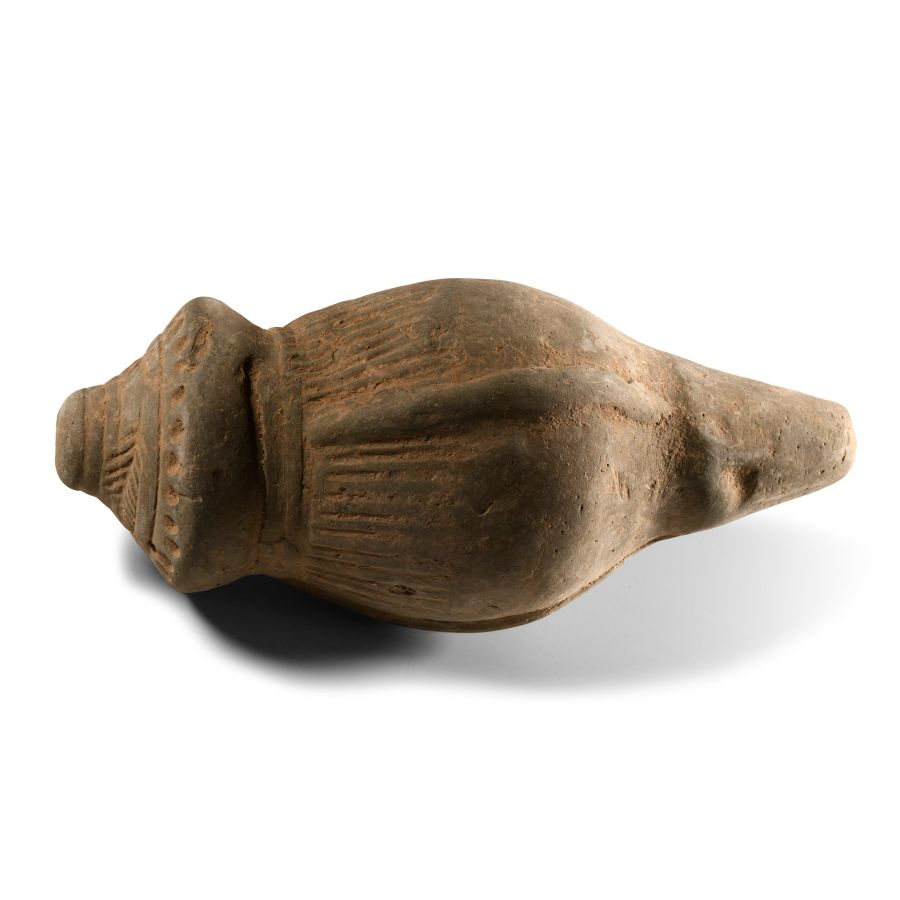
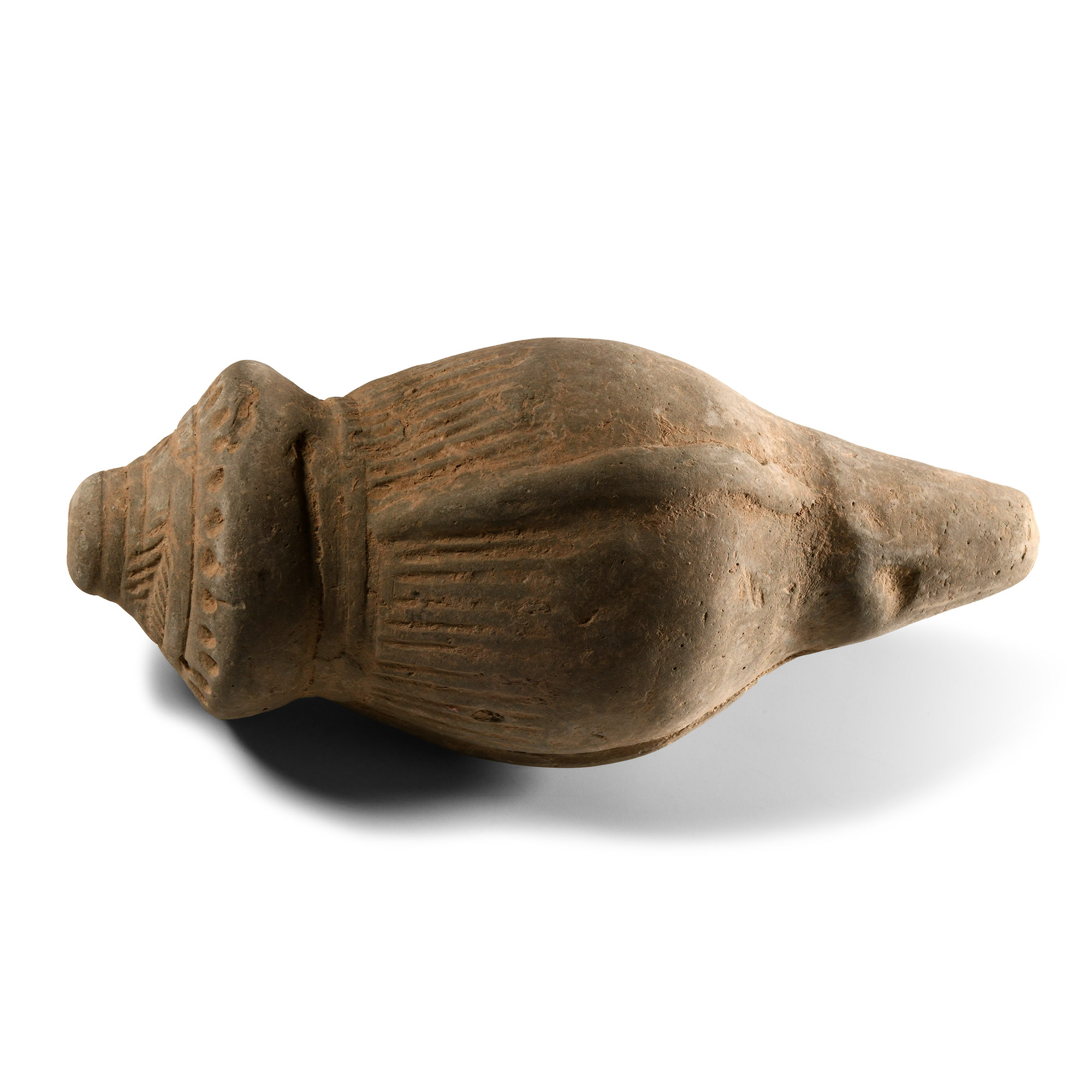
Turco-Mongol 'Greek Fire' Ceramic Fire Bomb or Hand Grenade
14TH CENTURY A.D.
6 1/2 in. (435 grams, 16.5 cm).
Piriform body with vertical ribs, tiered collar, domed filler-hole, intended to be filled with explosive liquid and wick, used as a hand grenade. [No Reserve]
ProvenanceFrom a specialist collection of militaria, London, UK, collected 1990s onwards.
LiteratureCf. Arendt, W. I., Granaten des 13-14. Jahrhunderts, die an der Wolga gefunden sind, Zeitschrift fur Historische Waffen-und Kostumkunde, 11 (1926-8), p.42; cf. Arendt, W., Die Spharisch-konischen Gefäße aus Gebranntem Ton, ibid; cf. Ayalon, D., Gunpowder and Firearms in the Mamluk Kingdom, London, 1956, p.16
FootnotesApart from the use of siphons or manual flame-throwers called cheirosiphona, special corps of Roman soldiers employed terracotta grenades, in the form of small jars, abundantly evidenced in archaeological excavations. They were called μεσαία kακαβιά or κυτροκακάβια where the former had a bulbous shape and the latter a more cylindrical form.
CONDITIONTimeLine Auctions follows a vetting process to ensure the authenticity and legality of all items, reinforcing our commitment to integrity and responsible trading. Each antiquity, antique, and coin lot undergoes thorough examination by a vetting committee of at least ten external specialists, professional trade association members, scientists, and archaeologists: Our Vetting Process
AUCTIONS:
TimeLine is a leading auction house specialising in antiquities, ancient art, collectables, natural history, coins, medals, and books. Our auctions offer museums, collectors, historians, and enthusiasts the opportunity to acquire unique and historically significant pieces.
LOT 1371
Turco-Mongol 'Greek Fire' Ceramic Fire Bomb or Hand Grenade
Sold for (Inc. bp): £59
-
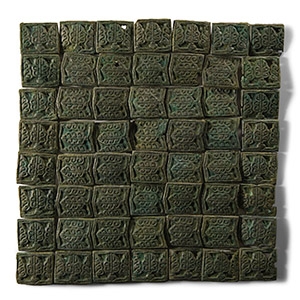
Viking Age Bronze Horse Harness Mount Set
9th-11th century A.D.Sold for (Inc. bp): £156
Group of rectangular mounts each with fixing studs to the reverse, decorated with a dense foliage and leaf motif. 205 grams total, 24-26 mm
From the private collection of a London gentleman, from his grandfather's collection formed before the early 1970s. -
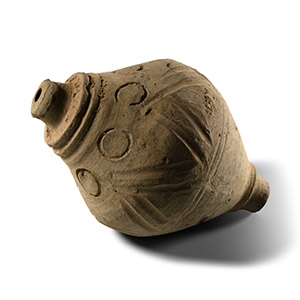
Byzantine 'Greek Fire' Ceramic Fire Bomb or Hand Grenade
9th-11th century A.D.Sold for (Inc. bp): £104
Piriform body with zigzag band to the equator and impressed roundels to the shoulder, tiered neck, domed filler-hole, intended to be filled with explosive liquid and wick, used as a hand grenade. 650 grams, 13.3 cm
From a specialist collection of militaria, London, UK, collected 1990s onwards. Accompanied by an academic paper by military specialist Dr Raffaele D'Amato, dated 15 July 2019 and titled 'Eastern Roman Empire - Greek Fire Bomb or Hand Grenade (μεσαίον kακάβιον) 9th-11th century AD'.
Apart from the use of siphons or manual flame-throwers called cheirosiphona, special corps of Roman soldiers employed terracotta grenades, in the form of small jars, abundantly evidenced in archaeological excavations. They were called μεσαία kακαβιά or κυτροκακάβια where the former had a bulbous shape and the latter a more cylindrical form. -
.jpg)
Luristan 'Mistress of Animals' Bridle Bit
Circa 9th-7th century B.C.Estimate: £3,000 - 4,000 (+bp*)
Opening Bid: £1,500
Each cheekpiece comprising the figure of a goddess on a rectangular base, standing in a long fringed robe and tiara with horns emerging from his head, grasping an attacking rampant winged griffin or winged lion in each hand, three loops to the reverse, perforated through the body through which the long mouthpiece passes. 1.03 kg, 24.5 cm
Acquired on the London art market, 1995. Ex Christie's London, 2nd April 2014, no.32. From the private collection of a North West London, UK, gentleman. Accompanied by a previous collection photograph and copies of the relevant Christie's catalogue pages. Accompanied by an academic report by Dr Raffaele D'Amato. This lot has been checked against the Interpol Database of stolen works of art and is accompanied by a search certificate number no.12049-217395.
The image of a deity holding two animals is ancient and found in many cultures and can depict either a male or female divinity. The goddess was known by the Greek as Potnia Theron, or "Lady of the Animals", a term first used by Homer in the Iliad.
