
Loading, please wait...
LOT 1376
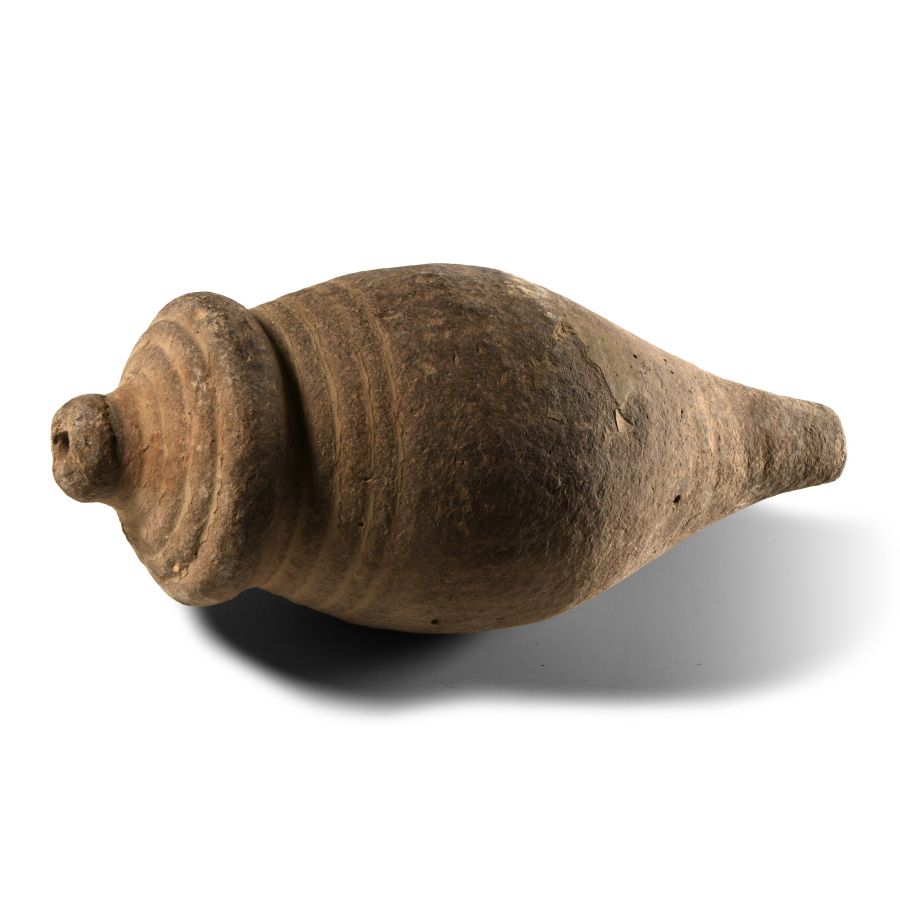
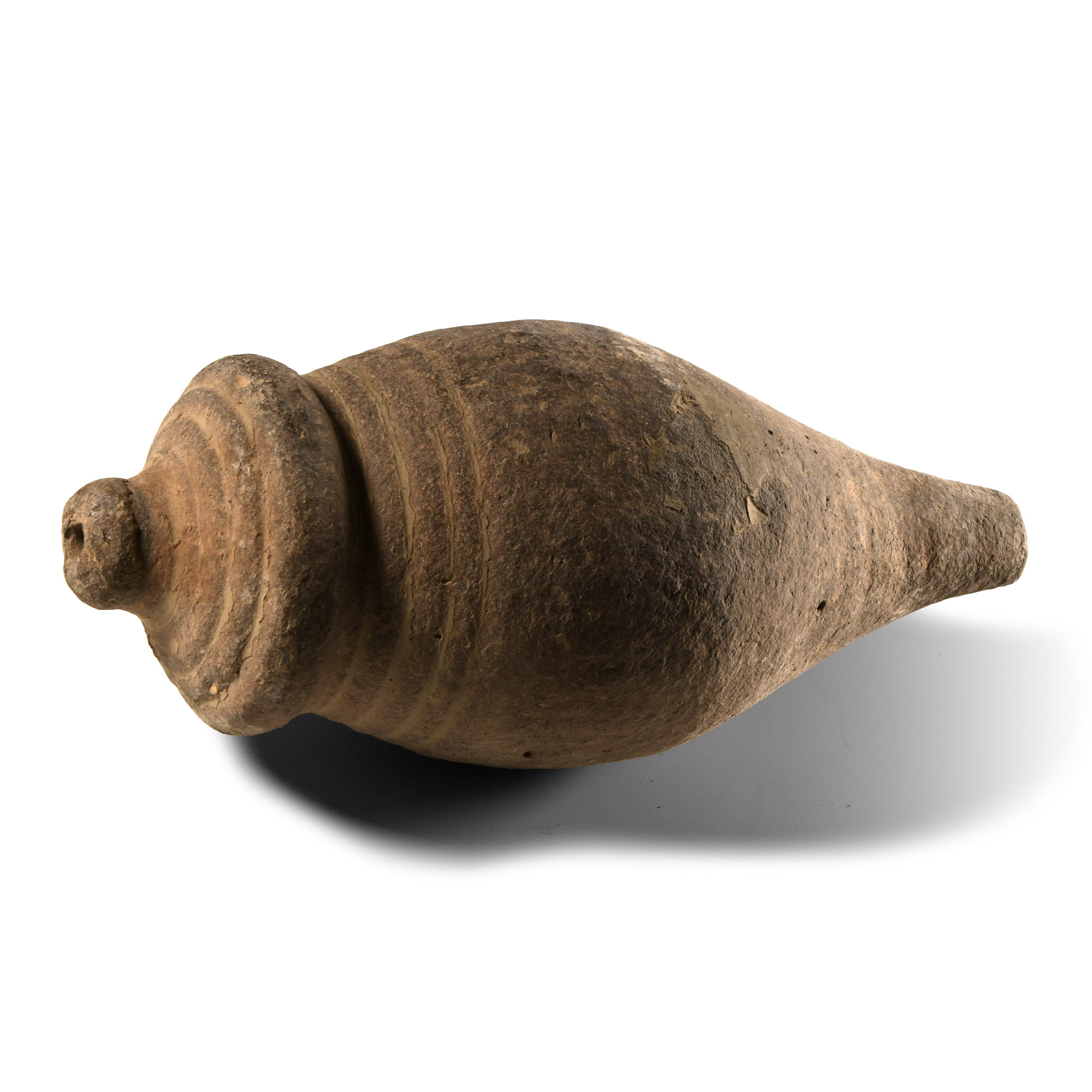
Turco-Mongol 'Greek Fire' Ceramic Fire Bomb or Hand Grenade
14TH CENTURY A.D.
7 1/8 in. (458 grams, 18 cm).
Piriform body with horizontal bands to the shoulder, flanged collar, domed filler-hole, intended to be filled with explosive liquid and wick, used as a hand grenade. [No Reserve]
ProvenanceFrom a specialist collection of militaria, London, UK, collected 1990s onwards.
LiteratureCf. Arendt, W. I., Granaten des 13-14. Jahrhunderts, die an der Wolga gefunden sind, Zeitschrift fur Historische Waffen-und Kostumkunde, 11 (1926-8), p.42; cf. Arendt, W., Die Spharisch-konischen Gefäße aus Gebranntem Ton, ibid; cf. Ayalon, D., Gunpowder and Firearms in the Mamluk Kingdom, London, 1956, p.16.
FootnotesApart from the use of siphons or manual flame-throwers called cheirosiphona, special corps of Roman soldiers employed terracotta grenades, in the form of small jars, abundantly evidenced in archaeological excavations. They were called μεσαία kακαβιά or κυτροκακάβια where the former had a bulbous shape and the latter a more cylindrical form.
CONDITIONTimeLine Auctions follows a vetting process to ensure the authenticity and legality of all items, reinforcing our commitment to integrity and responsible trading. Each antiquity, antique, and coin lot undergoes thorough examination by a vetting committee of at least ten external specialists, professional trade association members, scientists, and archaeologists: Our Vetting Process
AUCTIONS:
TimeLine is a leading auction house specialising in antiquities, ancient art, collectables, natural history, coins, medals, and books. Our auctions offer museums, collectors, historians, and enthusiasts the opportunity to acquire unique and historically significant pieces.
LOT 1376
Turco-Mongol 'Greek Fire' Ceramic Fire Bomb or Hand Grenade
Sold for (Inc. bp): £72
-
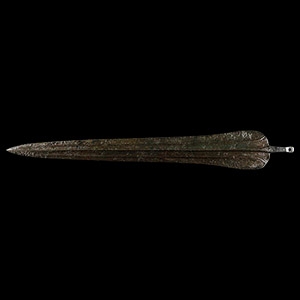
North-West Persian Bronze Short Sword with Blood Channels
2nd-1st millennium B.C.Estimate: £250 - 350 (+bp*)
Opening Bid: £125
Shaped as a two-edged bronze blade, leaf-shape with short rectangular tang with fastening hole, corrugated midrib extending almost to the tip and flared at the shoulder. 439 grams, 44.2 cm
Acquired 1980-2015. Ex Abelita family collection.
The metalworking techniques used in making bronze weapons in Luristan were very complex. Surfaces were often finished in repoussé work, and some of the weapons were chased and others engraved. Many of the graves dating from the era of Kassite hegemony contain bronze and iron artefacts, including various type of weapons. These swords with shallow fullers tapering to a sharp tip have been dated by P.R.S. Moorey to the end of the 2nd millennium B.C. -
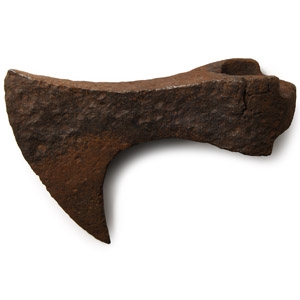
Viking Age Bearded Iron Axehead
11th-13th century A.D.Sold for (Inc. bp): £182
With broad curved blade and pointed chin, broad neck, deep socket with lateral flanges. 698 grams, 15.5 cm
From the collection of a Californian, USA, gentleman, dating back to the late 1960s.
During the mid 13th century, the axes were favourite weapons among Baltic people. For instance the Curonian army included lightly armed soldiers who fought with spears, shields, fighting knives and axes. A heavily armed soldier could also carry a sword, a helmet, a shield and a wide-bladed axe. -
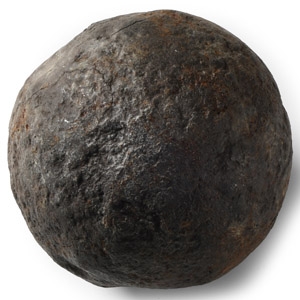
Civil War Iron Cannon Shot
Circa 17th century A.D.Sold for (Inc. bp): £26
Solid-core shot or cannon ball for a small artillery piece. 730 grams, 61 mm
From a collection acquired on the UK art market from various auction houses and collections mostly before 2000. From an important Cambridgeshire estate; thence by descent.
