
Loading, please wait...
LOT 1352
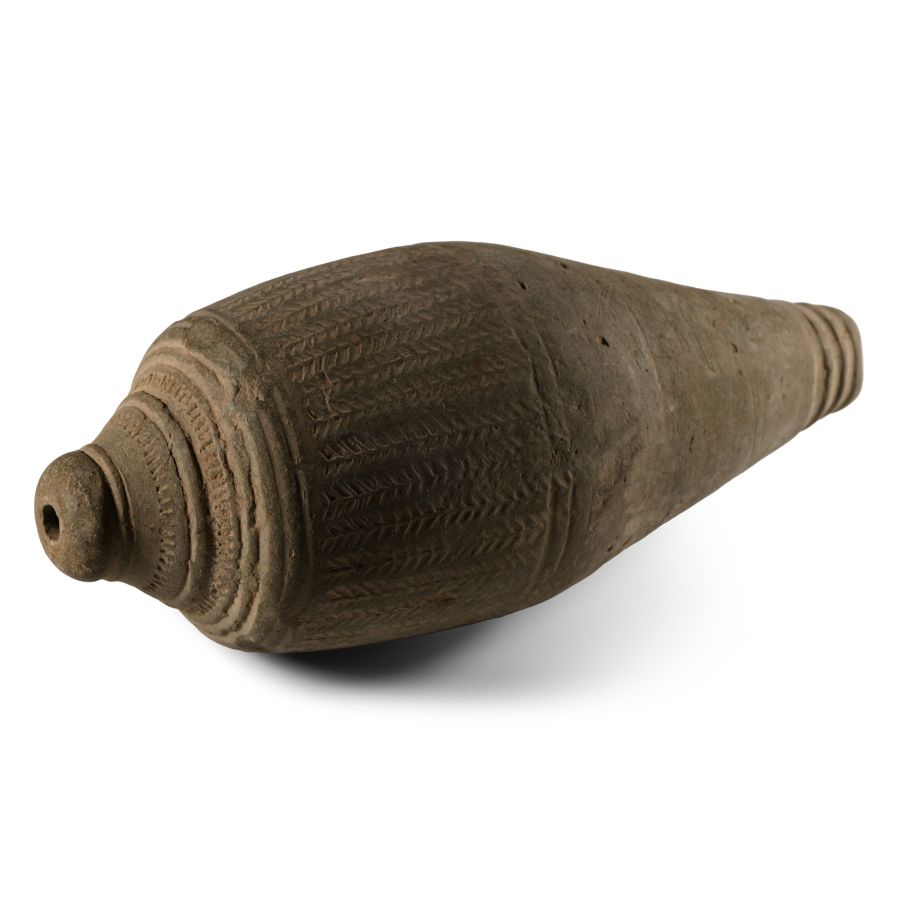
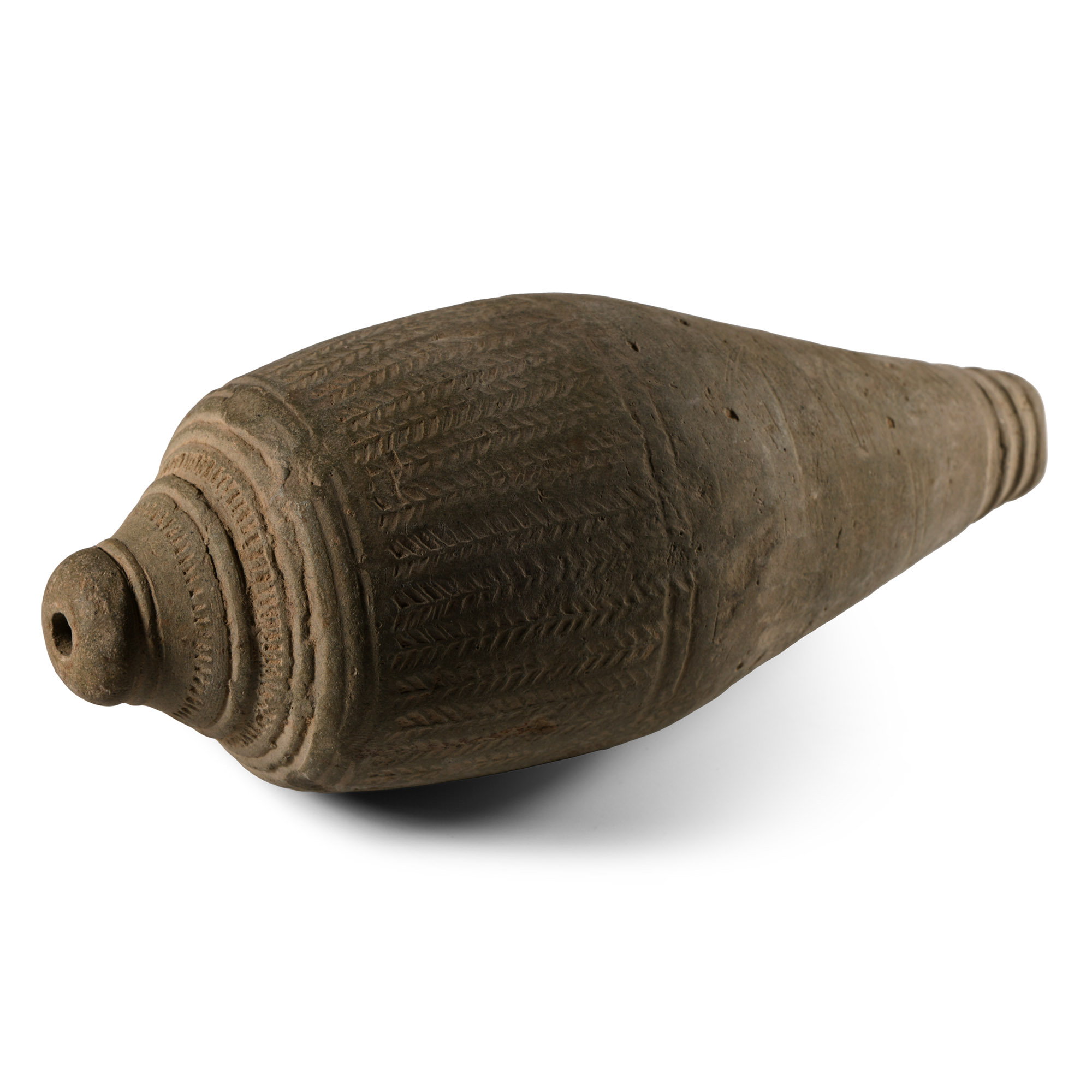
Turco-Mongol Ceramic Fire Bomb or Hand Grenade
13TH-15TH CENTURY A.D.
6 3/4 in. (463 grams, 17 cm).
A hollow vessel with cylindrical body, carinated shoulder, short neck and domed mouth, bands of impressed herringbone patterns to the shoulder and waist, piriform lower body; intended to be filled with explosive liquid and a wick, and used as a hand grenade. [No Reserve]
ProvenanceFrom a military inspired collection formed from the 1990s.
LiteratureCf. Arendt, W. I., 'Granaten des 13-14. Jahrhunderts, die an der Wolga gefunden sind,' in Zeitschrift fur Historische Waffen-und Kostumkunde, 11 (1926-8), p.42; cf. Arendt, W., Die Spharisch-konischen Gefasse aus Gebranntem Ton, ibid; cf. Ayalon, D., Gunpowder and Firearms in the Mamluk Kingdom, London, 1956, p.16; for this specific shape see Nicolle, D., Arms and Armour of the Crusading Era, 1050-1350 AD, volume II, London, 1999, fig.784e.
FootnotesThis piece was a type of ceramic fire grenade, similar to the ones used by the Eastern Romans but of Turco-Mongol type. Apart from the use of manual flame-throwers, special corps of soldiers employed terracotta grenades, in the form of small jars, abundantly evidenced in archaeological excavations.
CONDITIONTimeLine Auctions follows a vetting process to ensure the authenticity and legality of all items, reinforcing our commitment to integrity and responsible trading. Each antiquity, antique, and coin lot undergoes thorough examination by a vetting committee of at least ten external specialists, professional trade association members, scientists, and archaeologists: Our Vetting Process
AUCTIONS:
TimeLine is a leading auction house specialising in antiquities, ancient art, collectables, natural history, coins, medals, and books. Our auctions offer museums, collectors, historians, and enthusiasts the opportunity to acquire unique and historically significant pieces.
-
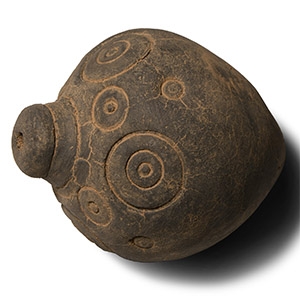
Byzantine 'Greek Fire' Ceramic Fire Bomb or Hand Grenade
9th-11th century A.D.Sold for (Inc. bp): £104
Piriform body with domed filler-hole, the upper body decorated with concentric circle motifs; intended to be filled with explosive liquid and wick, used as a hand grenade. 460 grams, 11.1 cm
From a specialist collection of militaria, London, UK, collected 1990s onwards. Accompanied by an academic paper by military specialist Dr Raffaele D'Amato, dated 15 July 2019 and titled 'Eastern Roman Empire - Greek Fire Bomb or Hand Grenade (μεσαίον kακάβιον) 9th-11th century AD'.
Apart from the use of siphons or manual flame-throwers called cheirosiphona, special corps of Roman soldiers employed terracotta grenades, in the form of small jars, abundantly evidenced in archaeological excavations. They were called μεσαία kακαβιά or κυτροκακάβια where the former had a bulbous shape and the latter a more cylindrical form. -
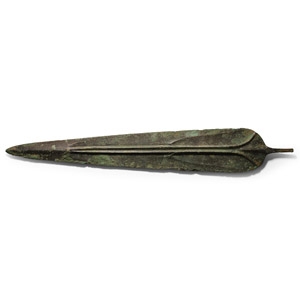
Luristan Wide-Bladed Bronze Sword with Blood Channels
1st millennium B.C.Sold for (Inc. bp): £390
Two-edged leaf-shaped blade with short rectangular tang, corrugated midrib extending almost to the tip and flared at the shoulders. 671 grams, 48.5 cm
Acquired 1980-2015. Ex Abelita family collection.
Luristan was hardly an ethnic or political entity, but the people of Luri had relations through warfare and trade with Sumerians, Lullubi, Assyrians, Babylonians and Elamites in a large time period, spanning from the 3rd to the 2nd millennium BC. The ruling elites of warrior horsemen were buried in the graves with their weapons and horses. -
.jpg)
Migration Period Iron Sword with Bronze Pommel
5th-6th century A.D.Sold for (Inc. bp): £1,235
A spatha with a double-edged parallel-sided blade, battle nicks to both cutting edges; long tang with a fastening rivet in situ; small trapezoidal bronze pommel. 707 grams, 91 cm
From the private collection of a London gentleman, from his grandfather's collection formed before the early 1970s. Accompanied by an academic report by Dr Raffaele D’Amato. This lot has been checked against the Interpol Database of stolen works of art and is accompanied by a search certificate number no.12040-216429.
The spatha, often with an elegantly decorated hilt with golden elements, was characterised by a relatively light handle so that the centre of gravity of the weapon was moved towards the tip. The evolution of the 'barbarian' long sword in the west, during the invasions, began around the 5th century.
