
Loading, please wait...
LOT 1435
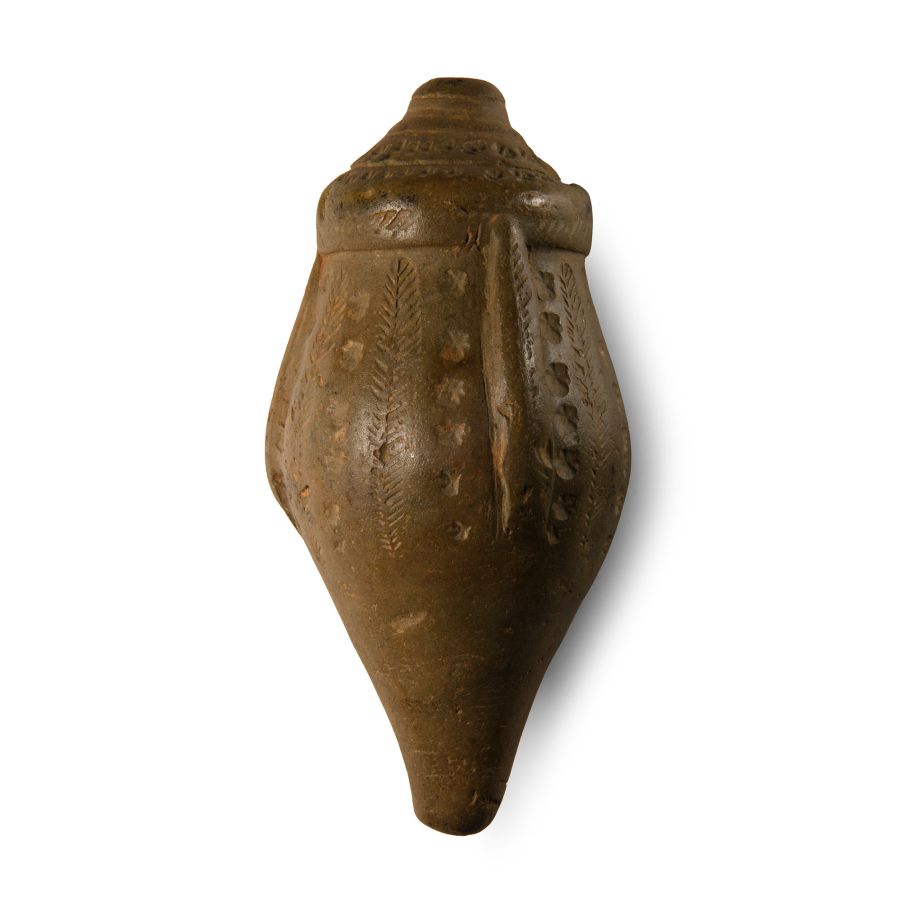
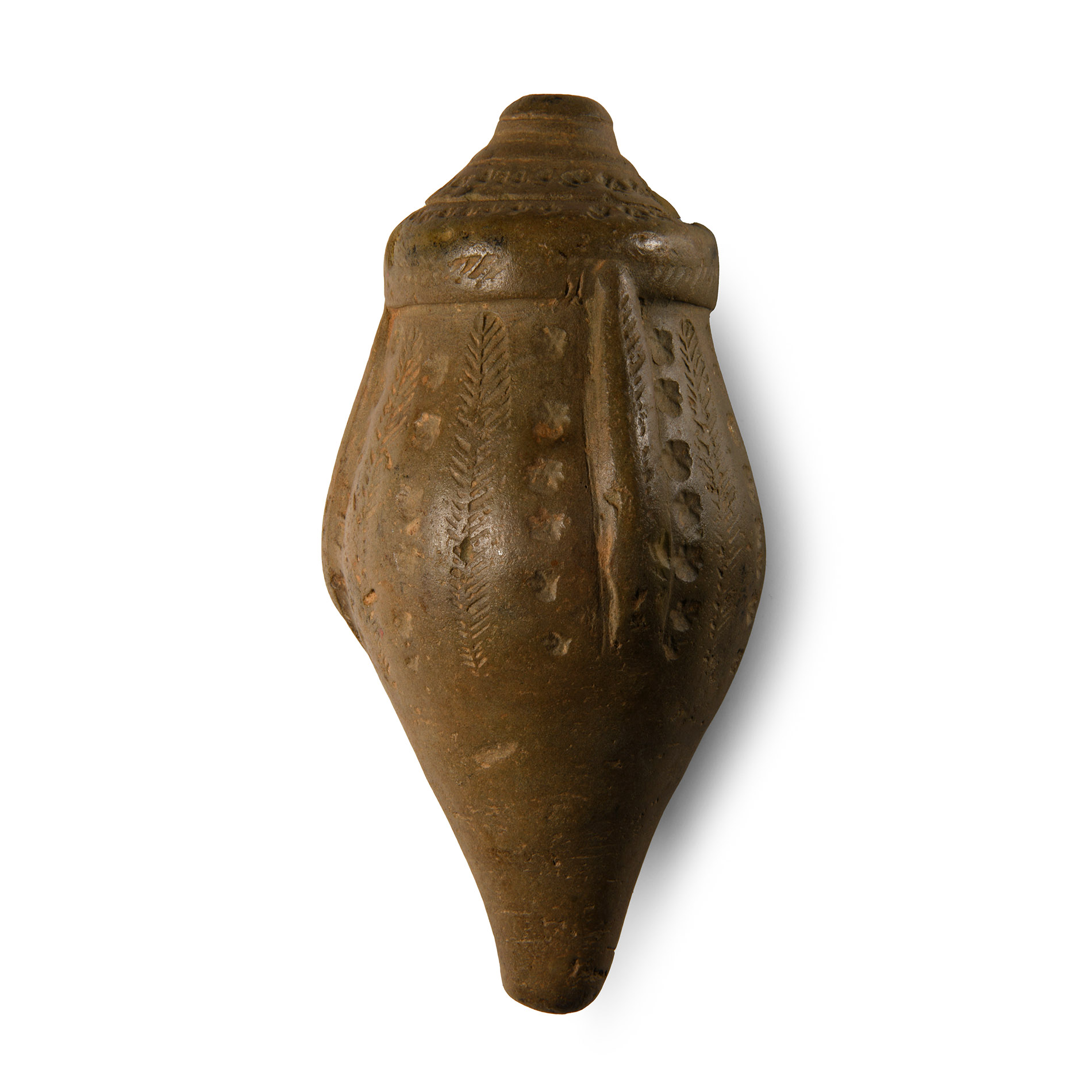
Turco-Mongol Ceramic Fire Bomb or Hand Grenade
13TH-15TH CENTURY A.D.
6 3/4 in. (520 grams, 17 cm).
A hollow ceramic vessel with cylindrical body, carinated shoulder, short neck and domed mouth, bands of impressed herringbone patterns to the shoulder, waist and body, alternated with floral pattern around a groove; intended to be filled with explosive liquid and a wick, and used as a hand grenade. [No Reserve]
ProvenanceAcquired 1980-2015.
Ex Abelita family collection.
Accompanied by an academic paper by military specialist Dr Raffaele D'Amato, dated 15 July 2019 and titled 'Eastern Roman Empire - Greek Fire Bomb or Hand Grenade (μεσαίον kακάβιον) 9th-11th century AD'.
Cf. Arendt, W. I., 'Granaten des 13-14. Jahrhunderts, die an der Wolga gefunden sind,' in Zeitschrift fur Historische Waffen-und Kostumkunde, 11 (1926-8), p.42; cf. Arendt, W., Die Spharisch-konischen Gefasse aus Gebranntem Ton, ibid; cf. Ayalon, D., Gunpowder and Firearms in the Mamluk Kingdom, London, 1956, p.16; for this specific shape see Nicolle, D., Arms and Armour of the Crusading Era, 1050-1350 AD, volume II, London, 1999, fig.784e.
FootnotesThis piece was a sort of ceramic fire grenade, similar to the ones used by the Eastern Romans but of Turco-Mongol type. Apart from the use of manual flame-throwers, special corps of soldiers employed terracotta grenades, in the form of small jars, abundantly evidenced in archaeological excavations.
CONDITIONTimeLine Auctions follows a vetting process to ensure the authenticity and legality of all items, reinforcing our commitment to integrity and responsible trading. Each antiquity, antique, and coin lot undergoes thorough examination by a vetting committee of at least ten external specialists, professional trade association members, scientists, and archaeologists: Our Vetting Process
AUCTIONS:
TimeLine is a leading auction house specialising in antiquities, ancient art, collectables, natural history, coins, medals, and books. Our auctions offer museums, collectors, historians, and enthusiasts the opportunity to acquire unique and historically significant pieces.
-
North West Persian Short Sword with Blood Channels
2nd-1st millennium B.C.Estimate: £250 - 350 (+bp*)
Opening Bid: £125
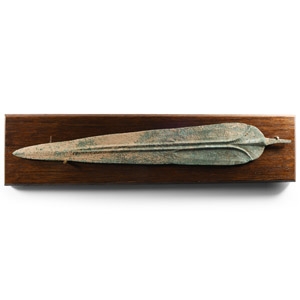
With short tang for an organic hilt, the blade showing multiple grooves forming a pronounced mid-rib spanning roughly more than three-quarters of the blade; accompanied by a custom-made display stand. 1.18 kg total, 45.5 cm (49 cm including stand)
Ex P.A., Hertfordshire, UK, specialist collection of Greek art, 1980-1990s.
Luristan was hardly an ethnic or political entity, but the people of Luri had relations through warfare and traded with Sumerians, Lullubi, Assyrians, Babylonians and Elamites over a long period of time, spanning from the 3rd to the 2nd millennium B.C. The ruling elites of warrior horsemen were buried with their weapons and horses. -
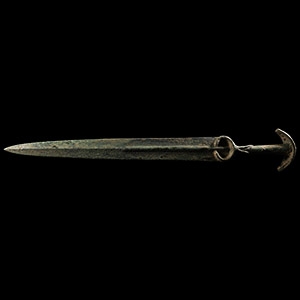
Luristan Bronze Sword
14th-10th century B.C.Sold for (Inc. bp): £975
Of type II with crescentic pommel, the grip with V-shaped collar and penannular guard, blade with a broad, raised midrib. 684 grams, 56 cm
Ex Abelita family collection, 1988.
The crescentic pommel and the penannular guard were probably cast in a one piece-mould. These kinds of pommels are typical of the iron swords of type 2 from Luristan. A certain number of Luristan daggers and swords have bronze or iron blades with cast-on bronze hilts. The typology of winged pommel bronze grip is visible on examples in the British Museum and the National Museum of Iran. -
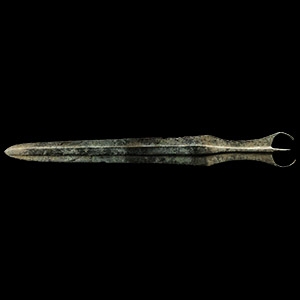
North-Western Persian Bronze Sword Blade with Horns
Circa 1st millennium B.C.Sold for (Inc. bp): £338
With curved 'horns' projecting on either side at the top of the waisted grip, blade with flat mid-rib. 325 grams, 51 cm
Acquired 1980-2015. Ex Abelita family collection.
The Luristani people produced a quantity of fine metalwork, which according to Dr Khorasani, could be due to a settled period which arose as a result of the defeat of the Elamites by the Babylonians, leaving the Luristani people in relative peace for a period of time after 1200 B.C. According to Khorasani 'A culture of innovation and experimentation flourished, and the repertoire of the Luristan smiths expanded in the period between 1150-1050 B.C.'
