
Loading, please wait...
LOT 1840
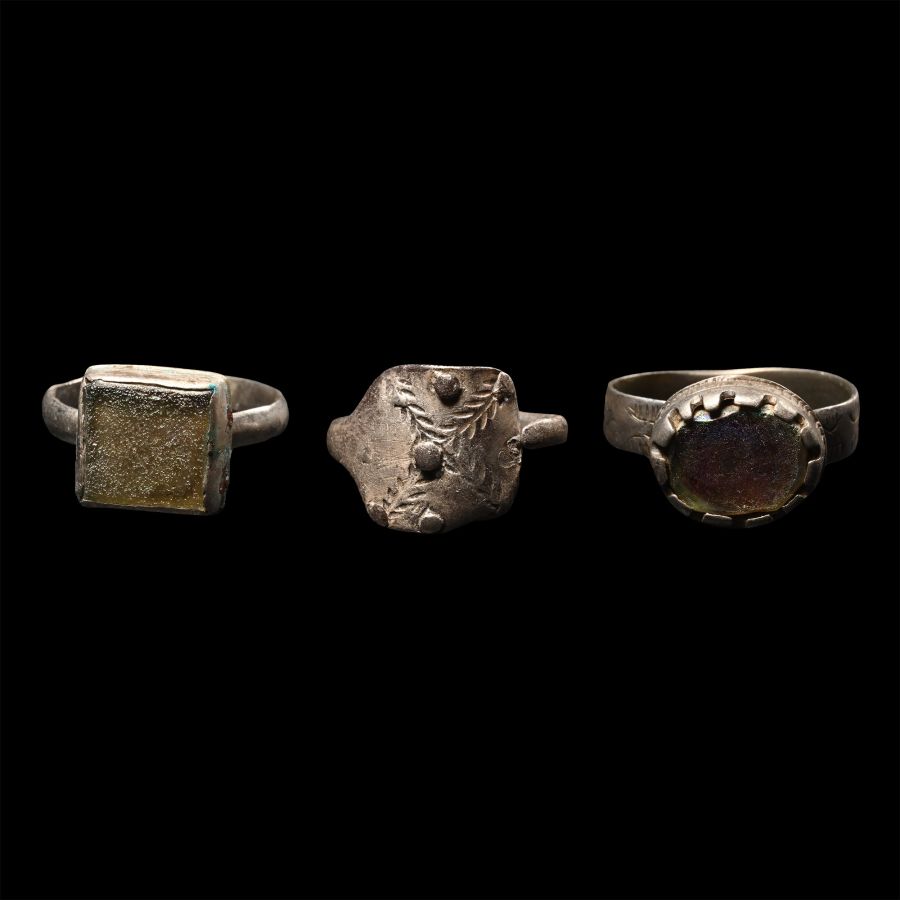
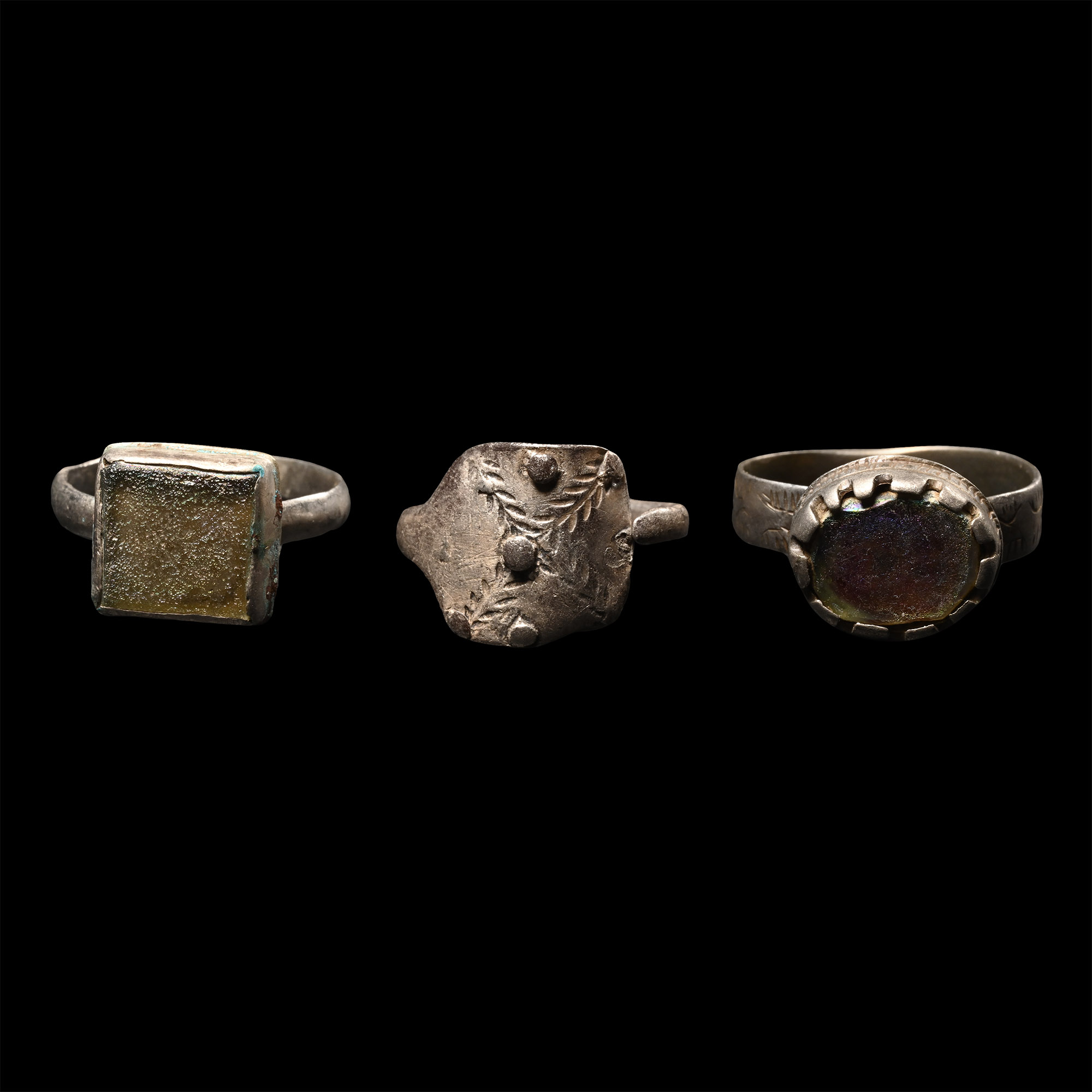
Tudor Period Silver Ring Group
CIRCA 16TH CENTURY A.D.
3/4 - 1 in. (9.68 grams total, 19-25 mm).
Comprising three rings, two with an iridescent glass insert, and one one with a shield-shaped bezel with applied bosses and incised sprigs forming a cross. [3]
ProvenanceEx German art market, 2000s.
Acquired from an EU collector living in London.
From the collection of a Surrey, UK, gentleman.
This lot is accompanied by an illustrated lot declaration signed by the Head of the Antiquities Department, Dr Raffaele D'Amato.
TimeLine Auctions follows a vetting process to ensure the authenticity and legality of all items, reinforcing our commitment to integrity and responsible trading. Each antiquity, antique, and coin lot undergoes thorough examination by a vetting committee of at least ten external specialists, professional trade association members, scientists, and archaeologists: Our Vetting Process
AUCTIONS:
TimeLine is a leading auction house specialising in antiquities, ancient art, collectables, natural history, coins, medals, and books. Our auctions offer museums, collectors, historians, and enthusiasts the opportunity to acquire unique and historically significant pieces.
LOT 1840
Tudor Period Silver Ring Group
Estimate £100 - 140€120 - 160 (for guidance only)$140 - 190 (for guidance only)
-
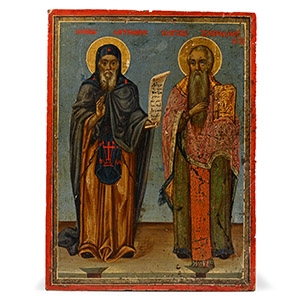
Greek Icon with Saint Anthony the Abbot and Saint Charalambos
Early 19th century A.D.Sold for (Inc. bp): £598
Saint Anthony the Great on the left, represented in monastic dress holding a scroll of holy writings with his left hand; Saint Charalambos dressed as a bishop, with a green sticharion embroidered in gold, covered by a pink gold embroidered phelonion, a gold embroidered square epigonation with blue edges, and a long orange gold embroidered epitrachelion, holding a gold covered gospel with the image of Christ's resurrection with his left hand; tempera on wood. 558 grams, 25 x 18.6 cm
Acquired from Portobello Road, London, in the 1990s. Property of a London, UK, gentleman collector. This lot is accompanied by an illustrated lot declaration signed by the Head of the Antiquities Department, Dr Raffaele D'Amato.
Saint Anthony the Great, who lived in the 3rd-4th century A.D., was the father of Eastern Monachism. According to the tradition, Saint Charalambos was martyred in 202 A.D. He is the protector of prosperity and health. -
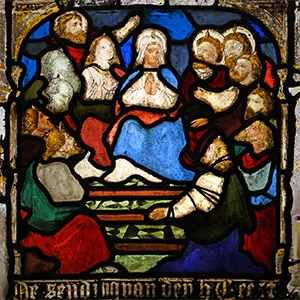
Stained Glass Panel with the Pentecost
Flemish, 19th century A.D. or earlierSold for (Inc. bp): £1,430
In late 15th century style, showing praying nimbate Mary at the centre, dressed in a blue cloak and a long white cassock, Mary Magdalene at her side with her head raised towards the sky; eleven Apostles surrounding the women, dressed in long tunics and cloaks, receiving the Holy Spirit in the form of small tongues resting on their heads; architectural background and Flemish inscription ‘DE ZENDING VAN DE HEILIGE GEEST’ (The Descent of the Holy Spirit) below; some restoration. 4.5 kg, 65 x 53.5 cm
Some restoration.
From a war-damaged church in Belgium. Ex property of a late Northumberland collector. From a private collection, Derbyshire, UK. This lot is accompanied by an illustrated lot declaration signed by the Head of the Antiquities Department, Dr Raffaele D'Amato.
The scene represents the Christian feast of the Pentecost, described in Acts, 2,1-4, when the eleven Apostles, gathered in Jerusalem together with Mary Mother of God and Mary of Magdala (the latter only according to some traditions) received the Holy Spirit as a mighty rushing wind and under the form of tongues of fire. According to the Christian tradition, this event represents the fulfilment of the promise that Christ will baptise his followers with the Holy Spirit and fire. -
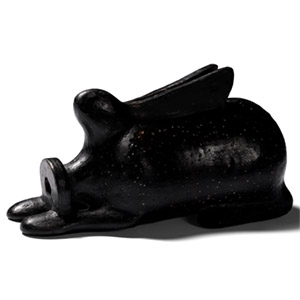
Greek Style Black Glazed Aryballos in the Shape of a Hare
20th century A.D.Sold for (Inc. bp): £117
Modelled as a reclining hare with raised head and long ears resting along the back, small spout supported by the front legs; dimpled body. 80.2 grams, 10.7 cm
with Galerie Rhéa, Zurich, Switzerland. This lot is accompanied by an illustrated lot declaration signed by the Head of the Antiquities Department, Dr Raffaele D'Amato.
