
Loading, please wait...
LOT 2126
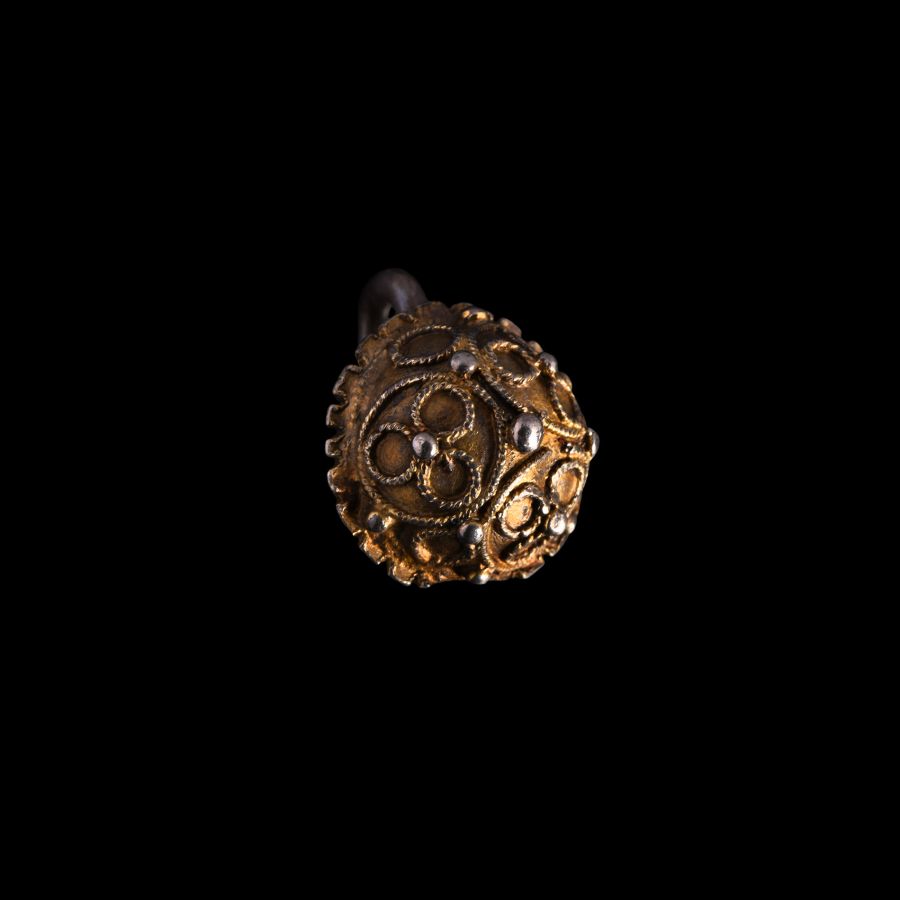
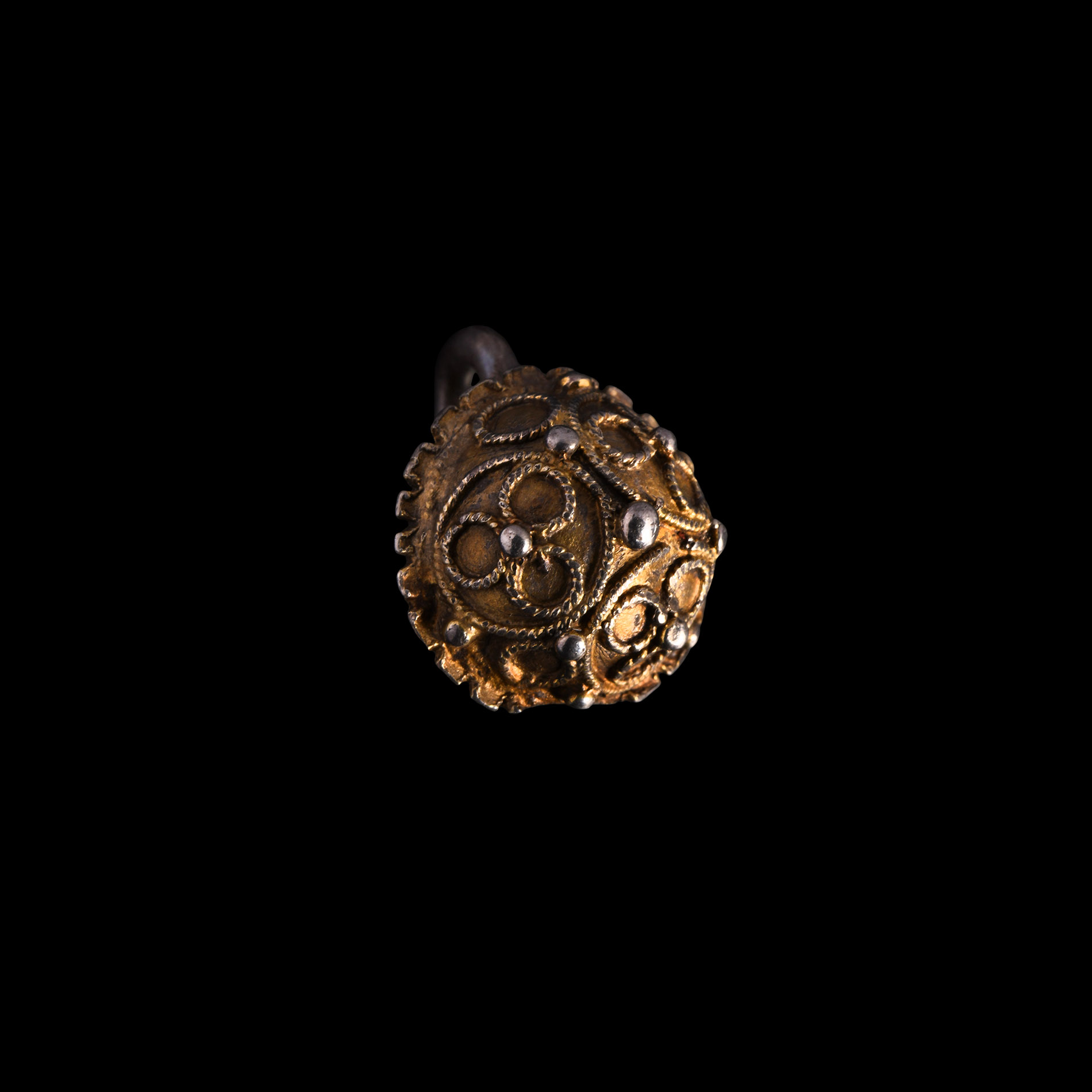
Tudor Period Silver-Gilt Hat Pin
CIRCA 16TH CENTURY A.D.
3/4 in. (5.66 grams, 19 mm).
The domed head adorned with filigree roundels and circlets interspersed with granules, decoratively notched rim; S-shaped hook to reverse.
ProvenanceFrom the collection of a North American gentleman, formed in the 1990s.
CONDITIONTimeLine Auctions follows a vetting process to ensure the authenticity and legality of all items, reinforcing our commitment to integrity and responsible trading. Each antiquity, antique, and coin lot undergoes thorough examination by a vetting committee of at least ten external specialists, professional trade association members, scientists, and archaeologists: Our Vetting Process
AUCTIONS:
TimeLine is a leading auction house specialising in antiquities, ancient art, collectables, natural history, coins, medals, and books. Our auctions offer museums, collectors, historians, and enthusiasts the opportunity to acquire unique and historically significant pieces.
-
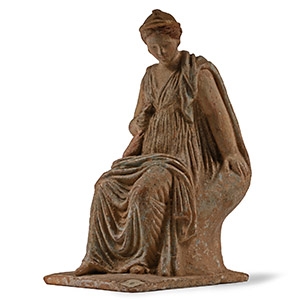
Hellenistic Style Terracotta Figurine
19th century A.D.Sold for (Inc. bp): £780
Modelled in the round on a rectangular base, seated female wearing a crested cap, peplos dress and palla holding a coin-purse to her midriff, collector's reference 'ABLT' to underside. 157 grams, 11.6 cm
Ex Louis-Gabriel Bellon (c.1819-1899), France. Private collection, Europe. Accompanied by a copy of French passport no.111342 dated 6 July 2009. -
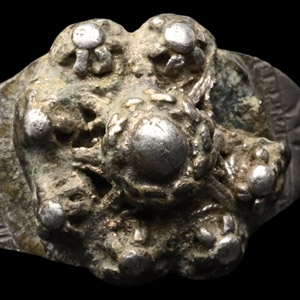
Post Medieval Silver Ring with Rosette
Circa 17th-18th century A.D.Sold for (Inc. bp): £33
Expanding hoop with linear decoration on each side of the bezel, bezel formed of small floral motifs forming a large rosette. 5.44 grams, 25.52 mm overall, 18.69 x 17.53 mm internal diameter (approximate size British O, USA 7, Europe 14.98, Japan 14)
Ex German art market, 2000s. Acquired from an EU collector living in London. From the collection of a Surrey, UK, gentleman. -
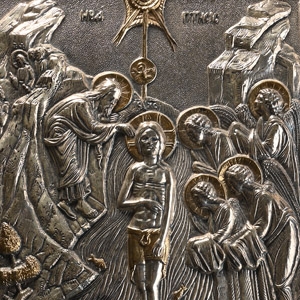
Reproduction Silver-Gilt Byzantine Icon of Christ's Baptism
20th century A.D.Sold for (Inc. bp): £72
Representing the Epiphany (the Manifestation) of Jesus Christ; Jesus standing in the river, wearing a small loincloth made from a knotted tallit, recognisable by its striped edge; the rocky landscape of the Jordan valley temporarily breaking open and river becoming a vast whirlpool; from the left bank John reaching towards Jesus and blessing his cousin; four angels look on holding towels; above, the dove of the Holy Spirit with three rays of light; above the inscription Η ΒΑΠΤHCΙC (the Baptism). 110 grams, 26 x 20 cm
925 silver
Ex David Miller, Hemel Hempstead, London, UK. From the private collection of a West London, UK, gentleman, formed since the early 2000s.
The Gospel of Mark describes the voice of God announcing: ‘Thou art my beloved Son, with thee I am well pleased’ (Mark 1: 11). This is the theoretical moment after which Jesus becomes known as Christ and John becomes known as the Baptist.
