
Loading, please wait...
LOT 2028
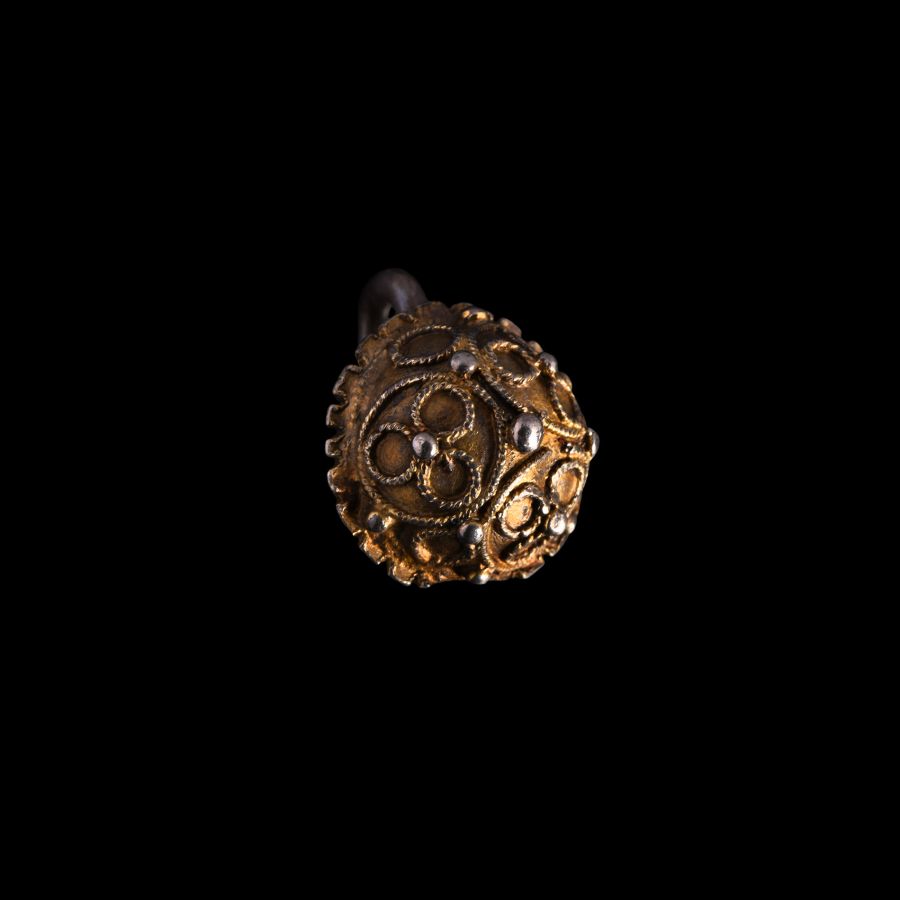
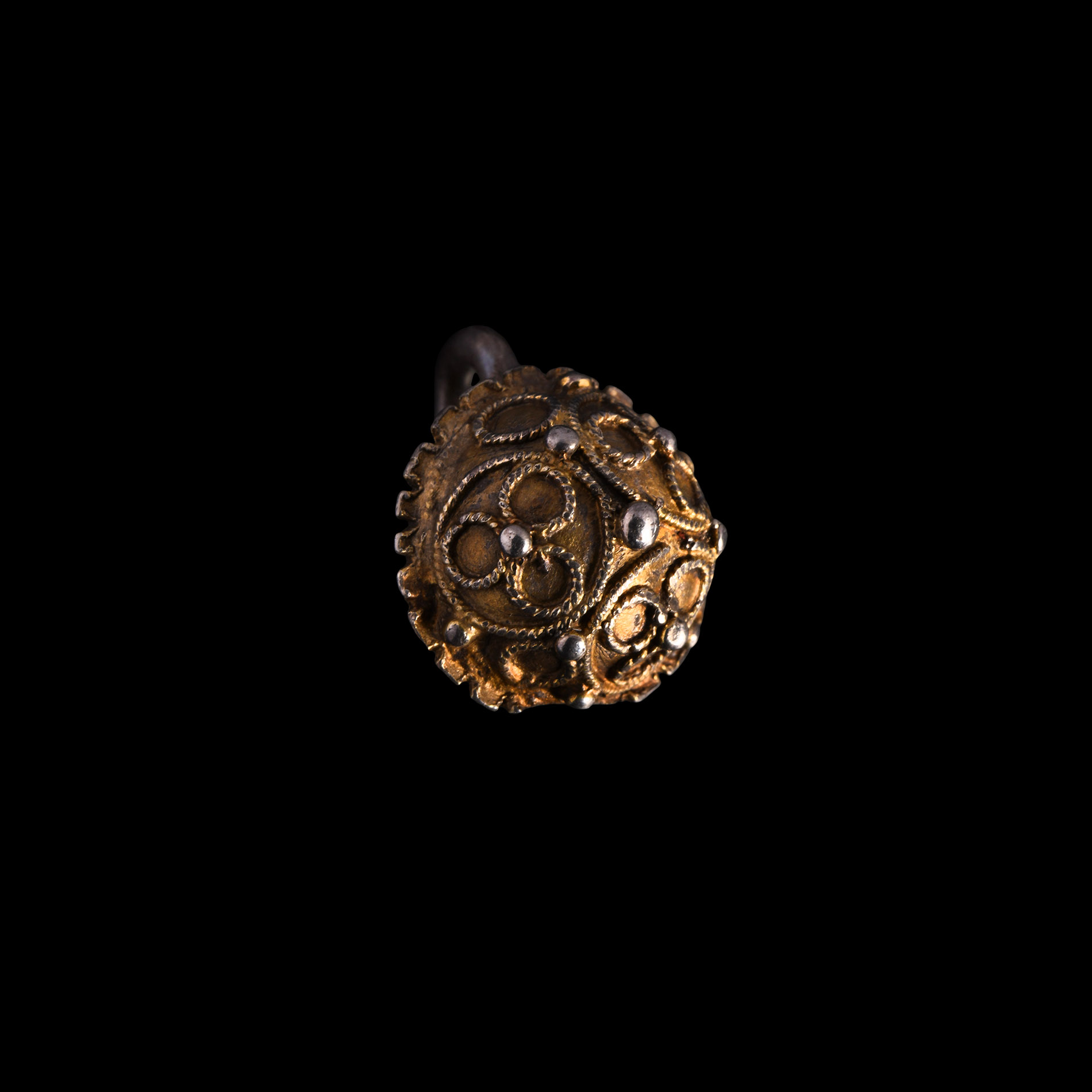
Tudor Period Silver-Gilt Hat Pin
CIRCA 16TH CENTURY A.D.
3/4 in. (5.66 grams, 19 mm).
The domed head adorned with filigree roundels and circlets interspersed with granules, decoratively notched rim; S-shaped hook to reverse. [No Reserve]
ProvenanceFrom the collection of a North American gentleman, formed in the 1990s.
CONDITIONTimeLine Auctions follows a vetting process to ensure the authenticity and legality of all items, reinforcing our commitment to integrity and responsible trading. Each antiquity, antique, and coin lot undergoes thorough examination by a vetting committee of at least ten external specialists, professional trade association members, scientists, and archaeologists: Our Vetting Process
AUCTIONS:
TimeLine is a leading auction house specialising in antiquities, ancient art, collectables, natural history, coins, medals, and books. Our auctions offer museums, collectors, historians, and enthusiasts the opportunity to acquire unique and historically significant pieces.
LOT 2028
Tudor Period Silver-Gilt Hat Pin
Estimate £200 - 300€230 - 350 (for guidance only)$270 - 410 (for guidance only)
-
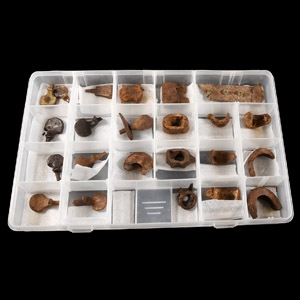
Tudor Period Iron Dagger Guard Group
Circa 16th century A.D.Sold for (Inc. bp): £20
Comprising guards of various types; held in a plastic collector's case. 1.4 kg total, 35.5 x 23.5 cm including box
Acquired 1990s-early 2000s. East Anglian private collection. -
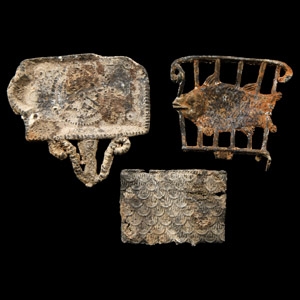
Tudor and Later 'Thames' Lead Toy Griddle Group
16th-17th century A.D.Sold for (Inc. bp): £13
Comprising: an openwork griddle with fish; rectangular example with openwork volute lug and beaded design to one face; rectangular plaque displaying fish scales. 12.4 grams total, 30-39 mm
Found Thames foreshore spoil, 1980s. -
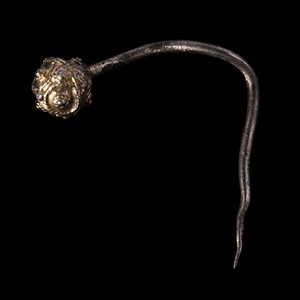
Tudor Period Silver-Gilt Dress Pin
16th-17th century A.D.Sold for (Inc. bp): £46
Comprising a tapering shaft and spherical head decorated with granule clusters and filigree hoops. 1.69 grams, 29 mm
From an Essex collection; acquired as part of an old jewellery collection. From the collection of a North American gentleman. Accompanied by a copy of the British Museum's Portable Antiquities Scheme (PAS) record no.SWYOR-FF9E65; disclaimed as Treasure.
