
Loading, please wait...
LOT 1963
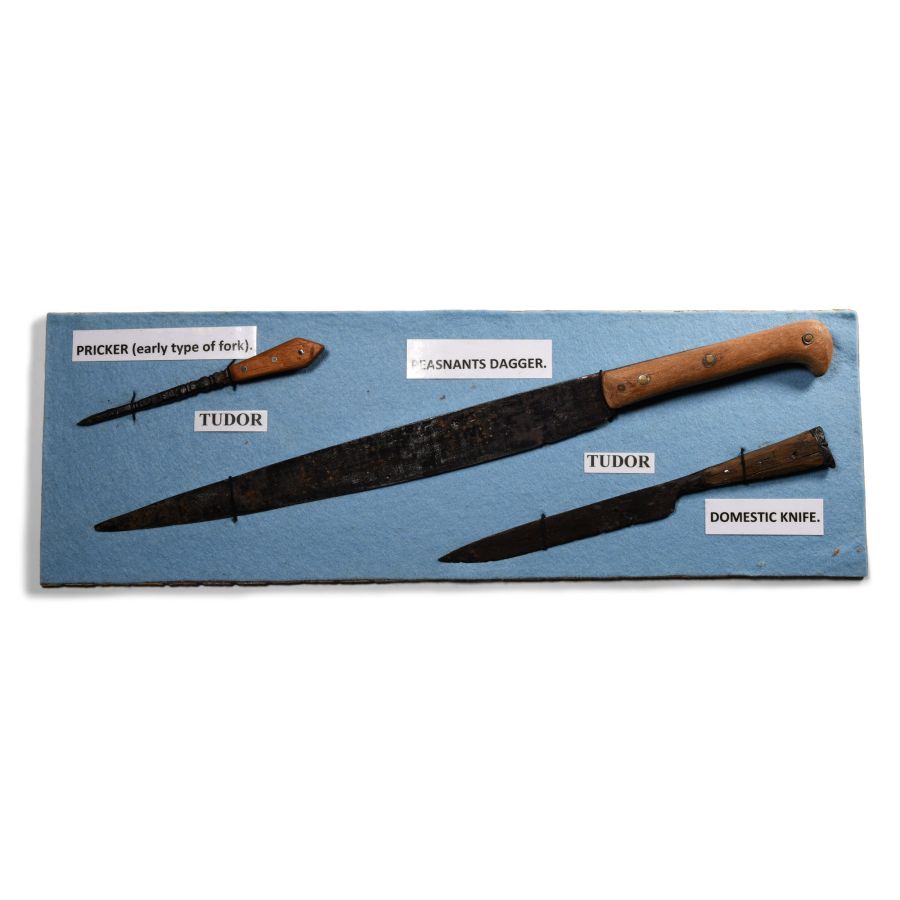
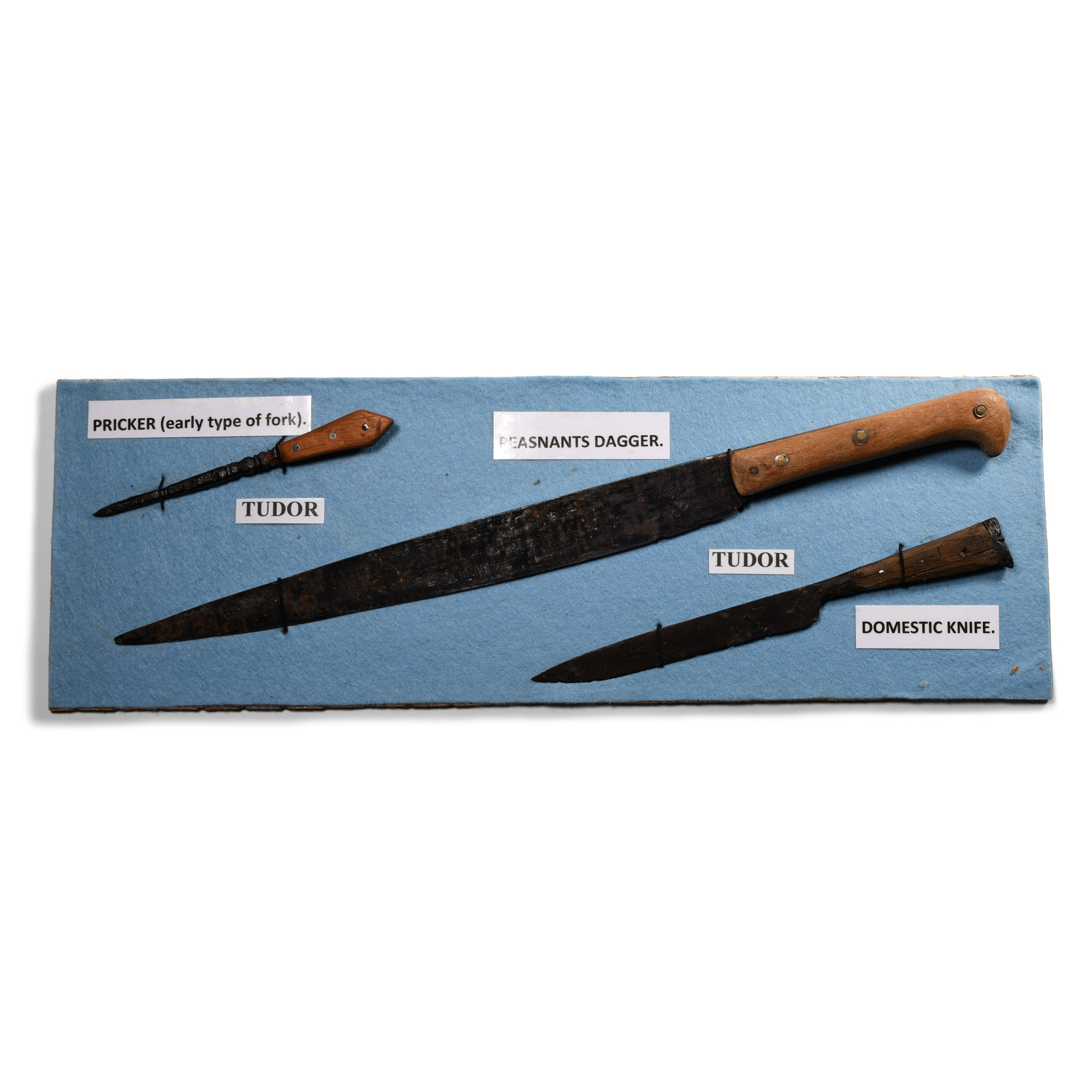
Tudor Period Iron Knife Display
CIRCA 16TH CENTURY A.D.
5 3/4 - 16 3/4 in. (633 grams total, knife: 14.5-42.5 cm).
Comprising: a single-edged peasant iron dagger with reconstructed wooden handle; a Tudor iron knife with scale tang handle and a decorative pommel; an early type of iron fork (pricker) with reconstructed wooden handle. [3, No Reserve]
ProvenanceFrom the collection of the famous author, writer and speaker, Gordon Bailey, Essex, UK; formed since 1968.
FootnotesKnives with long wide blades would have been used at table for carving meat, but in difficult times they could be a proper weapon in the hand of common people. The practice to carrying knives for everyday use continued for many centuries.
CONDITIONTimeLine Auctions follows a vetting process to ensure the authenticity and legality of all items, reinforcing our commitment to integrity and responsible trading. Each antiquity, antique, and coin lot undergoes thorough examination by a vetting committee of at least ten external specialists, professional trade association members, scientists, and archaeologists: Our Vetting Process
AUCTIONS:
TimeLine is a leading auction house specialising in antiquities, ancient art, collectables, natural history, coins, medals, and books. Our auctions offer museums, collectors, historians, and enthusiasts the opportunity to acquire unique and historically significant pieces.
-
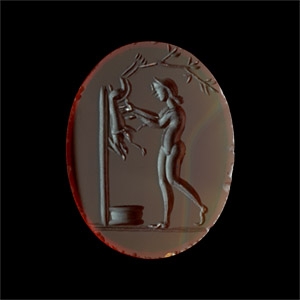
Neoclassical Carnelian Gemstone with Naked Goddess
18th-19th century A.D.Sold for (Inc. bp): £247
Ellipsoid panel with nude female supporting an inverted dog over a libation bowl, frond above; supplied with a museum-quality impression. 1.47 grams, 25 mm
Private collection, England. -
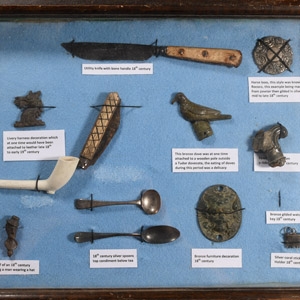
Cased Post Medieval 'Published' Artefacts Collection
Circa 18th century A.D.Sold for (Inc. bp): £52
Mixed group including a silver condiment spoon, pewter syringe, folding knife, furniture plaque with lion mask and other items, all mounted and labelled in a glazed wooden display case; many of these objects are published in the Detector Finds book series. 3.95 kg total, 53.5 x 35 x 6 cm including case
From the collection of the famous author, writer and speaker, Gordon Bailey, Essex, UK; formed since 1968. -
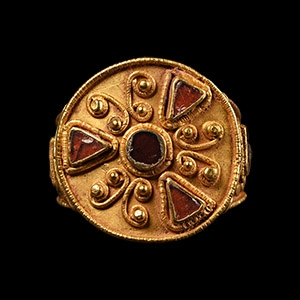
Langobardic Style Gold Ring with Garnets
20th century A.D.Sold for (Inc. bp): £1,820
With broad discoid bezel in 6th-7th century A.D. style surrounded by an applied beaded wire rim; granule and filigree ornament to the shank, triangular garnet cloison in a cell to each shoulder, three radiating triangular garnet cloisons to the bezel with applied wire collars, central garnet cloison, scrolled wire appliqués. 8.88 grams, 23.48 mm overall, 19.53 mm internal diameter (approximate size British T, USA 9 1/2, Europe 21.26, Japan 20)
From a private collection, The Netherlands. Acquired in 2010. Property of a North American gallery.
