
Loading, please wait...
LOT 1186
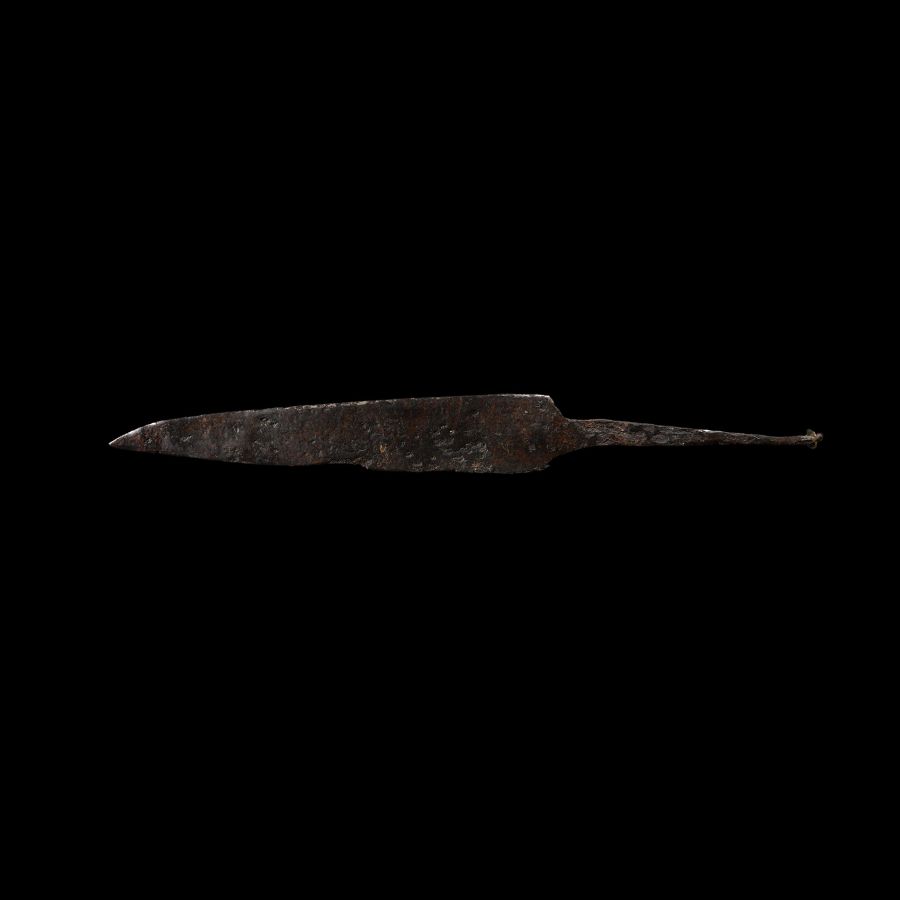
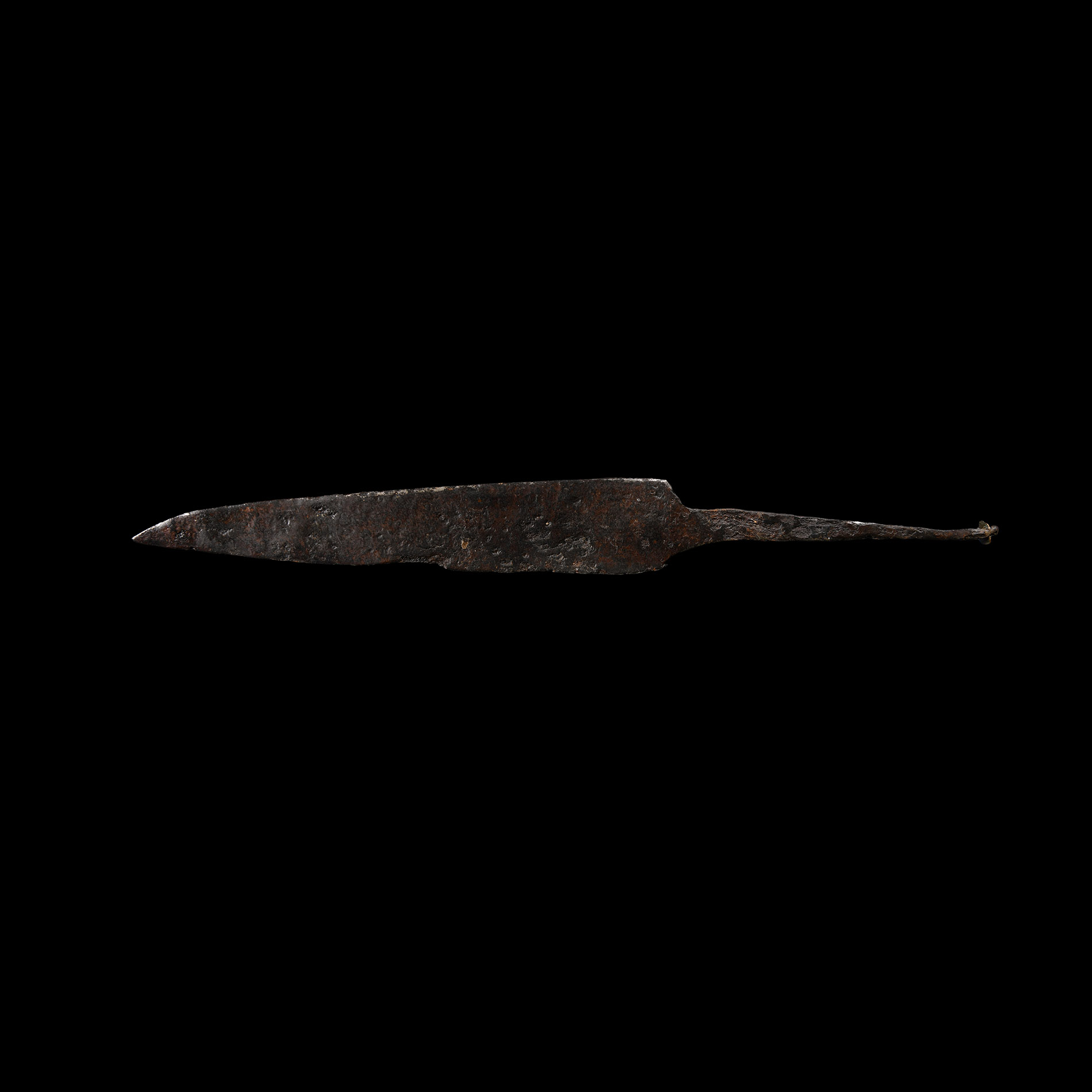
Tudor Period Iron Dagger
16TH CENTURY A.D. OR LATER
11 1/4 in. (155 grams, 28.5 cm).
Comprising a single cutting edge and tang.
ProvenanceAcquired 1960s-1990s.
Late Alison Barker collection, a retired London barrister.
TimeLine Auctions follows a vetting process to ensure the authenticity and legality of all items, reinforcing our commitment to integrity and responsible trading. Each antiquity, antique, and coin lot undergoes thorough examination by a vetting committee of at least ten external specialists, professional trade association members, scientists, and archaeologists: Our Vetting Process
AUCTIONS:
TimeLine is a leading auction house specialising in antiquities, ancient art, collectables, natural history, coins, medals, and books. Our auctions offer museums, collectors, historians, and enthusiasts the opportunity to acquire unique and historically significant pieces.
LOT 1186
Tudor Period Iron Dagger
Estimate £100 - 140€120 - 160 (for guidance only)$140 - 190 (for guidance only)
-
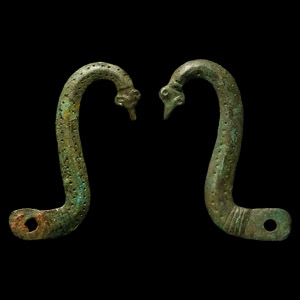
Roman Bronze Armour Double Fastening Hooks
1st century A.D.Sold for (Inc. bp): £221
Each a scrolled bar with gently carinated upper face, formed as serpents or other animals with stylised geometric detailing; attachment perforations to one terminal. 16.5 grams total, 65 mm each
Acquired on the London art market, 1980s-1990s.
In the 1st century B.C.-1st century A.D., the Celtic fastening system of the ring mail armour (gallica, lorica ferro aspera) became the standard in the Imperial Roman army, with a pivot attached to the breast and hinged to the edges of the humeralia (shoulder guards). The chest fastener had various different designs. The double hooks, S-shaped and usually with snake-head terminals, were secured by a central rivet on the chest. The system allowed excellent freedom of movement, giving greater protection to the shoulders and the arms. Similar fasteners for infantry mail have been found on the Kalkriese battlefield, some of them also decorated with niello and inscribed with the name of the soldier. -
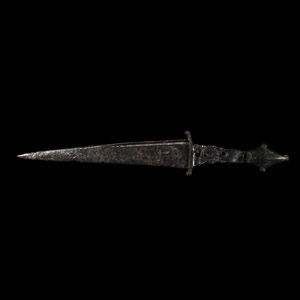
Medieval Quillon Dagger with Bronze Pommel
England or Germany, 16th century A.D.Sold for (Inc. bp): £1,430
Featuring a hexagonal brass pommel engraved with a fleur-de-lis to one side and a dragon to the other; pierced tang, two short quillons inclining towards the blade, terminating in lion head-shaped finials; straight single-edged blade, with side ridges to both faces of the blade, tapering to a fine point. 177 grams, 34 cm
Tang is heavily corroded, trace of employment on the battlefield.
Acquired 1960s-1990s. Late Alison Barker collection, a retired London barrister.
Quillon daggers were predominantly employed as a military weapon. During the 16th century, this dagger continued to be popular, although the hilt no longer resembled that of the contemporary sword, as sword hilts had developed into more intricate forms. -
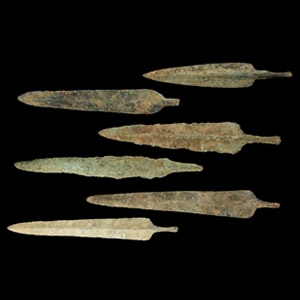
Luristan Bronze Arrowhead Group
2nd-1st millennium B.C.Estimate: £150 - 200 (+bp*)
Opening Bid: £80
Mainly of leaf-shaped type with short tangs, including examples with midribs. 268 grams total, 14.5-19 cm
Acquired 1990s. From the collection of a late Japanese weaponry collector.
