
Loading, please wait...
LOT 2023
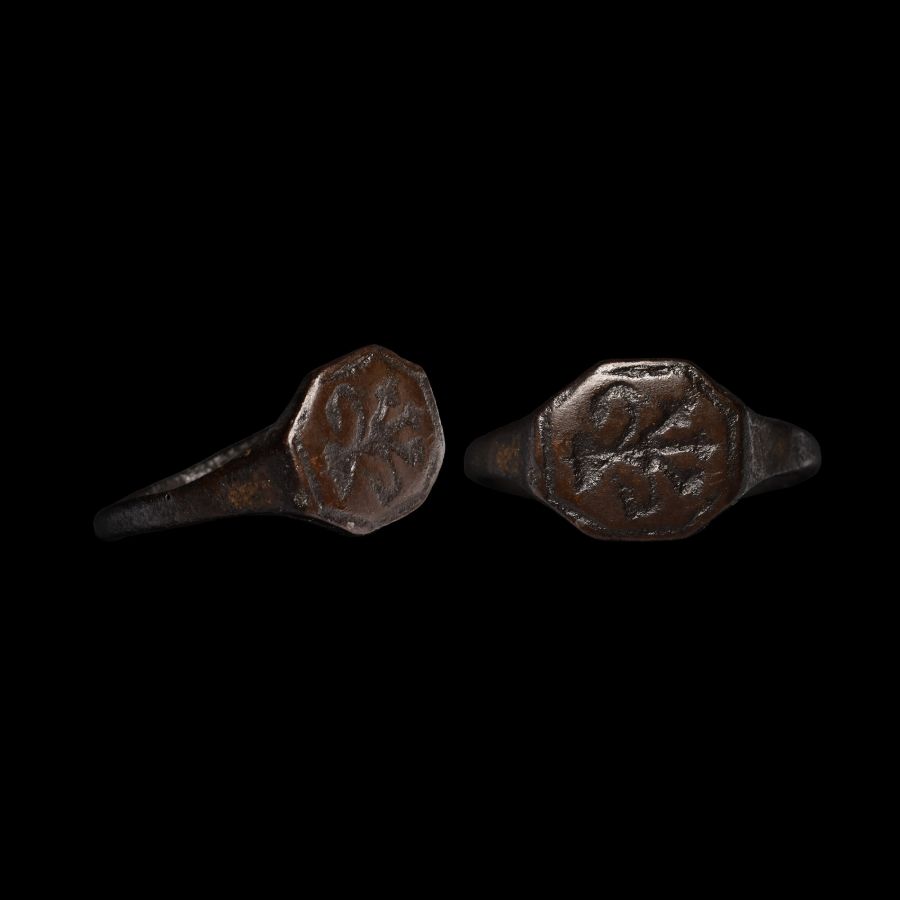
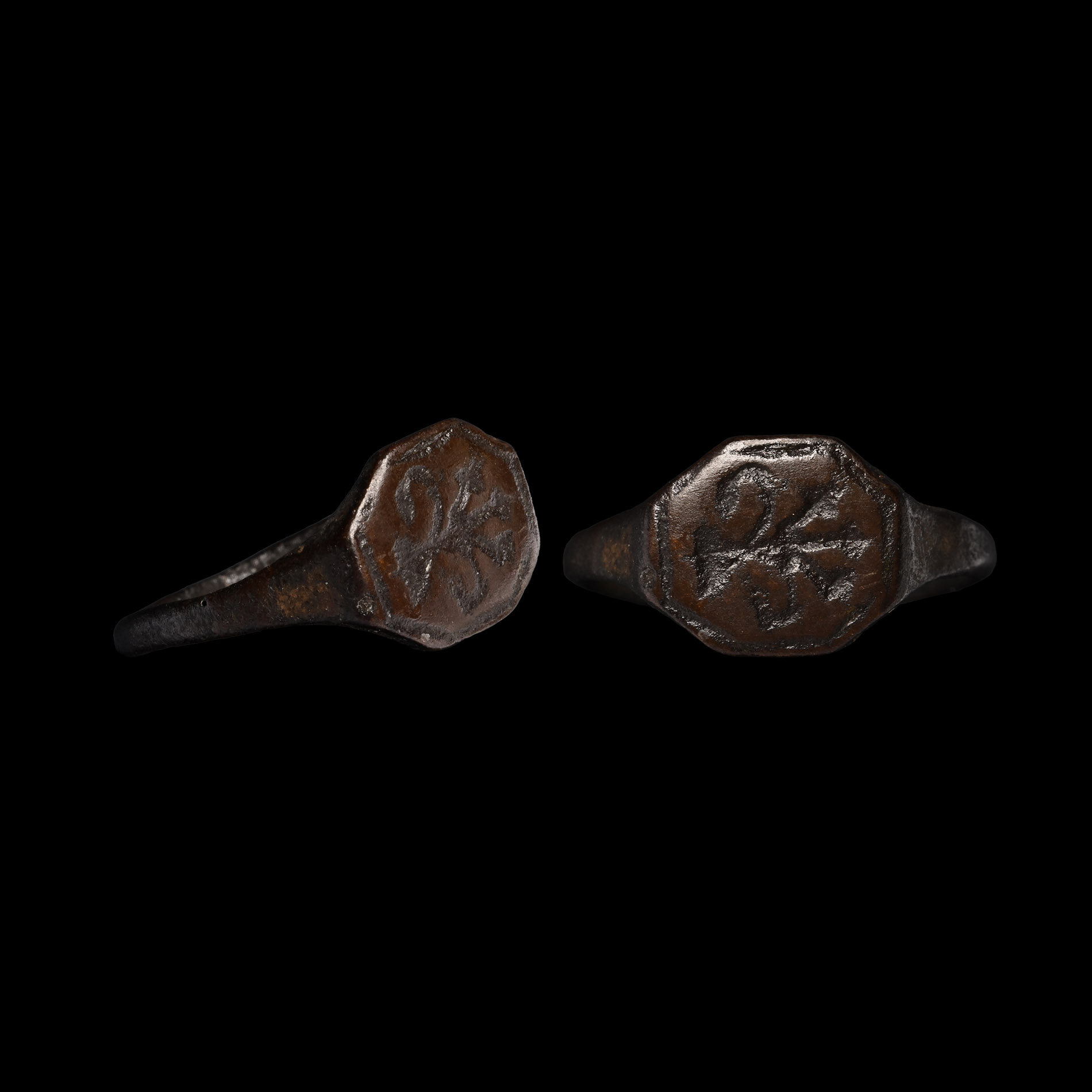
Tudor Period Bronze Ring with Hexagonal Bezel and Armorial Motif
CIRCA 16TH CENTURY A.D.
7/8 in. (2.73 grams, 21.28 mm overall, 17.83 mm internal diameter (approximate size British P 1/2, USA 7 3/4, Europe 16.86, Japan 16)).
Comprising a D-section hoop, facetted shoulders, integral octagonal bezel with pointillé border enclosing an incuse fleur-de-lys motif. [No Reserve]
ProvenancePrivate collection formed since the 1940s.
UK art market.
Property of an Essex, UK, gentleman.
Cf. Chadour, A.B., Rings. The Alice and Louis Koch Collection, volume I, Leeds, 1994, item 613, for type.
CONDITIONTimeLine Auctions follows a vetting process to ensure the authenticity and legality of all items, reinforcing our commitment to integrity and responsible trading. Each antiquity, antique, and coin lot undergoes thorough examination by a vetting committee of at least ten external specialists, professional trade association members, scientists, and archaeologists: Our Vetting Process
AUCTIONS:
TimeLine is a leading auction house specialising in antiquities, ancient art, collectables, natural history, coins, medals, and books. Our auctions offer museums, collectors, historians, and enthusiasts the opportunity to acquire unique and historically significant pieces.
LOT 2023
Tudor Period Bronze Ring with Hexagonal Bezel and Armorial Motif
Sold for (Inc. bp): £39
-
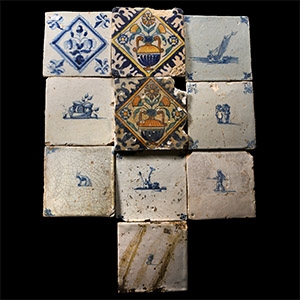
Post Medieval Dutch Glazed Ceramic Tile Group
Circa 17th-18th century A.D.Sold for (Inc. bp): £78
Composed mainly of blue and white glazed tiles displaying sailing vessels, still life scenes, figural vignettes, animals, polychrome floral motifs and others. 3.4 kg total, 12.5 x 13 - 13 x 13.3 cm
Acquired 1990s-early 2000s. East Anglian private collection. -
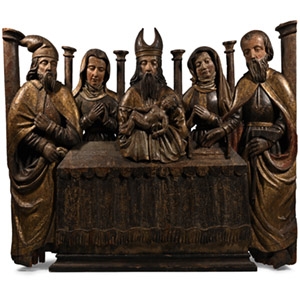
Large Renaissance Lime Wood Bas-Relief of The Presentation of Christ to the Temple
Rhineland, circa 1480-1500 A.D.Sold for (Inc. bp): £12,350
The gilt polychrome carving showing Saint Simeon holding the infant Christ in his arms before his circumcision, Saint Simeon wearing a priestly mitre, holding the infant above an altar covered by an embroidered brocade; Virgin Mary to his left gazing at the infant tenderly, veiled and wearing a long robe with gilt decoration; to her left Saint Joseph dressed in a long robe and gilt cloak, holding a carpenter's axe in his left hand; praying Saint Anna to the right of Saint Simeon, wearing a simple dress and veil; to her right Saint Joachim, wearing a yellow cap and gilt cloak; the columns of the Temple of Jerusalem on the background; on a wooden stand. 10.15 kg, 86.5 cm wide
Crait and Muller, 8 June 2021, no.2. Ex central London gallery. Accompanied by an academic report by Dr Raffaele D’Amato. This lot has been checked against the Interpol Database of stolen works of art and is accompanied by search certificate no.12181-221704.
The relief shows the parents and relatives of infant Jesus following the Jewish tradition of circumcising young boys eight days after their birth. This iconography is symbolic as, according to the tradition, Saint Anna and Saint Joachim, parents of Mary, died before the birth of Christ. This panel originally would have adorned the interior panels of a large altarpiece, showing the cycle of life of Christ. -
.jpg)
Bronze Astrolabe
20th century A.D.Sold for (Inc. bp): £390
Composed of three circular quadrants, the body surmounted with an openwork panel incised with a floral motif and set with small blue glass cabochons; suspension loop. 1.25 kg, 24 cm
UK gallery, early 2000s.
