
Loading, please wait...
LOT 1950
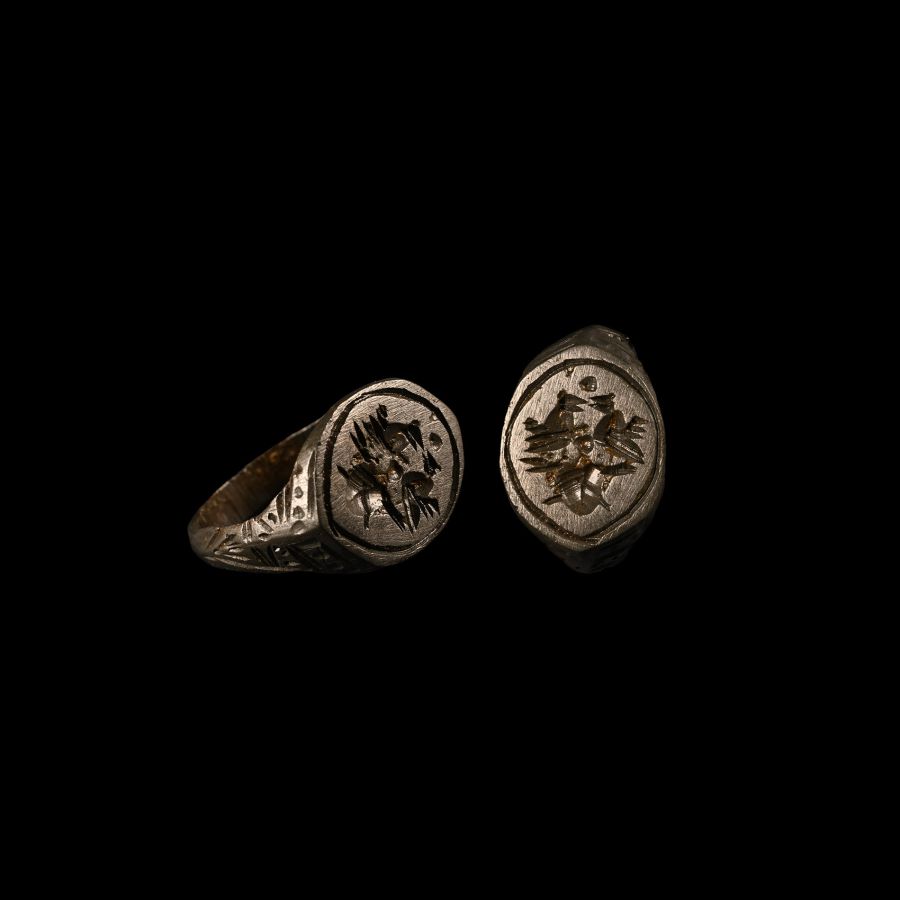
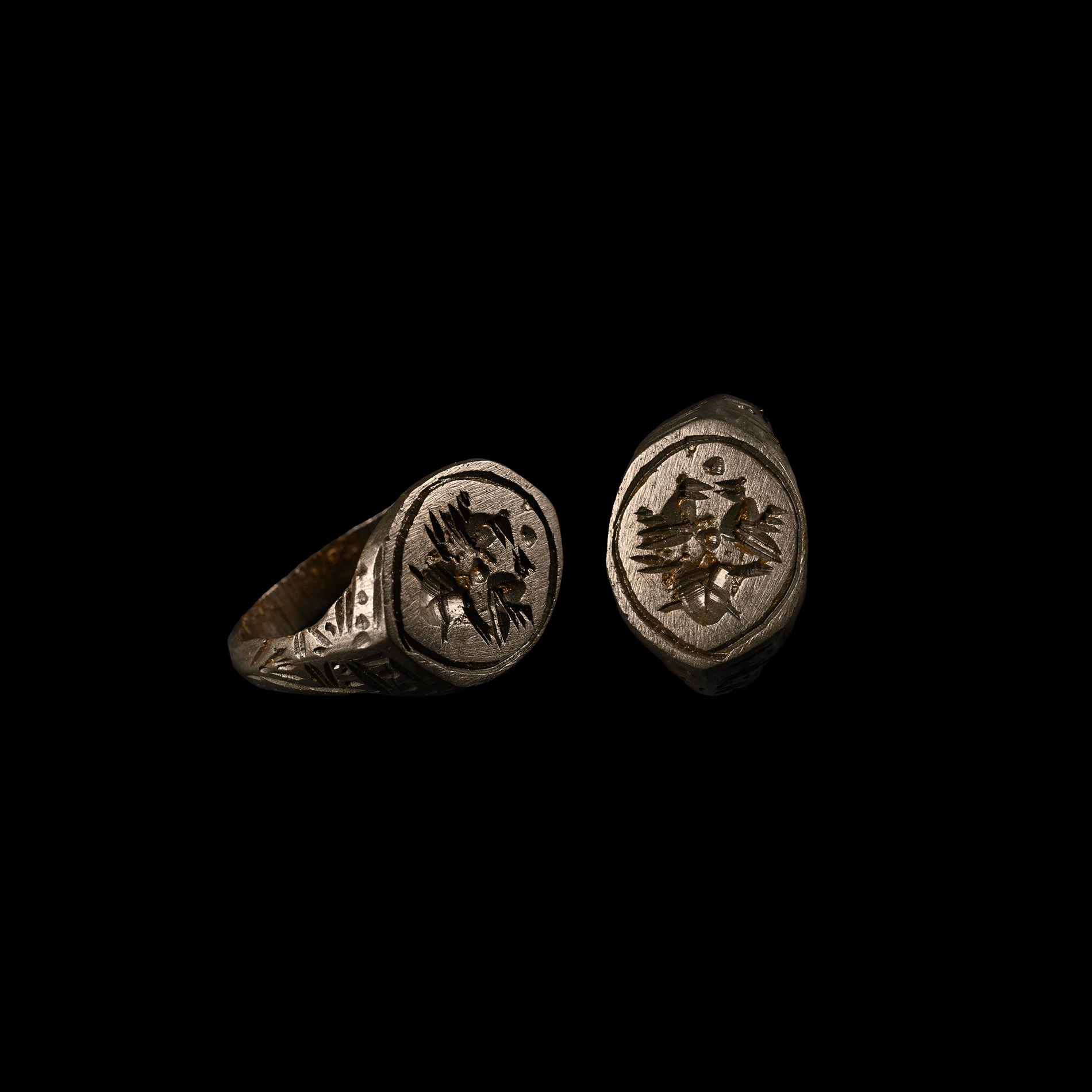
Tudor Period Bronze Ring with Birds on Nest
CIRCA 16TH CENTURY A.D.
3/4 in. (5.47 grams, 22.42 mm overall, 18.63 mm internal diameter (approximate size British Q 1/2, USA 8 1/4, Europe 18.12, Japan 17)).
Carinated hoop, geometric panels to the shoulders, lentoid bezel with incuse motif of two facing birds on a nest. [No Reserve]
ProvenancePrivate collection formed since the 1940s.
UK art market.
Property of an Essex gentleman.
Cf. Chadour, A.B., Rings. The Alice and Louis Koch Collection, volume I, Leeds, 1994, item 646.
CONDITIONTimeLine Auctions follows a vetting process to ensure the authenticity and legality of all items, reinforcing our commitment to integrity and responsible trading. Each antiquity, antique, and coin lot undergoes thorough examination by a vetting committee of at least ten external specialists, professional trade association members, scientists, and archaeologists: Our Vetting Process
AUCTIONS:
TimeLine is a leading auction house specialising in antiquities, ancient art, collectables, natural history, coins, medals, and books. Our auctions offer museums, collectors, historians, and enthusiasts the opportunity to acquire unique and historically significant pieces.
-
.jpg)
Gilt Painted Wooden Icon of Saint George
Circa 19th century A.D.Sold for (Inc. bp): £172
Dressed in armour and holding a spear, carrying a shield on his back, quiver of arrows on his hip with bow over arm, and one hand on a sword at his side, against a gilt background; text across left and right field reading 'Свети Георги' (Saint George). 667 grams, 33.2 cm
Ex French gallery, Paris.
Saint George, a Roman soldier of the 4th century, martyred under Diocletian, soon became the emblem of the military saint par excellence, defender of the faith and protector of armies. In the east, his icons and images were often carried into battle or placed on standards of Christian armies; in the West, he became a patron of chivalry. Here he is represented in late Roman armour, according to the style in use in Byzantium between the 14th and 15th centuries. -
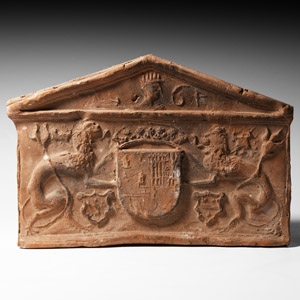
Post Medieval House-Shaped Armorial Terracotta Brick
16th-17th century A.D.Sold for (Inc. bp): £208
Displaying a crowned shield flanked by mythical leonine creatures in relief, crowned profile bust facing right above with number 6 and reversed 4. 4.2 kg, 27 cm wide
Acquired 1990s-early 2000s. East Anglian private collection. -
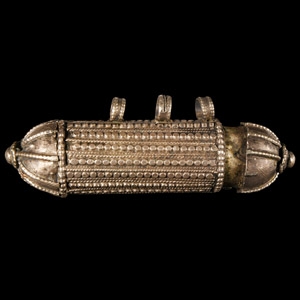
Judaic or Arabic Hirzbaase Silver Amulet Case
Circa 19th century A.D.Sold for (Inc. bp): £52
Cylindrical with domed terminals with apex pellet and pelletted ribbing, ridge of suspension loops, body adorned with horizontal bands of filigree wire and pellets; hollow-formed. 90 grams, 10.1 cm
From the private collection of the late Mr S.M., London, UK, thence by descent.
