
Loading, please wait...
LOT 2012
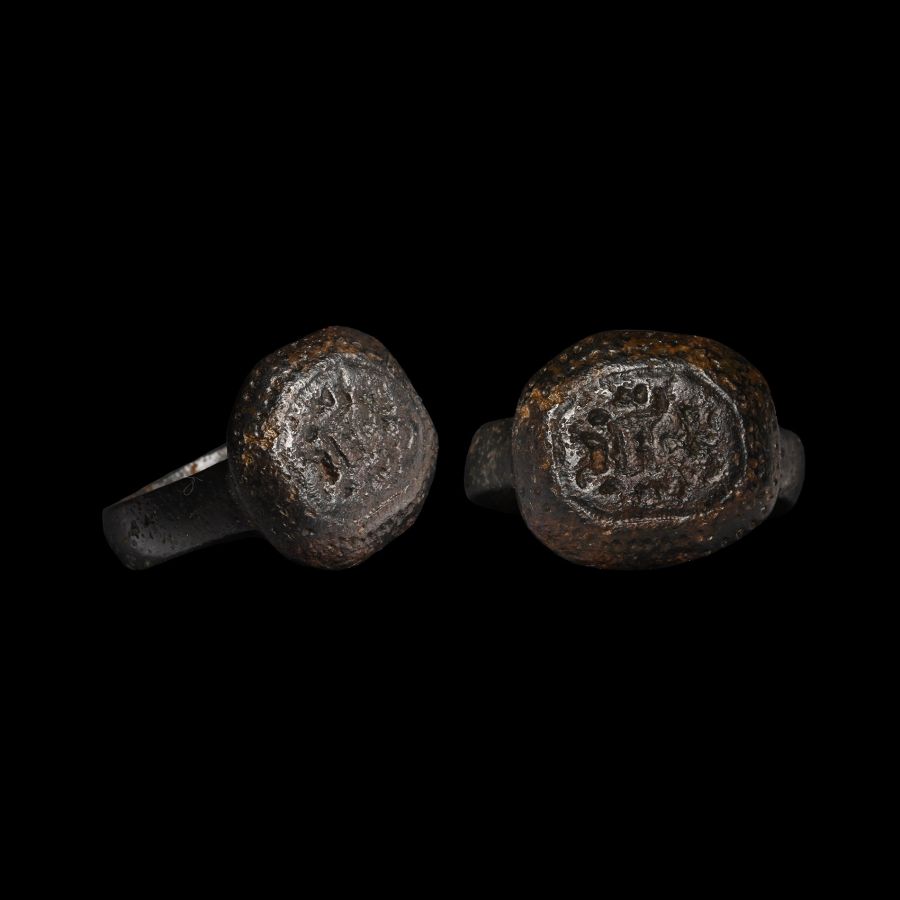
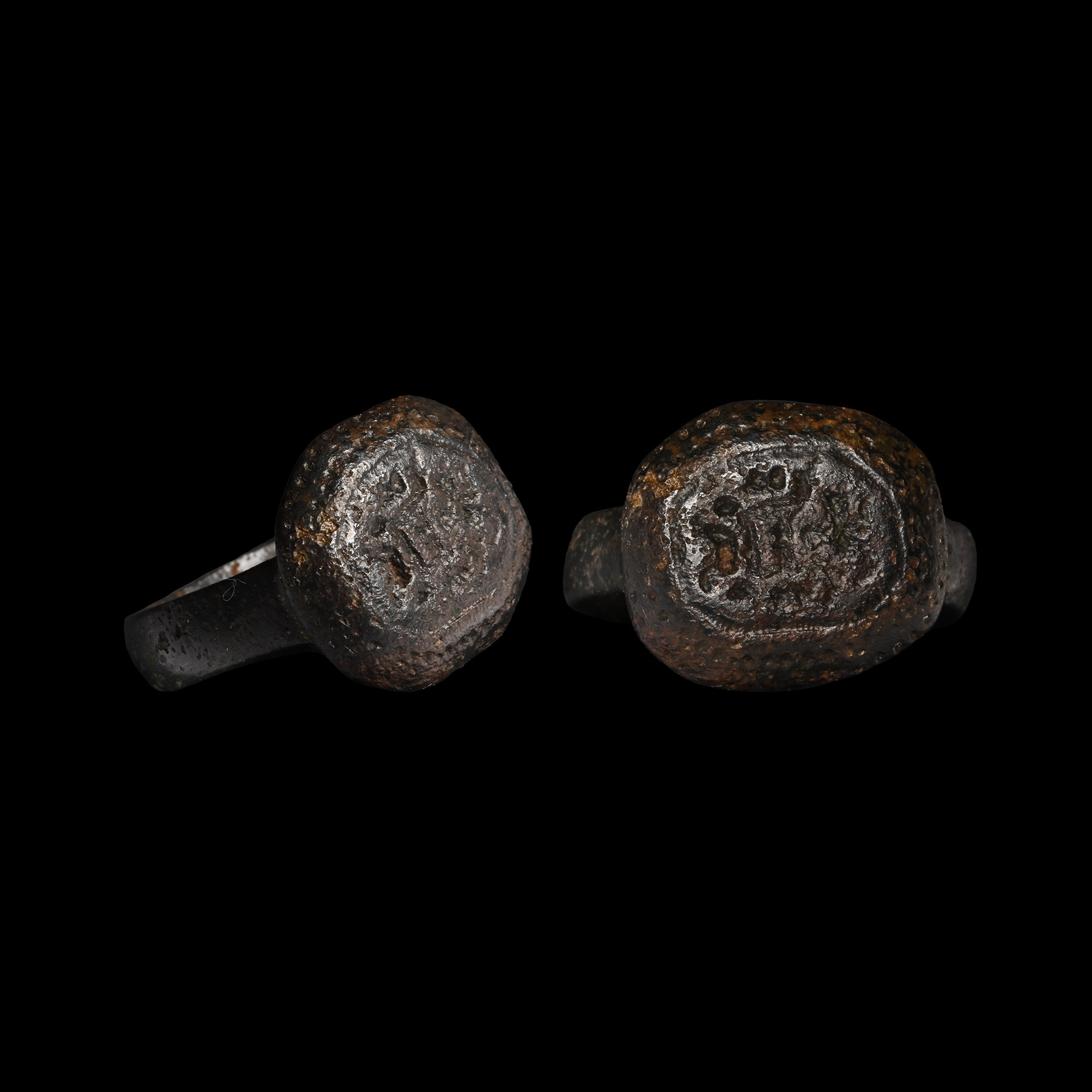
Tudor Period Bronze Ring with Armorial Motif
CIRCA 16TH CENTURY A.D.
7/8 in. (6.36 grams, 22.28 mm overall, internal diameter 17.95 x 19.55 mm (approximate size British R, USA 8 1/2, Europe 18 3/4, Japan 18)).
Comprising a broad hoop, octagonal bezel with chamfered edges, punched-point border, central motif of a shield and supporters. [No Reserve]
ProvenancePrivate collection formed since the 1940s.
UK art market.
Property of an Essex, UK, gentleman.
Cf. Chadour, A.B., Rings. The Alice and Louis Koch Collection, volume I, Leeds, 1994, item 619, for type.
CONDITIONTimeLine Auctions follows a vetting process to ensure the authenticity and legality of all items, reinforcing our commitment to integrity and responsible trading. Each antiquity, antique, and coin lot undergoes thorough examination by a vetting committee of at least ten external specialists, professional trade association members, scientists, and archaeologists: Our Vetting Process
AUCTIONS:
TimeLine is a leading auction house specialising in antiquities, ancient art, collectables, natural history, coins, medals, and books. Our auctions offer museums, collectors, historians, and enthusiasts the opportunity to acquire unique and historically significant pieces.
-
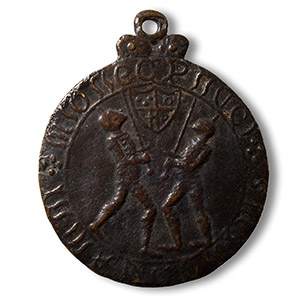
Medieval Style 'Billy and Charlie' Fantasy Pendant
19th century A.D.Sold for (Inc. bp): £104
By William Smith and Charles Eaton; obverse: robed figure with keys; reverse: two combatants with swords. 78 grams, 95 mm
From the collection of the famous author, writer and speaker, Gordon Bailey, Essex, UK; formed since 1968.
"Billy and Charlies", also known as the Shadwell forgeries, refer to a very extensive series of fake antiquities made in Victorian London by William Smith (Billy) and Charles Eaton (Charley). They were mudlarks who searched the Thames for items of value. William Edwards, a London antique dealer, made Billy's acquaintance around 1845, and he met Charley some years later. He paid them for items of interest that they found. Billy and Charley earned money from this until 1857, when they decided to counterfeit antiquities. They cast objects from lead or pewter, cutting dies into plaster of Paris moulds with nails and knives, and bathing the finished items in acid to simulate aging. Their commonest products were medallions, but others included daggers, statuettes, ampullae and even small shrines; as they were both illiterate the inscriptions on many of the objects are nonsense. They sold their forgeries to very prominent collectors of the time who thought they were genuine. Eventually, due to the large volume of objects that were appearing on the market, they were arrested and tried at court though they could not be found guilty of any crime at the time. They were released and carried on producing fakes but their style of manufacture had become well known and they eventually disappeared from history. -
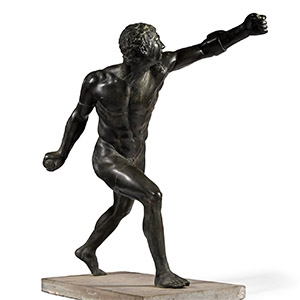
Bronze Statue the Borghese Gladiator
19th century A.D.Sold for (Inc. bp): £845
Modelled nude with right leg thrust forward, left arm raised and head turned, right arm held back for balance; miniature heater shield on strap to left forearm; mounted on a rectangular base. 15.45 kg total, 50.5 cm including stand
Private collection, England. -
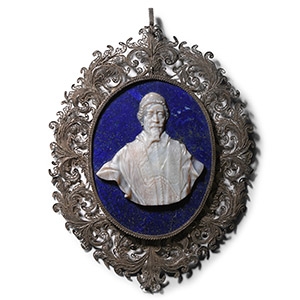
Silver Plaque with Cameo of Pope Alexander VII
17th-18th century A.D.Sold for (Inc. bp): £1,300
A carved agate facing bust within a lapis lazuli plaque, held in a silver canatille frame comprising elaborate filigree foliage and with suspension loop; image of Pope Alexander VII. 500 grams, 28.5 cm
Private collection, England.
Pope Alexander VII was born Fabio Chigi and took the role of head of the Catholic Church and ruler of the Papal States from 7 April 1655 to his death, in May 1667. He held a number of diplomatic positions in the Holy See, was ordained in 1634, and became bishop of Nardo in 1635. Pope Innocent X elevated him to the role of secretary of state in 1651, and in the following year he was appointed a cardinal. Alexander VII supported various construction projects in Rome, wrote poetry and patronized artists working on the decoration of churches.
