
Loading, please wait...
LOT 2029
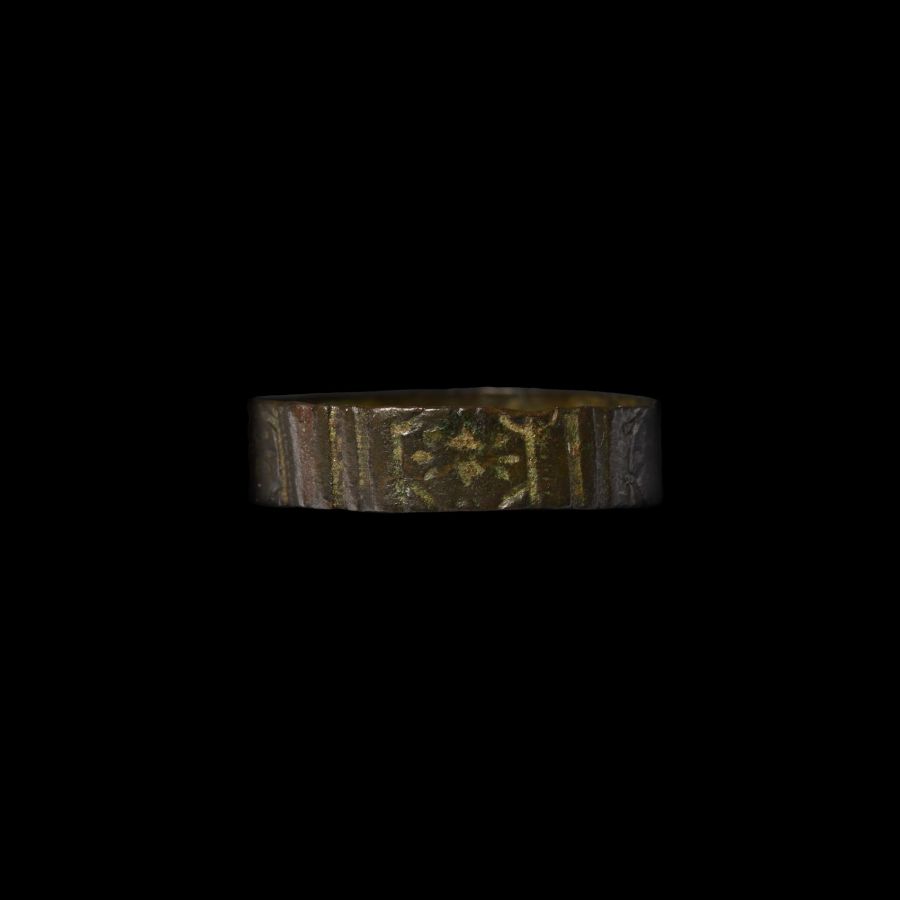
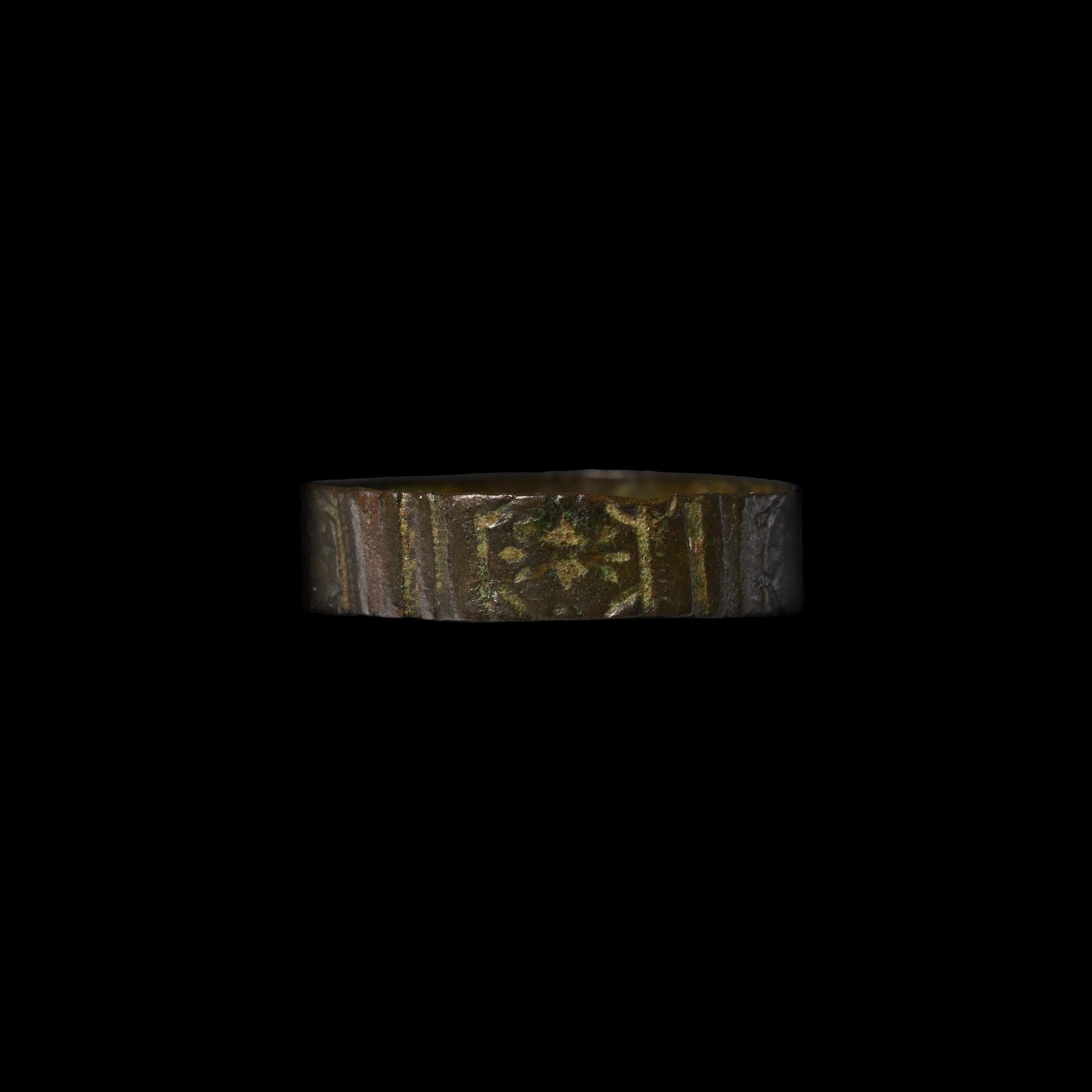
Tudor Period Bronze Decorated Ring
15TH-16TH CENTURY A.D.
(1.135 grams. 18.07 mm.).
Flat shank with raised vertical bands, five octagonal rosette motifs. [No Reserve]
ProvenanceAcquired on the UK art market.
Property of a Essex, UK, collector.
Accompanied by an old typed information card.
TimeLine Auctions follows a vetting process to ensure the authenticity and legality of all items, reinforcing our commitment to integrity and responsible trading. Each antiquity, antique, and coin lot undergoes thorough examination by a vetting committee of at least ten external specialists, professional trade association members, scientists, and archaeologists: Our Vetting Process
AUCTIONS:
TimeLine is a leading auction house specialising in antiquities, ancient art, collectables, natural history, coins, medals, and books. Our auctions offer museums, collectors, historians, and enthusiasts the opportunity to acquire unique and historically significant pieces.
-
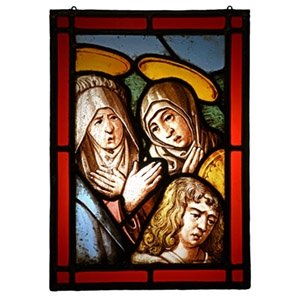
Stained Glass Panel with Three Figures at the Base of the Crucifixion
Northern France, Champagne, circa 1520s A.D.Sold for (Inc. bp): £2,210
A composite panel comprising: central figural sections with nimbate Virgin Mary, Saint Mary Magdalene and Saint John below, with deep blue surround; outer frame of deep red square and rectangular panes in lead cames with loops to the upper edge. 1.16 kg, 38 x 26.7 cm
Estate of Dr Woody Cobbs and Mrs Honor Cobbs, Atlanta, Georgia, USA. with Ahlers & Ogletree 1 May 2016, no.394. From a Suffolk, UK, collection. This lot has been checked against the Interpol Database of stolen works of art and is accompanied by a search certificate number no.12301-221724. -
.jpg)
Carnelian Bead Necklace
19th century A.D. or earlierSold for (Inc. bp): £104
Composed of graduated polished carnelian beads of mainly biconical and annular form; hook-and-eye clasp. 36.2 grams, 53 cm long
Private U.K. family collection formed in the early 1970s. The property of Mr and Mrs P.R. of East Sussex. Thence by descent to family members. -
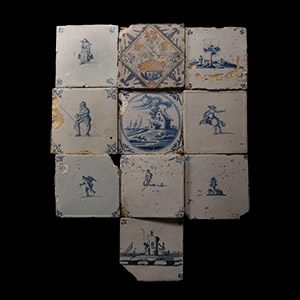
Post Medieval Dutch Glazed Ceramic Tile Group
Circa 17th-18th century A.D.Sold for (Inc. bp): £143
Composed mainly of blue and white glazed tiles displaying erotes, buildings, landscapes, figural vignettes and polychrome floral motifs. 2.9 kg total, 13 x 13 cm each
Acquired 1990s-early 2000s. East Anglian private collection.
