
Loading, please wait...


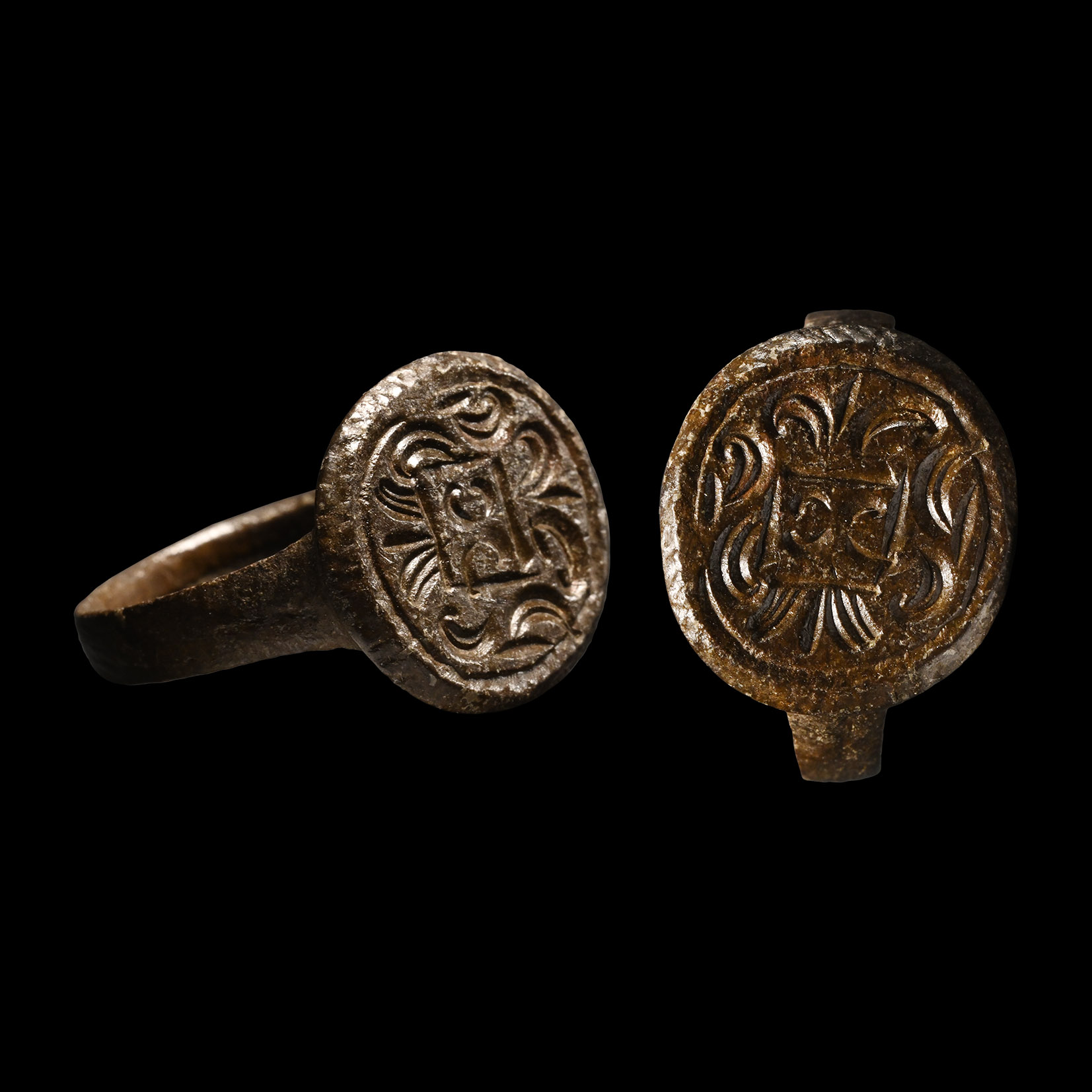
LOT 2130
Tudor Period Bronze Armorial Ring
16TH-17TH CENTURY A.D.
1 in. (4.63 grams, 23.47 mm overall, 20.05 mm internal diameter (approximate size British U 1/2, USA 10 1/4, Europe 23.15, Japan 22)).
With discoid bezel, ropework border, central square with crescent motifs, surrounding fronds in imitation of heraldic design. [No Reserve]
ProvenancePrivate collection formed since the 1940s.
UK art market.
Property of an Essex, UK, gentleman.
TimeLine Auctions follows a vetting process to ensure the authenticity and legality of all items, reinforcing our commitment to integrity and responsible trading. Each antiquity, antique, and coin lot undergoes thorough examination by a vetting committee of at least ten external specialists, professional trade association members, scientists, and archaeologists: Our Vetting Process
AUCTIONS:
TimeLine is a leading auction house specialising in antiquities, ancient art, collectables, natural history, coins, medals, and books. Our auctions offer museums, collectors, historians, and enthusiasts the opportunity to acquire unique and historically significant pieces.
-

Stained Glass Panel of an Architect Inspecting the Work of Masons
Low Countries, circa 1640 A.D.Sold for (Inc. bp): £208
Ellipsoid panel with polychrome scene depicting a standing figure in doublet with broad collar, plain hose and wide-brimmed felt hat, holding a surveying staff and pointing towards a stone in preparation; mason to the rear wearing a soft felt cap with turned brim and with an apron on his waist, using a mallet and chisel to finish a stone block on a bench; second mason kneeling working on a fresh dressed stone with a mallet and bolster; chisels, square and other tools in the foreground, all set in a landscape with building under construction; cracked and repaired, in a lead came with loop to the upper edge. 271 grams, 26.7 cm
Collection of Henry L Hotellier (1908-1993), and by descent until 2021. Encheres Cote d'Opal DeBacker Richmond, 22 May 2021, no.263 [Part]. -
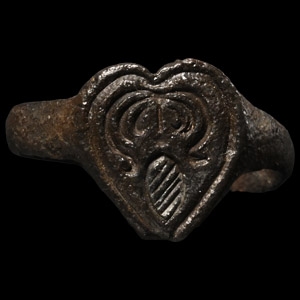
Post Medieval Bronze Heart-Shaped Ring with Pinecone
Circa 16th century A.D.Sold for (Inc. bp): £52
With a D-section hoop supporting a heart-shaped bezel displaying a pinecone with foliage above. 2.73 grams, 20.01 mm overall, 16.51 mm internal diameter (approximate size British L, USA 5 3/4, Europe 11.24, Japan 10)
Private collection formed since the 1940s. UK art market. Property of an Essex, UK, gentleman. -

Medieval Style 'Billy and Charley' Fantasy Pendant
19th century A.D.Sold for (Inc. bp): £91
By William Smith and Charles Eaton; obverse: head with radiate crown; reverse: crowned figure with dagger and chalice. 112 grams, 10.7 cm
From the collection of the famous author, writer and speaker, Gordon Bailey, Essex, UK; formed since 1968.
"Billy and Charlies", also known as the Shadwell forgeries, refer to a very extensive series of fake antiquities made in Victorian London by William Smith (Billy) and Charles Eaton (Charley). They were mudlarks who searched the Thames for items of value. William Edwards, a London antique dealer, made Billy's acquaintance around about 1845, and he met Charley some years later. He paid them for items of interest that they found. Billy and Charley earned money from this until 1857, when they decided to counterfeit antiquities. They cast objects from lead or pewter, cutting dies into plaster of Paris moulds with nails and knives, and bathing the finished items in acid to simulate aging. Their commonest products were medallions, but others included daggers, statuettes, ampullae and even small shrines; as they were both illiterate the inscriptions on many of the objects are nonsense. They sold their forgeries to very prominent collectors of the time who thought they were genuine. Eventually, due to the large volume of objects that were appearing on the market, they were arrested and tried at court though they could not be found guilty of any crime at the time. They were released and carried on producing fakes but their style of manufacture had become well known and they eventually disappeared from history.
