
Loading, please wait...
LOT 1898
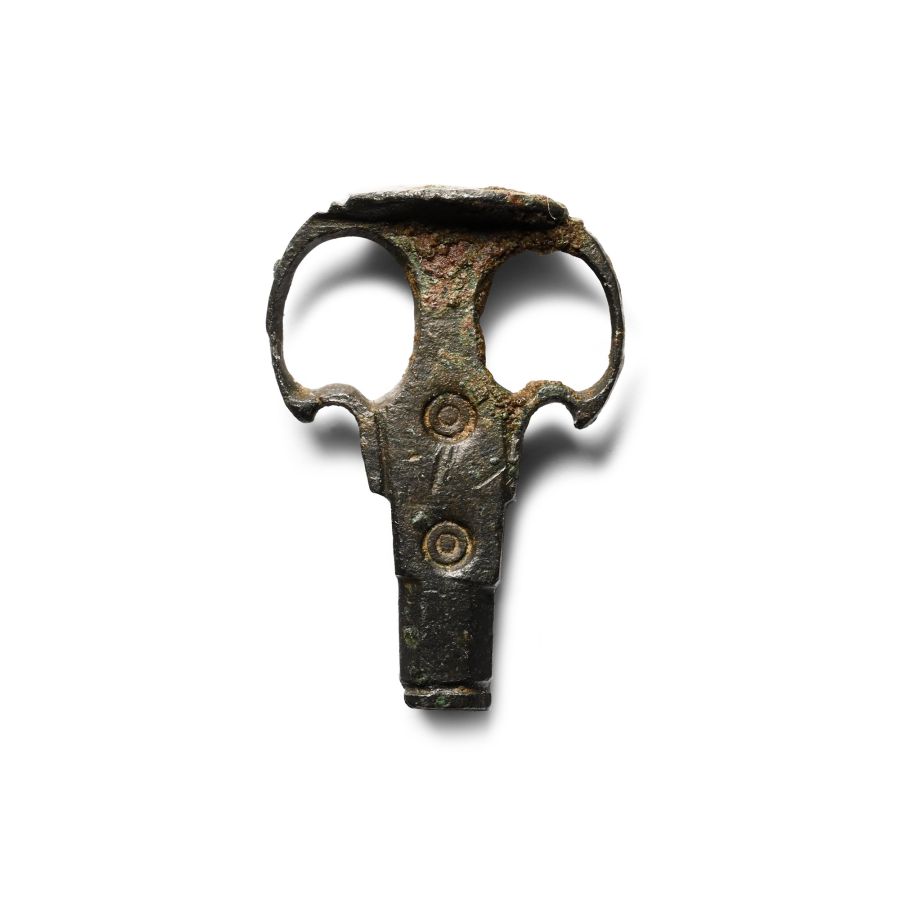
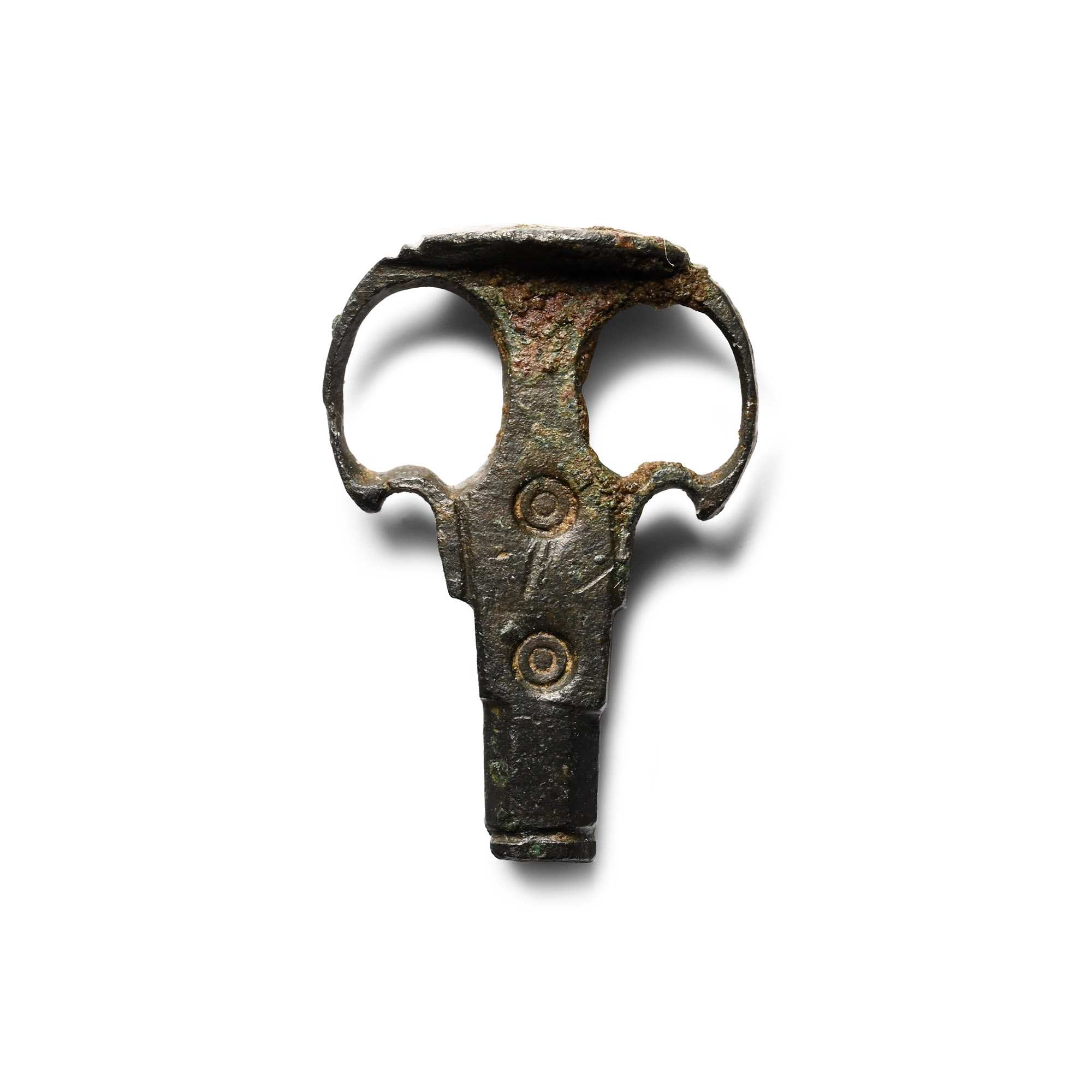
Tudor Bronze Winder Key
16TH CENTURY A.D. OR LATER
1 in. (3.72 grams, 24 mm).
With tubular shank and flared lateral arms, ellipsoid panel above. [No Reserve]
ProvenanceFound near Skirpenbeck, Yorkshire, UK, in 1997.
From an old Yorkshire, UK, collection.
Accompanied by a copy of the British Museum's Portable Antiquities Scheme (PAS) report no.FAKL-404206.
This lot is accompanied by an illustrated lot declaration signed by the Head of the Antiquities Department, Dr Raffaele D'Amato.
The item is described by the PAS report as 'probably a watch winding key' although these are very rare until the late 17th century since mechanical timepieces were not portable until then. An alternative use for the item would be for the tuning of a musical instrument: hollow keys for this purpose have been in use since at least the 7th century.
CONDITIONTimeLine Auctions follows a vetting process to ensure the authenticity and legality of all items, reinforcing our commitment to integrity and responsible trading. Each antiquity, antique, and coin lot undergoes thorough examination by a vetting committee of at least ten external specialists, professional trade association members, scientists, and archaeologists: Our Vetting Process
AUCTIONS:
TimeLine is a leading auction house specialising in antiquities, ancient art, collectables, natural history, coins, medals, and books. Our auctions offer museums, collectors, historians, and enthusiasts the opportunity to acquire unique and historically significant pieces.
-
Western Asiatic Style Carved Stone Animal Group
20th century A.D.Sold for (Inc. bp): £52
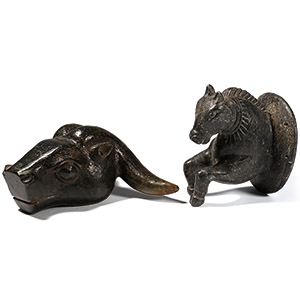
Comprising: a horse protome modelled as the foreparts of a leaping horse; a bull's head with large curving horns. 1.94 kg total, 12-18 cm
From the family collection of a Hampstead gentleman; formerly acquired in the 1980s. This lot is accompanied by an illustrated lot declaration signed by the Head of the Antiquities Department, Dr Raffaele D'Amato. -
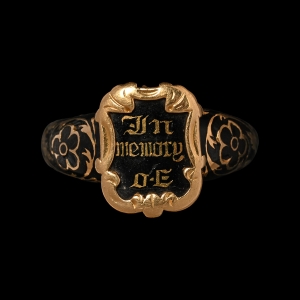
Engraved Gold and Black Enamel Memento Mori Ring
19th century A.D.Estimate: £700 - 900 (+bp*)
Opening Bid: £389
With D-section tapering hoop, black enamel finish with reserved rosettes and tendrils, the bezel an ornate heater shield with reserved text 'In memory OE' and copperplate engraving to the inner face '1852 / obt.63', 'Mrs.Sarah Hems, obt.26 May' and stamped assay marks: crown, '18', leopard's head, gothic 'k' in octagonal panel (dated to 1845). 4.14 grams, 22.74 mm overall, 17.43 mm internal diameter (approximate size British O, USA 7, Europe 14.98, Japan 14)
Acquired on the UK art market. Property of an East Sussex collector. This lot is accompanied by an illustrated lot declaration signed by the Head of the Antiquities Department, Dr Raffaele D’Amato. This lot is accompanied by an illustrated lot declaration signed by the Head of the Antiquities Department, Dr Raffaele D'Amato. -
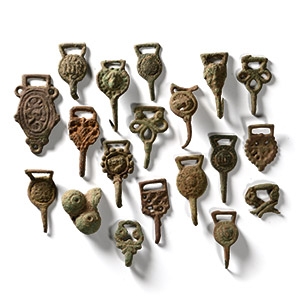
Tudor Bronze Hook Fastener Collection
Circa 16th century A.D.Sold for (Inc. bp): £59
Comprising nineteen hooked tags of various types, one inscribed with 'IHS'. 67 grams total including documents, 15-38 mm
Found Yorkshire, UK. From the private collection of Robin Sykes, Yorkshire, UK, formed since the late 1990s. Seven identified by Jim Halliday on two record sheets. This lot is accompanied by an illustrated lot declaration signed by the Head of the Antiquities Department, Dr Raffaele D'Amato.
