
Loading, please wait...
LOT 2040
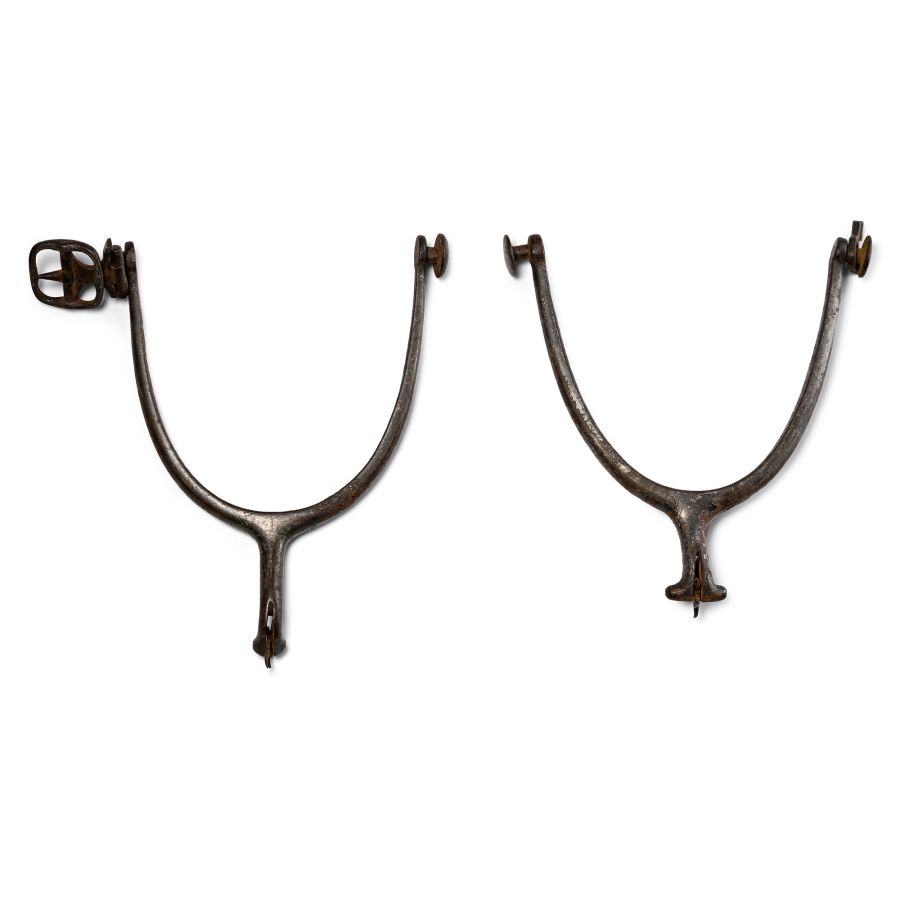
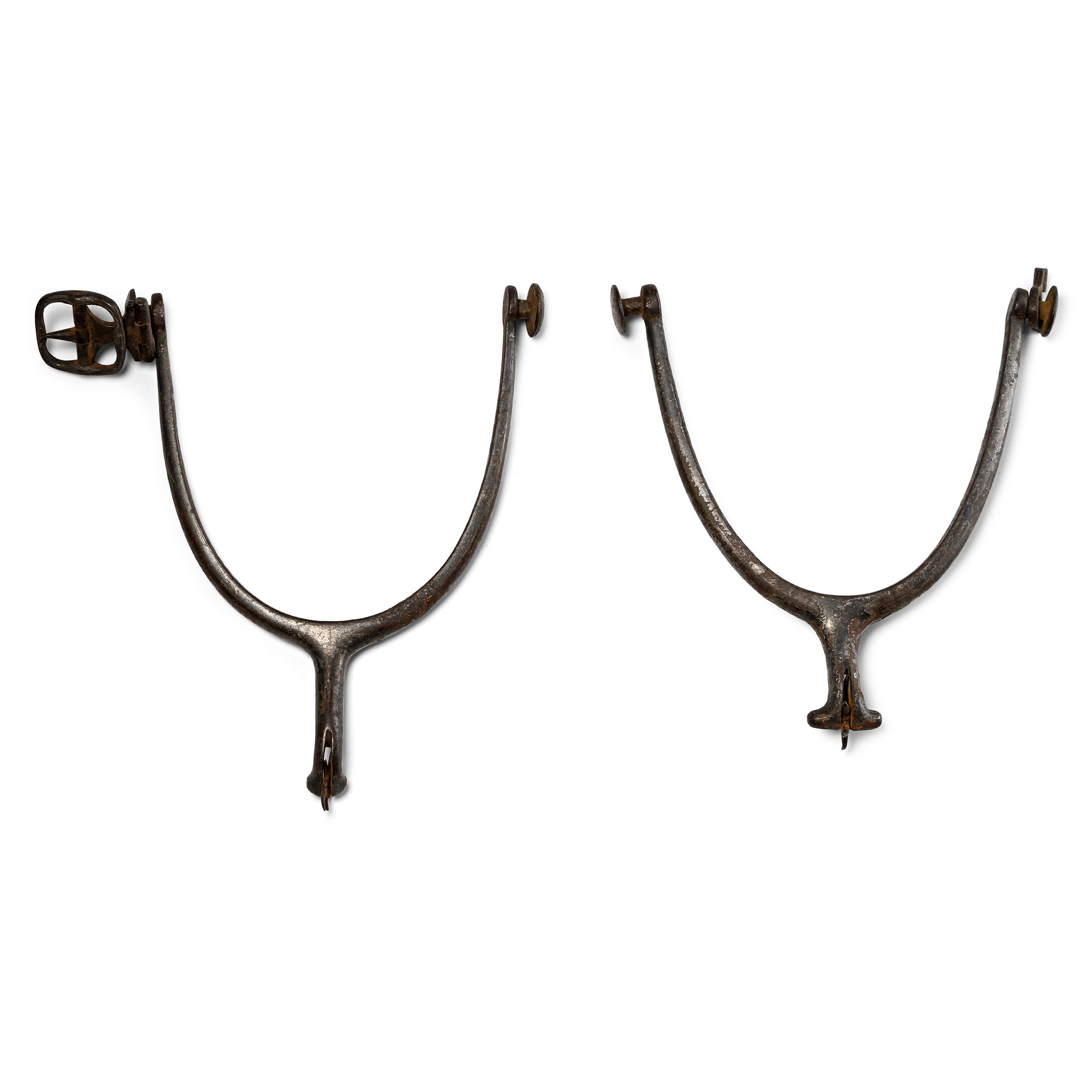
Tudor Bronze Spur Pair
16TH-17TH CENTURY A.D.
4 1/4 - 4 5/8 in. (95 grams total, 11-11.8 cm).
Each a tapering D-section heelband, short shank and straight rowel box with remains of an articulated eight-armed rowel; one with attachment locket. [2, No Reserve]
ProvenanceFrom the collection of a Buckinghamshire, UK, collector established from the earlier 1960s.
LiteratureCf. Clark, J. (ed.), The Medieval Horse and its Equipment, London, 2004, for discussion.
CONDITIONTimeLine Auctions follows a vetting process to ensure the authenticity and legality of all items, reinforcing our commitment to integrity and responsible trading. Each antiquity, antique, and coin lot undergoes thorough examination by a vetting committee of at least ten external specialists, professional trade association members, scientists, and archaeologists: Our Vetting Process
AUCTIONS:
TimeLine is a leading auction house specialising in antiquities, ancient art, collectables, natural history, coins, medals, and books. Our auctions offer museums, collectors, historians, and enthusiasts the opportunity to acquire unique and historically significant pieces.
-
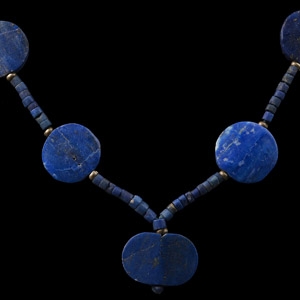
Lapis Lazuli Bead Necklace String
20th century A.D.Sold for (Inc. bp): £65
Restrung group of annular and tabular beads. 36 grams, 34.5 cm
London, UK, collection, 2000s. -

Large Georgian Gold Wedding Ring
18th-19th century A.D.Sold for (Inc. bp): £390
Lentoid in section, probably a glove ring. 2.55 grams, 24.5 mm overall, 21.76 mm internal diameter (approximate size British Y 1/2, USA 12 1/4, Europe 28.20, Japan 27)
Acquired from the early 1980s. From the private collection of a late Gloucestershire, UK, gentleman; thence by descent. -

Spanish Gold Ring with a Table-Cut Red Spinel
16th-17th century A.D.Sold for (Inc. bp): £11,700
A substantial ring with a box-shaped bezel set with a table-cut red spinel of deep purplish-red hue, the reverse of the bezel convex with chamfered ends. 6.93 grams, 24.30 mm overall, 17.05 mm internal diameter (approximate size British M 1/2 , USA 6 1/4, Europe 13.09, Japan 12)
Private English collection, formed between the late 1970s and early 1990s. Private collection, UK. This lot has been checked against the Interpol Database of stolen works of art and is accompanied by search certificate number no.12996-245986.
The box bezel is typical of both Spanish and Islamic goldsmithing traditions. The small pointed projection at the rear of the hoop, however, is not a common feature in Spanish rings but is a distinctive hallmark of Islamic goldwork — a form ultimately rooted in Middle Eastern traditions of the Sasanian, Fatimid, and Mamluk periods. This detail likely reached Spain through the transmission of techniques from the Middle East into Islamic North Africa, and subsequently into the goldsmithing repertoire of al-Andalus. These forms were adapted by Spanish goldsmiths to accommodate the tastes of a Christian clientele, reflecting the deep and enduring influence of Islamic craftsmanship in post-Reconquista Spain.
