
Loading, please wait...
LOT 2016
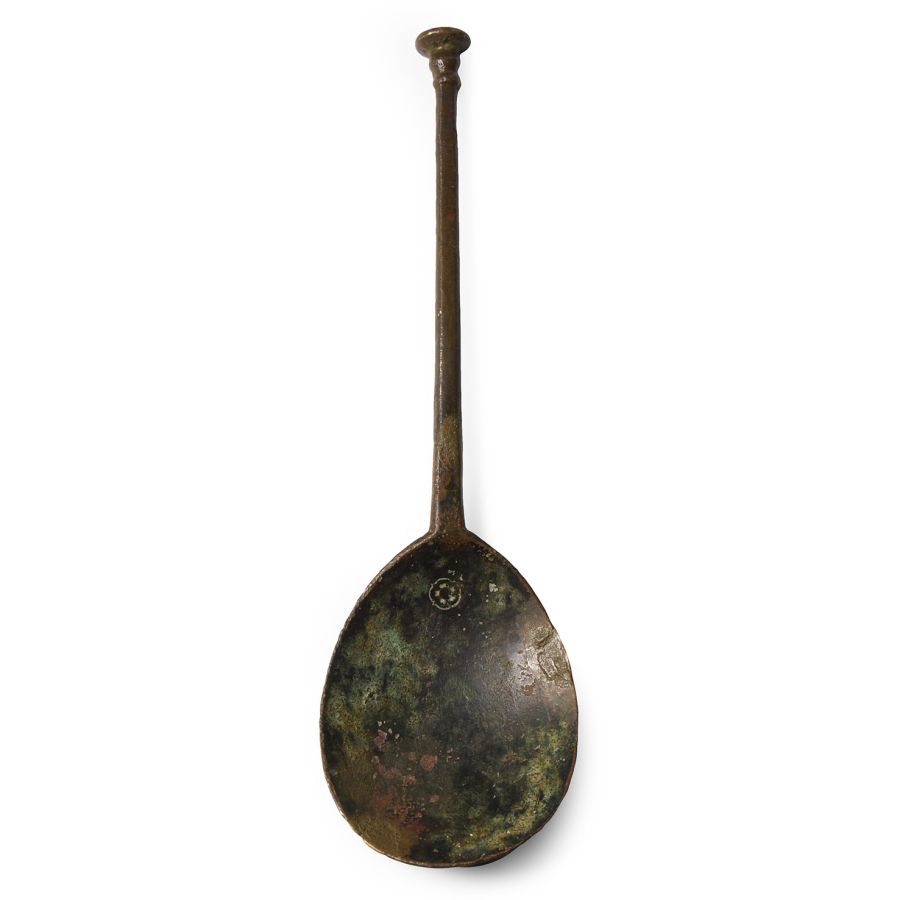
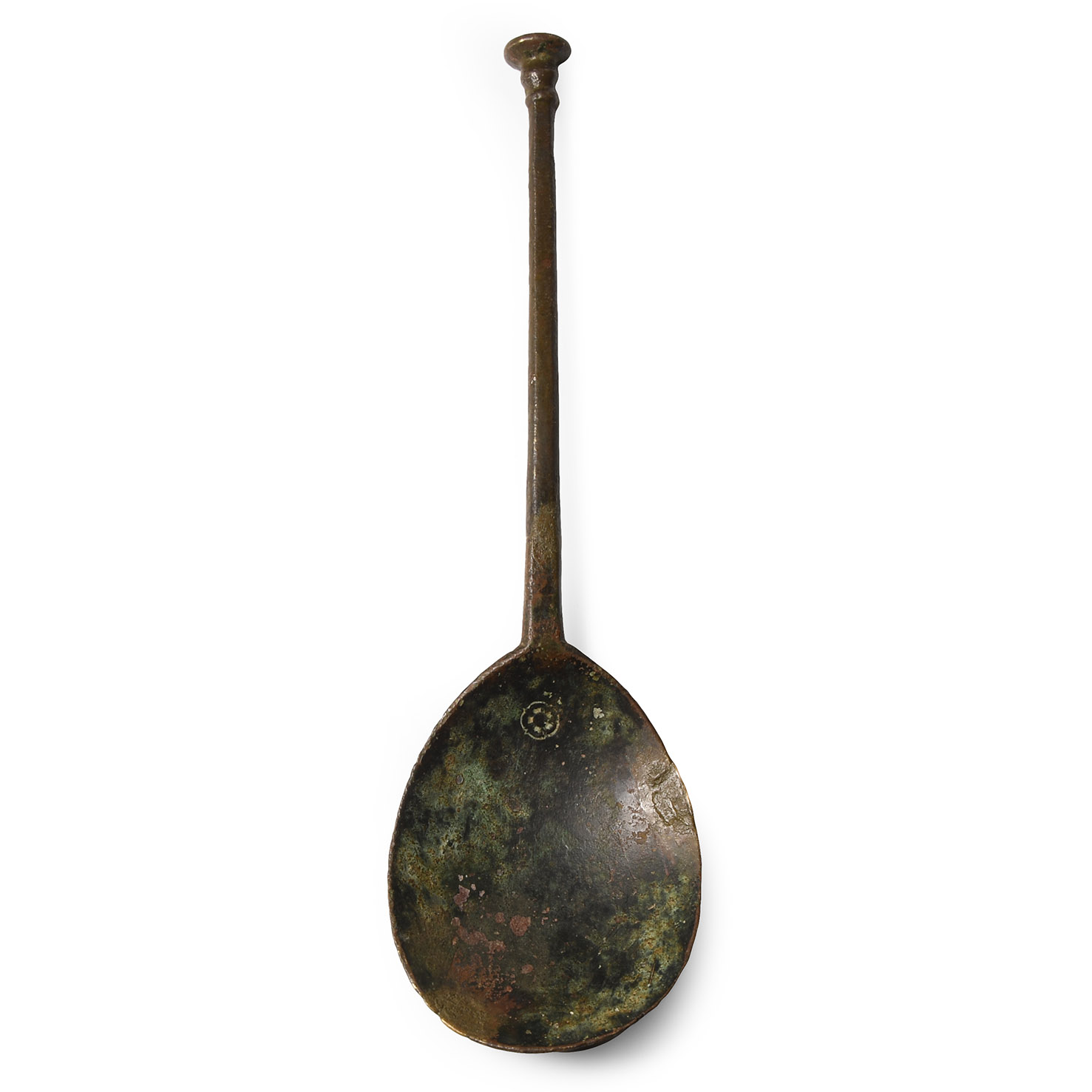
Tudor Bronze Spoon with Rose Maker's Mark
16TH CENTURY A.D.
6 3/4 in. (48 grams, 17 cm).
With flat oval cross-section stem, tapering very slightly from the bowl and ending in a simple ball seal knop; a maker's mark in the form of a Tudor rose within a circular border stamped within the bowl, adjacent to the stem. [No Reserve]
ProvenanceFrom the collection of the famous author, writer and speaker, Gordon Bailey, Essex, UK; formed since 1968.
LiteratureCf. similar spoon in PAS, SOM-7C2A26.
FootnotesSpoons with this type of knop date from the 16th century A.D. The knop, when bearing an owner's initial, could be used as a seal. The bronze spoons of the Tudor era were inexpensive and not mentioned in wills, but if silvered or in silver they were often listed among their owner’s property.
CONDITIONTimeLine Auctions follows a vetting process to ensure the authenticity and legality of all items, reinforcing our commitment to integrity and responsible trading. Each antiquity, antique, and coin lot undergoes thorough examination by a vetting committee of at least ten external specialists, professional trade association members, scientists, and archaeologists: Our Vetting Process
AUCTIONS:
TimeLine is a leading auction house specialising in antiquities, ancient art, collectables, natural history, coins, medals, and books. Our auctions offer museums, collectors, historians, and enthusiasts the opportunity to acquire unique and historically significant pieces.
-
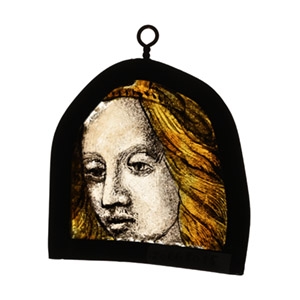
Renaissance Stained Glass Panel of a Head of a Woman
Northern France, circa 1480-1500 A.D.Sold for (Inc. bp): £975
Irregular D-shaped panel with female head in three-quarter view, her hair worn loose with a diadem or crespine; old collector's label '20668015'; framed with a lead came and suspension loop. 46 grams, 71 mm
De Baecque Vente aux enchere, 8 June 2023, no.511 (part). Ex central London gallery. -
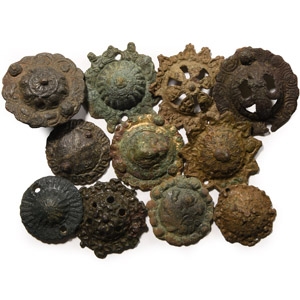
Post Medieval Bronze Horse Harness Mount Collection
16th-19th century A.D.Sold for (Inc. bp): £78
Including rosette and floral types; many of these objects are published in the Detector Finds book series. 407 grams total, 43-62 mm
From the collection of the famous author, writer and speaker, Gordon Bailey, Essex, UK; formed since 1968. -
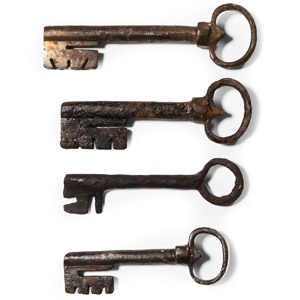
Post Medieval Iron Key Group
18th-19th century A.D.Sold for (Inc. bp): £52
Including circular and looped bows, barrel-shanks and other types; many of these objects are published in the Detector Finds book series. 170 grams total, 9-12.2 cm
From the collection of the famous author, writer and speaker, Gordon Bailey, Essex, UK; formed since 1968.
