
Loading, please wait...
LOT 2035
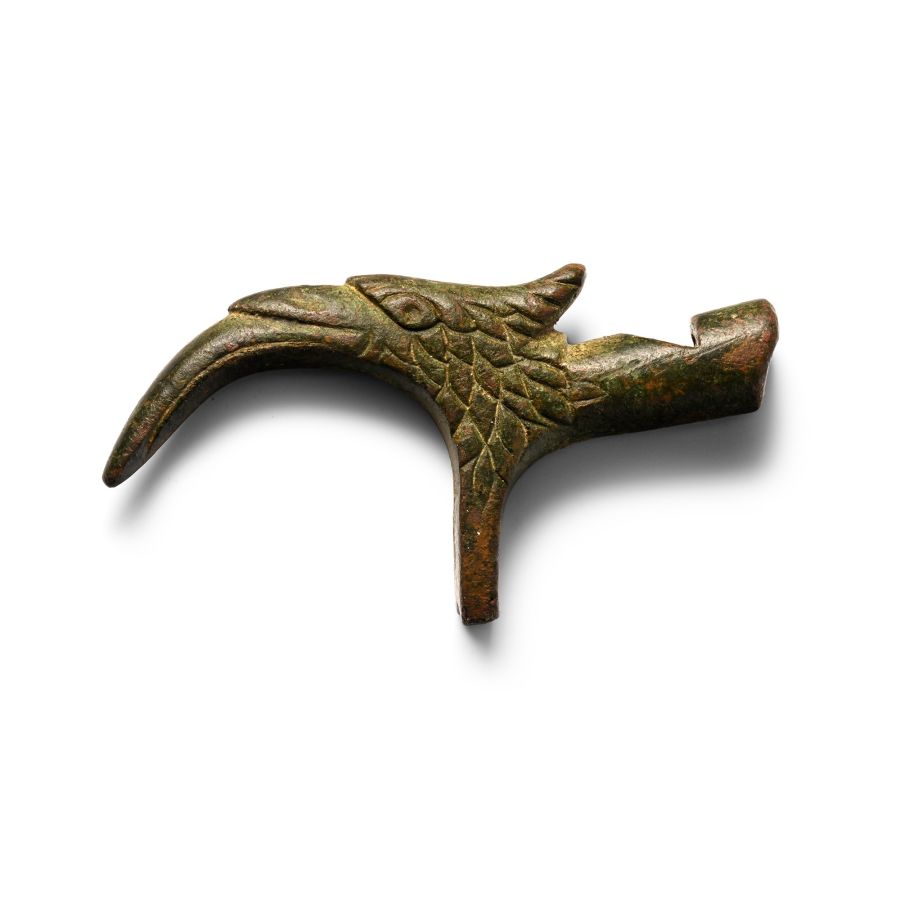
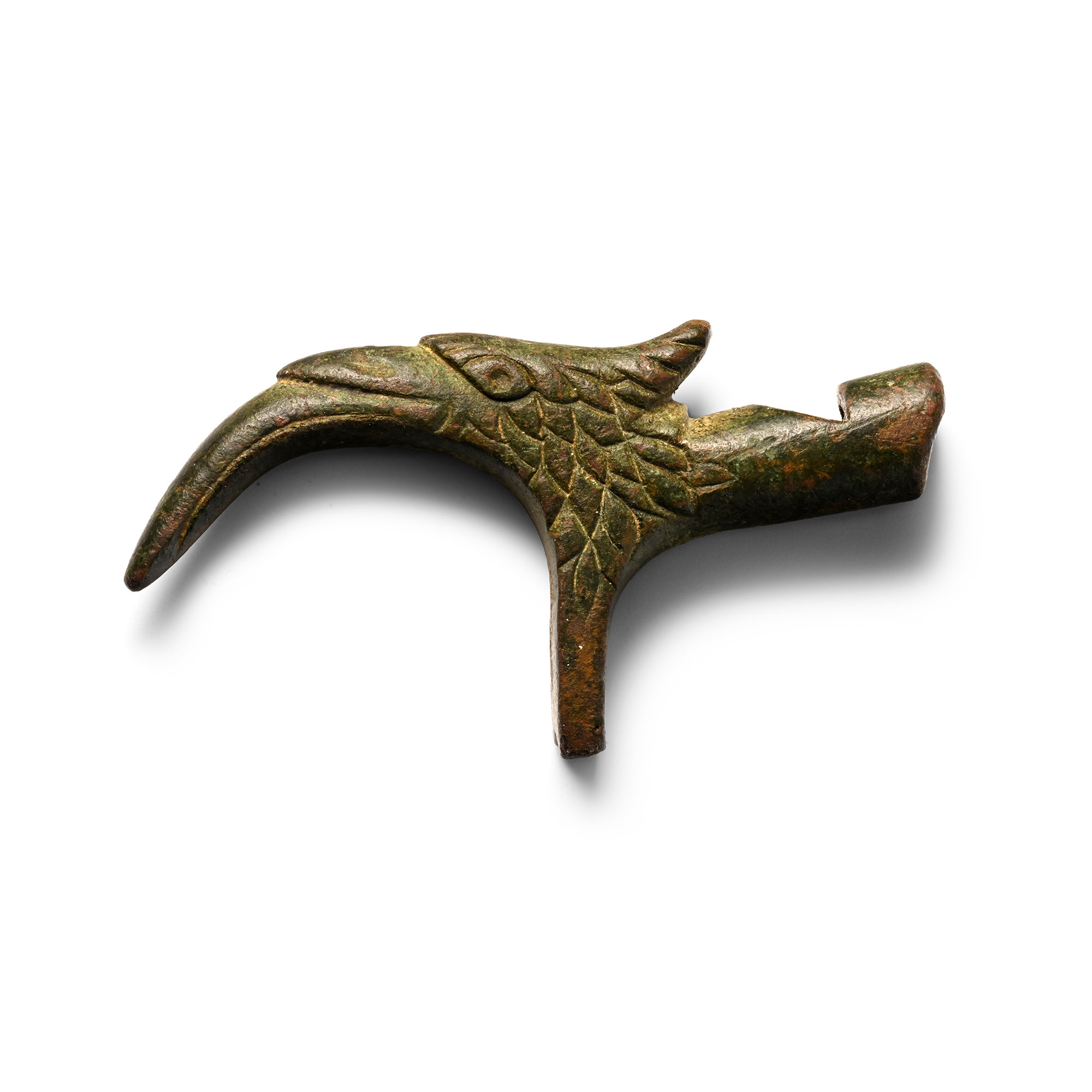
Tudor Bronze Hawking Whistle
16TH-17TH CENTURY A.D.
2 1/2 in. (32.8 grams, 64 mm).
Formed as a hawk's head with detailing to the beak, eye, and plumage; round-section whistle with sub-triangular air hole. [No Reserve]
ProvenanceFound Gloucestershire, UK.
LiteratureCf. Leahy, K. and Lewis, M., The British Museum's Portable Antiquities Scheme Finds Identified: An illustrated guide to metal detecting and archaeological finds, Essex, 2018, p.350, item LVPL-8E9B4F, for a similar object date 1550-1650 (NB. the same object has not been updated on the PAS database, so is still dated 1700-1900).
FootnotesCf. The Portable Antiquities Scheme Database, id. NMS-2201BE for similar.
CONDITIONTimeLine Auctions follows a vetting process to ensure the authenticity and legality of all items, reinforcing our commitment to integrity and responsible trading. Each antiquity, antique, and coin lot undergoes thorough examination by a vetting committee of at least ten external specialists, professional trade association members, scientists, and archaeologists: Our Vetting Process
AUCTIONS:
TimeLine is a leading auction house specialising in antiquities, ancient art, collectables, natural history, coins, medals, and books. Our auctions offer museums, collectors, historians, and enthusiasts the opportunity to acquire unique and historically significant pieces.
-
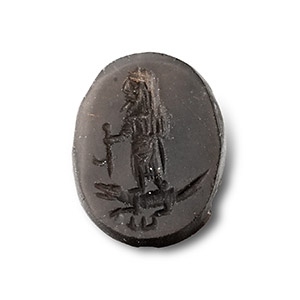
Romano-Egyptian Style Blackstone Intaglio Depicting a God with Crocodile
20th century A.D. or earlierSold for (Inc. bp): £117
Plaque with incuse image, bearded figure in calf-length robe wielding a harpe, standing on the back of a crocodile. 1.78 grams, 20 mm
From the private collection of Mr K.A., acquired in the 1990s-early 2000s. -
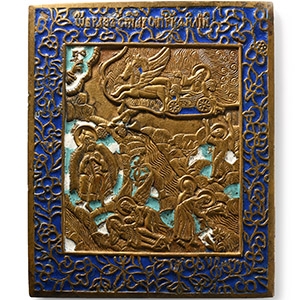
Russian Orthodox Enamelled Bronze Travel Icon with Scenes of the Life of the Prophet Elijah
19th century A.D.Estimate: £300 - 400 (+bp*)
Opening Bid: £150
With blue champlevé enamel, depicting scenes of the life of Prophet Elijah: on the bottom right Elijah rolling up his mantle and dividing the waters of the Jordan, in front of his disciple Elisha; on the bottom left Elijah watched over by the Angel; on the top right Elijah ascending to heaven on a Chariot of Fire, assisted by the hand of God; on the left Elijah, covered by his mantle, fed by ravens; frame with blue enamel over gilded pseudo-vegetal decorations. 585 grams, 14.3 cm
Acquired from Chris Martin-Zakheim, Iconastas, 5 Piccadilly Arcade, London SW1. From the private collection of a West London, UK, gentleman, formed since the early 2000s.
The icon represents the Ascension of the prophet Elijah and other scenes from his life. Elijah is ascending to heaven in a fiery chariot drawn by horses, leaving his mantle to the disciple Elisha, symbolising the transmission of his prophetic mission. Among the great figures of the Bible, the prophet Elijah was one of the most venerated figures in history in Orthodoxy. -
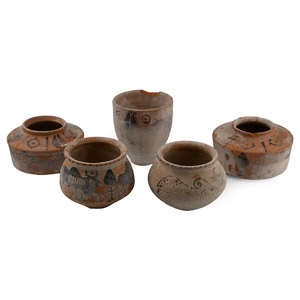
Indus Valley Style Terracotta Vessel Group
20th century A.D.Sold for (Inc. bp): £46
Mixed group of jars and a cup with painted details. 1.05 kg, 8.2-11 cm wide
Very fine condition.
From the private collection of John Meredith, acquired since the 1990s; thence by descent.
