
Loading, please wait...
LOT 2031
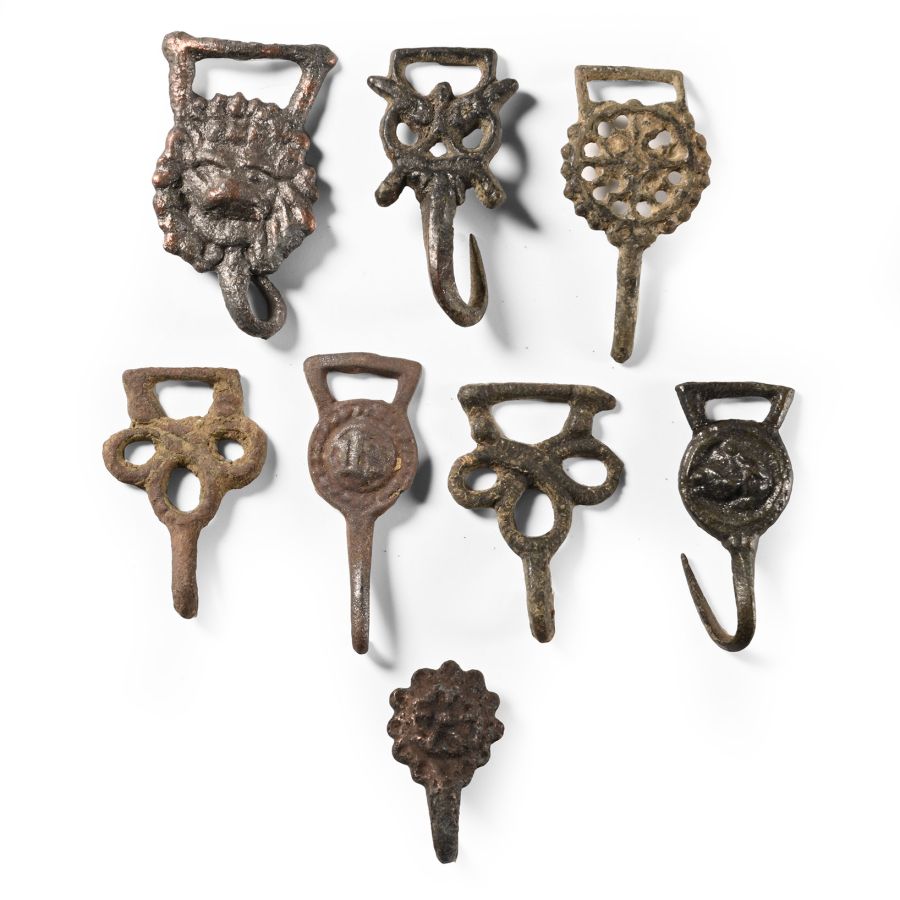
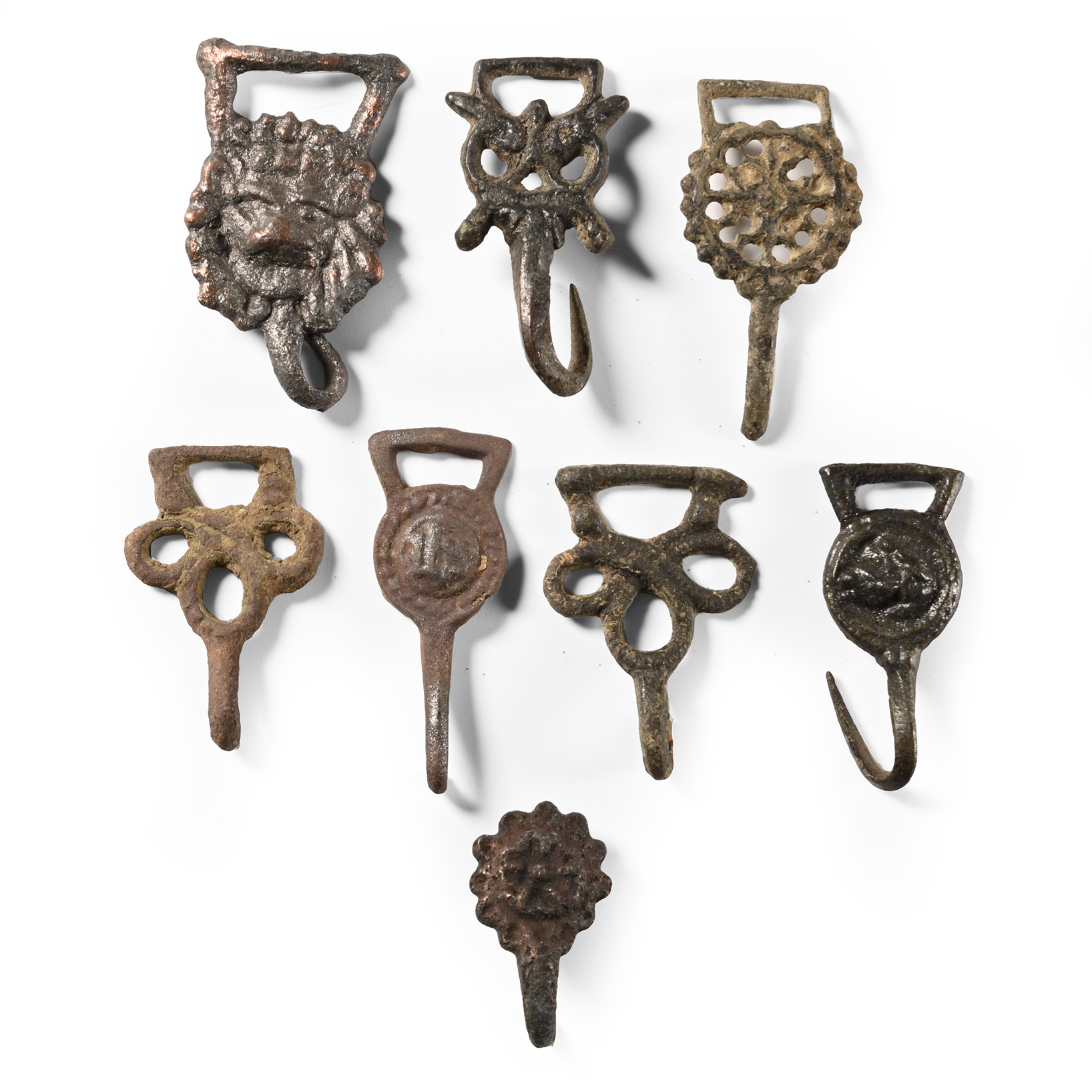
Tudor Bronze Clothes Fastener Group
16TH CENTURY A.D.
7/8 - 1 3/8 in. (22.16 grams total, 23-34 mm).
Including openwork rosette, triple-looped and other types. [8, No Reserve]
ProvenanceFound on various UK sites since 1974.
Property of an Essex collector.
See Bailey, G., Buttons & Fasteners 500 BC-AD1840, Witham, 2004, for types.
CONDITIONTimeLine Auctions follows a vetting process to ensure the authenticity and legality of all items, reinforcing our commitment to integrity and responsible trading. Each antiquity, antique, and coin lot undergoes thorough examination by a vetting committee of at least ten external specialists, professional trade association members, scientists, and archaeologists: Our Vetting Process
AUCTIONS:
TimeLine is a leading auction house specialising in antiquities, ancient art, collectables, natural history, coins, medals, and books. Our auctions offer museums, collectors, historians, and enthusiasts the opportunity to acquire unique and historically significant pieces.
-
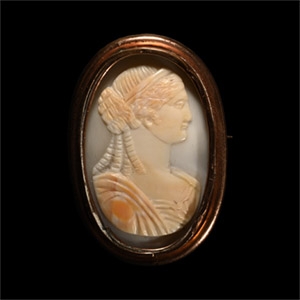
Neoclassical Shell Cameo of a Noble Lady in Gilt Brooch
Late 19th-early 20th century A.D.Sold for (Inc. bp): £7
Lustrous cameo with profile female bust in classical palla and with stephane to the hair; set in a gilt frame with securing pin to reverse. 11.2 grams, 42 mm
Private collection, England. -

Post Medieval Iron Bill Hook and Tool Collection
13th-17th century A.D.Sold for (Inc. bp): £33
Comprising four sickles and one pruning knife with crescent blade and the whittle tang handle terminating in a hook, two with reconstructed modern handle; one sickle with cutler's mark EE. 1.32 kg total, 20.5-37.5 cm
From the collection of the famous author, writer and speaker, Gordon Bailey, Essex, UK; formed since 1968.
Among our specimens a particular importance is given to the 13th century A.D. sickle with a maker's marks evident on the blade. Like many knives, sickles sometimes carry a cutler's mark. Sickles were produced in various sizes depending on the type of work they were to be used for. The large examples would have been used for clearing weeds or harvesting hay or crops. The small sickles would have been used for cutting herbs or similar. -

Large Carnelian Intaglio with Bust of Minerva
19th century A.D.Sold for (Inc. bp): £98
Ellipsoid plaque with chamfered edge; intaglio profile bust of Minerva in Corinthian-style helmet with hippocamp motif to the bowl; small arrow placed at her shoulder. 3.03 grams, 28 mm
UK private collection before 2000. Acquired on the UK art market. Property of a London gentleman.
